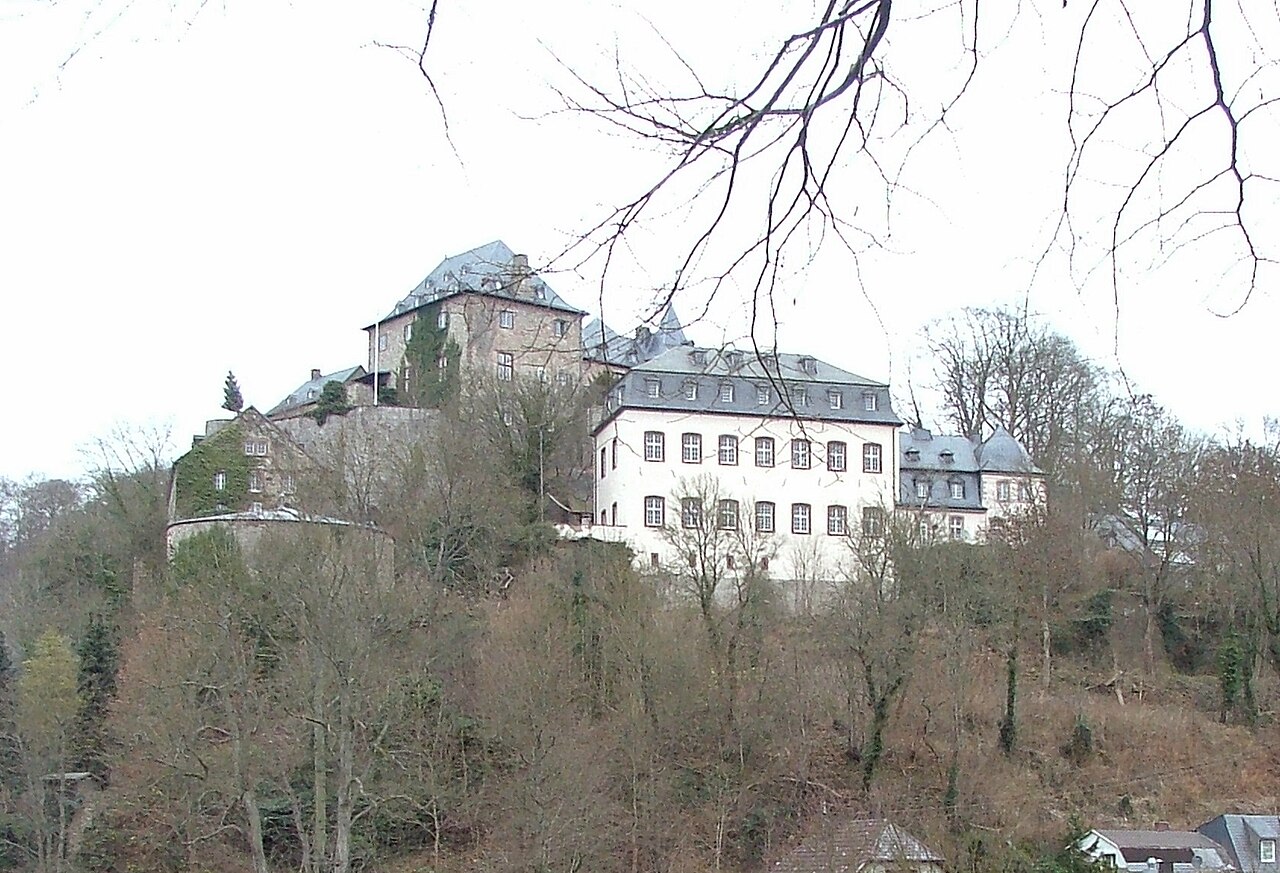
Dollendorf Castle
Dollendorf Castle is a historic medieval fortress located near the town of Blankenheim in the Eifel region of Germany. First documented in 1077, it served as the ancestral seat of the noble Dollendorf family until the mid-15th century. Though now largely in ruins, the castle remains an important site for understanding the feudal and architectural history of the High Medieval period in this part of Europe.
Historical background and ownership
The castle was originally constructed in the 11th century during a time when fortifications were crucial for local lords to assert control over their territories. The Dollendorf family, a noble lineage with significant regional influence, maintained ownership of the castle for nearly four centuries. This long tenure reflects the castle's role as a familial stronghold and administrative center within the fragmented political landscape of medieval Germany.
By the mid-15th century, the castle's strategic importance diminished, likely due to shifting political alliances and the evolving nature of warfare, which favored more modern fortifications. Ownership changed hands or the castle was abandoned, leading to its gradual decline.
Architectural features and layout
Dollendorf Castle was originally built as a hill castle, taking advantage of elevated terrain to enhance its defensive capabilities. The surviving remnants primarily consist of sections of the outer walls, which were constructed using local stone materials typical of the region. These walls would have enclosed a courtyard and various functional buildings such as a keep, residential quarters, and service structures.
The castle's design reflects typical High Medieval fortification principles, emphasizing strong defensive walls, limited access points, and strategic positioning. Although detailed plans of the castle are scarce, it is probable that Dollendorf Castle featured a keep or donjon as the central fortified tower, surrounded by curtain walls and possibly a moat or other natural defenses.
Defensive elements
The surviving wall fragments suggest that the castle's defenses included thick stone walls with battlements for archers and lookouts. The elevated position would have provided commanding views of the surrounding landscape, allowing early detection of approaching enemies.
Decline and current condition
After the 15th century, Dollendorf Castle fell into disuse, and over time, natural decay and human activity led to the deterioration of its structures. Today, only partial sections of the walls remain, indicating the original footprint of the castle but leaving much to the imagination regarding its former grandeur.
The site is recognized as a valuable cultural heritage location, offering insight into medieval castle construction and the feudal history of the Eifel region. Visitors can explore the ruins, which provide a tangible connection to the past and a picturesque setting amidst the surrounding countryside.
Significance in regional history
Dollendorf Castle stands as a testament to the medieval nobility's role in shaping the political and social landscape of the Eifel area. Its long association with the Dollendorf family highlights the importance of such castles as centers of power, administration, and defense during the High Medieval period.
Although much of the castle has not survived intact, its remains contribute to the broader understanding of medieval fortifications in Germany and the evolution of castle architecture from the 11th century onward.
Visiting information
The castle ruins are accessible to the public, offering an opportunity for history enthusiasts and tourists to experience a piece of medieval heritage firsthand. Due to the limited remains, visitors are encouraged to explore the site with respect for its preservation and to appreciate the natural beauty of the surrounding Eifel landscape.
Nearby Blankenheim provides additional historical and cultural attractions, making Dollendorf Castle a worthwhile stop for those interested in medieval German history and architecture.
Frequently asked questions (FAQ)
- When was Dollendorf Castle first documented?
- Dollendorf Castle was first documented in 1077 during the High Medieval period.
- What remains of Dollendorf Castle can be seen today?
- Today, visitors can see partial sections of the castle's outer walls, which reveal the original layout and defensive features.
- Where is Dollendorf Castle located?
- The castle is located near Blankenheim in the Eifel region of Germany, situated on elevated terrain typical of hill castles.
- Is Dollendorf Castle accessible to the public?
- Yes, the ruins of Dollendorf Castle are accessible to visitors who wish to explore the historical site and enjoy the surrounding landscape.
- What was the historical significance of Dollendorf Castle?
- Dollendorf Castle served as the ancestral seat of the Dollendorf noble family and played a role in regional defense and administration during the High Medieval period.
Information
Loading map...
Visitor reviews
No reviews yet. Been here? Write the first review and help other travelers!
Write the first reviewVisited this castle? Share your experience
Your review helps other travelers and adds first-hand knowledge to our encyclopedia.