Gingee Fort
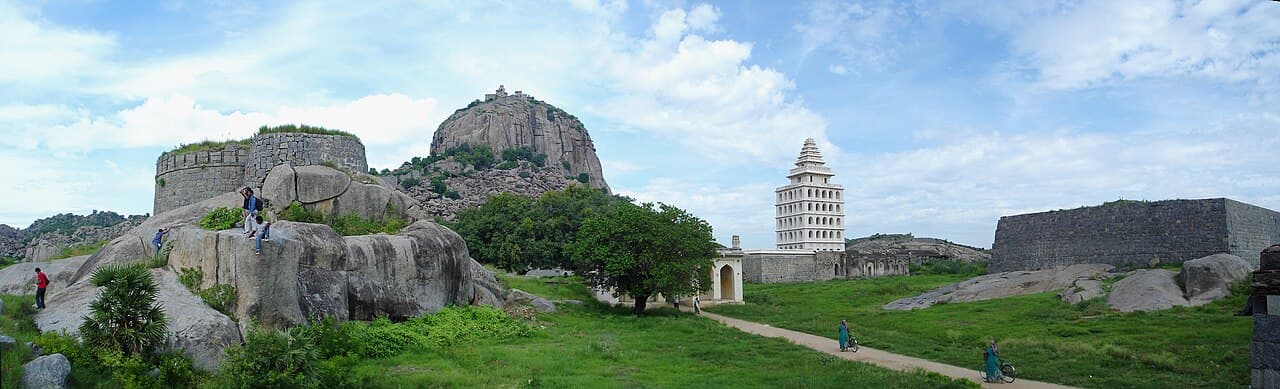
Gingee Fort, also known as Senji Fort and by several variant names such as Chenji, Chanchi, Jinji, or Senchi, is a remarkable example of a bastioned fortress located in the Villupuram district of Tamil Nadu, India. Situated approximately 160 kilometres from Chennai and near the Union Territory of Puducherry, it stands as one of the most significant surviving medieval fortifications in southern India. The fort's strategic location atop three distinct hillocks—Krishnagiri to the north, Rajagiri (Anandagiri) to the west, and Chakilidurg to the southeast—affords it commanding views of the surrounding plains and natural defenses that contributed to its reputation as the "Great Wall of South India" and earned it the moniker "Troy of the East" by British colonial observers.
The origins of Gingee Fort trace back to the 11th century, with early references in Tamil literature such as Ottakoothar's Moovarula around 1123 AD, which mentions the territory under a Kadava chieftain titled Senjiyar Kon. The initial fortifications are attributed to Ananda Kon, who established the fortress as a strategic military stronghold to repel invading forces. Over the centuries, the fort underwent significant expansions and enhancements, notably during the 15th and 16th centuries, when it was extensively fortified to withstand evolving siege technologies and military tactics.
Architectural layout and defensive features
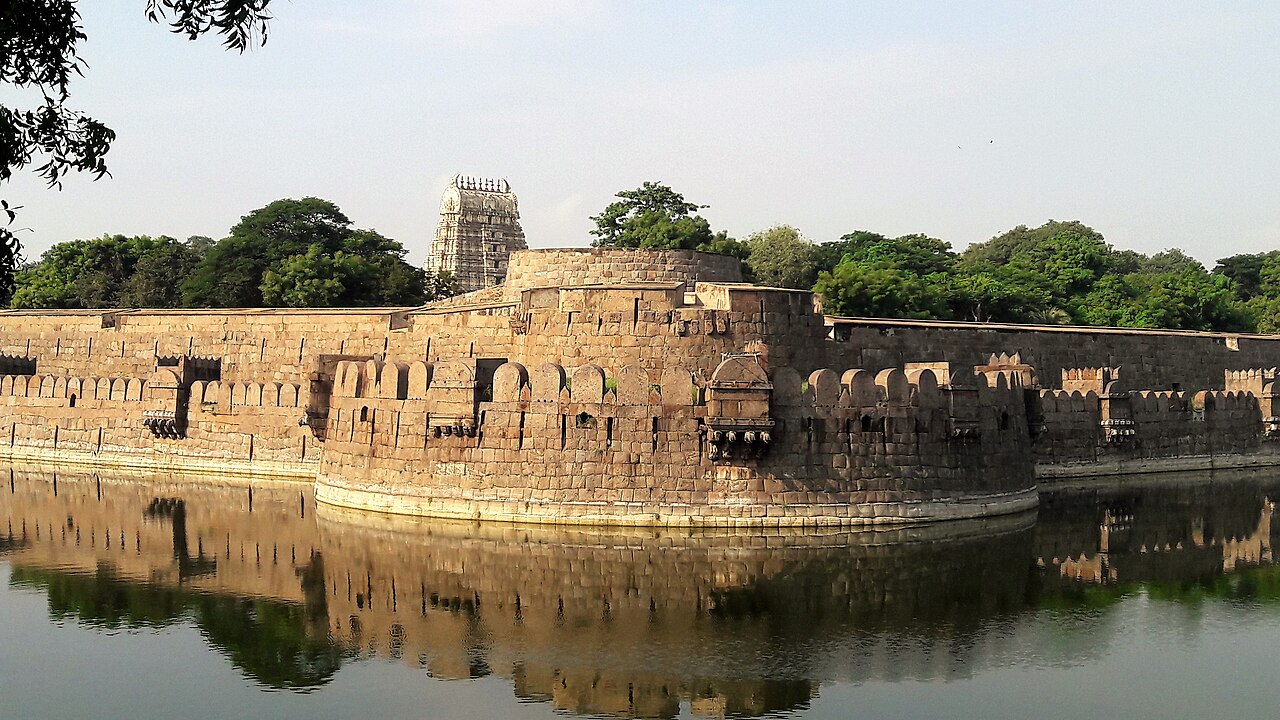
The fort complex is uniquely spread across three hillocks, each crowned with its own citadel, creating a formidable multi-layered defense system. The interconnected walls span approximately 13 kilometres, enclosing an area of around 11 square kilometres. The elevation of the hills reaches about 800 feet (240 meters), providing natural height advantage, while an 80-foot-wide moat further enhanced the fort's defenses against siege engines and infantry assaults.
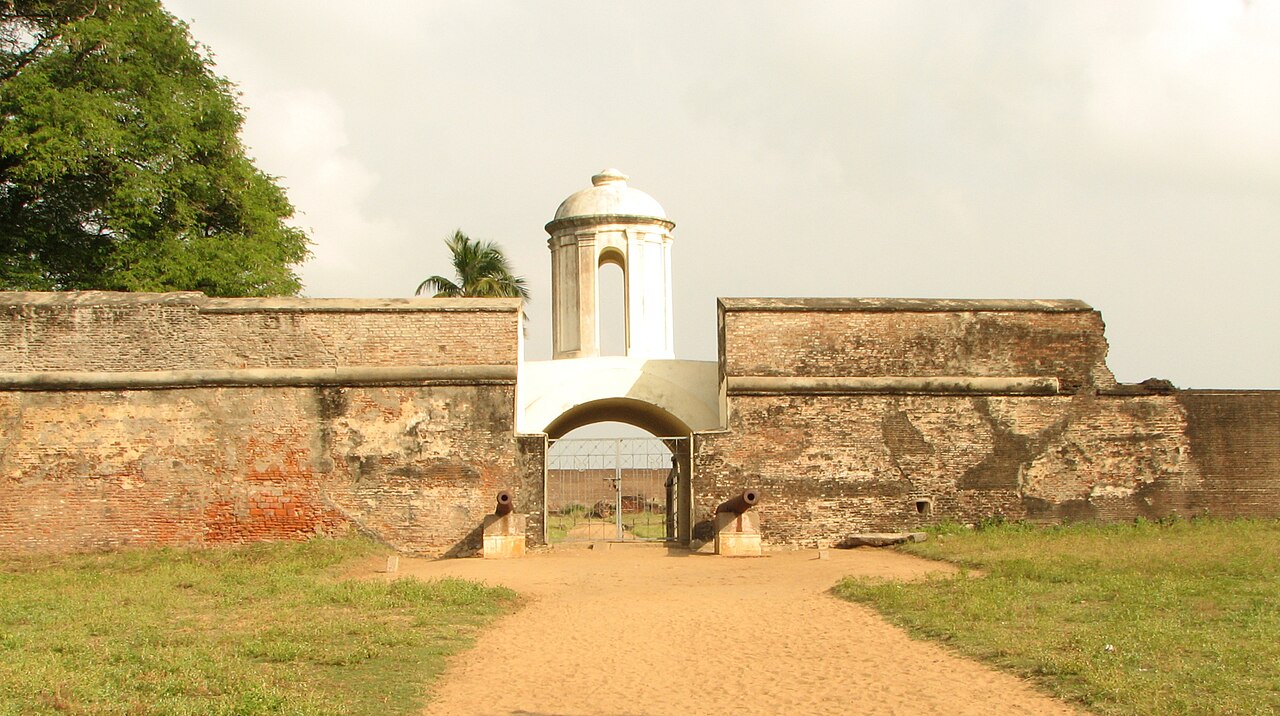
The fortifications include massive bastions, thick ramparts, and strategically placed gates that controlled access to the complex. Each hillock's citadel was self-sufficient, featuring granaries capable of storing large quantities of grain to endure prolonged sieges, prison cells for detaining captives, and sacred structures such as the temple dedicated to the presiding goddess Chenjiamman. The presence of a sacred pond called Aanaikulam within the fortifications highlights the integration of religious and practical water management systems.
Kalyana mahal and other notable structures
A prominent architectural highlight is the seven-storeyed Kalyana Mahal, or marriage hall, notable for its pyramidal shikhara that crowns the structure. This multi-tiered building served ceremonial purposes and stands as a testament to the architectural sophistication of the period. The fort also contains minor fortifications atop the hillocks, contributing to layered defense and surveillance capabilities.
Historical significance and successive rulers
Gingee Fort's history is marked by its control under various regional powers, reflecting the complex political landscape of southern India. It was captured by the Marathas in 1677 under the leadership of Subedar Harji Rajemahadik, serving the renowned ruler Shivaji. Prior to and following this period, the fort was held by the Bijapur Sultanate, the Mughal Empire, the Carnatic Nawabs, and the French colonial forces. The British East India Company eventually took control in 1761, marking the fort's integration into colonial administration.
The fort is also associated with Raja Tej Singh, a notable figure who led a revolt against the Nawab of Arcot but was ultimately defeated and killed in battle. This episode underscores the fort's continued military and political importance well into the early modern period.
Current condition and preservation
Today, Gingee Fort is maintained by the Archaeological Survey of India and is classified as a well-preserved bastioned fortress. Despite the passage of centuries and exposure to the elements, much of the fort's extensive walls, bastions, and key structures remain intact, allowing visitors to appreciate its scale and defensive ingenuity.
The fort is a prominent tourist destination within the Villupuram district, attracting history enthusiasts, architects, and travelers interested in the military heritage and cultural legacy of southern India. Its vast area and complex layout provide ample opportunity for exploration and study.
Cultural and architectural legacy
Gingee Fort exemplifies the fusion of military architecture with local cultural elements, blending practical defensive features with religious and ceremonial structures. The fort's design reflects the adaptation to the terrain, maximizing natural topography for defense while incorporating advanced bastion fortification techniques that were emerging in India during the late medieval period.
The fort's enduring presence serves as a physical record of the region's turbulent history, showcasing the shifts in power among regional dynasties, colonial powers, and indigenous rulers. Its nickname as the "Great Wall of South India" emphasizes its monumental scale and strategic importance in the defense of Tamil Nadu through centuries.
Frequently asked questions (FAQ)
- What is the best time to visit Gingee Fort?
- The best time to visit Gingee Fort is during the cooler months from October to March when the weather is pleasant for exploring the extensive fort complex.
- How do I reach Gingee Fort from Chennai?
- Gingee Fort is approximately 160 kilometres from Chennai. Visitors can reach the fort by road via buses or private vehicles, taking around 3 to 4 hours depending on traffic.
- Is Gingee Fort accessible for people with mobility issues?
- Due to its hilltop location and rugged terrain, Gingee Fort has limited accessibility for visitors with mobility challenges. Some areas involve steep climbs and uneven surfaces.
- What are the main attractions inside Gingee Fort?
- Key attractions include the seven-storeyed Kalyana Mahal, the temple dedicated to Chenjiamman, granaries, prison cells, and the extensive fort walls and bastions spanning three hillocks.
- Are there guided tours available at Gingee Fort?
- Guided tours are occasionally available through the Archaeological Survey of India or local tour operators, providing detailed historical and architectural insights about the fort.
Photo gallery

Photo by This Image was created by User:PlaneMad. If you are using the image under the creative commons share alike license please credit the photo CC-by-sa PlaneMad/Wikimedia and include a link to this page. No explicit permission is needed from me, but id appreciate an email if my work has been of help to you. If you dont want to release your work under a creative commons license, please mail me at [email protected] or catch me at my Website to negotiate a custom license as per your needs.•CC BY-SA 2.5
Information
Loading map...
Visitor reviews
No reviews yet. Been here? Write the first review and help other travelers!
Write the first reviewVisited this castle? Share your experience
Your review helps other travelers and adds first-hand knowledge to our encyclopedia.