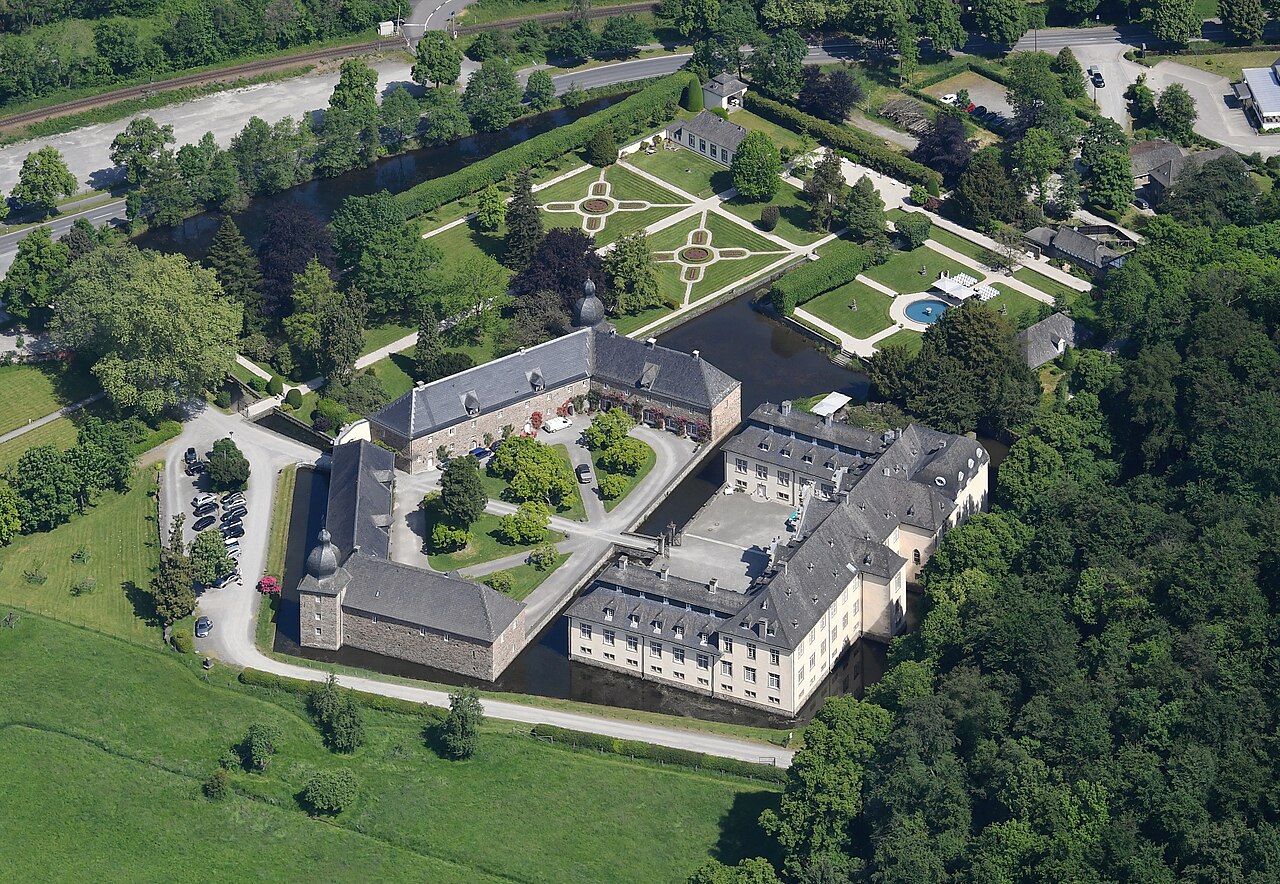
Gimborn Castle
Gimborn Castle is a notable example of a former moated castle located in the scenic upper Leppe valley near Marienheide, Germany. Constructed in the 13th century during the High Medieval period, the castle originally served as a strategic stronghold and noble residence. Its location in a remote valley provided natural defense advantages, complemented by its water defenses characteristic of water castles of the era.
Medieval origins and historical significance
The castle's earliest recorded mention dates to 1273 when it was pledged from the county of Berg to the county of Mark. This transfer highlights the castle's importance in regional power dynamics during the High Medieval period. Later, in 1631, Gimborn Castle became the residence of the House of Schwarzenberg within the county of Gimborn Neustadt, marking a significant chapter in its aristocratic history.
Architectural features and layout
Originally designed as a moated water castle, Gimborn Castle's defensive system relied heavily on its surrounding water-filled moat, which was typical for castles built to withstand siege warfare in the medieval era. The castle's layout likely included fortified walls, towers, and a gatehouse controlling access across the moat. While the exact architectural details have evolved, the castle's structure reflects the typical High Medieval fortification style, emphasizing both defense and residential comfort.
Construction materials and style
The castle was primarily constructed using locally sourced stone and timber, materials common in the High Medieval period. Its architectural style aligns with the functional and robust designs of the era, prioritizing fortification over ornamental elements. Over the centuries, modifications may have introduced elements from later architectural movements, but the core remains medieval in character.
Ownership and modern use
Since 1874, Gimborn Castle has been owned by the Barons von Fürstenberg zu Gimborn, a noble family with historical ties to the region. This ownership has helped preserve the castle's heritage and maintain its structural integrity. In 1969, the castle found a new role as a conference site and meeting place for the International Police Association, blending its historic ambiance with contemporary functions.
Cultural events and public access
Gimborn Castle opens its gates annually for a traditional festival or fair, allowing visitors to experience its historic atmosphere and regional culture firsthand. This event celebrates the castle's enduring legacy and fosters community engagement with its rich history.
Geographical and strategic importance
Situated in a remote valley of the upper Leppe, the castle's location was strategically chosen for defense and control over the surrounding territory. The natural landscape, combined with its moated defenses, made Gimborn Castle a formidable stronghold during the turbulent medieval period.
Preservation and current condition
Today, Gimborn Castle is well preserved, maintaining much of its historical character. Its continued use as a conference venue and cultural site has contributed to ongoing maintenance and restoration efforts, ensuring that this High Medieval water castle remains a significant architectural and historical landmark in the region.
Frequently asked questions (FAQ)
- What is the historical significance of Gimborn Castle?
- Gimborn Castle dates back to the 13th century and played a key role in regional power during the High Medieval period. It was pledged from the county of Berg to the county of Mark and later became the residence of the House of Schwarzenberg.
- Can I visit Gimborn Castle?
- The castle opens to the public once a year during a traditional festival or fair. Outside of this event, it serves as a conference site, so public access is limited.
- What architectural features characterize Gimborn Castle?
- Gimborn Castle is a former moated water castle featuring defensive walls, a moat, and typical High Medieval fortification elements designed for both defense and residence.
- Who currently owns Gimborn Castle?
- Since 1874, the castle has been owned by the Barons von Fürstenberg zu Gimborn, who have preserved its historical and architectural heritage.
- What is the current use of Gimborn Castle?
- Since 1969, it has served as a conference site and meeting place for the International Police Association, blending historic ambiance with modern functions.
Information
Sources & official resources
Verify the information above using these authoritative references.
Loading map...
Visitor reviews
No reviews yet. Been here? Write the first review and help other travelers!
Write the first reviewVisited this castle? Share your experience
Your review helps other travelers and adds first-hand knowledge to our encyclopedia.