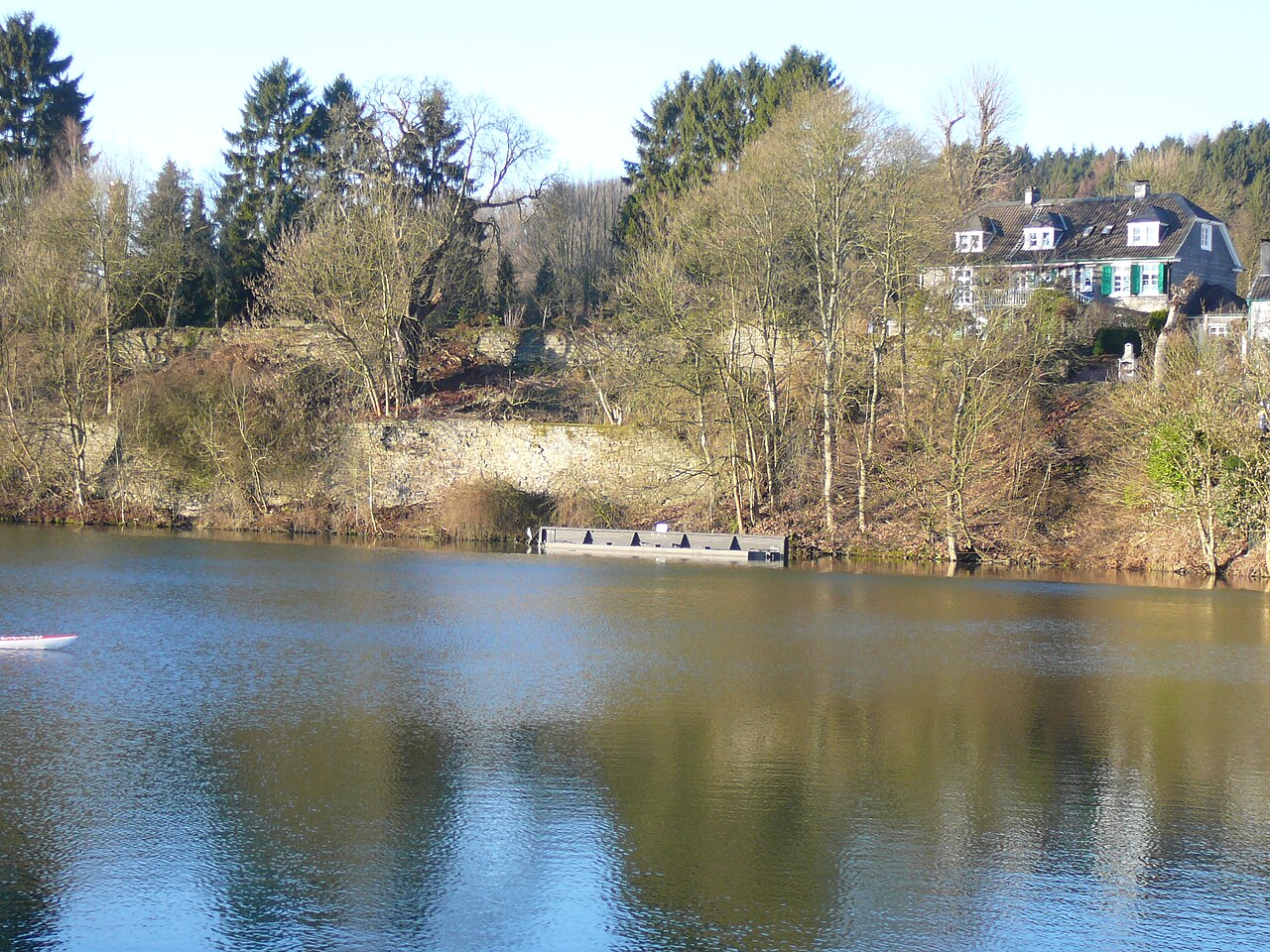
Hückeswagen Castle
Hückeswagen Castle, first documented in 1189, is a significant medieval fortress located in the town of Hückeswagen, Germany. This castle has a rich history tied to regional noble families and has undergone numerous transformations over the centuries. It stands today not only as a historical monument but also as a center for local administration and cultural heritage.
Early history and noble associations
The castle's earliest mention in 1189 places it firmly in the high medieval period. Originally, it was the seat of the counts of Hückeswagen, an influential noble family in the region. In 1260, the county of Hückeswagen was transferred to the counts of Berg, a prominent dynasty in the Rhineland. Following this transfer, the original counts of Hückeswagen relocated to Moravia, marking a significant shift in the castle's ownership and political importance.
Subsequently, the castle served as a widow's seat for the countess Margarete von Hochstaden, indicating its role as a residence for noble widows, a common practice in medieval aristocratic society. This use underscores the castle's continued importance as a noble residence even after the original ruling family had moved on.
Architectural evolution and structural features
One of the most remarkable architectural elements of Hückeswagen Castle is its donjon, also known locally as the "scoundrel's tower". This tower was likely constructed in the first third of the 13th century, making it one of the oldest surviving parts of the castle. The donjon originally stood at approximately 23 metres in height, as depicted in an early 18th-century illustration by Erich Philipp Ploennies.
During the early 19th century, the tower underwent significant modifications for restoration and preservation purposes. These works reduced the tower's height by two floors, altering its original imposing silhouette. Despite this reduction, the tower remains a dominant feature of the castle complex and a symbol of its medieval origins.
Over the centuries, the castle experienced numerous pledges and changes in ownership, which contributed to its gradual decline. By 1397, the site was officially referred to as a castle, reflecting its fortified nature and strategic importance. However, the castle's condition deteriorated significantly during the following centuries, with periods of neglect leading to a poor state of preservation.
Modern restoration and current use
In 1884, the castle entered partial ownership by the town of Hückeswagen. This marked the beginning of efforts to preserve and restore the structure. Since then, the castle has been maintained and adapted for modern uses while retaining its historical character.
Today, Hückeswagen Castle houses municipal offices and a museum dedicated to the local history of the town and surrounding region. This dual function allows the castle to remain an active part of the community, providing both administrative services and cultural education to residents and visitors alike.
Historical significance and cultural heritage
The castle's long history from the high medieval period through various political and social changes reflects the broader historical developments in the Rhineland region. Its association with noble families such as the counts of Hückeswagen and the counts of Berg highlights its role in regional power dynamics.
Architecturally, the surviving donjon provides valuable insight into medieval fortification techniques and residential architecture. The castle's adaptation over time, including its 19th-century restoration, demonstrates changing attitudes toward heritage preservation and the practical reuse of historic buildings.
Visitors to Hückeswagen Castle can explore its museum exhibits, which showcase artifacts and stories from the castle's past and the history of the town. The castle's presence enriches the cultural landscape of Hückeswagen, offering a tangible connection to its medieval roots.
Frequently asked questions (FAQ)
- What are the opening hours of Hückeswagen Castle?
- Hückeswagen Castle is open to visitors from Tuesday to Sunday, typically from 10 AM to 5 PM. It is advisable to check the specific dates and any potential changes in hours due to special events or holidays on the official website before planning your visit.
- Is it possible to take guided tours of Hückeswagen Castle?
- Yes, guided tours are available at Hückeswagen Castle, providing an in-depth look at its rich history and architecture. These tours are led by knowledgeable guides who share fascinating stories about the castle and its significance in the region.
- When was Hückeswagen Castle built?
- Hückeswagen Castle dates back to the 13th century, making it a significant historical site in the area. It has undergone various renovations over the centuries, reflecting different architectural styles and the historical evolution of the region.
- Can I find nearby attractions when visiting Hückeswagen Castle?
- Absolutely! Hückeswagen is surrounded by beautiful landscapes and other attractions, such as the scenic Wupper Valley and the nearby towns of Radevormwald and Wipperfürth. Visitors can enjoy outdoor activities, hiking trails, and local eateries, making it a perfect day trip destination.
- What is the historical significance of Hückeswagen Castle?
- Hückeswagen Castle played a crucial role in the defense and governance of the region during the Middle Ages, serving as a residence for local nobility. Its strategic location allowed it to oversee important trade routes, and it stands today as a testament to the medieval architecture and history of Germany.
- How do I purchase tickets for Hückeswagen Castle?
- Tickets for Hückeswagen Castle can be purchased at the entrance or online through the official website. It’s recommended to buy tickets in advance during peak tourist seasons to ensure availability, especially for guided tours.
- What is the best time to visit Hückeswagen Castle?
- The best time to visit Hückeswagen Castle is during the spring and early fall when the weather is pleasant, and the surrounding nature is particularly beautiful. Additionally, visiting during weekdays can help you avoid the larger crowds typically seen on weekends.
- Is Hückeswagen Castle accessible for visitors with mobility challenges?
- Hückeswagen Castle has made efforts to improve accessibility for visitors with mobility challenges. However, due to its historical nature and some uneven terrain, it's advisable to check specific accessibility options on the official website or contact the castle administration for detailed information.
Information
Loading map...
Visitor reviews
No reviews yet. Been here? Write the first review and help other travelers!
Write the first reviewVisited this castle? Share your experience
Your review helps other travelers and adds first-hand knowledge to our encyclopedia.