
Gigonza Castle
Gigonza Castle, located in San José del Valle in the province of Cádiz, southern Spain, is a notable example of a high medieval hill castle with deep historical roots tracing back to antiquity. This castle stands on a strategic elevation along the historic road connecting Medina Sidonia and Arcos de la Frontera, approximately 12 kilometres from Paterna de Rivera. Its location underscores its historical importance in controlling regional routes and territorial defense during the medieval period.
Historical background and significance
The site of Castillo de Gigonza has been occupied since ancient times, serving various roles through the ages before the current structure was established. The castle's origins are closely linked to the Andalusian period of southern Spain, reflecting the Islamic architectural and military influence prevalent in the region during the 13th and 14th centuries. This era was marked by the Reconquista, where Christian kingdoms sought to reclaim territories from Muslim rule, making castles like Gigonza critical defensive and administrative centers.
Declared a Bien de Interés Cultural monument in 1993, Gigonza Castle is recognized for its cultural and historical value. Despite its significance, the castle has faced challenges in preservation, including contested restoration efforts reported in 2009, which involved work on the castle's tower, chapel, and adjoining structures. These events highlight ongoing concerns about maintaining the integrity and authenticity of historical monuments.
Architectural features and layout
The castle's plan is almost square, a typical form for Andalusian fortifications, designed to maximize defensive capabilities while accommodating residential and administrative functions. The structure is divided into two main parts, which may correspond to different phases of construction or functional areas within the castle complex.
One of the castle's distinctive architectural elements is its narrow and low entrance door, featuring a lintel supported by two heavy imposts. This design emphasizes security, limiting access and providing a defensible entry point. The upper floor of the castle is vaulted, an architectural technique that enhances structural strength and fire resistance, and it contains windows that would have provided light and ventilation while allowing defenders to observe the surrounding area.
The courtyard is accessed through an arched door prominently displaying the coat of arms of the Casa de Arcos, indicating the castle's historical association with this noble family. Surrounding the castle grounds is a fence, which would have served as an additional protective barrier and possibly delineated the castle's territorial extent.
Defensive elements
While specific details about the castle's battlements and towers are limited, the presence of a fortified tower and chapel within the complex suggests a multifunctional design combining military defense with religious and residential uses. The castle's elevated position on a hill enhances its defensive posture, providing commanding views over the surrounding landscape and early warning against approaching threats.
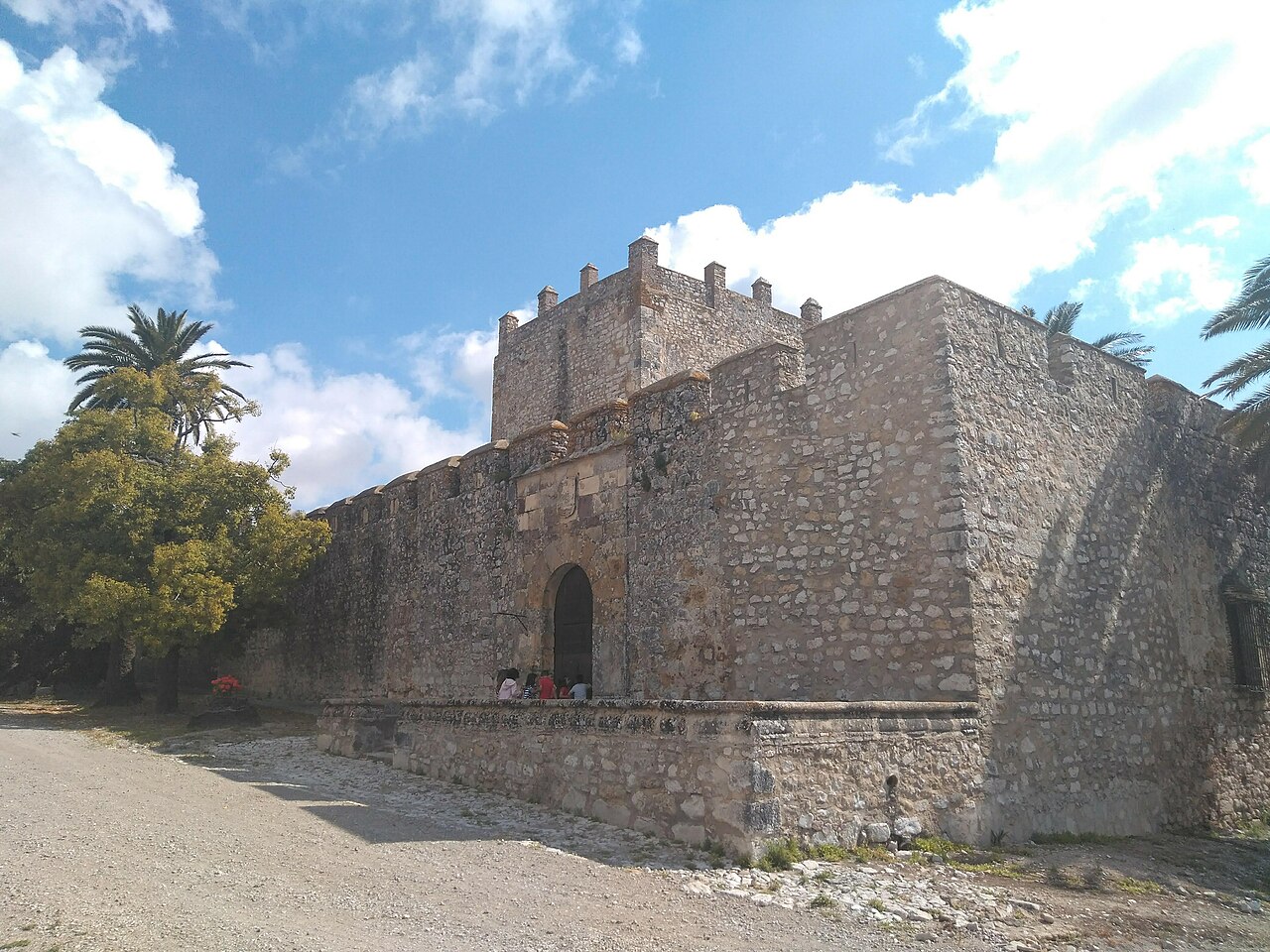
Photo by El Pantera • CC BY-SA 4.0
Historical context and ownership
The castle's association with the Casa de Arcos is significant, as this noble lineage played a prominent role in the region's history. The coat of arms displayed at the courtyard entrance symbolizes the family's influence and ownership during the post-medieval period. This connection provides insights into the castle's role not only as a military fortress but also as a noble residence and administrative center.
Throughout its history, Gigonza Castle has witnessed the complex interplay of cultural influences in Andalusia, including Islamic, Christian, and later Spanish noble traditions. Its architecture and historical record reflect these layers of occupation and adaptation.
Preservation and current status
Today, Gigonza Castle remains a well-preserved example of medieval Andalusian military architecture, although it has experienced periods of neglect and unauthorized restoration activities. The castle's designation as a Bien de Interés Cultural underscores the importance of protecting its structural integrity and historical authenticity.
Visitors to the castle can observe its characteristic vaulted upper floors, the imposing entrance with its heavy imposts, and the noble heraldry marking its courtyard. The surrounding landscape and strategic hilltop location continue to convey the castle's historical function as a fortress and territorial stronghold.
Challenges in conservation
The unauthorized restoration reported in 2009 highlights ongoing challenges in managing heritage sites, including the need for regulated conservation efforts that respect the castle's historical fabric. Such incidents stress the importance of official oversight and community engagement in preserving cultural landmarks.
Visiting information and cultural relevance
While specific visitor information such as opening hours and ticket prices may vary, Gigonza Castle's status as a cultural monument makes it an important destination for those interested in medieval Spanish history and architecture. Its proximity to other historic towns like Medina Sidonia and Arcos de la Frontera allows for combined cultural tours exploring Andalusia's rich heritage.
The castle's enduring presence in the landscape serves as a tangible link to the region's medieval past and the complex history of Andalusia, making it a valuable site for education and tourism.
Frequently asked questions (FAQ)
- What is the historical significance of Gigonza Castle?
- Gigonza Castle dates back to the 13th century and reflects Andalusian influence during the Reconquista, serving as a defensive and administrative stronghold.
- Can I visit Gigonza Castle year-round?
- Visiting hours may vary, but the castle is generally accessible to tourists interested in medieval history and architecture. It is advisable to check local tourism information before planning your visit.
- What architectural features distinguish Gigonza Castle?
- The castle features a nearly square plan, a narrow entrance with a lintel supported by heavy imposts, vaulted upper floors, and a courtyard with the Casa de Arcos coat of arms.
- Why was Gigonza Castle declared a Bien de Interés Cultural?
- It was declared a Bien de Interés Cultural in recognition of its cultural, historical, and architectural importance as a medieval Andalusian fortress.
- Is the castle located near other historic sites?
- Yes, Gigonza Castle is situated along the road connecting Medina Sidonia and Arcos de la Frontera, both rich in historic landmarks, making it part of a broader cultural route.
Photo gallery

Information
Loading map...
Visitor reviews
No reviews yet. Been here? Write the first review and help other travelers!
Write the first reviewVisited this castle? Share your experience
Your review helps other travelers and adds first-hand knowledge to our encyclopedia.