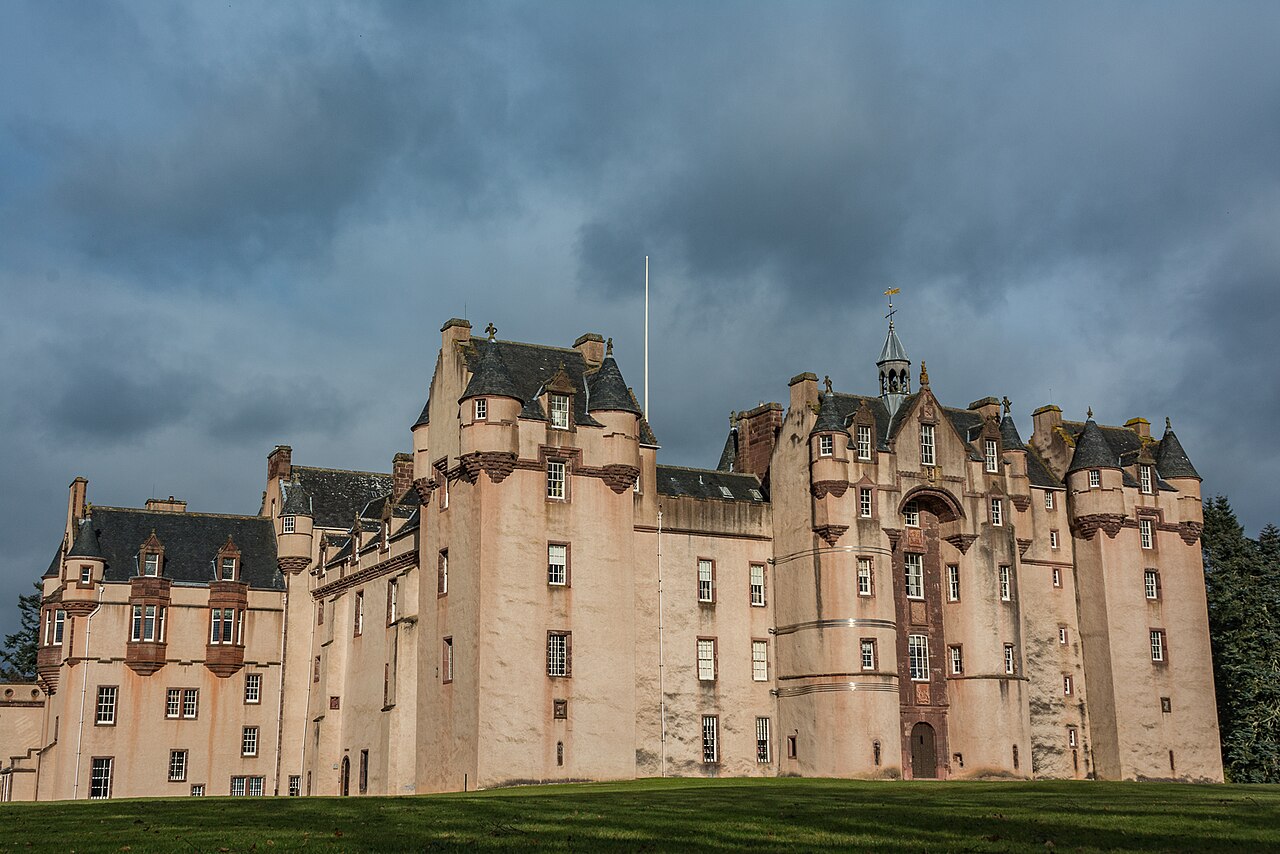
Gight Castle
Gight Castle stands as a significant example of a late medieval hill castle located near Ellon in Aberdeenshire, Scotland. This site reflects the turbulent history and architectural evolution of Scottish noble residences during the 16th century and beyond. Originally constructed as a fortified home for the influential Clan Gordon, the castle's remains today offer insights into the defensive and domestic arrangements typical of Scottish aristocratic dwellings of the period.
The origins and historical significance of Gight Castle
The castle's documented history begins in the late 15th century when the estate was acquired by the Gordons around 1480. It was built circa 1560 by George Gordon, the second Laird of Gight, who inherited the estate after his father died at the Battle of Flodden Field in 1513, a pivotal moment in Scottish history. This construction period places Gight Castle firmly within the late medieval era, a time marked by feudal conflicts and the need for fortified noble residences.
The Gordons were a powerful Scottish family, and the castle served not only as a home but as a symbol of their status and authority in the region. The estate remained in the family for several centuries, witnessing Scotland's complex social and political changes.
In the late 18th century, financial difficulties led to the sale of the castle by Catherine Gordon-Byron, the last Laird of Gight, in 1787. Her husband, the infamous "Mad" Jack Byron, had incurred significant debts, forcing the sale just before the birth of their son, George Gordon Byron, who would become the celebrated Romantic poet Lord Byron. This connection adds a notable literary dimension to the castle's history.
Subsequently, the castle was purchased by the 3rd Earl of Aberdeen and passed into the hands of his son, George Gordon, Lord Haddo, and Lady Charlotte Baird. Their son, George Hamilton-Gordon, later the 4th Earl of Aberdeen and British Prime Minister, descended from this lineage. However, after Lord Haddo's untimely death in a riding accident, the family abandoned the castle, which led to its gradual decay.
Architectural features and layout
Gight Castle was originally designed in an L-shaped plan, measuring approximately 20.74 by 16.16 meters. This layout was typical of Scottish fortified houses of the period, balancing defensive needs with residential comfort. The main entrance was located in the larger wing, positioned away from the inner corner where the two wings met, enhancing security.
Upon entering, visitors would have passed through a vaulted vestibule adorned with various coats of arms, signifying the heraldic pride of the Gordons. This space led into a corridor connecting multiple ground floor rooms, including two vaulted storage cellars essential for food preservation and supplies.
The castle featured a bakehouse within the main building and a kitchen in the adjoining wing, indicating a well-planned domestic infrastructure. Access to the upper floors was provided by a staircase located at the junction of the main block and the wing, facilitating efficient movement throughout the residence.
The first floor contained a great hall in the main wing, which served as the primary gathering and ceremonial space. Private chambers were situated in the secondary wing, separated by a small vaulted sleeping chamber, reflecting the social hierarchy and privacy considerations of the time. Unfortunately, the floors above the first have not survived, leaving only partial evidence of the castle's original vertical extent.
Later additions included a new wing on the northeast side, representing an expansion phase that suggests the castle's continued use and adaptation over time.
The decline and preservation of Gight Castle
After the abandonment by the Gordon family in the late 18th century, Gight Castle fell into disrepair. The lack of continuous occupation and maintenance led to the gradual ruination of the structure. Today, it remains a ruin, with significant portions of the original walls and vaulted chambers still visible, offering valuable archaeological and architectural insights.
The castle is recognized as a Scheduled Monument, underscoring its importance as a cultural heritage site within Scotland. Preservation efforts focus on stabilizing the ruins and facilitating public access while protecting the remains from further deterioration.
Gight Castle in the context of Scottish castle architecture
As a hill castle, Gight Castle exemplifies the strategic use of elevated terrain for defense and surveillance. Its L-shaped design and vaulted interiors are characteristic of 16th-century Scottish noble residences, which combined military functionality with domestic needs.
The castle's architectural features, such as the vaulted vestibule and storage cellars, reflect the practical demands of life in a fortified home, while the heraldic decorations demonstrate the Gordons' status and identity. The addition of wings over time illustrates the evolving requirements and tastes of its occupants.
Gight Castle's story is intertwined with Scotland's broader historical narrative, including clan dynamics, feudal warfare, and the cultural flowering of the Romantic era through its connection to Lord Byron.
Visiting Gight Castle today
Visitors to Gight Castle can explore the atmospheric ruins set in the scenic Aberdeenshire countryside. While the castle is roofless and partially collapsed, the remaining walls and vaulted chambers provide a tangible link to Scotland's medieval past. Interpretive signage and the site's status as a Scheduled Monument help contextualize the castle's historical and architectural significance.
The site is accessible year-round, though facilities are minimal, and visitors should prepare for uneven terrain. Nearby attractions include the town of Ellon and other historic sites in Aberdeenshire, making Gight Castle a worthwhile destination for those interested in Scottish history and architecture.
Frequently asked questions (FAQ)
- How do I get to Gight Castle?
- Gight Castle is located near the town of Ellon in Aberdeenshire, Scotland. It can be reached by car via local roads from Ellon, with parking available nearby. Public transport options are limited, so driving is recommended.
- What is the historical significance of Gight Castle?
- Gight Castle was built in the late medieval period by the Gordons and is linked to notable historical figures including Lord Byron. It reflects the architecture and social history of Scottish noble families.
- Can I explore the interior of Gight Castle?
- As a ruin, Gight Castle has no roof and some unstable sections. Visitors can walk around the remains and see the vaulted chambers, but access inside may be limited for safety reasons.
- When is the best time to visit Gight Castle?
- The castle is accessible year-round, but spring to early autumn offers the best weather for exploring the site and surrounding countryside.
- Is there an entrance fee to visit Gight Castle?
- There is no entrance fee to visit Gight Castle as it is an open ruin on public land.
Information
Loading map...
Visitor reviews
No reviews yet. Been here? Write the first review and help other travelers!
Write the first reviewVisited this castle? Share your experience
Your review helps other travelers and adds first-hand knowledge to our encyclopedia.