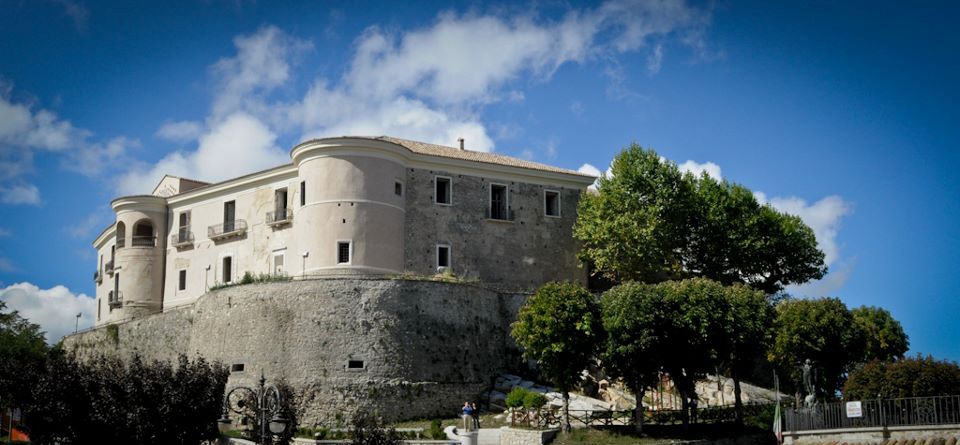
Ariano Irpino Castle
Ariano Irpino Castle stands prominently atop Colle Castello, overlooking the town of Ariano Irpino in southern Italy. This hill castle is a remarkable example of early medieval military architecture with significant Norman modifications. Originally of Lombard origin, the castle was extensively restored and expanded by the Normans in the 12th century, establishing it as a formidable fortress dominating the surrounding valleys of Ufita, Miscano, and Cervaro. Its strategic location offered control over key routes in the Campanian Apennines, making it a vital stronghold in the region.
Historical background and significance
The earliest foundations of the castle likely date back to the 7th or 8th century, constructed by the Lombards as a military fortification to resist Byzantine advances. Documentary evidence confirms its presence by 892 AD, when it served as a defensive bastion rather than a city fortification, which was instead protected by walls with nine gates and overseen by a city watchman. The castle's primary function was to provide a refuge and stronghold capable of withstanding prolonged sieges, safeguarding the region's interior.
The Norman conquest of southern Italy brought substantial changes to the castle. In the 12th century, the Normans undertook significant restoration and enlargement efforts, transforming it into a more complex and robust fortress. Notably, King Roger II convened the Assizes of Ariano there in 1140, a landmark legal assembly that shaped the governance of the Norman Kingdom of Sicily.
Throughout the 13th and 14th centuries, the castle's history was marked by conflict and reconstruction. In 1255, Saracen forces from Lucera captured Ariano through betrayal, inflicting serious damage on the fortress. Subsequently, King Charles I of Anjou ordered its rebuilding in 1266. The castle later hosted King Louis I of Anjou in the 14th century, who stayed there for several months, underscoring its continued strategic and residential importance.
The 15th century saw further expansion under King Ferdinand I of Aragon, who introduced architectural elements characteristic of the Aragonese style while maintaining the castle's medieval character. The last known modifications occurred in 1537 under the supervision of Duke Ferrante I Gonzaga. The castle remained militarily active during the Italian Wars of the 16th century but was eventually abandoned as a fortress.
Natural disasters, particularly a series of earthquakes in the late 17th and early 18th centuries, caused the collapse of the central keep and significant damage to the structure. By the late 19th century, the castle grounds were repurposed as a public park known as the Villa Comunale. Restoration efforts in the early 21st century aimed to preserve the ruins and highlight the site's historical value. Between 2009 and 2023, the castle housed the Museum of Norman Civilization, featuring an extensive collection of authentic weapons and a detailed model of the Battle of Hastings (1066).
Architectural features and layout
The castle's design is an almost trapezoidal enclosure fortified by four truncated cone towers at each corner, with diameters ranging from 13 to 16 meters. These towers contain multiple interior rooms that decrease in size from base to top, connected by corridors along the perimeter walls. Originally, the walls were supported by buttresses, now largely buried, and vary in length: approximately 40 meters on the north side, 56 meters on the south, and 72 to 81 meters on the longer east and west sides.
The main entrance faced east and featured an external drawbridge, emphasizing the castle's defensive capabilities and ceremonial grandeur. At the heart of the upper castle stood the Torre Grande, a substantial rectangular keep built during the Norman period. Historical records from 1585 describe the keep as accessible only by a bridge, comprising two main rooms with two smaller adjacent chambers, alongside a courtyard and a cistern for water storage, essential for enduring sieges. Today, only the ruins of this keep remain.
Underlying the castle is an intriguing network of underground passages extending beyond the walls, known locally as Madonna di Loreto, Guardia, and Pasteni. These tunnels contributed to the fortress's impenetrability by enabling secret movement and supply during attacks.
Material culture and archaeological findings
Excavations in the late 20th and early 21st centuries uncovered a wealth of artifacts, including ceramic fragments such as local majolica ware—decorated amphorae, jugs, and bowls—dating from the early 14th century. These finds highlight Ariano Irpino's role as a center of ceramic production during the medieval period. Additionally, rare tools associated with sugar refining were discovered, along with related artifacts from the 13th to 15th centuries, indicating the significance of sugar consumption and production within the Angevin territories inland.
Numerous medieval coins minted between the late 13th and early 16th centuries were also found, further attesting to the castle's long-standing economic and strategic importance. These archaeological discoveries enrich understanding of the castle's multifaceted role beyond military defense, encompassing economic and cultural dimensions.
Strategic and cultural importance
Ariano Irpino Castle was not only a military stronghold but also a symbol of Norman and later rulers' authority in the region. Its commanding position allowed surveillance over a vast horizon, including the territories of Benevento, Montefusco, the Camporeale plain, and the Apulian gorges. The castle's architecture reflects the evolution of military technology and styles from the early medieval period through the Norman, Angevin, and Aragonese eras.
The castle's role in hosting significant historical events, such as the Assizes of Ariano, and its connection to prominent figures like Roger II and the Angevin kings, underscore its importance in the political and legal history of southern Italy. Its enduring presence in the landscape serves as a testament to the cultural and architectural legacy of the Nordic peoples in the Irpinia region.
Current condition and visitor experience
Today, the castle remains a partially preserved ruin, with the four large bastions and foundational walls offering a tangible sense of its former grandeur. The site is integrated into the Municipal Villa park, providing visitors with panoramic views and a connection to the region's rich history.
The former Museum of Norman Civilization housed within the castle displayed around 200 authentic weapons from various periods and a detailed model of the Battle of Hastings, enhancing the educational value of the site. Although the museum collection has been relocated, the castle continues to attract history enthusiasts and tourists interested in medieval architecture and Norman heritage.
Visitors can explore the castle's exterior walls, towers, and ruins, appreciating the complex defensive systems and the strategic ingenuity of its builders. The network of underground passages, while not fully accessible, adds an element of mystery and depth to the site’s historical narrative.
Overall, Ariano Irpino Castle stands as a significant cultural landmark in the province of Avellino, embodying centuries of architectural evolution, military history, and the enduring legacy of Norman influence in southern Italy.
Frequently asked questions (FAQ)
- What is the historical significance of Ariano Irpino Castle?
- Ariano Irpino Castle, dating back to the 10th century, played a crucial role in the defense of the region during various conflicts throughout Italian history. It served as a strategic fortification during the struggles between different feudal lords and later under the control of the Kingdom of Naples.
- When is the best time to visit Ariano Irpino Castle?
- The best time to visit Ariano Irpino Castle is during the spring and fall when the weather is mild and pleasant for exploring the grounds. Additionally, these seasons often feature fewer tourists, allowing for a more intimate experience of the castle's history and architecture.
- Can I access the castle with a wheelchair?
- Ariano Irpino Castle has some accessibility features, but due to its historical nature, certain areas may be challenging to navigate with a wheelchair. It is advisable to contact the castle administration before your visit to inquire about specific accommodations.
- What are the opening hours for Ariano Irpino Castle?
- The opening hours for Ariano Irpino Castle vary by season, typically operating from 9 AM to 7 PM during the warmer months and 9 AM to 5 PM in the winter. Be sure to check the official website or local tourism office for any updates on hours and potential closures.
- Is it possible to take guided tours of the castle?
- Yes, guided tours of Ariano Irpino Castle are available and provide a deeper insight into its rich history, architecture, and significance. Tours are often led by knowledgeable guides who can share fascinating stories and details about the castle's past.
- What are the ticket prices for visiting the castle?
- Ticket prices for Ariano Irpino Castle are generally affordable, with discounts available for students and seniors. It's best to check the official website for the most current pricing and any special offers that may be available during your visit.
- What nearby attractions should I visit after exploring the castle?
- After visiting Ariano Irpino Castle, you can explore the charming town of Ariano Irpino itself, which offers local restaurants and shops. Additionally, nearby attractions include the Church of Santa Maria di Costantinopoli and the scenic landscapes of the Irpinia region, known for its beautiful hills and vineyards.
Information
Loading map...
Visitor reviews
No reviews yet. Been here? Write the first review and help other travelers!
Write the first reviewVisited this castle? Share your experience
Your review helps other travelers and adds first-hand knowledge to our encyclopedia.