Gate of Dawn
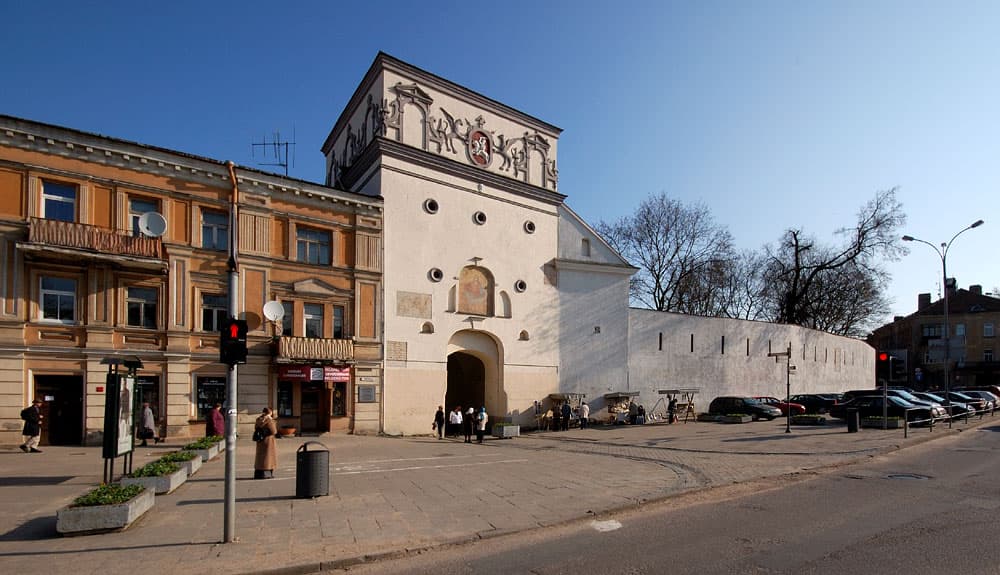
The Gate of Dawn (Lithuanian: Aušros vartai) is a prominent city gate located in Vilnius, the capital of Lithuania. It stands as one of the most significant religious, historical, and cultural monuments in the country. Originally constructed in the early 16th century as part of the city's defensive fortifications, the gate was later rebuilt and enhanced during the Renaissance period, particularly in the 17th century, reflecting the architectural styles and military needs of that era.
Historical background and significance
The Gate of Dawn was one of the original city gates of Vilnius, designed to protect the city from invaders. It was part of the city's fortification system, which included bastions and walls that surrounded Vilnius. The gate's defensive role was complemented by its religious importance, as it houses the revered icon of the Blessed Virgin Mary, Mother of Mercy, also known as the Vilnius Madonna. This icon has made the gate a major site of Catholic pilgrimage, attracting visitors from Lithuania and beyond.
Architectural features and style
The Gate of Dawn is classified as a bastioned fortress, a type of fortification that incorporates angled bastions to provide defensive coverage. Its architecture exhibits key elements of the Renaissance style, characterized by symmetry, proportion, and the use of classical details. The gate's structure includes robust stone walls and arched passageways, designed to withstand sieges and attacks.
One of the most distinctive features of the gate is the chapel built within its upper level, which houses the icon of the Blessed Virgin Mary. This chapel was added to the gate in the early 17th century, enhancing the gate's spiritual significance and making it a place of worship as well as defense.
The bastions and defensive elements
The bastions flanking the gate were part of a larger system of fortifications that included moats and ramparts. These bastions allowed defenders to cover the approaches to the gate with crossfire, a common military strategy in Renaissance fortifications. The gate's design reflects the evolution of military architecture in response to the introduction of gunpowder weapons.
The icon of the Blessed Virgin Mary and religious importance
The Gate of Dawn is renowned for the icon of the Blessed Virgin Mary, Mother of Mercy, which is enshrined in the chapel above the gate's passage. This icon is considered miraculous and has been venerated since the early 17th century. It is a focal point for Catholic pilgrims, especially during religious festivals and processions.
The icon's presence within a city gate is unique and symbolizes the protection of Vilnius by the Virgin Mary. The gate thus serves both as a defensive structure and a spiritual guardian of the city.
Preservation and current status
Today, the Gate of Dawn is well preserved and remains a vital part of Vilnius's cultural heritage. It is accessible to visitors and continues to function as a religious site. The gate is maintained by both the city authorities and religious organizations, ensuring its conservation for future generations.
Visitors can explore the gate's architectural features, visit the chapel to see the icon, and learn about its historical role in the city's defense and spiritual life. The gate is a symbol of Vilnius and an important landmark that connects the city's past with its present.
Frequently asked questions (FAQ)
- What is the historical significance of the Gate of Dawn?
- The Gate of Dawn, or Aušros Vartai, is one of the most important religious, historical, and cultural monuments in Vilnius. It dates back to the early 16th century and is famed for its iconic chapel housing a revered painting of the Virgin Mary, which is believed to have miraculous powers.
- When was the Gate of Dawn built?
- The Gate of Dawn was built in the early 1500s as part of the defensive fortifications of Vilnius. It has undergone various renovations over the centuries but retains its historical charm and significance.
- What are the opening hours for the Gate of Dawn?
- The Gate of Dawn is open to visitors year-round, typically from 6:00 AM to 8:00 PM. However, hours may vary on public holidays, so it’s advisable to check before your visit.
- Can I take photos inside the Gate of Dawn?
- Yes, photography is allowed inside the Gate of Dawn, particularly in the chapel area. However, visitors are asked to be respectful of worshippers and the sanctity of the space while taking photos.
- Is it possible to access the Gate of Dawn with a wheelchair?
- Yes, the Gate of Dawn is generally accessible for visitors with mobility challenges. There are ramps available to help navigate the area, but it’s recommended to check specific accessibility features upon arrival.
- What is the best time to visit the Gate of Dawn?
- The best time to visit the Gate of Dawn is during the early morning or late afternoon when the light creates beautiful views and fewer crowds are present. Additionally, visiting during weekdays can provide a more tranquil experience.
- What are some nearby attractions to the Gate of Dawn?
- Nearby attractions include the Vilnius Cathedral, the Palace of the Grand Dukes, and the bustling streets of the Old Town. These sites can easily be explored on foot, making for a delightful day of sightseeing.
- Are there any ticket prices for visiting the Gate of Dawn?
- Entry to the Gate of Dawn is free, allowing visitors to appreciate this historical site without any cost. However, donations are appreciated to help maintain the site and support its preservation.
Photo gallery

Photo by Kontis Šatūnas•Public domain
Information
Loading map...
Visitor reviews
No reviews yet. Been here? Write the first review and help other travelers!
Write the first reviewVisited this castle? Share your experience
Your review helps other travelers and adds first-hand knowledge to our encyclopedia.