Gåseborg Hill Fort
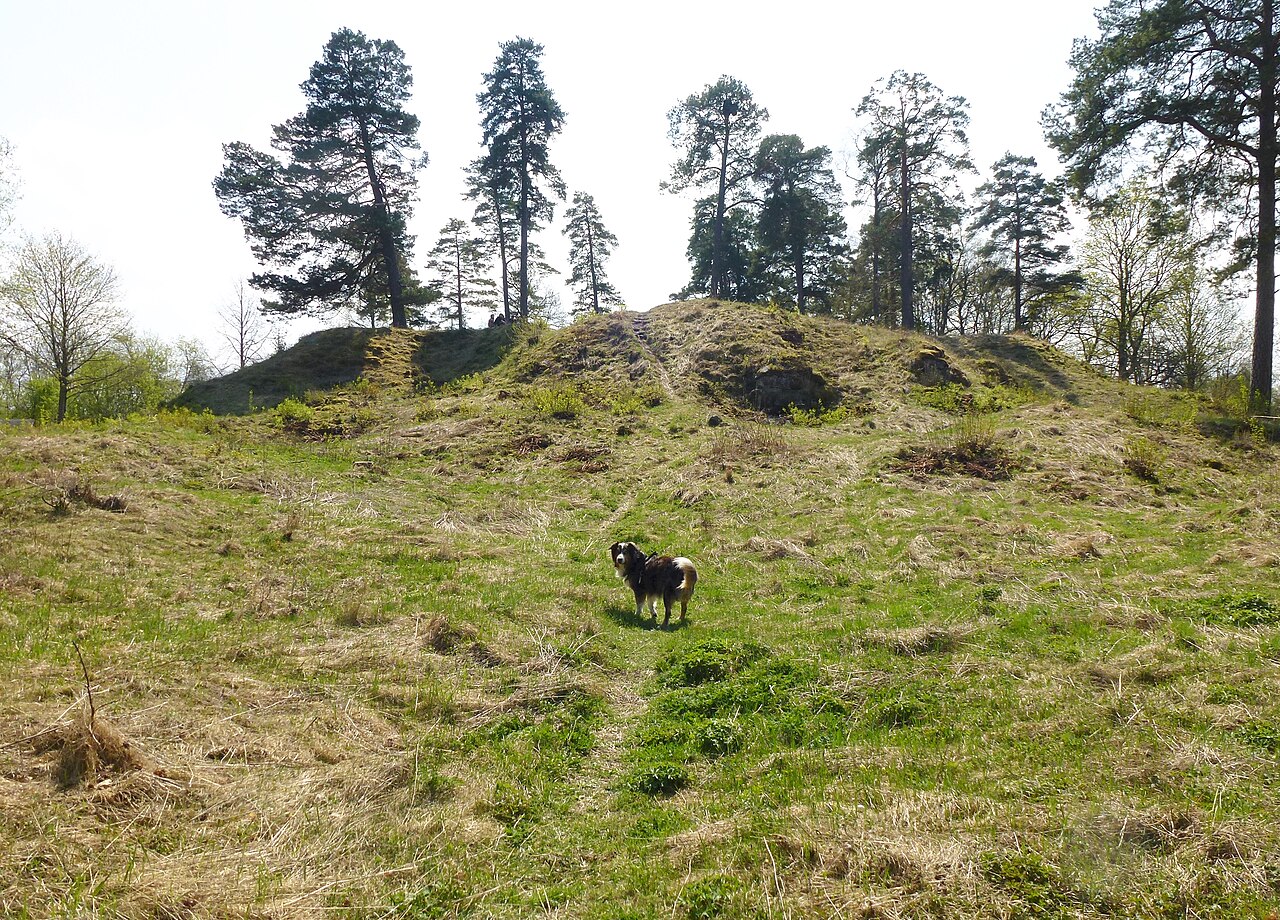
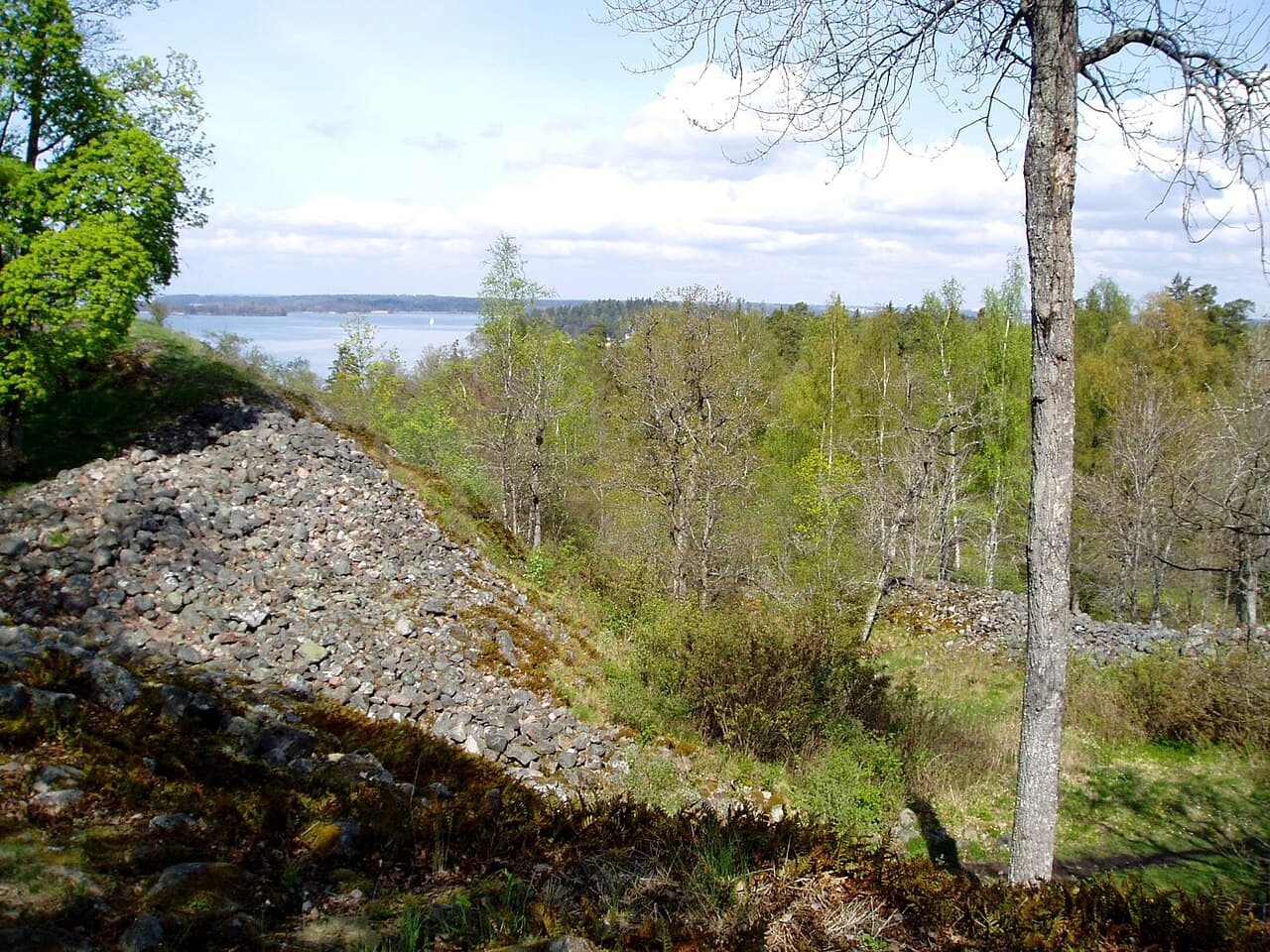
Gåseborg hill fort is a significant archaeological site located in Viksjö, Sweden, dating back to the Iron Age, approximately 1500 years ago. This ancient hill fort was constructed primarily of stone without the use of masonry, a technique typical of early fortifications in the region. Its strategic position atop a hill overlooking the waterways of Lake Mälaren highlights its role in controlling and supervising vital trade and travel routes during the late Iron Age.
Historical context and strategic importance
Gåseborg's location was carefully chosen to dominate several major waterways that connected important centers such as Uppsala, Sigtuna, and Birka, as well as the western districts of Lake Mälaren. These waterways were crucial for trade, communication, and military movements in the region. The fort likely served as a stronghold for local rulers or chieftains who sought to monitor and regulate traffic along these routes, asserting control over the surrounding territory.
Role in the late Iron Age
While exact dates remain uncertain, archaeological evidence suggests that Gåseborg was active from around 500 AD through to the later part of the Iron Age, roughly up to 1100 AD. This period was marked by significant social and political changes in Scandinavia, including the rise of centralized power structures and increased trade connections across the Baltic Sea. Gåseborg's construction and use reflect these dynamics, functioning as a defensive and administrative center.
Architectural features and construction techniques
The fortifications at Gåseborg comprise a stone wall built without mortar, a dry stone construction method common in prehistoric fortifications. The walls follow the natural contours of the hill, creating a defensive barrier that would have been difficult for attackers to breach. The absence of masonry indicates a construction style relying on the careful placement and interlocking of stones, which has contributed to the site's enduring remains.
Layout and structural elements
Excavations have revealed that the fort included not only defensive walls but also internal spaces that may have served as temporary residences or refuges during times of conflict. The discovery of golden artifacts at the site suggests that it was also a place of some wealth and status, possibly serving ceremonial or symbolic functions in addition to its military role.
Archaeological investigations and findings
Systematic archaeological excavations at Gåseborg have provided valuable insights into its construction, use, and cultural significance. The recovery of precious items such as gold artifacts points to the presence of an elite class or ruling family associated with the site. These finds help to illuminate the social hierarchy and economic conditions of the late Iron Age in this part of Sweden.
Evidence of temporary residence
The fort's internal areas show signs of habitation, although likely not permanent settlement. The site may have been used seasonally or during periods of heightened tension or warfare, serving as a refuge or administrative center for local leaders. This dual function as both a defensive structure and a temporary residence underscores its importance in the regional power network.
Gåseborg's place in regional history and heritage
Today, Gåseborg stands as a well-preserved archaeological ruin that offers a window into the early medieval period of Sweden's history. Its strategic location and construction reflect the complex social and political landscape of the late Iron Age. The site contributes to our understanding of Scandinavian fortifications and their role in controlling trade and communication routes.
Preservation and public access
As an archaeological site, Gåseborg is protected and managed to preserve its structural remains and the artifacts discovered there. Visitors to the site can explore the remnants of the stone walls and appreciate the commanding views over Lake Mälaren that once made the fort a critical point of control. Interpretive materials and signage help contextualize the site's historical significance.
Frequently asked questions (FAQ)
- When was Gåseborg hill fort built?
- Gåseborg hill fort was constructed around 500 AD, during the late Iron Age period in Sweden.
- What was the main purpose of Gåseborg hill fort?
- The fort was primarily built to control and supervise key waterways in the Lake Mälaren region, overseeing trade and travel routes to important centers like Uppsala and Birka.
- What materials were used to build Gåseborg hill fort?
- Gåseborg was built using dry stone construction without masonry, relying on carefully placed stones to form defensive walls.
- Can visitors access Gåseborg today?
- Yes, Gåseborg is accessible to the public as an archaeological ruin, with preserved stone walls and informative signage available on site.
- Are there any notable artifacts found at Gåseborg?
- Archaeological excavations have uncovered golden artifacts at Gåseborg, indicating the presence of elite inhabitants or ceremonial use.
Photo gallery

Information
Current owner
Municipality
Loading map...
Visitor reviews
No reviews yet. Been here? Write the first review and help other travelers!
Write the first reviewVisited this castle? Share your experience
Your review helps other travelers and adds first-hand knowledge to our encyclopedia.