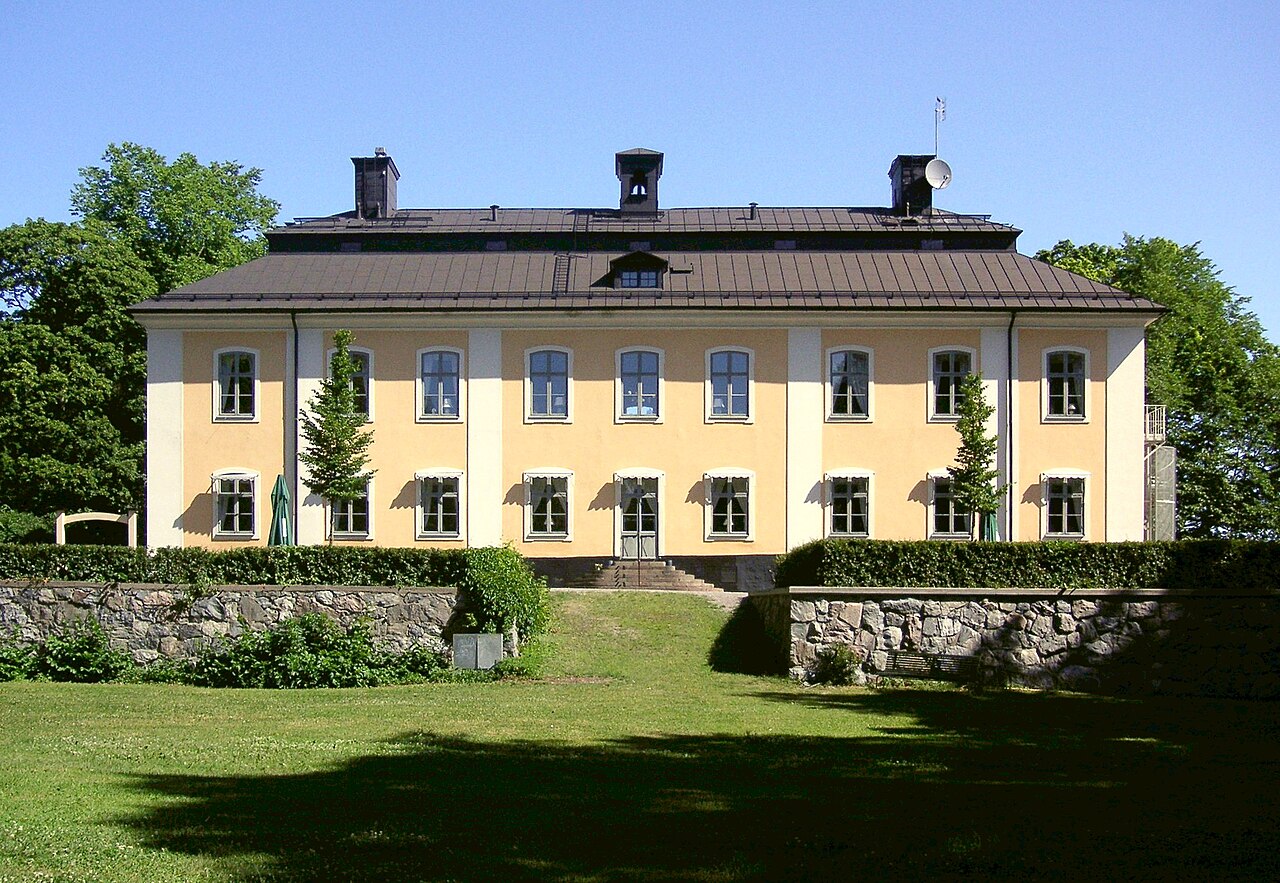
Hässelby Castle

Hässelby Castle: a renaissance manor in Stockholm
Stockholm, Sweden
Renaissance (15th–17th c.)

Hässelby Castle (Hässelby slott) is a significant example of Renaissance architecture in Sweden, located in Stockholm. Its origins date back to the 1640s, when it was first constructed by the prominent nobleman Karl Bonde, a member of the Swedish riksråd (council of the realm). The castle was initially designed by the French-Swedish architect Simon de la Vallée, known for introducing continental European architectural styles to Sweden. After Karl Bonde's death in 1652, construction continued under the supervision of Simon's son, Jean de la Vallée, a master architect who completed the castle around the 1660s. This father-son duo contributed significantly to the castle's distinctive Renaissance style, blending classical elements with Swedish manor traditions.

Historical background and ownership

The castle remained in the possession of the Bonde noble family for nearly three centuries, from its construction until 1931. The Bondes were an influential aristocratic family in Sweden, and Hässelby served as their country residence and estate center. In 1931, ownership transferred to Stockholms stad (Stockholm City), which managed the property until 2010. Since then, the castle has been owned by SIVAB, a company specializing in property management. Throughout its history, Hässelby Castle has been preserved as a cultural landmark, reflecting the aristocratic lifestyle and architectural trends of the Swedish Renaissance period.

Architectural features and style

Hässelby Castle is a Renaissance manor characterized by its symmetrical layout, classical proportions, and elegant detailing. The building exhibits hallmark Renaissance features such as pilasters, cornices, and decorative stonework around windows and doors. The castle's façade is balanced and orderly, emphasizing harmony and refinement, which were central to Renaissance aesthetics.

The castle complex includes several key architectural elements: a main residential building, ancillary wings, and formal gardens that complement the structure's grandeur. The interiors retain period features, including spacious halls and chambers designed for noble living and social functions. The involvement of the de la Vallée architects ensured that Hässelby Castle reflected contemporary European trends while adapting to local Swedish conditions and materials.

Use and preservation in modern times

Today, Hässelby Castle functions as an event venue, hosting weddings, parties, and conferences. Its well-preserved Renaissance architecture and scenic location near Stockholm make it a popular destination for cultural and private events. The castle's management under SIVAB has focused on maintaining the building's historic character while adapting it for modern use.

While the castle is not a museum open for daily public tours, its availability for special events allows visitors to experience its architectural splendor and historical ambiance firsthand. The surrounding parkland and gardens also contribute to the estate's charm and heritage value.

Location and regional context

Situated in Stockholms län, Hässelby Castle occupies a strategic position within the Stockholm region, historically serving as a noble estate outside the city center. The castle's location reflects the pattern of aristocratic manors established in the Swedish countryside during the Renaissance, combining accessibility to the capital with rural tranquility.

Frequently asked questions (FAQ)

What is the historical significance of Hässelby Castle?
Hässelby Castle, built in the late 17th century, is a significant example of Swedish Baroque architecture. It has served various purposes over the centuries, including as a noble residence and a cultural venue, reflecting the rich history of Stockholm and its aristocracy.
When was Hässelby Castle built?
Hässelby Castle was constructed between 1660 and 1670. It was commissioned by the noble family of von Duwall, and its design showcases the artistic styles of the time, making it an important architectural landmark.
What are the opening hours of Hässelby Castle?
Hässelby Castle is typically open to visitors from May to September, with specific hours varying by day. It is advisable to check the official website for the most current information regarding opening times and any special events.
Is it possible to visit Hässelby Castle year-round?
While Hässelby Castle has limited public access outside of the summer months, visitors can still enjoy the surrounding park and gardens throughout the year. Guided tours may be available during special events or upon request during the off-season.
Can I purchase tickets in advance for Hässelby Castle?
Yes, tickets for Hässelby Castle can often be purchased in advance through their official website. Booking ahead is recommended, especially during peak tourist season, to ensure availability for guided tours and special events.
What is the best time to visit Hässelby Castle?
The best time to visit Hässelby Castle is during the summer months, from May to September, when the weather is pleasant and the gardens are in full bloom. This period also offers the most extensive public access and various cultural events.
How do I get to Hässelby Castle using public transportation?
Hässelby Castle is accessible via Stockholm's public transportation system. Visitors can take the metro to Hässelby Strand and then a short bus ride or a pleasant walk through the park to reach the castle.
Are there any nearby attractions to visit while at Hässelby Castle?
Yes, nearby attractions include the scenic Hässelby Park and the beautiful waterfront areas along Lake Mälaren. Additionally, the surrounding residential areas offer charming cafes and local shops, making it a great spot for a full day of exploration.
Is Hässelby Castle accessible for visitors with disabilities?
Hässelby Castle strives to be accessible to all visitors, with ramps and facilities in place for those with mobility challenges. It is recommended to contact the castle in advance to inquire about specific accessibility options and assistance during your visit.

Information

Sources & official resources

Verify the information above using these authoritative references.

Loading map...

Visitor reviews

No reviews yet. Been here? Write the first review and help other travelers!

Write the first review

Visited this castle? Share your experience

Your review helps other travelers and adds first-hand knowledge to our encyclopedia.
Write a review

(5/5)

0/2000 characters

Your review will be visible after admin approval

Nearby castles

4.8 km
Åkeshov Castle — Sweden castle

Åkeshov Castle

Stockholm, Sweden

Åkeshov Castle, located in Bromma, a borough of Stockholm, Sweden, is a notable example of a 17th-century Renaissance hill castle. Nestled within the Judarskogen nature reserve, the castle's setting combines natural beauty with historical significance. Originally part of Bromma socken, Åkeshov was incorporated into the City of Stockholm in 1916, marking a transition from rural estate to urban heritage site. Historical background and origins The estate that would become Åkeshov Castle dates back to the early 17th century, a period marked by significant architectural development in Sweden. The castle was constructed during the Renaissance period, reflecting the influence of European Renaissance styles that emphasized symmetry, proportion, and classical details. Åkeshov was originally built as a manor house and later expanded into a castle-like residence, serving as a symbol of status and power for its owners. Architectural features and style Åkeshov Castle exhibits key characteristics of Renaissance architecture, including a balanced and harmonious facade, rectangular floor plans, and ornamental details inspired by classical antiquity. The castle is situated on a slight elevation, qualifying it as a hill castle, which provided strategic advantages and aesthetic prominence. The building's exterior is marked by its orderly window arrangements and the use of traditional masonry techniques prevalent in 17th-century Sweden. Structure and layout The castle's layout includes a central main building flanked by wings, creating an enclosed courtyard that was typical of Renaissance manor houses. Defensive features are minimal, reflecting the transition from medieval fortifications to more comfortable noble residences. The castle's interior spaces were designed for both residential comfort and formal functions, with grand halls and chambers that accommodated social gatherings and administrative activities. Later history and current use Over the centuries, Åkeshov Castle underwent various modifications and restorations to preserve its structural integrity and adapt to changing needs. In recent times, the castle has been carefully reconstructed to maintain its historical character while providing modern amenities. Today, Åkeshov serves as a hotel and conference facility, attracting visitors who appreciate its blend of historical ambiance and contemporary comfort. Preservation and cultural significance The castle's location within the Judarskogen nature reserve enhances its appeal as a cultural landmark surrounded by natural beauty. Åkeshov's preservation reflects Sweden's commitment to maintaining its architectural heritage, offering insights into the lifestyle and aesthetics of the Swedish Renaissance nobility. The castle remains accessible to the public through its hospitality functions, allowing guests to experience a piece of Sweden's historical narrative firsthand. Visiting Åkeshov Castle Visitors to Åkeshov can enjoy the serene environment of the nature reserve alongside the castle's historic charm. The site is ideal for those interested in Renaissance architecture, Swedish history, and nature walks. While the castle operates primarily as a hotel and conference center, it occasionally hosts cultural events and guided tours, providing opportunities to explore its architectural and historical features in depth.

Renaissance (15th–17th c.)
Details
5.2 km

Drottningholm Castle - Stockholm

Stockholm County, Sweden

Drottningholm Castle, located on the island of Lovön in Lake Mälaren within Stockholm County, stands as one of Sweden's most significant royal residences and architectural treasures. Since 1981, it has served as the official residence of King Carl XVI Gustaf and Queen Silvia, symbolizing centuries of Swedish monarchy and cultural heritage. The castle's origins date back to the late 16th century, with its name first recorded in 1579 during the reign of King Johan III, who constructed a stone house for his queen, Katarina Jagellonica. Architectural evolution and royal patronage The present form of Drottningholm Castle was conceived in the 17th century under the initiative of Queen Hedvig Eleonora. The castle was extensively rebuilt and transformed into a grand palace between 1662 and approximately 1750. This ambitious project was guided by some of Sweden's most renowned architects, including Nicodemus Tessin the Elder, Nicodemus Tessin the Younger, and Carl Hårleman. Their work introduced a blend of Baroque and early Rococo architectural styles, which remain evident in the castle's elegant façades, grand halls, and intricate interior decorations. In 1777, the Swedish state acquired the property from Queen Lovisa Ulrika, the Queen of Denmark by birth, further cementing its status as a royal possession. Following this acquisition, King Gustav III was granted disposal rights over the castle, ensuring its continuous use by the Swedish royal family. Over the centuries, various monarchs have left their mark on Drottningholm, adapting the castle and its grounds to reflect changing tastes and fashions. Distinctive architectural features and estate components Drottningholm Castle is renowned not only for its main palace building but also for the ensemble of structures and landscaped areas that compose the estate. Key components include the Chinese Pavilion (China Slottet), an exquisite example of 18th-century European fascination with East Asian art and architecture. The Drottningholm Palace Theatre is another highlight, famous for its well-preserved 18th-century stage machinery and original Baroque interior, offering visitors a glimpse into historical theatrical productions. Other notable features within the castle grounds are the Gothic Tower (Götiska Tornet), the Little China pavilion, and the charming residential area known as Drottningholmsmalmen. The castle is surrounded by meticulously designed gardens combining a formal Baroque garden with an expansive English landscape park, showcasing the evolution of European garden design from strict geometrical patterns to naturalistic landscaping. UNESCO World Heritage status and cultural significance In 1991, Drottningholm Castle and its surrounding park were designated as a UNESCO World Heritage Site, marking it as Sweden's first entry on the prestigious list. The protected heritage area encompasses approximately 40 buildings, including the main palace, theater, pavilions, and various ancillary structures. This recognition underscores the castle's outstanding universal value as a well-preserved example of European royal architecture and landscape design. The World Heritage designation also covers extensive parklands north and west of Ekerövägen, ensuring the preservation of the castle's historic setting. Many of the buildings within the estate are also classified as state building memorials, emphasizing their architectural and historical importance. Current status, management, and public access Owned by the Swedish state, Drottningholm Castle is managed by the State Property Agency, while the Standing Committee administers the King's disposal rights, balancing public access with royal privacy. The castle and its grounds attract around 700,000 visitors annually, drawn by the rich history, architectural splendor, and cultural events hosted on site. While most of the castle park and buildings are open to the public, certain areas remain private for the royal family’s use. Visitors can explore the palace interiors, the theater, the Chinese Pavilion, and the extensive gardens, experiencing firsthand the grandeur of Sweden's royal heritage. The site also hosts theatrical performances and cultural exhibitions, further enhancing its role as a vibrant cultural landmark. Historical context and royal influence Drottningholm Castle reflects the evolution of Swedish royal architecture and court life from the Renaissance through the Baroque and Rococo periods into modern times. Its continuous use as a royal residence has allowed it to preserve an authentic atmosphere rarely found in European palaces. The involvement of prominent architects like the Tessins and Hårleman ensured that the castle incorporated contemporary artistic and architectural innovations, making it a showcase of Swedish craftsmanship and royal ambition. The castle's gardens also mirror changing landscape aesthetics, transitioning from formal French-style parterres to the more naturalistic English park style, illustrating broader European trends in garden design. This blend of styles enhances the castle's visual appeal and historical depth.

Late Medieval (14th–15th c.)
Details
6.6 km
Gåseborg Hill Fort — Sweden castle

Gåseborg Hill Fort

Viksjö, Sweden

Gåseborg hill fort is a significant archaeological site located in Viksjö, Sweden, dating back to the Iron Age, approximately 1500 years ago. This ancient hill fort was constructed primarily of stone without the use of masonry, a technique typical of early fortifications in the region. Its strategic position atop a hill overlooking the waterways of Lake Mälaren highlights its role in controlling and supervising vital trade and travel routes during the late Iron Age. Historical context and strategic importance Gåseborg's location was carefully chosen to dominate several major waterways that connected important centers such as Uppsala, Sigtuna, and Birka, as well as the western districts of Lake Mälaren. These waterways were crucial for trade, communication, and military movements in the region. The fort likely served as a stronghold for local rulers or chieftains who sought to monitor and regulate traffic along these routes, asserting control over the surrounding territory. Role in the late Iron Age While exact dates remain uncertain, archaeological evidence suggests that Gåseborg was active from around 500 AD through to the later part of the Iron Age, roughly up to 1100 AD. This period was marked by significant social and political changes in Scandinavia, including the rise of centralized power structures and increased trade connections across the Baltic Sea. Gåseborg's construction and use reflect these dynamics, functioning as a defensive and administrative center. Architectural features and construction techniques The fortifications at Gåseborg comprise a stone wall built without mortar, a dry stone construction method common in prehistoric fortifications. The walls follow the natural contours of the hill, creating a defensive barrier that would have been difficult for attackers to breach. The absence of masonry indicates a construction style relying on the careful placement and interlocking of stones, which has contributed to the site's enduring remains. Layout and structural elements Excavations have revealed that the fort included not only defensive walls but also internal spaces that may have served as temporary residences or refuges during times of conflict. The discovery of golden artifacts at the site suggests that it was also a place of some wealth and status, possibly serving ceremonial or symbolic functions in addition to its military role. Archaeological investigations and findings Systematic archaeological excavations at Gåseborg have provided valuable insights into its construction, use, and cultural significance. The recovery of precious items such as gold artifacts points to the presence of an elite class or ruling family associated with the site. These finds help to illuminate the social hierarchy and economic conditions of the late Iron Age in this part of Sweden. Evidence of temporary residence The fort's internal areas show signs of habitation, although likely not permanent settlement. The site may have been used seasonally or during periods of heightened tension or warfare, serving as a refuge or administrative center for local leaders. This dual function as both a defensive structure and a temporary residence underscores its importance in the regional power network. Gåseborg's place in regional history and heritage Today, Gåseborg stands as a well-preserved archaeological ruin that offers a window into the early medieval period of Sweden's history. Its strategic location and construction reflect the complex social and political landscape of the late Iron Age. The site contributes to our understanding of Scandinavian fortifications and their role in controlling trade and communication routes. Preservation and public access As an archaeological site, Gåseborg is protected and managed to preserve its structural remains and the artifacts discovered there. Visitors to the site can explore the remnants of the stone walls and appreciate the commanding views over Lake Mälaren that once made the fort a critical point of control. Interpretive materials and signage help contextualize the site's historical significance.

Early Medieval (5th–10th c.)
Details