Gamleborg Viking Fortress
Gamleborg Viking fortress is the oldest known stone stronghold on the Danish island of Bornholm, constructed around 750 AD during the Early Medieval period. It served as the royal seat for the kings of Bornholm throughout the Viking Age (750–1050) and into the early Middle Ages (1050–1150). This massive fortress, measuring approximately 264 metres from north to south and 110 metres from east to west, occupies a strategic plateau rising 21 metres above the surrounding terrain in the dense Almindingen forest. Its location provided natural defensive advantages, particularly on the southern side where steep cliffs up to 20 metres high negated the need for additional fortifications.
Architectural features and fortifications
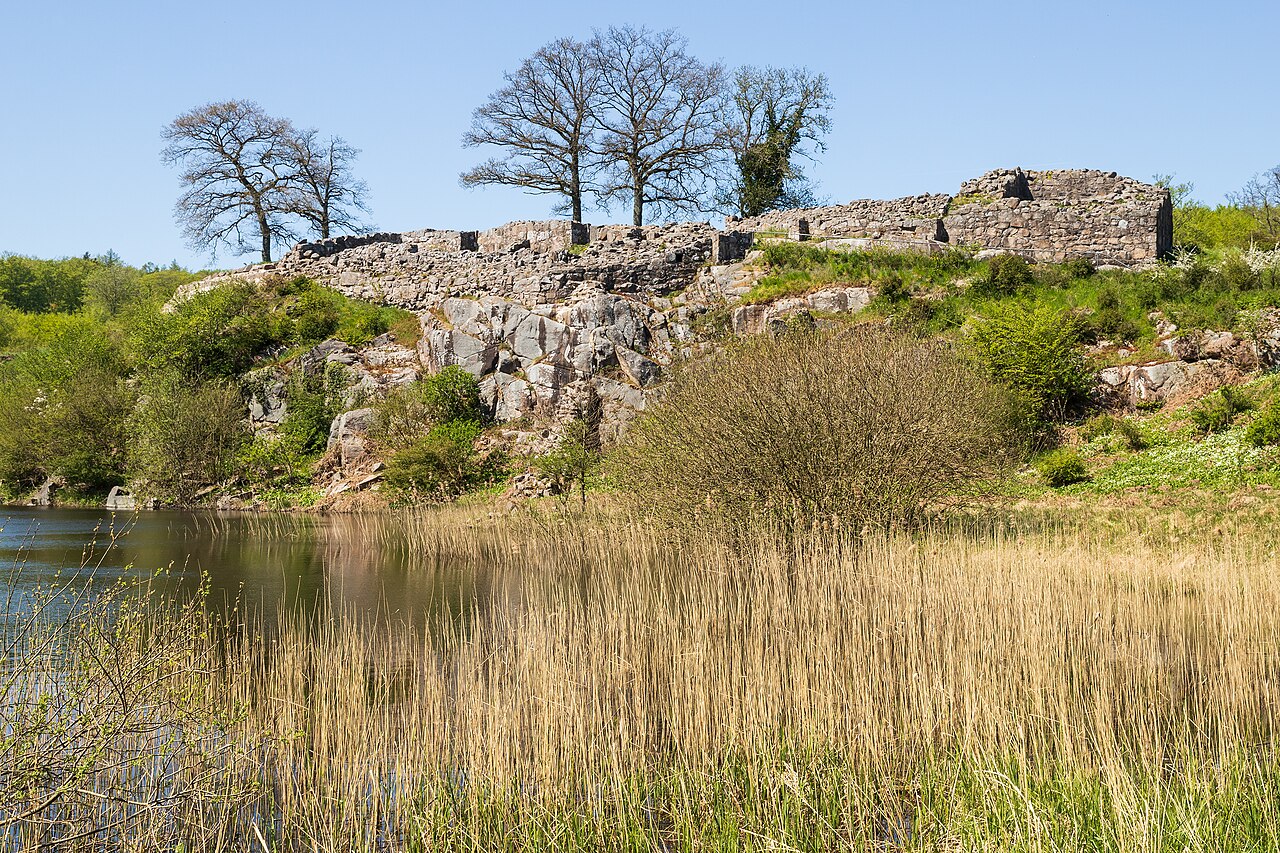
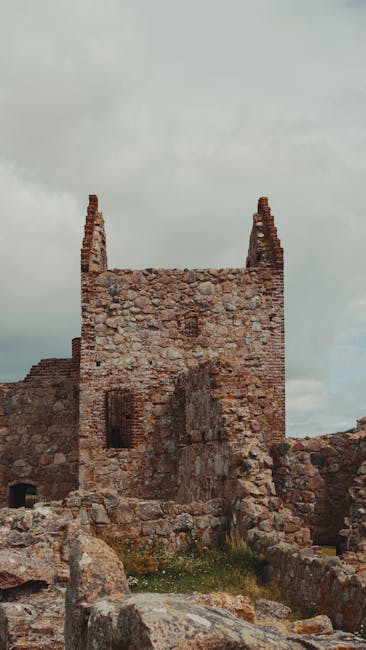
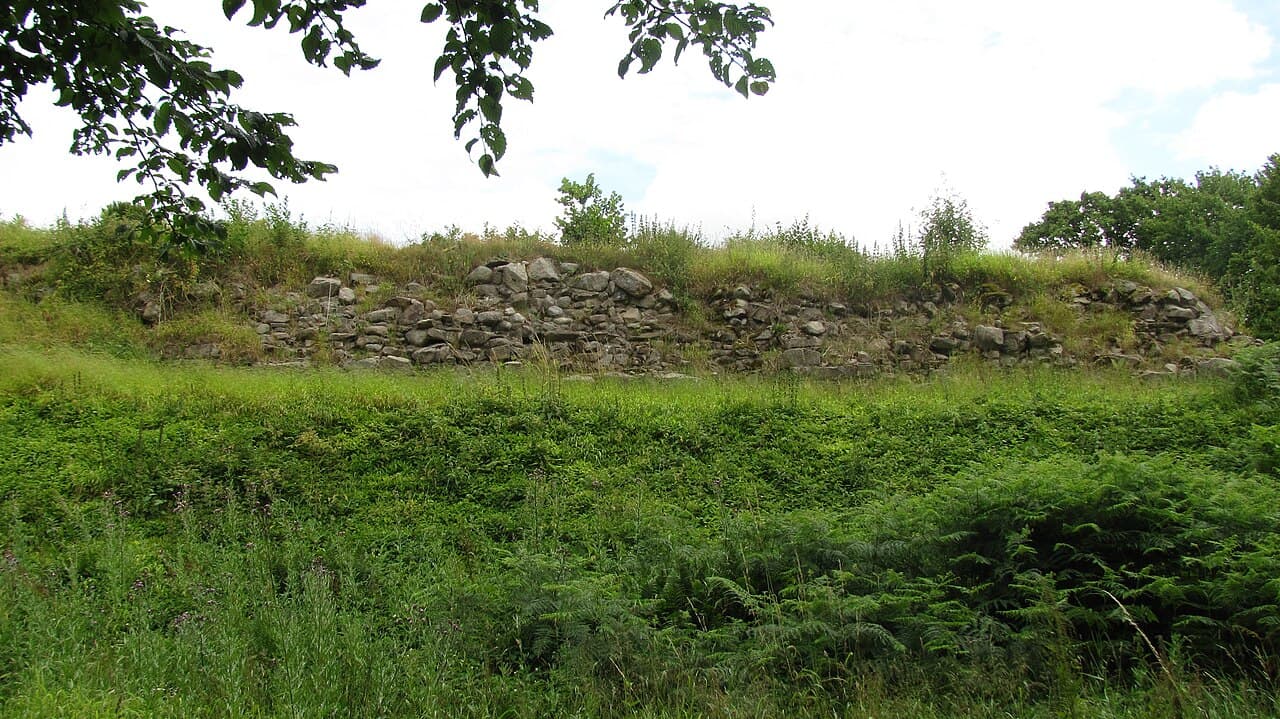
The fortress is enclosed on its western side by a substantial stone wall nearly 275 metres long, about 2 metres thick, and reaching heights of up to 6 metres. Constructed from large boulders and rocks bound with clay, this wall likely supported wooden palisades atop to further enhance its defensive capabilities. The fortress originally had two main gates: a northern gate located at the highest point of the site, accompanied by the remains of a square tower that probably served as a lookout and defensive position, and a southern gate that was later sealed off during a major reconstruction phase around 1100 AD.
During this reconstruction, the southern entrance was replaced by a more robust southwestern gate built from granite blocks and mortar, possibly featuring a drawbridge to control access. Defensive measures also included a surrounding moat that remains visible today, as well as two stone-lined embankments near the western approach that reinforced the fortress's access points. The interior of Gamleborg, now overgrown, once contained multiple buildings, as evidenced by artifacts such as loom weights, horseshoes, and stirrups dating from the 11th century. A water pool on the northwest side supplied fresh water to the inhabitants.
Historical context and significance
Gamleborg was the primary stronghold and royal seat on Bornholm during the Viking Age and early Middle Ages. It was a refuge during the turbulent 10th century, providing protection against Viking raids and other threats. The fortress is mentioned indirectly in the account of Wulfstan of Hedeby from 890 AD, which describes Bornholm as having its own king at that time, though the fortress's exact builder remains unknown.
Archaeological evidence confirms that Gamleborg was in use during the reigns of notable Danish rulers including Harald Bluetooth (940–986) and Canute IV (1080–1086). Around 1100 AD, the fortress underwent significant strengthening, but it was abandoned by 1150 in favor of the nearby Lilleborg fortress, located about 700 metres to the northeast. The reasons for this relocation remain unclear, but there is no evidence of warfare or destruction prompting the move.
Archaeological findings and excavations
Excavations conducted in the 1950s revealed that the fortress's fortifications date to the Viking period, with some evidence suggesting the site was used as a hideout during the earlier Iron Age. Archaeologists uncovered signs of a destructive fire from the Viking Age, but no traces of subsequent battles or occupations after the fortress was abandoned. Artifacts recovered include glass beads, jewelry, loom weights, horseshoes, and stirrups, indicating the presence of high-status occupants and daily activities within the fortress.
The fortress layout and natural defenses
Gamleborg occupies a roughly rectangular area of about 27,000 square metres atop a plateau. Its natural defenses were enhanced by the terrain, especially the steep cliffs on the southern side that rise up to 20 metres, making artificial fortifications unnecessary in that direction. The western stone wall, northern gate with its tower remains, southwestern granite gate, moat, and embankments together formed a comprehensive defensive system.
The interior's exact building locations remain uncertain, but the artifacts suggest the presence of residential and storage structures. The water pool on the northwest side was a vital feature, providing a reliable fresh water source for the fortress's inhabitants during sieges or prolonged occupation.
Legacy and cultural importance
As Bornholm's oldest defense works, Gamleborg Viking fortress holds significant cultural and historical value. It represents the early stone fortification techniques of the Viking Age and illustrates the island's political importance as a royal seat. The fortress's remains offer insights into Viking military architecture and settlement patterns on Bornholm.
Today, the site is a protected archaeological ruin, attracting visitors interested in Viking history and medieval fortifications. Its well-preserved stone walls, gates, moat, and natural setting provide a tangible connection to the island's past and its role in the Baltic Sea region during the Early Medieval period.
Frequently asked questions (FAQ)
- When was Gamleborg Viking fortress built?
- Gamleborg Viking fortress was constructed around 750 AD during the Early Medieval period on Bornholm island.
- What was the purpose of Gamleborg fortress?
- Gamleborg served as the royal seat for the kings of Bornholm during the Viking Age and early Middle Ages, functioning as a defensive stronghold and refuge.
- Why was Gamleborg abandoned?
- Gamleborg was abandoned around 1150 in favor of the nearby Lilleborg fortress. The exact reasons are unclear, but there is no evidence of warfare causing the move.
- What remains can be seen at Gamleborg today?
- Visitors can see substantial stone walls, two main gates including a northern gate with tower remains, a moat, and earth embankments that formed the fortress's defenses.
- Is Gamleborg accessible to visitors?
- The site is accessible to the public as an archaeological ruin, offering visitors a view of Viking Age fortification remains in a natural forest setting.
Photo gallery

Information
Website
Visit websiteSources & official resources
Verify the information above using these authoritative references.
Loading map...
Visitor reviews
No reviews yet. Been here? Write the first review and help other travelers!
Write the first reviewVisited this castle? Share your experience
Your review helps other travelers and adds first-hand knowledge to our encyclopedia.