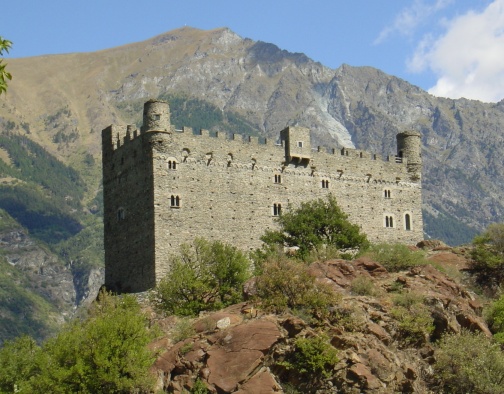
Gamba Castle
Gamba Castle, located in Châtillon, Italy, stands as a unique example of early 20th-century castle architecture blending historicist design with modern cultural functions. Constructed in 1911 under the direction of Baron Charles-Maurice Gamba and his wife Angélique d’Entrèves, the castle was designed by engineer Carlo Saroldi to evoke traditional castle forms while serving the needs of a noble family in the modern era. Its architectural style, while restrained and straightforward, draws inspiration from medieval hill castles, featuring a compact cubic main building and a prominent square tower that commands the surrounding landscape.
Today, Gamba Castle functions as a significant cultural hub, housing a regional museum dedicated to modern and contemporary art. The castle’s collection spans over 150 works, including paintings, sculptures, installations, drawings, and photographs, representing key movements and artists from the late 19th century to the present day. This includes masterpieces by renowned 20th-century Italian artists such as Casorati, De Pisis, Carrà, and Guttuso, as well as sculptors like Martini, Mastroianni, Manzù, and the Pomodoro brothers. The museum also showcases contemporary figures like Schifano, Baruchello, Rama, and Mainolfi, reflecting the evolving Italian art scene over the past century.
Historical context and construction
Gamba Castle is the youngest of the three castles in Châtillon, a town with a rich medieval heritage also home to the Passerin d’Entrèves and Ussel castles. Unlike its medieval predecessors, Gamba Castle was built in the modern period (early 20th century) with a deliberate nod to traditional hill castle architecture. The commission by the noble Gamba family, specifically Baron Charles-Maurice Gamba and Angélique d’Entrèves, reflects both their aristocratic lineage and a desire to create a residence that symbolized continuity with the region’s feudal past.
The castle’s design by Carlo Saroldi carefully balanced historicist architectural elements with modern construction techniques. The main building rises four floors high, forming a nearly cubic volume that is visually anchored by a central square tower. This tower not only provides a vertical emphasis typical of defensive medieval castles but also serves as a dominant aesthetic feature in the landscape.
Architectural features and layout
Main building and tower
The castle’s main block is a compact structure characterized by its simple yet imposing cubic form. The central square tower rises above the main roofline, creating a focal point visible from afar, especially from the nearby A5 highway. This tower echoes the defensive keeps of medieval hill castles, though its function is primarily symbolic and residential rather than military.
Service wings and courtyard
To the north of the main building, the castle extends with a service complex consisting of two parallel wings connected by a vaulted corridor. This corridor encloses a modest courtyard, effectively separating the service areas from the main residential quarters. This arrangement reflects early 20th-century domestic planning within a castle-like form, emphasizing both functionality and historical style.
Setting and landscape
The castle’s southern facade overlooks the Dora Baltea river, integrating the building into the natural landscape of the Aosta Valley. The surrounding park, covering approximately five to seven hectares, enhances the castle’s setting with walking paths, benches, and a wooden fountain. The park is notable for its three monumental trees protected under regional law: a giant sequoia planted in 1888, a century-old Judas tree, and a bald cypress, all contributing to the estate’s historical and environmental significance.
Transformation into a cultural institution
Originally a private noble residence, Gamba Castle transitioned into a public cultural venue in the 21st century. A landmark moment came in 2008 when the castle’s park hosted over 4,000 spectators for Bob Dylan’s final Italian concert, highlighting the site’s capacity for large cultural events.
Between 2011 and 2012, the castle underwent comprehensive restoration to adapt its interiors for museum use. Reopened in October 2012, it became the seat of the regional art gallery, showcasing permanent and temporary exhibitions. The museum’s thirteen rooms on the first and second floors display a wide-ranging collection of modern and contemporary artworks, while the upper floors, including the attic within the central tower, are dedicated to temporary exhibitions, often featuring local artists.
Art collection and exhibitions
The castle’s museum houses an extensive collection documenting Italian figurative art from the late 19th century through contemporary times. The collection includes significant works by 20th-century masters such as Casorati, De Pisis, Carrà, and Guttuso, alongside sculptures by Martini, Mastroianni, Manzù, and the Pomodoro brothers. The museum also embraces contemporary artistic movements including informal art, geometric abstraction, transavantgarde, and pop art.
Special emphasis is placed on artists connected to the Aosta Valley region, either through origin or activity, reflecting the museum’s role in promoting regional cultural heritage. The collection’s diversity highlights the dynamic evolution of Italian art over more than a century, making Gamba Castle a vital center for art appreciation and research in the region.
Preservation and public access
Gamba Castle is well preserved, with its architectural integrity maintained through careful restoration efforts. The castle’s adaptation from a private residence to a public museum has ensured ongoing conservation and increased public engagement. Visitors can explore the castle’s historic architecture alongside its rich art collection, enjoying the blend of cultural heritage and natural beauty.
The castle and its park are accessible to the public, offering a unique experience that combines art, history, and landscape. The presence of monumental trees and the scenic views over the Dora Baltea river enhance the visitor experience, making Gamba Castle a notable destination in the Aosta Valley.
Frequently asked questions (FAQ)
- What is the historical significance of Gamba Castle in Châtillon?
- Gamba Castle is the youngest of Châtillon's three castles, built in 1911 as a noble residence that blends historicist architecture with modern design. It now serves as a regional museum showcasing Italian modern and contemporary art.
- Can I visit the art museum inside Gamba Castle?
- Yes, Gamba Castle houses a museum with over 150 artworks from the late 19th century to contemporary times. The museum features permanent and temporary exhibitions highlighting regional and national artists.
- What architectural style does Gamba Castle represent?
- Gamba Castle exhibits a restrained historicist style inspired by traditional hill castles, with a compact cubic main building and a prominent square tower, reflecting early 20th-century modern castle architecture.
- Is Gamba Castle accessible to the public and what can I see in the park?
- The castle and its surrounding park are open to visitors, offering walking paths, benches, and notable monumental trees such as a giant sequoia, Judas tree, and bald cypress, protected under regional law.
- When was Gamba Castle restored and transformed into a museum?
- Gamba Castle underwent restoration between 2011 and 2012 to convert it into a museum. It reopened in October 2012 as the seat of the regional art gallery.
Information
Sources & official resources
Verify the information above using these authoritative references.
Loading map...
Visitor reviews
No reviews yet. Been here? Write the first review and help other travelers!
Write the first reviewVisited this castle? Share your experience
Your review helps other travelers and adds first-hand knowledge to our encyclopedia.