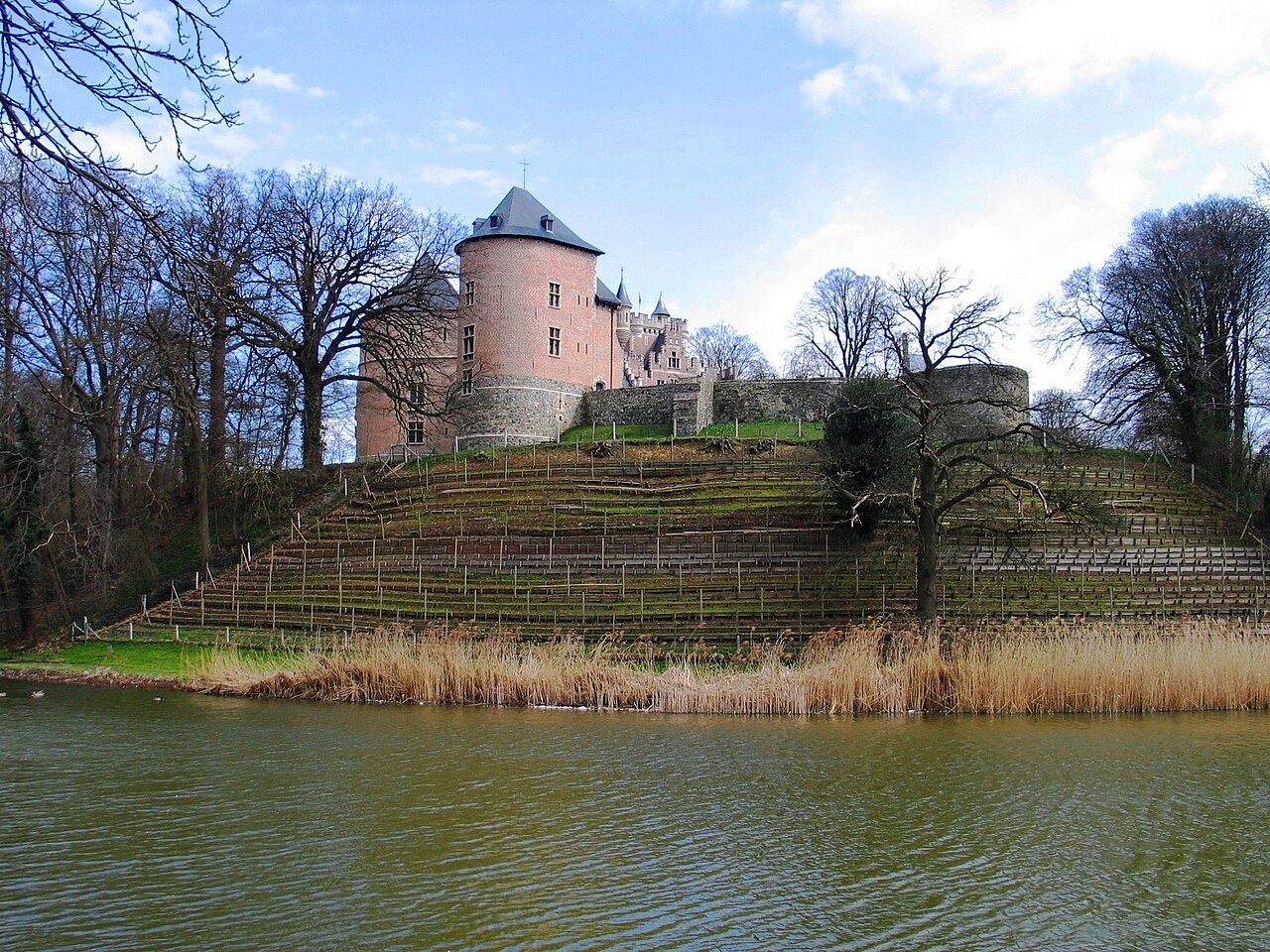
Coloma Castle

Coloma Castle in Sint-Pieters-Leeuw, Belgium
Sint-Pieters-Leeuw, Belgium
Renaissance (15th–17th c.)
Restored

Coloma Castle is a notable example of Renaissance architecture constructed around 1515 in Sint-Pieters-Leeuw, Belgium. This historic castle is distinguished by its square layout with square corner towers topped by pear-shaped roofs, a characteristic feature of the period's architectural style. The entire structure is encircled by a moat, enhancing its defensive capabilities and aesthetic appeal.

Architectural features and layout

The castle's design reflects the transition from medieval fortifications to more comfortable and stately residences typical of the renaissance era. The square plan with four corner towers provided both defensive advantages and a balanced, symmetrical appearance. The pear-shaped roofs on the towers are distinctive, combining functionality with decorative elegance. Surrounding the castle, the moat not only served as a defensive barrier but also contributed to the picturesque setting that complements the castle's stately presence.

Castle park and auxiliary buildings

The grounds of Coloma Castle include a large park that houses several noteworthy structures. Among these is the former carriage house, dating back to 1731, which has been repurposed into a cozy tavern, offering visitors a glimpse into the castle's operational history. Additionally, a garden pavilion featuring a stair tower adds architectural interest and serves as a charming focal point within the park.

The rose garden of coloma

One of the most remarkable features of the castle grounds is the Rose Garden of Coloma, recognized as the largest rose garden in Europe. Spanning an impressive 15 hectares, the garden showcases a vast variety of rose species and cultivars, attracting horticulture enthusiasts and tourists alike. The garden's extensive layout and meticulous maintenance highlight the cultural and botanical significance of the site.

Historical significance and current use

Originally built as a fortified residence, Coloma Castle has undergone complete restoration, preserving its historical integrity while adapting to modern uses. Today, it functions as a municipal cultural center, hosting events, exhibitions, and community activities that connect visitors with the region's heritage. The castle's restoration ensures that its architectural and historical value continues to be appreciated by future generations.

Visitor experience and attractions

Visitors to Coloma Castle can explore not only the castle's well-preserved structure but also enjoy the surrounding park and its amenities. The carriage house tavern offers a welcoming atmosphere for refreshments, while the extensive rose garden provides a serene environment for leisurely walks and photography. The combination of historical architecture and natural beauty makes Coloma Castle a significant cultural destination in Belgium.

Frequently asked questions (FAQ)

What is the historical significance of Coloma Castle?
Coloma Castle, built in the 19th century, is a prime example of neo-Gothic architecture in Belgium. It has served various roles throughout its history, including being a private residence and a cultural venue, showcasing the rich heritage of the region.
When was Coloma Castle built?
Coloma Castle was constructed between 1852 and 1859. Designed by architect Jean-Baptiste Bethune, it reflects the romantic architectural style of its time, making it an important landmark in Sint-Pieters-Leeuw.
Can I visit Coloma Castle?
Yes, visitors can explore Coloma Castle, but access may be limited to certain areas depending on ongoing events or restoration work. It is advisable to check the official website for any visitor restrictions or special events before planning your trip.
What are the opening hours for Coloma Castle?
Coloma Castle is typically open to the public from April to October, with varying hours depending on the day of the week. It is recommended to visit the official website for the most up-to-date information on opening hours and any seasonal changes.
Is it possible to attend events at Coloma Castle?
Yes, Coloma Castle hosts a variety of events throughout the year, including cultural festivals, exhibitions, and guided tours. Check the castle's official schedule for upcoming events to ensure you don't miss out.
What is the best time to visit Coloma Castle?
The best time to visit Coloma Castle is during the spring and summer months when the gardens are in full bloom and outdoor events are more frequent. Visiting during these seasons allows for a more vibrant experience of the castle's surroundings.
Are there any nearby attractions to visit alongside Coloma Castle?
Yes, nearby attractions include the beautiful parks and gardens of the surrounding area, as well as local museums that highlight the history of Sint-Pieters-Leeuw. Exploring these sites can enhance your visit to the castle and provide a deeper understanding of the region.
What are the ticket prices for visiting Coloma Castle?
Ticket prices for Coloma Castle vary depending on the type of visit, such as guided tours or special events. It is advisable to check the official website for current pricing and any discounts that may be available for families or groups.
How do I get to Coloma Castle?
Coloma Castle is accessible by public transportation, with several bus routes serving the Sint-Pieters-Leeuw area. For those driving, there is parking available nearby, making it convenient to visit the castle and explore its beautiful grounds.

Information

Water Castle

Sources & official resources

Verify the information above using these authoritative references.

Loading map...

Visitor reviews

No reviews yet. Been here? Write the first review and help other travelers!

Write the first review

Visited this castle? Share your experience

Your review helps other travelers and adds first-hand knowledge to our encyclopedia.
Write a review

(5/5)

0/2000 characters

Your review will be visible after admin approval

Nearby castles

3.9 km
Beersel Castle — Belgium castle

Beersel Castle

Beersel, Belgium

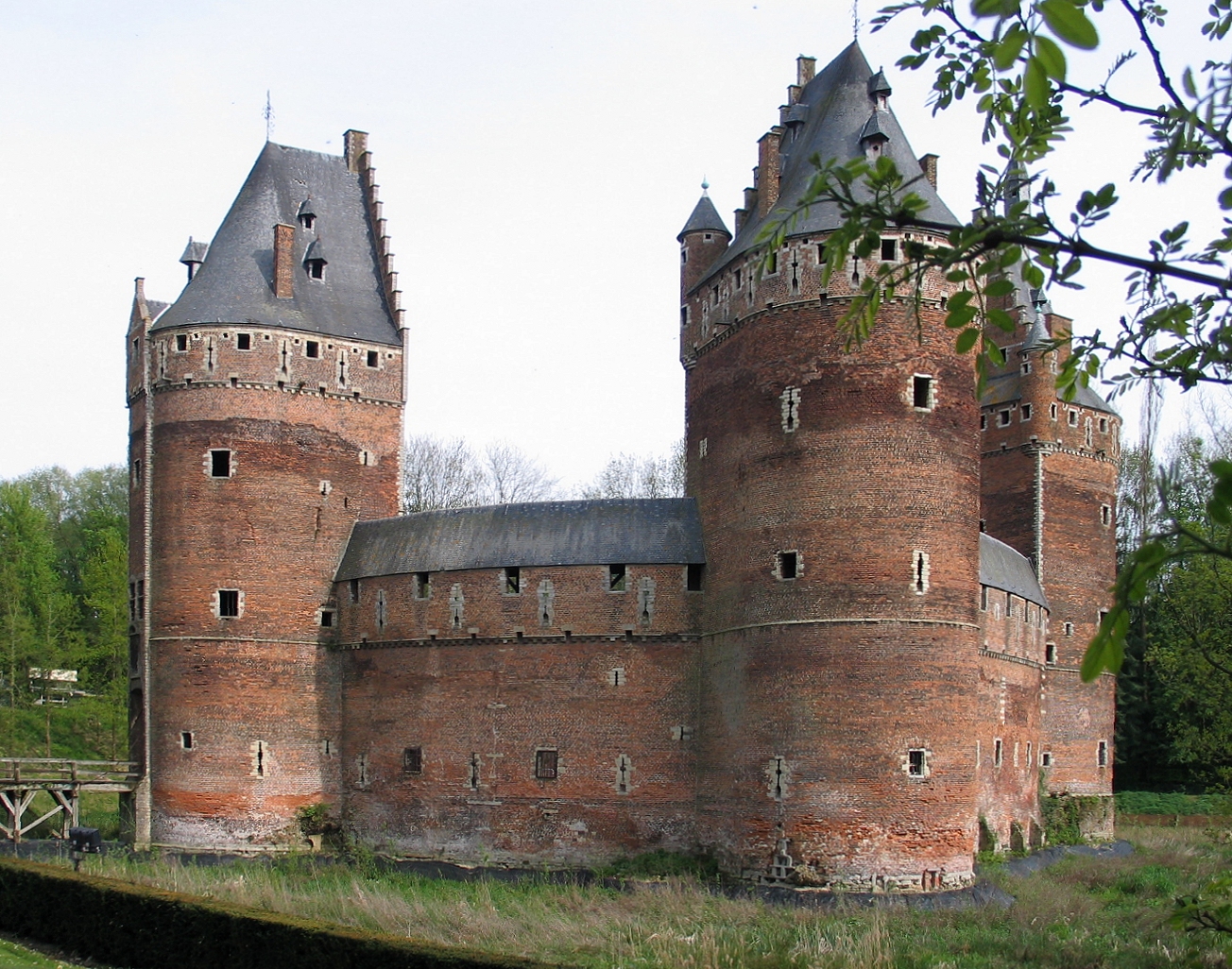
Beersel Castle, also known locally as Kasteel van Beersel, is a striking example of medieval military architecture located in the town of Beersel, in the province of Flemish Brabant, Belgium. Situated just south of Brussels, the castle occupies a strategic position near the meadows of the Zenne River at the foot of a hill, which historically allowed it to serve as a vital defensive outpost protecting the southern borders of the Duchy of Brabant. The castle’s origins trace back to the early 14th century, specifically between 1300 and 1310, when it was constructed under the direction of Godfrey of Hellebeek, the first known lord associated with the site. It was built by order of Duke John II of Brabant as part of a defensive network designed to safeguard Brussels from incursions by the neighboring County of Hainaut. The castle was initially a fortified structure featuring a moated elliptical layout with robust brick curtain walls and three massive semicircular towers, each topped with conical roofs added in later centuries. Historical significance and ownership lineage The Lords of Beersel, first mentioned in the latter half of the 12th century, initially held a wooden or stone keep on a moated circular motte at this location. By the early 14th century, the castle was firmly established as a critical military fortress. Ownership passed through several noble families over the centuries, most notably the Witthem family from the late 14th century until the late 16th century. The castle’s strategic importance is underscored by its role during the War of Succession of Brabant in 1356-1357, when it was besieged and burned but quickly rebuilt. In the late 15th century, during the 1488-1489 rebellion of Brussels against Holy Roman Emperor Maximilian I, the castle sided with the emperor under Lord Hendrik III van Wittem. The castle was besieged twice by the rebels, finally falling after a brief siege involving heavy artillery. The assault caused significant damage to the gate tower, southern tower, and residential wing, breaching the walls. Following the suppression of the revolt, Maximilian forced the city of Brussels to finance the castle’s extensive restoration between 1491 and 1508. After the extinction of the Witthem line, the castle passed to the Arenberg family in the 17th century. Neglect led to the castle falling into disrepair and eventual abandonment by the 18th century. The early 19th century saw the castle repurposed as a cotton factory, accelerating its decline. The French writer Victor Hugo visited during this period and lamented its dilapidated state in his writings. Ownership later transferred to the Merode family through marriage, who initiated preservation efforts. In 1928, the descendants donated the castle to the League of Friends of Beersel Castle, which began restoration work. Since 1948, the Royal Association of Historic Residences and Gardens of Belgium has owned the castle, leasing it to the municipal authorities of Beersel. The municipality took over management in 1999, continuing restoration and renovation projects to enhance the castle’s historical authenticity and visitor experience. Architectural features and military design Beersel Castle is a rare surviving example of a medieval moated fortress in Belgium that has not been transformed into a residential palace. Its elliptical plan is surrounded by a broad, water-filled moat, characteristic of a water castle designed for defense in flat terrain. The brick curtain walls are reinforced by three prominent semicircular towers with conical roofs, which replaced an original fourth tower that no longer exists. The castle’s defensive system includes a wide moat, a working drawbridge over the northern gate tower, machicolations for dropping projectiles on attackers, and merlons atop the towers and walls for protection during combat. The walls feature numerous embrasures and arrow slits, some edged with distinctive red and white sandstone, which were adapted over time to accommodate the introduction of artillery in the late 15th century. The three main towers served multiple functions: the upper floors housed the lord’s chambers, barracks for the garrison, storage rooms, and arsenals. The middle tower contains a knight’s hall with a Gothic vaulted ceiling dating from the 15th century. The towers’ inner faces resemble traditional residential houses with stepped gables, reflecting the dual military and domestic nature of the structure. Additional defensive features include covered walkways or chemin de ronde along the tops of the walls, allowing defenders to patrol and repel attackers. Within these galleries are two vertical oubliettes (dungeons), emphasizing the castle’s role in both defense and justice. The castle once included a chapel, a kitchen area complete with a displayed torture table, and a watchtower that no longer survives. Materials and construction techniques The castle’s walls and towers are predominantly constructed of brick, a somewhat uncommon choice for major fortifications of this period in Belgium, which typically favored stone. The foundations, corners, window frames, and arrow slits utilize local sandstone varieties such as Ledian and Écaussinnes stone. This combination of materials contributes to the castle’s distinctive appearance and resilience. Cultural significance and modern restoration Beersel Castle holds a unique place in Belgium’s heritage as one of the few medieval fortresses that remain largely intact and unaltered by later residential conversions. Visitors today can experience firsthand the atmosphere of a heavily fortified medieval castle, with its imposing walls, narrow windows, and defensive features clearly visible. Since the mid-20th century, the castle has served as a cultural venue, hosting theatrical performances including Shakespearean plays and original productions, enriching the cultural life of the region. Restoration efforts have been ongoing since the early 20th century, with significant campaigns from the 1920s, post-World War II, and a major restoration project beginning in 2007 aimed at returning the castle to its 14th-century appearance. Current plans include extensive archaeological excavations and the rebuilding of the castle’s residential wing, which was destroyed during the 15th-century siege. The castle is open to the public for a small fee, offering visitors a chance to explore multiple rooms, staircases, and the surrounding moat and towers. Visitor experience and accessibility Visitors to Beersel Castle can explore its three massive watchtowers, walk along the drawbridge, and enjoy the moat that encircles the fortress. The narrow exterior windows and low openings emphasize the defensive nature of the structure, while the interior spaces reveal the living and military functions of a medieval stronghold. The castle’s management by the municipality of Beersel ensures ongoing maintenance and public access, with guided tours and cultural events enhancing the visitor experience. The castle’s well-preserved state and authentic medieval atmosphere make it a recommended destination for those interested in military architecture and medieval history in Belgium.

High Medieval (11th–13th c.)
Details
4.1 km
Gaasbeek Castle — Belgium castle

Gaasbeek Castle

Gaasbeek, Belgium

Gaasbeek Castle, locally known as Kasteel van Gaasbeek, stands as a significant historic monument near the village of Gaasbeek in the province of Flemish Brabant, Belgium. This castle's origins trace back to the early 13th century, around 1240, when it was initially constructed by Godfried van Leuven. Its primary function was to serve as a strategic defense point for the Duchy of Brabant against neighboring powers such as the Counties of Hainaut and Flanders. The original fortress was a typical medieval stronghold designed to withstand sieges and protect the surrounding region. However, its history is marked by conflict and destruction. In 1388, the castle was under the lordship of Zweder van Abcoude, who sought to expand his influence within Brabant. This ambition led to the assassination of Everard 't Serclaes, a prominent Brussels alderman, inciting the citizens of Brussels to retaliate by besieging and destroying the castle. Reconstruction and noble ownership through the centuries Following its destruction, the castle lay in ruins until the early 16th century when the Horne family rebuilt it on the medieval foundations. This reconstruction introduced brickwork, replacing much of the original stone structures, reflecting architectural trends of the period. The castle changed hands multiple times, most notably in 1565 when Lamoral, Count of Egmont, acquired it along with feudal rights over 17 villages. Egmont's tenure ended tragically when he was executed for high treason against Philip II of Spain, and the castle subsequently suffered damage from warfare and fire. In 1615, the castle was purchased by René de Renesse de Warfusée, who undertook restoration efforts and added several buildings to the castle park. Despite these efforts, the castle experienced further damage in 1695 during military actions by the troops of Louis XIV of France, which destroyed one of its wings. 19th-century restoration and architectural transformation By the late 18th century, Gaasbeek Castle came into the possession of the Arconati Visconti family from Milan through marriage. The most significant transformation occurred between 1887 and 1897 under the direction of Marie-Louise Peyrat, the Marchioness d'Arconati Visconti, following the death of her husband Gianmartino. With the help of architect Charles Albert, the castle was extensively rebuilt to reflect a romanticized medieval appearance, blending historical styles with 19th-century tastes. This renovation gave the castle its present-day look, characterized by an irregular polygonal ground plan situated on a slope at the edge of a plateau. The surviving medieval elements are limited to the bases of the original buildings, visible through the gray stonework, while the majority of the visible brickwork and architectural details date from this 19th-century restoration. The interiors were also lavishly decorated during this period, featuring rich furnishings and art collections. Architectural features and grounds Gaasbeek Castle is classified architecturally as a hill castle, positioned strategically on elevated terrain. Its irregular polygonal layout is designed to adapt to the natural contours of the land, enhancing its defensive capabilities. The castle complex includes multiple wings, towers, courtyards, and a surrounding park that spans approximately 50 hectares (124 acres). The park, developed over centuries, contains various auxiliary buildings erected during different ownership periods, including the 17th-century additions by René de Renesse de Warfusée. The castle's exterior showcases a blend of medieval foundations and romantic neo-Gothic style elements introduced during the 19th-century restoration, contributing to its picturesque and imposing appearance. Current status and cultural significance Today, Gaasbeek Castle functions as a national museum under the ownership of the Flemish Community since 1980. It houses impressive art collections displayed within its richly decorated historic rooms. Among the notable artifacts is the authentic testament of the renowned painter Peter Paul Rubens, highlighting the castle's cultural importance. Visitors can explore the castle through guided tours, which provide insights into its layered history, architectural evolution, and the noble families who shaped its legacy. Photography inside the castle is prohibited to preserve the integrity of the interiors and collections. The castle and its extensive grounds are open to the public, offering a unique glimpse into Belgium's medieval and post-medieval heritage. Gaasbeek Castle stands as a testament to centuries of history, architectural adaptation, and cultural preservation, making it a must-visit site for enthusiasts of history, art, and architecture.

Post-Renaissance (17th–18th c.)
Details
7.5 km

Malakoff Tower

Lembeek, Belgium

Malakoff Tower, locally known as Malakofftoren, is a distinctive 19th-century folly located in a park west of the town of Lembeek, within the province of Flemish Brabant in Belgium. Despite its medieval appearance, the tower is a product of the Modern period, constructed in 1854 by the Belgian industrialist and landowner Paul-Alexandre Claes. It was built as a commemorative structure to honor the original 16th-century Lembeek Castle, which Claes had acquired a year earlier. The tower serves as a romanticized tribute rather than a genuine medieval fortification. Historical context and inspiration The Malakoff Tower was erected during a time when medieval revivalism and romanticism influenced architectural tastes across Europe. While the original Lembeek Castle had fallen into ruin, Claes sought to preserve its memory by constructing this pseudo-medieval tower. Its design reflects the Victorian-era fascination with medieval architecture, blending aesthetic appeal with symbolic significance. The tower's name, Malakoff, is linked to a notable event during the Crimean War (1853–1856). In 1855, French Marshal Aimable Pélissier secured a decisive victory at the Battle of Malakoff, part of the Siege of Sevastopol. Following this triumph, Napoleon III bestowed upon Pélissier the title Duke of Malakoff. The tower's naming likely commemorates this military success, reflecting contemporary European political and cultural interests. Location and site features The tower is situated on a small hill adjacent to the Brussels-Charleroi Canal. This elevated position enhances its visual prominence in the landscape. The hill itself was probably formed from earth excavated during the canal's enlargement in 1854, the same year the tower was built. This strategic placement near the canal underscores the interplay between industrial development and historical commemoration in the mid-19th century. Architectural characteristics Although the tower mimics medieval military architecture, it is essentially a folly—a decorative structure without defensive purpose. Its design includes typical medieval elements such as battlements, narrow slit windows, and a cylindrical form reminiscent of a keep or donjon. The construction materials and techniques reflect 19th-century building practices rather than authentic medieval craftsmanship. The tower's aesthetic aims to evoke the romantic spirit of the Middle Ages, combining picturesque qualities with symbolic references to chivalry and nobility. Its presence in the park creates a historic ambiance, contributing to the cultural landscape of Lembeek. Current status and public access Today, Malakoff Tower is freely accessible to visitors, serving as a local landmark and point of interest. It remains well preserved as a Modern period folly, maintaining its original form and character. The tower is appreciated for its unique blend of historical homage and 19th-century architectural romanticism. The surrounding park area offers a pleasant setting for visitors to explore the tower and reflect on its historical associations. While it does not function as a traditional castle, Malakoff Tower holds cultural significance as a memorial structure and example of period architecture.

Modern (19th–20th c.)
Details