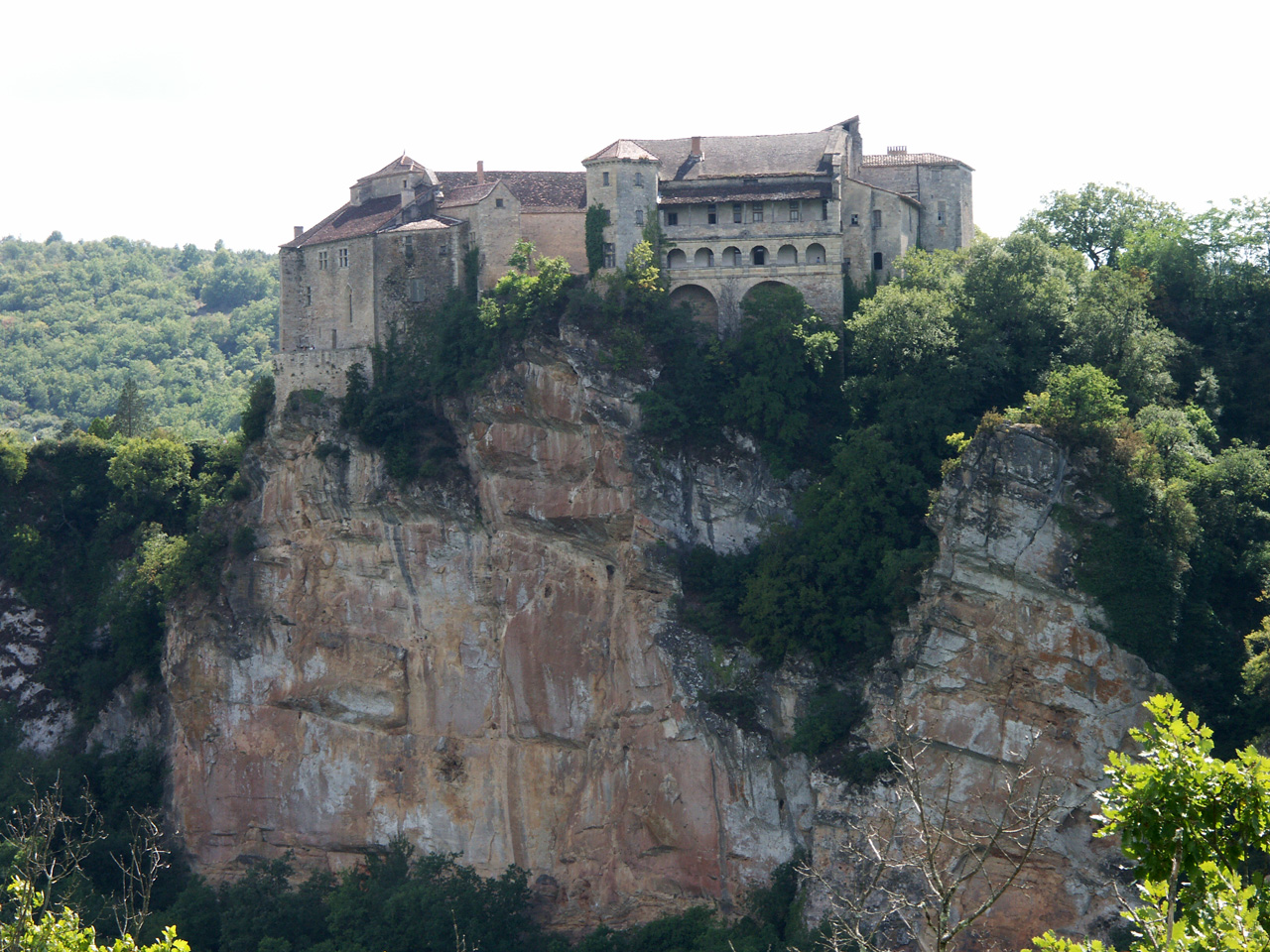
Frontenac Castle
Frontenac Castle stands as a remarkable example of medieval military architecture in the heart of Occitanie, France. Perched prominently on a hill overlooking the city of Frontenac, this 13th-century fortress has witnessed centuries of history, evolving through expansions and renovations that reflect the changing needs and styles of the times. Its strategic location provided commanding views of the surrounding landscape, essential for defense and control in the High Medieval period.
Historical background and significance
Constructed originally in the 13th century, Frontenac Castle was built during a time of significant political and military upheaval in southern France. The castle's establishment coincided with the aftermath of the Albigensian Crusade and the consolidation of royal authority in the region. Throughout its history, the fortress served as a defensive stronghold, administrative center, and residence for local lords who played roles in regional governance and defense.
Declared a historical monument in 1840, the castle has been recognized for its cultural and architectural importance. This designation helped preserve the site and facilitated restoration efforts to maintain its structural integrity and historical character.
Architectural features and layout
The castle exemplifies typical High Medieval military architecture with robust stone walls, battlements, and defensive towers. Its design incorporates a hill castle layout, utilizing the natural elevation to enhance its defensive capabilities. The main structures include a fortified keep, curtain walls with crenellations, and several round towers positioned to provide overlapping fields of fire.
Inside the walls, the castle contains a courtyard that historically accommodated various functional buildings such as stables, workshops, and living quarters. The gatehouse features a portcullis and murder holes, typical defensive elements designed to thwart attackers.
Renovations and expansions
Over the centuries, Frontenac Castle underwent several renovations and expansions. These modifications included strengthening the walls, adding artillery platforms in response to the advent of gunpowder weaponry, and updating residential areas to improve comfort. Some Renaissance influences can be observed in later additions, reflecting the transition from purely military to more residential and administrative functions.
Cultural role and current use
Today, Frontenac Castle is not only a preserved historical monument but also a vibrant cultural venue. It hosts a variety of events, including medieval reenactments, concerts, and exhibitions that celebrate the region's rich heritage. Visitors can explore the castle's interior and grounds, gaining insight into medieval life and architecture.
The castle's preservation and adaptive reuse demonstrate the importance of heritage conservation in Occitanie and contribute to local tourism and education.
Visitor information
Frontenac Castle is open to the public, offering guided tours that highlight its architectural features and historical significance. The site is accessible year-round, with special events scheduled during the warmer months. Visitors are encouraged to check local listings for event dates and ticket information.
Architectural style and classification
The castle is primarily classified as a hill castle with a High Medieval construction period. Its architectural style is predominantly Gothic, evident in its pointed arches, narrow windows, and fortified elements designed for defense and surveillance.
Frequently asked questions (FAQ)
- What is the historical significance of Frontenac Castle?
- Frontenac Castle, located in France, is a renowned example of 19th-century architecture and symbolizes the romantic revival of medieval styles. It was built in the late 1800s and has since become an iconic landmark, reflecting the opulence of the era in which it was constructed.
- When was Frontenac Castle built?
- Construction of Frontenac Castle began in 1890 and was completed in 1896. The castle was designed by architect Romain de Tirtoff, known for his extravagant designs that capture the essence of French heritage.
- Can I visit Frontenac Castle?
- Yes, Frontenac Castle is open to visitors throughout the year. Guided tours are available, allowing guests to explore its stunning architecture and learn about its rich history.
- What are the opening hours for Frontenac Castle?
- Frontenac Castle is open to the public from 9 AM to 6 PM during the summer months and from 10 AM to 4 PM in the winter. It is advisable to check the official website for any seasonal changes or special events.
- Is it possible to access Frontenac Castle with mobility issues?
- Yes, Frontenac Castle is equipped with facilities to accommodate visitors with mobility issues. The staff is trained to assist guests and ensure a comfortable visit, though some areas may still have limited accessibility due to the castle's historic nature.
- What is the best time to visit Frontenac Castle?
- The best time to visit Frontenac Castle is during the late spring or early fall when the weather is mild and the gardens are in full bloom. Additionally, visiting during weekdays can help you avoid larger weekend crowds.
- Are there any nearby attractions to visit?
- Yes, there are several attractions near Frontenac Castle, including beautiful parks, historical museums, and charming local markets. The surrounding area offers a rich cultural experience, perfect for a day of exploration.
- What are the ticket prices for Frontenac Castle?
- Tickets to Frontenac Castle are reasonably priced, with discounts available for students, seniors, and children. Group rates may also apply, so it's worth checking the website for current pricing and any special promotions.
Information
Loading map...
Visitor reviews
No reviews yet. Been here? Write the first review and help other travelers!
Write the first reviewVisited this castle? Share your experience
Your review helps other travelers and adds first-hand knowledge to our encyclopedia.