Frombork is a historic castle complex centered on the cathedral hill in the town of Frombork, Poland. This site is renowned for its Gothic architecture, its role as the episcopal seat of the Warmian diocese, and its association with the great astronomer Nicolaus Copernicus. The fortified hill, surrounded by deep ravines and defensive walls, served as a religious, administrative, and military center from the 13th century onward.
The origins of the castle complex date back to the establishment of the Warmian diocese in 1243 after the Teutonic Order conquered the Prussian tribes. Initially, the diocesan seat was in Braniewo, but after its destruction in 1261, the bishop moved the chapter to Frombork around 1274. The first ecclesiastical building was the church of the Assumption of the Virgin Mary and St. Andrew the Apostle, surrounded by wooden and earth fortifications. The site was carefully chosen on a moraine hill with steep northern slopes and natural ravines to the east and west, which were connected by a southern moat, creating a defensible position.
Medieval construction and fortifications
In the first half of the 14th century, extensive brick Gothic structures began to replace earlier wooden buildings. The centerpiece was the Gothic cathedral, completed in 1388, originally designed with defensive features including a guard gallery and corner turrets on the upper floor. Over time, particularly after a fire in 1551, the cathedral's fortifications were reduced in favor of decorative elements.
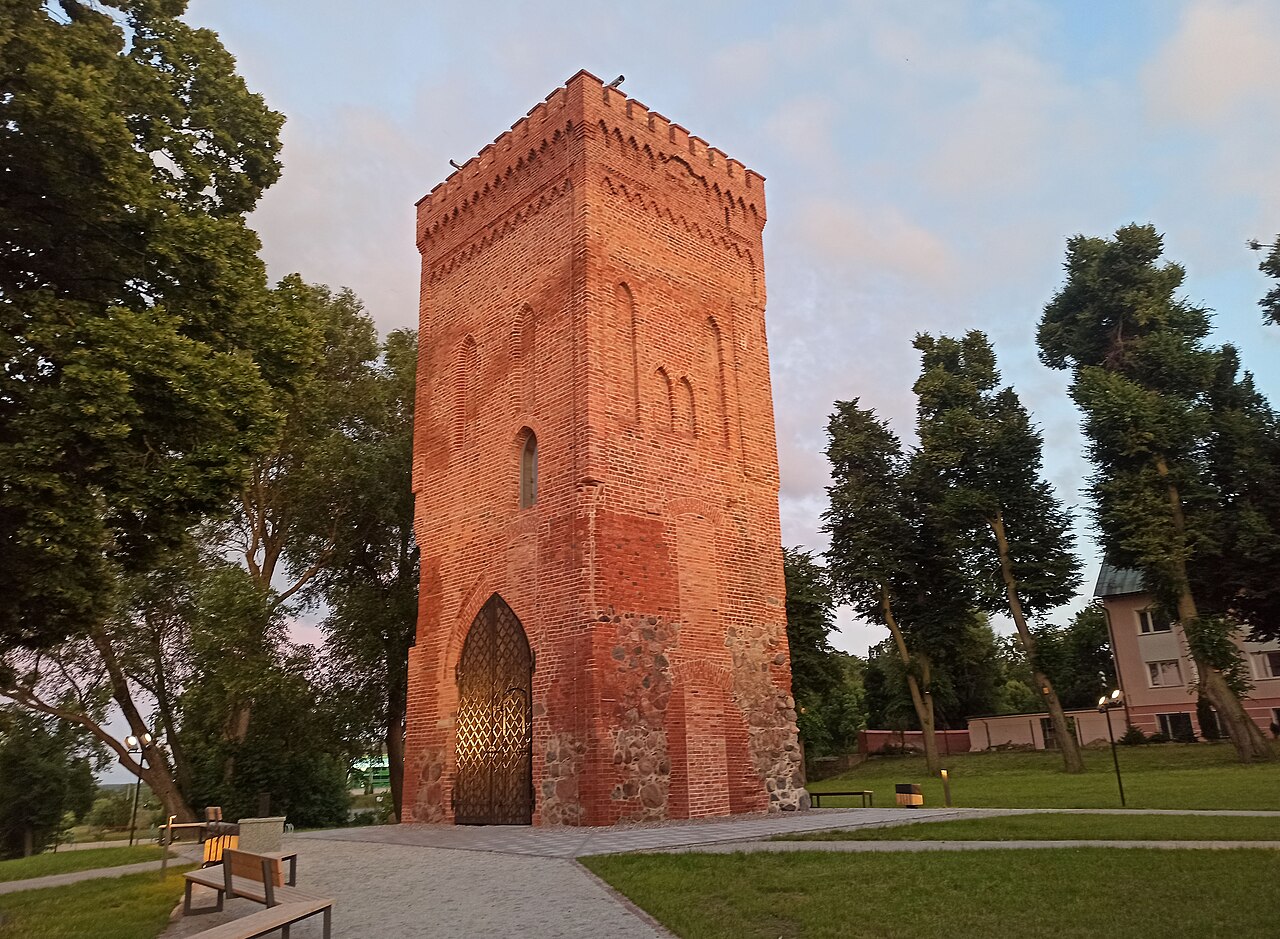
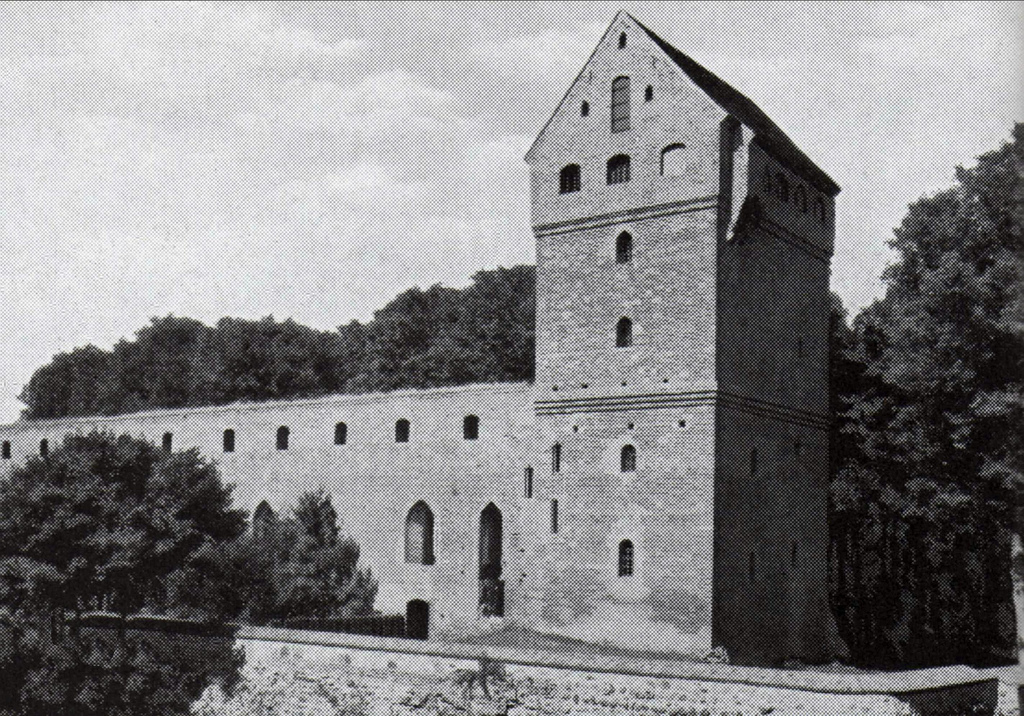
The cathedral hill was enclosed by brick defensive walls that followed the natural contours of the hill. The main southern gate provided controlled access, complemented by a smaller western gate tower known as the Smaller Gate. Two additional postern gates existed on the northern and eastern sides. Inside the walls, residential and utility buildings were constructed, including the chapter house in the northeast corner, the cathedral school in the southeast, and housing for canons and servants along the northern wall and near the gates.
Following the 1414 Polish-Lithuanian raid that devastated Frombork, further fortifications were added to withstand artillery. These included two semicylindrical four-story towers flanking the main gate, a five-level open semicylindrical tower to the west, and the massive octagonal Magna Turris bastion with walls up to seven meters thick in the southwest corner. Additional towers strengthened the northern curtain wall, including the Custodian's Tower and a northeastern gun tower adapted for firearms.
Frombork in regional conflicts and political changes
During the Thirteen Years' War (1454–1466), Frombork was besieged by Teutonic forces under Grand Master Ludwig Erlichshausen but successfully defended by Wacław of Tworków until reinforcements arrived. The Second Peace of Toruń (1466) incorporated Warmia, including Frombork, into the Kingdom of Poland. In 1478, Polish troops seized Frombork during the so-called "prince's war," removing the rebellious bishop Mikołaj Tungen.
In 1510, Nicolaus Copernicus became a cathedral canon and purchased the northwestern tower, converting it into his residence and workshop where he wrote his seminal work, De revolutionibus orbium coelestium (On the Revolutions of the Heavenly Spheres). Copernicus also supervised the reconstruction of fortifications damaged during the 1520 war with Albrecht of Brandenburg, the last Grand Master of the Teutonic Order. The eastern wall was reinforced with the Ferber Rondel in 1526, named after the bishop of that time, and a barbican was added to the main gate in 1537. A Renaissance bishop's palace was constructed on the foundations of the former cathedral school, and some defensive structures were adapted for residential use as military threats diminished.
Early modern warfare and restoration efforts
Frombork suffered during the Swedish invasions in the 17th century, including occupation by King Gustavus Adolphus in 1626, who looted the cathedral's art and manuscripts. The Swedes returned during the "Deluge" in 1656, with King Charles X Gustav seeking refuge on the hill. Subsequent destruction was repaired under Bishop Radziejowski, who added a large bastion and the two-story Radziejowski bell tower, now housing a planetarium. The bishop's palace was remodeled in the Baroque style in the mid-18th century.
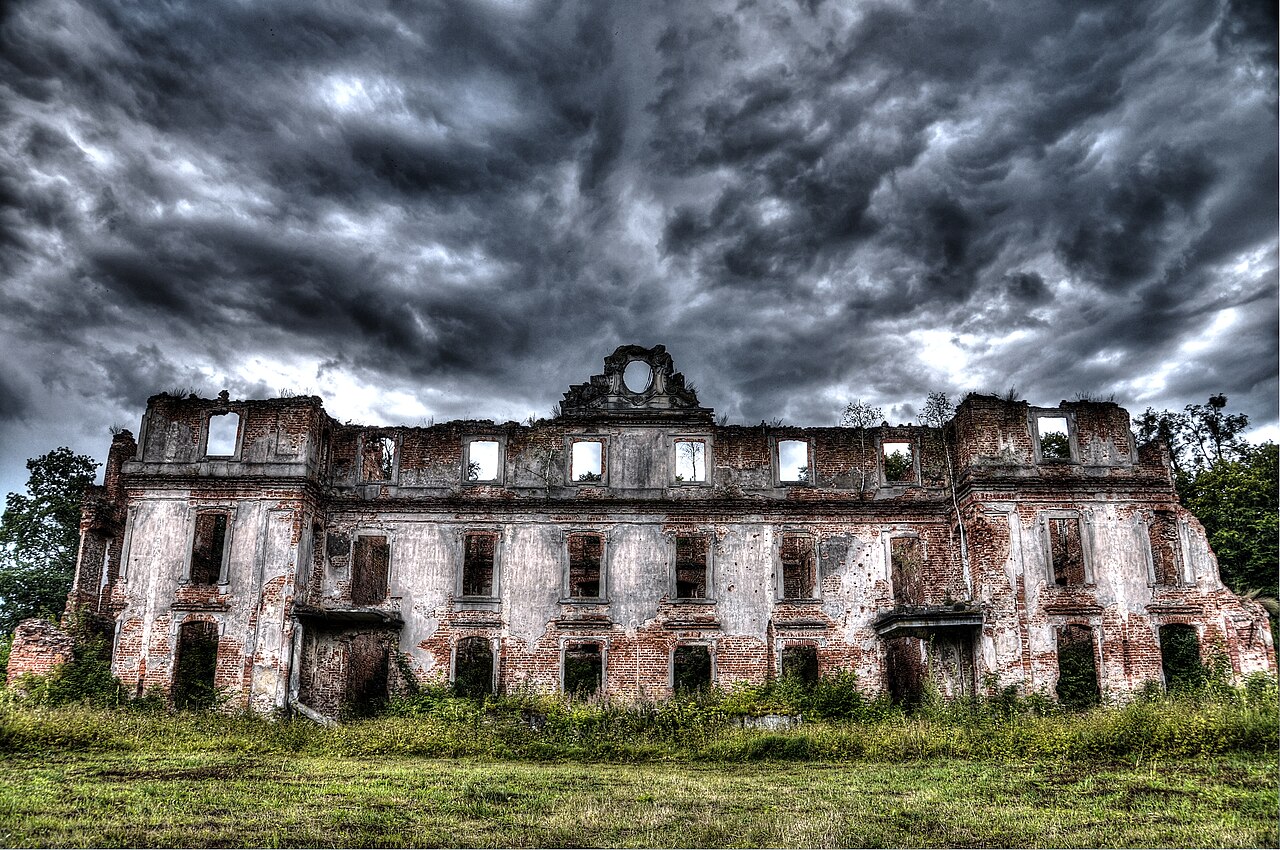
The castle complex endured further damage in the Great Northern War (1701-1702), the Seven Years' War (1756-1763), and the Napoleonic Wars (1807-1809). In the 19th century, Prussian authorities dismantled parts of the fortifications, including the barbican. The hill was partially burned in 1945 during World War II but was later restored, notably through the youth-led "Operation 1001 Frombork" between 1966 and 1973, preparing the site for the 500th anniversary of Copernicus's birth.
Architectural highlights and current status
Today, the cathedral hill in Frombork is a well-preserved historic site open to visitors. The Gothic cathedral remains the dominant structure, accompanied by the bishop's palace which houses the Nicolaus Copernicus Museum. The complex also includes the Gothic chapter house, the canon residences, and the Radziejowski bell tower with its planetarium. Visitors can explore the complete circuit of defensive walls with its two main gates and several towers, including the famous Copernicus Tower.
Frombork stands as a significant cultural and historical monument exemplifying medieval fortification techniques, Gothic ecclesiastical architecture, and the legacy of one of history's greatest astronomers. Its restoration and preservation efforts have made it a key destination for those interested in history, architecture, and science.
Frequently asked questions (FAQ)
- How do I get to Frombork castle?
- Frombork castle is located in the town of Frombork, Poland, accessible by car or local public transport from nearby cities such as Elbląg. The castle hill is well signposted in the town center.
- What are the opening hours of Frombork castle?
- The castle and its museum are generally open daily from 9:00 to 17:00, with variations depending on the season. It is advisable to check the official website for current visiting hours before planning your visit.
- Is there an entry fee to visit Frombork castle?
- Yes, there is an admission fee to access the cathedral hill complex and museums. Prices are modest, with discounts for children, students, and seniors. Some parts of the fortifications may be accessed free of charge.
- What is the historical significance of Frombork castle?
- Frombork castle was the seat of the Warmian bishops and a key religious and administrative center. It is historically significant as the residence of Nicolaus Copernicus, who lived and worked there, and for its role in regional conflicts and Polish-Teutonic history.
- Can I visit the Nicolaus Copernicus Museum at Frombork?
- Yes, the museum is located in the bishop's palace on the cathedral hill and features exhibits on Copernicus's life, work, and the history of the region. It is a highlight of any visit to Frombork.
- Are the fortifications at Frombork accessible to visitors?
- Visitors can walk along much of the surviving defensive walls, including the main gates and several towers such as the Copernicus Tower. The walls provide excellent views and insight into medieval military architecture.
Information
Current owner
State museum
Loading map...
Visitor reviews
No reviews yet. Been here? Write the first review and help other travelers!
Write the first reviewVisited this castle? Share your experience
Your review helps other travelers and adds first-hand knowledge to our encyclopedia.