Balga Castle Ruins
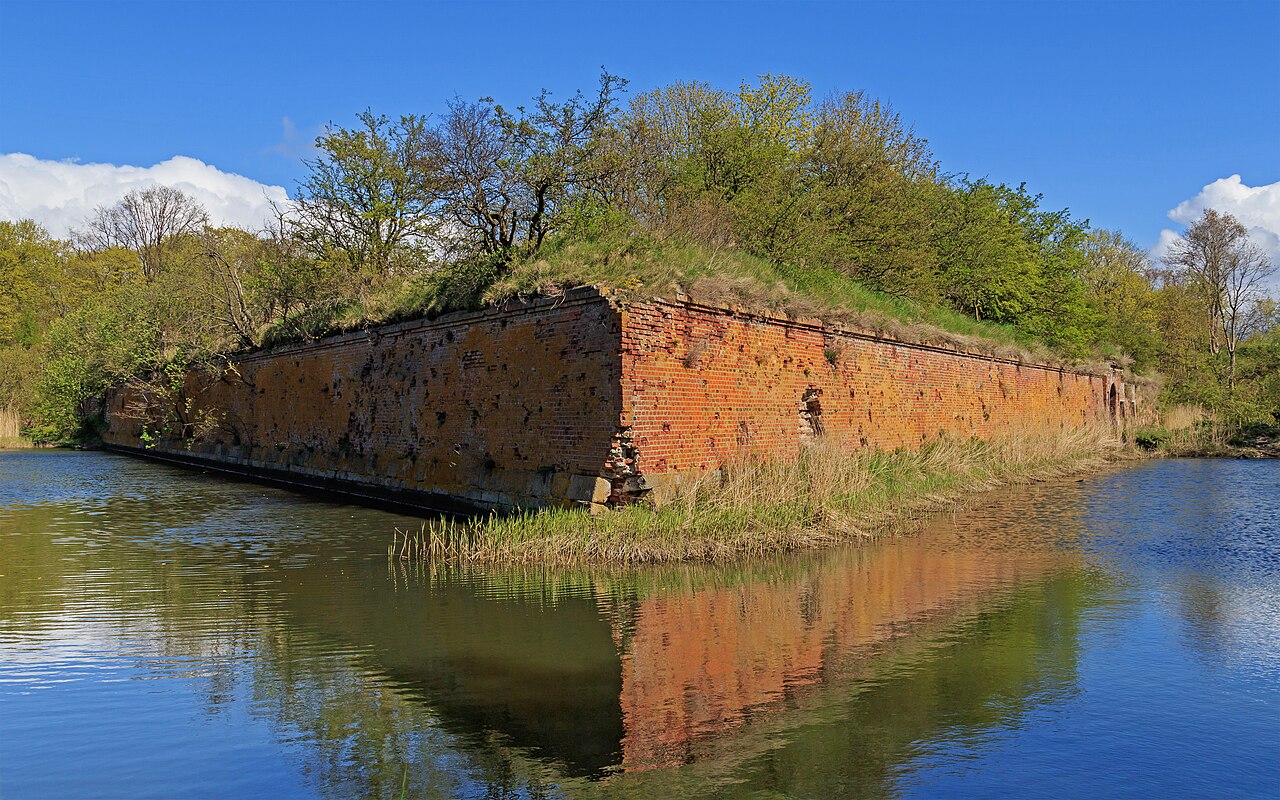
Balga Castle, located in the Kaliningrad Oblast of the Russian Federation, stands as a significant relic of the High Medieval period and the military and religious campaigns of the Teutonic Knights. Originally built in 1239, it represents the earliest Ordensburg constructed by the Order in the region, strategically positioned on a hill to control naval traffic on the Vistula Lagoon.
The site of Balga had long been important before the castle's construction, initially serving as a fortress for the Old Prussian (Warmian) tribe under the name Honeda. In 1237, it was unsuccessfully besieged by Margrave Henry III of Meissen during the Prussian Crusade. However, in 1239, the Teutonic Order, led by Grand Marshal Dietrich von Bernheim, successfully captured the stronghold. This conquest was pivotal in the Order's efforts to subjugate the pagan Prussian tribes and consolidate control along the Baltic coast. The involvement of Duke Otto I of Brunswick-Lüneburg was crucial in securing the territory.
Historical significance and role in the teutonic order
Following its capture, Balga became the administrative center of the Kommende Balga from 1250 and the seat of a Komtur, an official of the Teutonic Knights. Many of the commanders who held office at Balga, such as Winrich von Kniprode and Ulrich von Jungingen, later ascended to the position of Grand Master of the Order, highlighting the castle's importance within the Order's hierarchy.
The castle played a vital role in the military campaigns against the Old Prussians, Warmians, and Natangians, serving as a base for operations and a symbol of the Order's dominance in the region. Its location allowed the Knights to monitor and control maritime routes on the Vistula Lagoon, which was essential for trade and military logistics.
During the 1242 Prussian uprising, the castle's strategic value was underscored when Duke Świętopełk II of Pomerania declared war against the Order, though he was eventually forced to retreat. In 1499, Grand Master Friedrich von Sachsen dissolved the commandery, marking the end of its role as a Teutonic administrative center.
Transition and decline in the early modern period
With the secularization of the Teutonic Order's monastic state in 1525, Balga became part of the Polish Duchy of Prussia. The castle was granted to George of Polentz, the Lutheran Bishop of Samland, who used it as his residence for some time. However, the fortress gradually lost its strategic and administrative importance.
In the 17th century, during the Polish-Swedish War, parts of the castle were deliberately dismantled on the orders of King Gustavus Adolphus of Sweden to provide building materials for the construction of the fortress at Baltiysk (Pillau). Later, in the early 18th century, further demolition was authorized by King Frederick I to support regional fortification efforts.
The castle's surrounding estate, including the village of Balga (later renamed Vesyoloye), was managed as a local administrative unit and passed through various noble families, including the von Buddenbrock and von Glasow families, until the upheavals of World War II.
Architectural features and archaeological remains
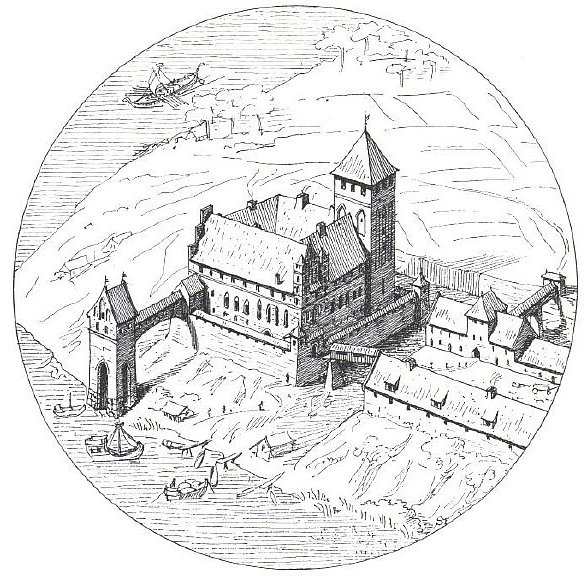
The original castle complex was composed of a hexagonal citadel with an outer bailey. The construction utilized fieldstone foundations combined with brick walls in Wendish bond, a technique that interlocks bricks for structural strength. Decorative elements included richly shaped stones and glazed bricks in red, yellow, and green, which adorned windows, doorways, and vault ribs, adding aesthetic refinement to the military structure.
The inner courtyard was surrounded by a cloister gallery, providing sheltered passageways between different sections of the castle. Key functional areas included a chapel with sculptural decorations, a refectory or dining hall, a chapter house for meetings, and service rooms such as a pantry, kitchen, and brewery, indicating the castle's self-sufficiency.
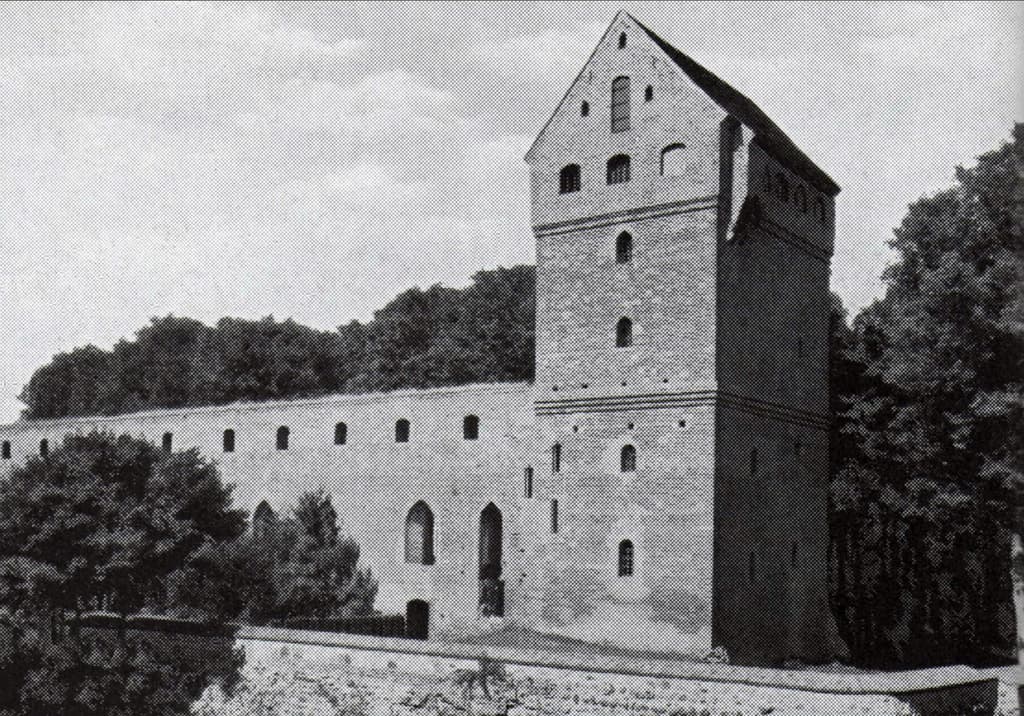
Several towers were part of the complex, including a Dansker tower on the western side overlooking the lagoon, which served as a latrine tower built over water for waste disposal. The precise location and form of the main tower remain uncertain due to the castle's ruinous state.
Archaeological investigations by architect Conrad Steinbrecht in 1887 helped reconstruct the castle's layout and revealed features such as staircases and the inner courtyard of the outer bailey. The castle tower was restored in 1929 and housed a museum until World War II caused further damage.
The ruined church of st. nicholas
Adjacent to the castle lies the ruined church of St. Nicholas, dating from the early 14th century. Its distinctive portal is a notable example of medieval ecclesiastical architecture in the region, reflecting the religious presence that accompanied the castle's military function.
Modern history and preservation efforts
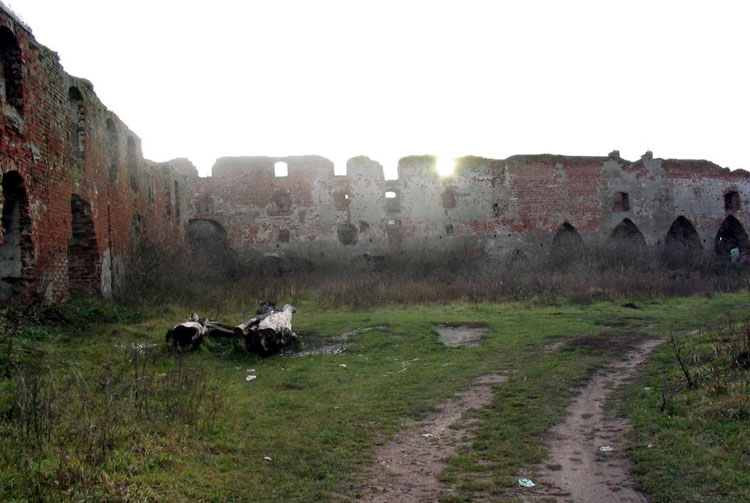
Balga was part of the German province of East Prussia until 1945, when it became a battleground during the East Prussian Offensive of World War II. The castle ruins suffered extensive damage during this conflict. After the war, the region was incorporated into the Soviet Union, and the nearby village of Balga was renamed Vesyoloye and later abandoned.
Interest in the site revived in the 19th and 20th centuries, with archaeological work and restoration of the castle tower. Today, the ruins are a protected cultural heritage site within Russia, with ongoing conservation efforts and public access initiatives that began around 2023. These efforts aim to preserve the remains of this historically significant hill castle and educate visitors about its role in medieval and early modern European history.
Balga Castle remains a powerful symbol of the Teutonic Knights' military and religious campaigns in the Baltic region and offers valuable insights into the architectural and strategic practices of the High Medieval period.
Frequently asked questions (FAQ)
- What is the historical significance of Balga Castle?
- Balga Castle was the earliest fortress built by the Teutonic Knights in the region, serving as a strategic base for their campaigns against the Old Prussian tribes and controlling naval routes on the Vistula Lagoon.
- Can I visit the ruins of Balga Castle today?
- Yes, the ruins of Balga Castle are accessible to the public as a cultural heritage site, with ongoing conservation efforts to preserve the remains and educate visitors about its history.
- When was Balga Castle built and by whom?
- Balga Castle was constructed starting in 1239 by the Teutonic Knights after they captured the site from the Old Prussians during their crusading campaigns.
- What architectural features are notable at Balga Castle?
- The castle featured a hexagonal citadel, an outer bailey, brick walls in Wendish bond, a cloister gallery, a chapel, refectory, chapter house, and a Dansker latrine tower overlooking the lagoon.
- Why did Balga Castle decline in importance?
- After the secularization of the Teutonic Order's state in 1525, Balga lost its military and administrative role, and parts were dismantled in the 17th and 18th centuries for building materials for other fortresses.
Photo gallery

Photo by sendker•Public domain
Information
Loading map...
Visitor reviews
No reviews yet. Been here? Write the first review and help other travelers!
Write the first reviewVisited this castle? Share your experience
Your review helps other travelers and adds first-hand knowledge to our encyclopedia.