Friedrichsfelde Castle — Germany castle

Friedrichsfelde Castle

Friedrichsfelde Palace in Berlin: history and architecture
Berlin, Berlin, Germany
Renaissance (15th–17th c.)
Well Preserved

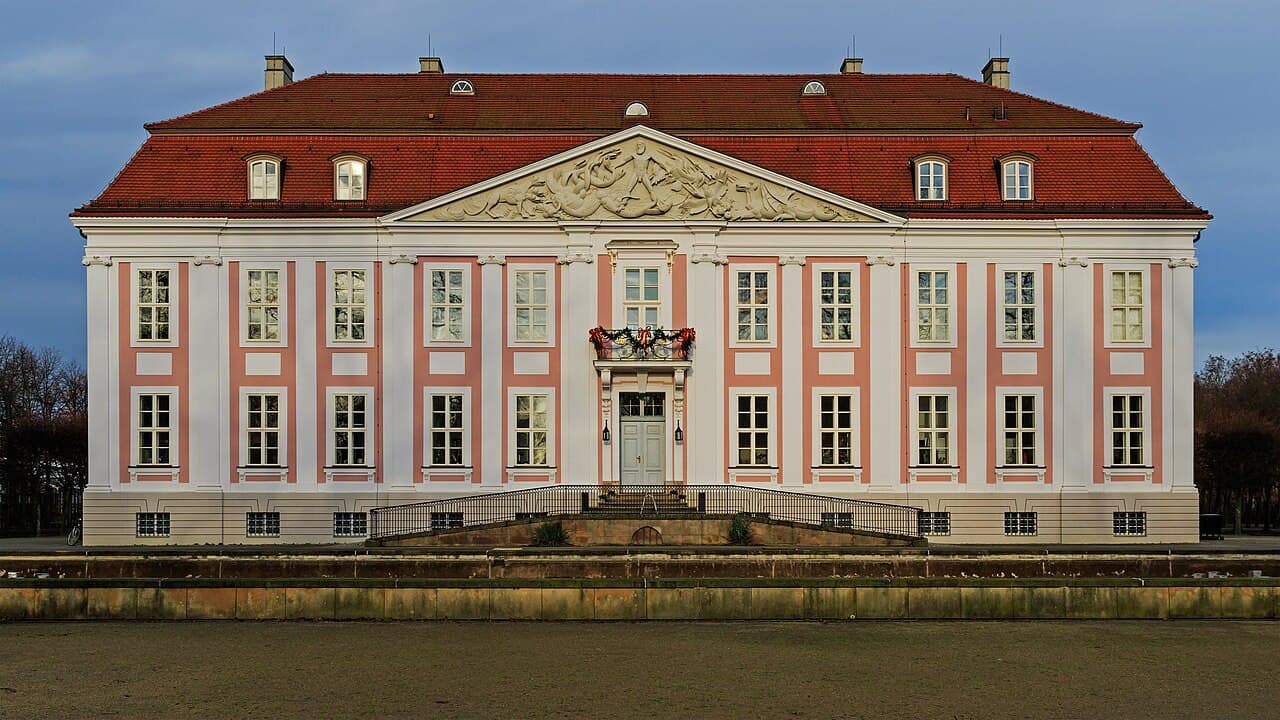
Friedrichsfelde Palace (German: Schloss Friedrichsfelde) is a distinguished neoclassical palace located in the heart of the Tierpark Berlin within the Friedrichsfelde district. Unlike typical medieval castles, Friedrichsfelde Palace is primarily a Renaissance-era structure that underwent significant transformation during the 18th and 19th centuries to adopt its current neoclassical architectural style. It stands as a testament to the evolving tastes and social status of its noble owners over several centuries.

Historical background and ownership

The origins of Friedrichsfelde Palace trace back to the 17th century, when it was constructed as a manor house on a gentle hill, fitting its classification as a hill castle. The estate was owned by various noble Prussian families, reflecting the region's aristocratic culture. Throughout its history, the palace was occasionally under the possession of Prussian kings, which elevated its prestige and importance within the royal domains.

One of the most notable families associated with the palace was the Treskow family, who became its last private owners. Their legacy remains visible in the surrounding park, where the family's landmarked burial ground is located, marking their long-standing connection to the estate and the region.

Architectural evolution and features

Originally built in the Renaissance period, Friedrichsfelde Palace underwent extensive renovations that introduced neoclassical elements, which dominate its current appearance. The palace features a symmetrical façade characterized by elegant columns, pilasters, and a balanced arrangement of windows that reflect the 18th-century neoclassical movement in architecture.

The interior of the palace includes grand halls and chambers designed for noble living and entertaining, with decorations that emphasize classical motifs and refined craftsmanship. The surrounding parkland, part of the palace grounds, enhances the estate's grandeur and provides a scenic setting that complements the architectural style.

Current use and cultural significance

Today, Friedrichsfelde Palace serves as a cultural venue within Tierpark Berlin, offering visitors a glimpse into its noble past and architectural beauty. The palace hosts exhibitions that detail its history and the stories of its former owners, enriching the public's understanding of Prussian heritage.

In addition to exhibitions, the palace is a popular location for classical concerts and various cultural events, making it a vibrant part of Berlin's cultural landscape. Its setting within the Tierpark allows visitors to combine a visit to the palace with exploring one of Europe's largest animal parks, enhancing the overall experience.

Visiting Friedrichsfelde Palace

Visitors to Friedrichsfelde Palace can enjoy guided tours that highlight the architectural features and historical context of the estate. The palace's location in Berlin-Friedrichsfelde makes it accessible for both local residents and tourists interested in history, architecture, and cultural events.

The palace's well-maintained condition allows for a comfortable and informative visit, with opportunities to attend concerts and exhibitions throughout the year. Its integration into the Tierpark Berlin adds a unique dimension, combining natural beauty with historical architecture.

Frequently asked questions (FAQ)

What is the historical significance of Friedrichsfelde Palace?
Friedrichsfelde Palace reflects the noble heritage of Prussian families and was occasionally owned by Prussian kings, showcasing Renaissance origins and neoclassical renovations.
When was Friedrichsfelde Palace originally built?
The palace was originally constructed in the 17th century during the Renaissance period and later remodeled in neoclassical style.
Can I visit Friedrichsfelde Palace and attend events there?
Yes, Friedrichsfelde Palace is open to visitors and hosts exhibitions, classical concerts, and cultural events throughout the year.
Where is Friedrichsfelde Palace located?
It is located in the Friedrichsfelde district of Berlin, within the Tierpark Berlin, making it easily accessible to visitors.
What architectural style characterizes Friedrichsfelde Palace?
The palace features a neoclassical style, with symmetrical façades, classical columns, and elegant interiors reflecting 18th-century design trends.

Photo gallery

Friedrichsfelde Castle
Click to view

Photo by A.Savin•FAL

1 photo • Click any image to view in full screen

Information

Hill Castle

Current owner

Municipality

Loading map...

Visitor reviews

No reviews yet. Been here? Write the first review and help other travelers!

Write the first review

Visited this castle? Share your experience

Your review helps other travelers and adds first-hand knowledge to our encyclopedia.
Write a review

(5/5)

0/2000 characters

Your review will be visible after admin approval

Nearby castles

8.4 km
Spandau Citadel — Germany castle

Spandau Citadel

Berlin, Germany

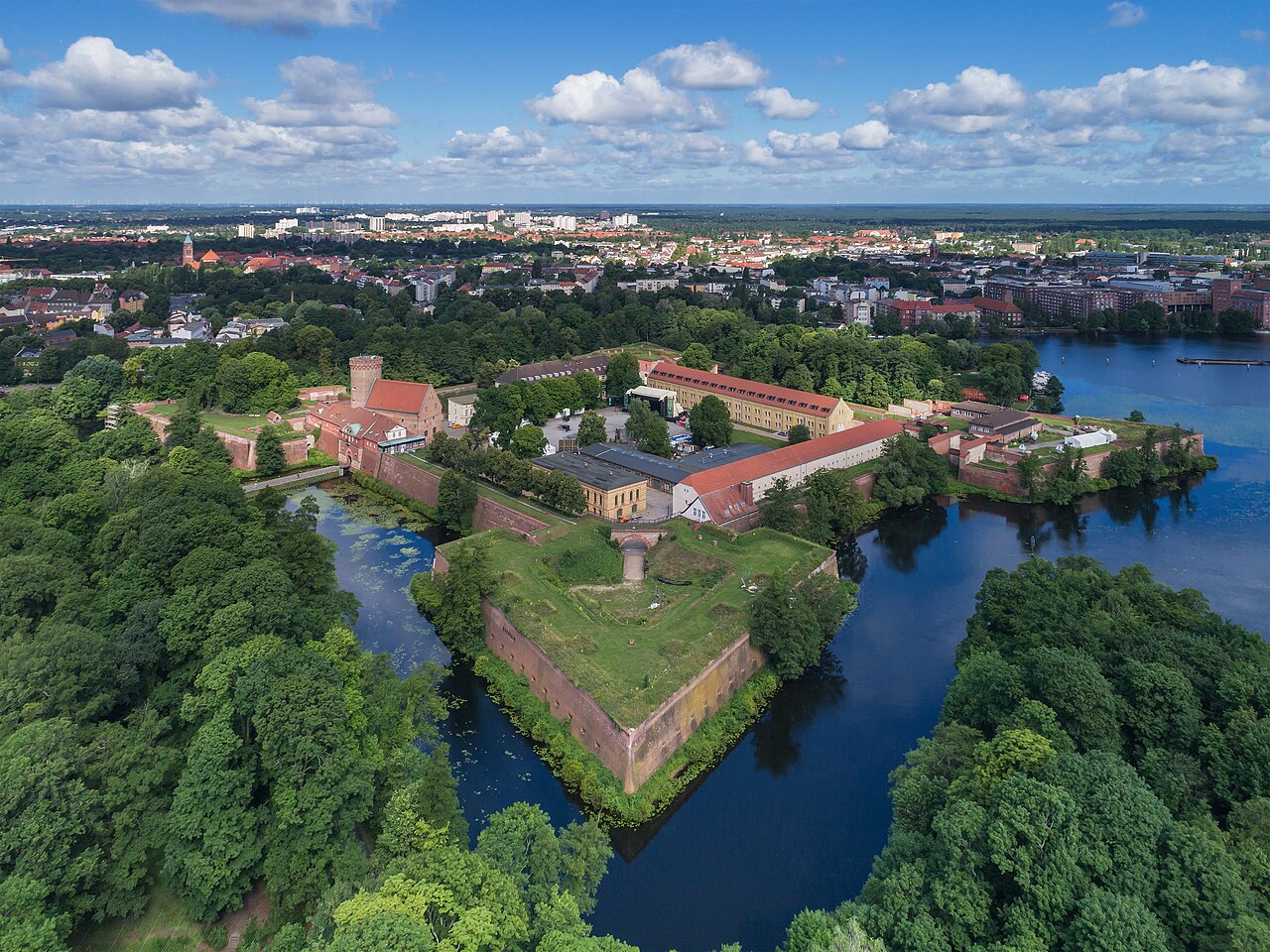
Spandau Citadel stands as one of the most remarkable and well-preserved Renaissance military fortresses in Europe. Situated in the western district of Berlin, this imposing fortress was constructed between 1559 and 1594 on the site of an earlier medieval fortification. Its strategic location on an island formed by the confluence of the Havel and Spree rivers was carefully chosen to defend the town of Spandau, which later became part of Berlin. The citadel exemplifies the military architectural innovations of the Renaissance period, designed to withstand the evolving artillery technology of the 16th century. Historical context and strategic importance The origins of the Spandau Citadel trace back to a medieval fortress that guarded the town of Spandau, a key trading and military hub due to its river junction. During the mid-16th century, advances in siege warfare and cannon technology necessitated a new style of fortification. The existing medieval structures were inadequate against artillery bombardment, prompting the Elector of Brandenburg to commission a modern fortress. Construction began in 1559 under the direction of Italian military engineer Francesco Chiaramella de Gandino, who brought Renaissance fortification principles to the project. The citadel was built to serve as a defensive stronghold protecting the approaches to Berlin from the west, as well as a garrison and administrative center. Architectural features and design Renaissance bastion fort design The Spandau Citadel is a quintessential example of a Renaissance bastion fortress, characterized by its star-shaped layout with angular bastions designed to eliminate blind spots and provide overlapping fields of fire. The fortress is surrounded by a wide moat fed by the adjacent rivers, enhancing its defensive capabilities. The walls are constructed of robust brick masonry, typical of northern German fortifications, and the bastions are equipped with artillery platforms. The fortress includes a main gatehouse with a drawbridge, multiple defensive towers, and thick curtain walls designed to absorb cannon fire. Interior structures and functional spaces Inside the citadel, there are several buildings including barracks, storage facilities, and administrative offices. The casemates—vaulted chambers within the walls—were used for housing troops and storing munitions safely. The central courtyard served as a parade ground and gathering space for the garrison. Role through history Throughout its history, the Spandau Citadel has played various military and administrative roles. It was a key defensive site during the Thirty Years' War and later conflicts. In the 19th and early 20th centuries, the fortress was adapted for use as a prison and military depot. During World War II, the citadel suffered some damage but remained largely intact. After the war, it was preserved as a cultural monument and converted into a museum. Today, it hosts exhibitions on military history and Renaissance architecture, attracting numerous visitors annually. Current status and visitor experience The Spandau Citadel is managed as a museum and cultural venue, offering guided tours that highlight its architectural features and historical significance. Visitors can explore the extensive ramparts, bastions, and interior buildings, gaining insight into Renaissance military engineering. The site also hosts concerts, festivals, and educational programs, making it a vibrant cultural hub in Berlin. Its well-preserved condition and picturesque riverside setting contribute to its popularity among tourists and locals alike. Architectural legacy and cultural significance The Spandau Citadel remains a prime example of Renaissance military architecture in northern Europe. Its design reflects the transition from medieval fortifications to modern bastioned defenses, incorporating Italian innovations adapted for German conditions. As one of the best-preserved fortresses of its kind, it provides valuable insights into 16th-century military strategy, engineering, and urban defense. The citadel's preservation allows scholars and visitors alike to appreciate the complexity and ingenuity of Renaissance fortification design.

Renaissance (15th–17th c.)
Details
8.7 km
Berlin Fortress — Germany castle

Berlin Fortress

, Germany

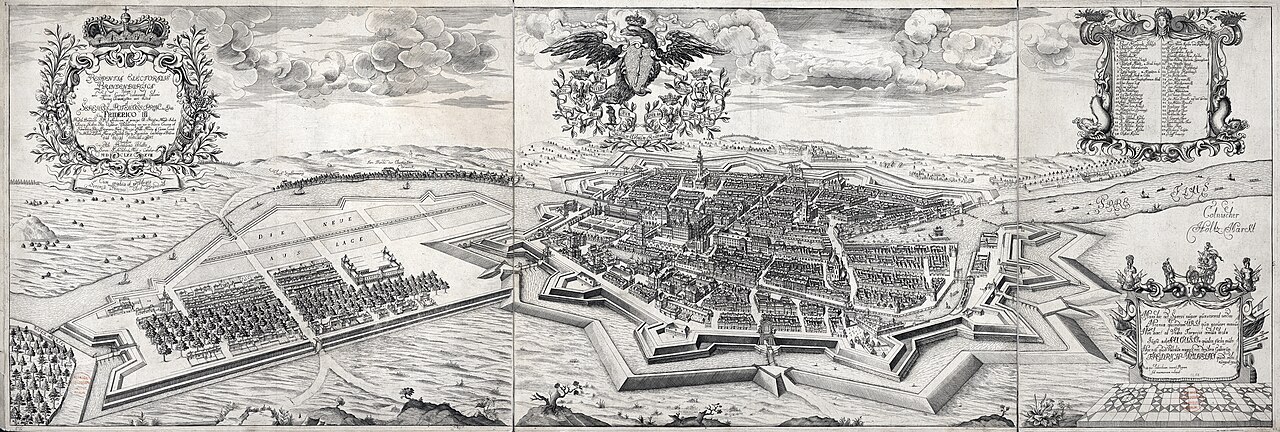
The Berlin Fortress (Festung Berlin) was a significant 17th-century bastion fort that served as the primary fortification for the historic city of Berlin. Construction began around 1650, reflecting the military architectural trends of the Renaissance period with its characteristic bastioned walls, moats, ramparts, and glacis. The fortress was designed to protect Berlin by encircling the city limits, creating a formidable defensive barrier against potential invaders. Architectural design and fortifications The layout of the Berlin Fortress followed the principles of the bastion fort or trace italienne style, which was prevalent in Europe during the 16th and 17th centuries. This design featured angled bastions projecting from the main walls, allowing defenders to cover adjacent walls with overlapping fields of fire. The fortress included thick stone and earth ramparts reinforced to absorb and deflect artillery fire, a wide moat surrounding the walls to hinder enemy approach, and a glacis—a gently sloping embankment to expose attackers to defensive fire while protecting the walls from direct artillery hits. The walls and ramparts enclosed the historic core of Berlin, marking the city's limits at the time. The fortress was not a single castle structure but rather a complex system of fortifications integrated into the urban fabric, reflecting the evolving military technology and urban defense needs of the early modern period. Historical context and evolution Constructed during the mid-17th century, the Berlin Fortress was part of the broader trend of European cities upgrading their defenses in response to the increased use of gunpowder artillery. Berlin, then growing as a political and economic center, required robust fortifications to protect against siege warfare common in the Thirty Years' War and subsequent conflicts. However, the fortress's military relevance declined by the early 18th century as warfare tactics evolved and urban expansion made the fortifications restrictive to the city's growth. Beginning in 1740, the demolition of the fortress's ramparts commenced, gradually dismantling the defensive walls to accommodate urban development and modernization. Remnants and archaeological significance Today, the Berlin Fortress exists primarily as archaeological ruins, with some sections of the original ramparts and moat traces still visible in parts of modern Berlin. These remnants offer valuable insights into the city's Renaissance-era military architecture and urban planning. Archaeological excavations have uncovered foundations and structural elements that reveal the fortress's scale and construction techniques. The site is important for understanding the transformation of Berlin from a fortified medieval town to a modern capital. Cultural heritage and public access While most of the fortress no longer stands, its historical footprint influences Berlin's urban layout. Some parks and streets follow the lines of the former ramparts, preserving the memory of the city's defensive past. Visitors interested in Berlin's military and urban history can explore museum exhibits and guided tours that discuss the fortress's role and its impact on the city's development. The archaeological sites are occasionally accessible, often integrated into broader heritage trails around Berlin's historic center.

Renaissance (15th–17th c.)
Details
8.8 km
Monbijou Palace — Germany castle

Monbijou Palace

Berlin, Germany

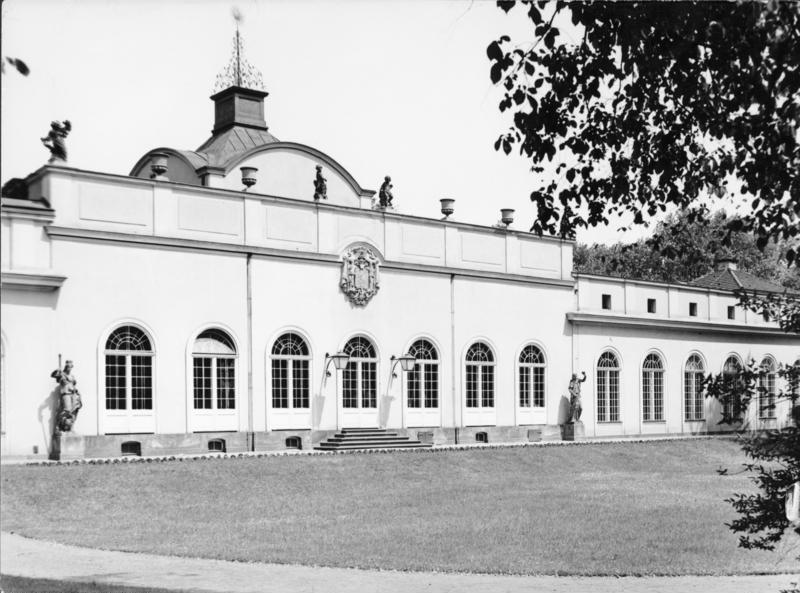
Monbijou Palace was a prominent Rococo palace situated in central Berlin, Germany. It stood on the north bank of the Spree river, directly opposite the site of today's Bode Museum and within view of the Hohenzollern city palace. Constructed in the 18th century, this elegant palace exemplified the post-Renaissance architectural period with its characteristic Rococo style, which emphasized ornate decoration, intricate detailing, and graceful forms.The palace was originally designed as a summer residence and was renowned for its refined aesthetic and lavish interiors. Its location in the heart of Berlin made it a significant cultural and social landmark during its time. The palace featured a series of formal gardens and courtyards that complemented its architectural grandeur, enhancing its status among the royal residences of the city.Architectural features and styleMonbijou Palace was distinguished by its Rococo architectural style, which was popular in the 18th century across Europe. This style is marked by asymmetrical designs, elaborate stucco work, and ornamental motifs such as shells, flowers, and scrolls. The palace's façade would have displayed these delicate decorations, combined with large windows and elegant balconies that allowed natural light to flood the interior spaces.The structure was composed of several wings arranged around courtyards, typical of palace design of the period, providing both private and public spaces. The interiors were richly decorated with frescoes, stuccoes, and gilded details, creating an atmosphere of luxury and artistic refinement. The palace's layout facilitated both intimate gatherings and grand receptions, reflecting the social customs of the time.Historical significance and ownershipMonbijou Palace held considerable importance as a royal residence and a symbol of aristocratic life in Berlin. It was associated with various members of the Prussian royal family and served as a venue for courtly events and cultural activities. The palace's proximity to other notable landmarks underscored its role within the urban fabric of Berlin's royal district.Throughout its history, the palace witnessed many changes in ownership and function, adapting to the evolving political and social landscape of Germany. Despite these changes, it remained a cherished architectural and cultural monument until the 20th century.Destruction and current statusDuring World War II, Monbijou Palace suffered extensive damage from bombing raids. The destruction left the structure in a state of ruin, with much of its ornate detailing and structural integrity compromised. After the war, the palace ruins stood as a reminder of the city's wartime suffering and the loss of its architectural heritage.In 1959, the authorities of East Berlin decided to demolish the remaining ruins completely. This decision was part of broader urban redevelopment plans and the political context of the time, which often prioritized modernization over preservation. Since then, the site has been transformed into Monbijou Park, a public green space that commemorates the palace's historical presence but contains no reconstructed elements of the original building.Legacy and cultural memoryAlthough Monbijou Palace no longer exists, its legacy persists through historical records, paintings, and photographs that document its architectural beauty and cultural role. The palace is remembered as an example of 18th-century Rococo architecture in Berlin and as part of the city's rich royal heritage.The site continues to attract interest from historians, architects, and visitors who seek to understand Berlin's architectural evolution and the impact of war on cultural landmarks. Monbijou Park serves as a quiet reminder of the palace's past, inviting reflection on the importance of preserving historical sites for future generations.

Post-Renaissance (17th–18th c.)
Details