Monbijou Palace was a prominent Rococo palace situated in central Berlin, Germany. It stood on the north bank of the Spree river, directly opposite the site of today's Bode Museum and within view of the Hohenzollern city palace. Constructed in the 18th century, this elegant palace exemplified the post-Renaissance architectural period with its characteristic Rococo style, which emphasized ornate decoration, intricate detailing, and graceful forms.
The palace was originally designed as a summer residence and was renowned for its refined aesthetic and lavish interiors. Its location in the heart of Berlin made it a significant cultural and social landmark during its time. The palace featured a series of formal gardens and courtyards that complemented its architectural grandeur, enhancing its status among the royal residences of the city.
Architectural features and style
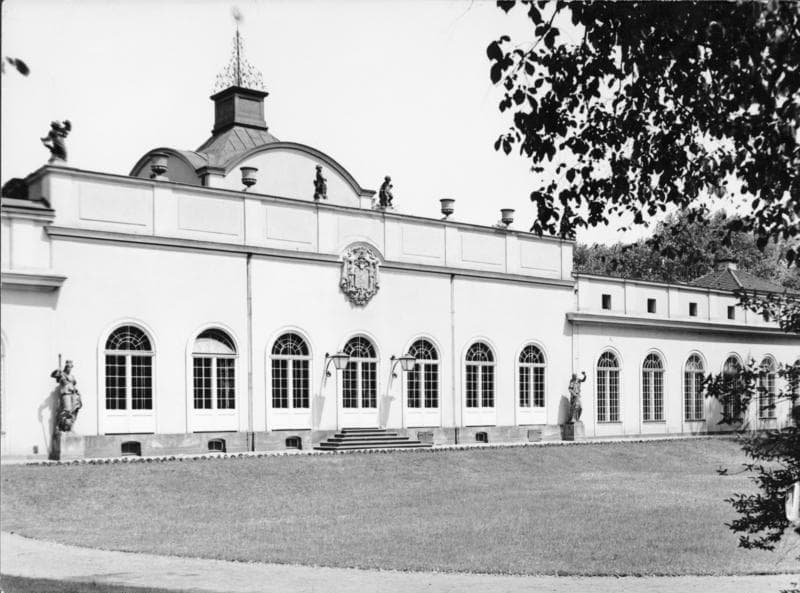
Monbijou Palace was distinguished by its Rococo architectural style, which was popular in the 18th century across Europe. This style is marked by asymmetrical designs, elaborate stucco work, and ornamental motifs such as shells, flowers, and scrolls. The palace's façade would have displayed these delicate decorations, combined with large windows and elegant balconies that allowed natural light to flood the interior spaces.
The structure was composed of several wings arranged around courtyards, typical of palace design of the period, providing both private and public spaces. The interiors were richly decorated with frescoes, stuccoes, and gilded details, creating an atmosphere of luxury and artistic refinement. The palace's layout facilitated both intimate gatherings and grand receptions, reflecting the social customs of the time.
Historical significance and ownership
Monbijou Palace held considerable importance as a royal residence and a symbol of aristocratic life in Berlin. It was associated with various members of the Prussian royal family and served as a venue for courtly events and cultural activities. The palace's proximity to other notable landmarks underscored its role within the urban fabric of Berlin's royal district.
Throughout its history, the palace witnessed many changes in ownership and function, adapting to the evolving political and social landscape of Germany. Despite these changes, it remained a cherished architectural and cultural monument until the 20th century.
Destruction and current status
During World War II, Monbijou Palace suffered extensive damage from bombing raids. The destruction left the structure in a state of ruin, with much of its ornate detailing and structural integrity compromised. After the war, the palace ruins stood as a reminder of the city's wartime suffering and the loss of its architectural heritage.
In 1959, the authorities of East Berlin decided to demolish the remaining ruins completely. This decision was part of broader urban redevelopment plans and the political context of the time, which often prioritized modernization over preservation. Since then, the site has been transformed into Monbijou Park, a public green space that commemorates the palace's historical presence but contains no reconstructed elements of the original building.
Legacy and cultural memory
Although Monbijou Palace no longer exists, its legacy persists through historical records, paintings, and photographs that document its architectural beauty and cultural role. The palace is remembered as an example of 18th-century Rococo architecture in Berlin and as part of the city's rich royal heritage.
The site continues to attract interest from historians, architects, and visitors who seek to understand Berlin's architectural evolution and the impact of war on cultural landmarks. Monbijou Park serves as a quiet reminder of the palace's past, inviting reflection on the importance of preserving historical sites for future generations.
Frequently asked questions (FAQ)
- What is the history of Monbijou Palace?
- Monbijou Palace was built in the 18th century as a Rococo summer residence in central Berlin. It served as a royal residence and cultural venue until it was heavily damaged during World War II and subsequently demolished in 1959.
- Can I visit Monbijou Palace today?
- The original palace no longer exists, as it was demolished after World War II. Visitors can explore Monbijou Park, located on the former palace site, which offers a green space and historical context but no standing structures.
- What architectural style was Monbijou Palace built in?
- Monbijou Palace was constructed in the Rococo style, characterized by ornate decoration, asymmetrical designs, and elaborate stucco work typical of 18th-century European architecture.
- Why was Monbijou Palace demolished?
- The palace was heavily damaged during World War II. The East Berlin authorities decided to demolish the ruins in 1959 as part of urban redevelopment efforts and political priorities of the time.
- Where was Monbijou Palace located?
- The palace was located on the north bank of the Spree river in central Berlin, across from the current Bode Museum and near the former Hohenzollern city palace.
Photo gallery

Information
Address
Monbijou Park, Berlin, Germany
Loading map...
Visitor reviews
No reviews yet. Been here? Write the first review and help other travelers!
Write the first reviewVisited this castle? Share your experience
Your review helps other travelers and adds first-hand knowledge to our encyclopedia.