Fredriksberg Fortress
Fredriksberg fortress is a historic military stronghold located on the Nordnes peninsula in Bergen, Norway. Strategically positioned on the peninsula's highest point, the fortress overlooks the sea with a steep cliff face to the west, providing a natural defensive advantage. Its construction was initiated in the aftermath of the Battle of Vågen (1665), a naval conflict that underscored the need for improved coastal defenses in Bergen. The fortress is named after King Fredrik III of Norway, reflecting its royal patronage and importance in the region's defense system during the Renaissance period.
Construction and design
The fortress was designed and overseen by the renowned Dutch engineer Major General Henrik Ruse (1624-1679), who was instrumental in fortification efforts across Scandinavia. Construction began in 1666 and continued through 1667. The original plan featured a complex layout with three bastions and a half bastion on the landward side, complemented by a defensive wall along the cliff edge to the west. This design aimed to maximize defense against both land and sea attacks. However, the initial construction stalled, and the fortifications began to deteriorate over time.
Following a 1695 inspection of Bergen by Christian Gyldenløve, the son of Christian V of Denmark, construction resumed with modifications. By 1706, the fortress was completed, albeit with a simplified layout compared to the original ambitious plans. The fortress thus represents an evolution in military architectural design, balancing practical constraints with defensive needs.
Architectural features and military functions
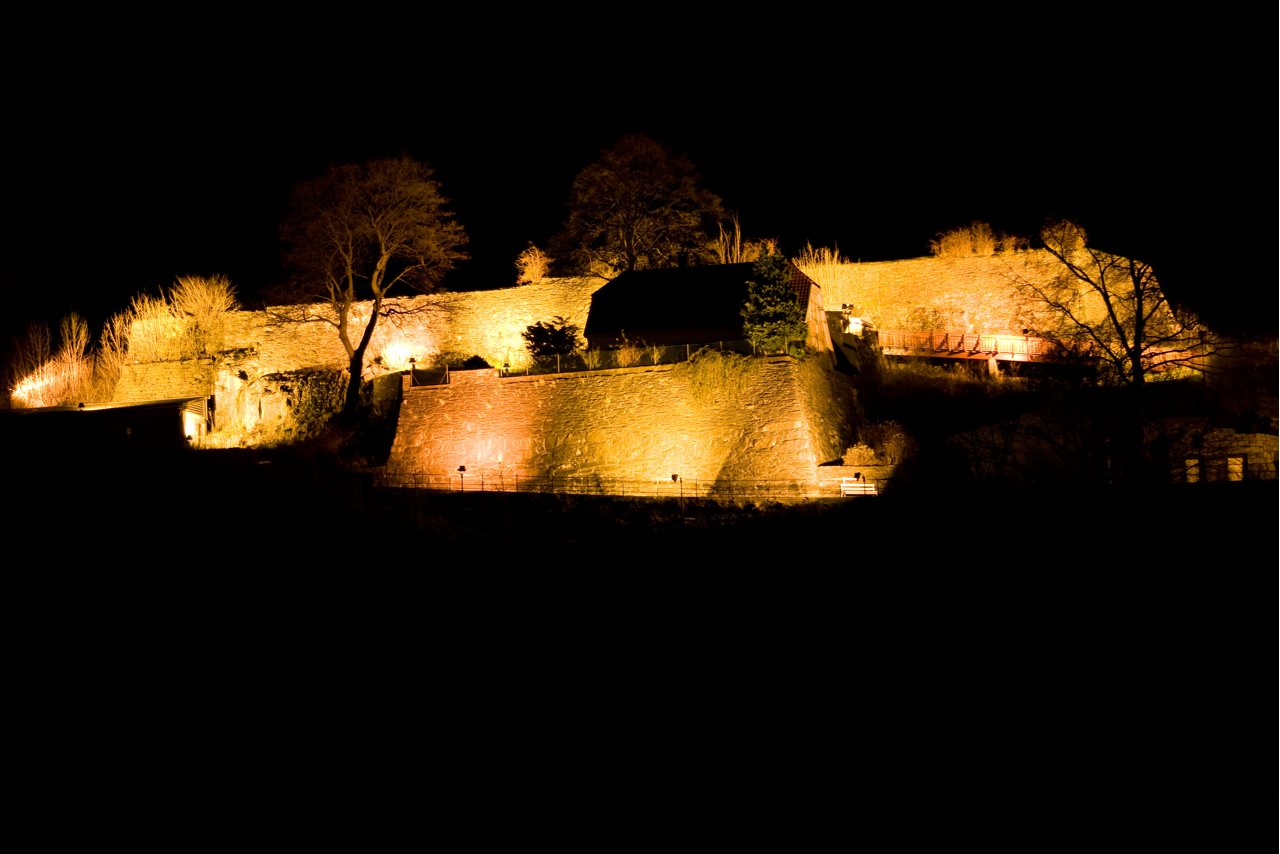
Fredriksberg fortress is characterized by its Renaissance-style bastioned fortifications, typical of 17th-century military architecture influenced by the Dutch school of fortification. The bastions provided overlapping fields of fire, allowing defenders to cover all approaches. The bastion named Katten, constructed in 1666, is situated in what is now Nordnes Park, demonstrating how military structures have been integrated into modern urban green spaces.
The fortress grounds included various military buildings, such as the Lavette houses, built in 1810 and 1843 for storage of artillery and supplies. These buildings later served as temporary housing following the 1916 Bergen city fire. The fortress also served as a site of executions, with the area in front of the Lavette houses used for this purpose until at least 1876, when the Swedish counterfeiter Jacob Wallin was executed.
Role in fire fighting and civil use
Beyond its military functions, Fredriksberg fortress played a significant role in Bergen's civil defense. From 1667, it operated as a fire watch station, monitoring the city for fires. Later, between 1905 and 1926, it functioned as a full fire station. These roles highlight the fortress's integration into the urban fabric and its adaptability to changing civic needs.
Modern legacy and cultural significance
Today, the fortress is the headquarters of the Nordnæs Bataillon, a traditional Bergen youth marching corps known as a buekorps. The fortress and its surrounding areas, including Nordnes Park, are important cultural landmarks that preserve Bergen's military heritage and provide public recreational space.
The transformation of parts of the fortress, such as the incorporation of bastions into the park and adaptive reuse of military buildings, reflects broader trends in heritage conservation and urban planning. Fredriksberg fortress stands as a testament to Bergen's strategic maritime importance in the 17th and 18th centuries and its evolving role within the community.
Historical context and strategic importance
Fredriksberg fortress was built during a period of intense military competition in Northern Europe, particularly between Denmark-Norway and Sweden. Its location on Nordnes allowed control over the harbor approaches to Bergen, one of Norway's most important ports. The fortress's construction shortly after the Battle of Vågen reflects the urgency to strengthen defenses following the conflict, which involved English and Dutch naval forces.
The fortress's design and later modifications illustrate the adaptation of Renaissance military architecture to the specific topography and strategic needs of Bergen. Its bastions and walls were designed to withstand artillery sieges, a common threat in the era's warfare.
Architectural details and preservation
The fortress's surviving structures include parts of the bastioned walls, the Lavette houses, and other military buildings. While some original features have been lost or altered, the site remains well preserved and accessible to the public. The integration of the fortress into Nordnes Park has helped protect its remains and maintain its visibility within the cityscape.
Efforts to preserve Fredriksberg fortress emphasize its dual historical significance as both a military installation and a civic landmark. Its preservation contributes to understanding the development of fortification techniques and urban defense in Norway during the Renaissance period.
Visitor information and accessibility
Visitors to Fredriksberg fortress can explore the fortress grounds and enjoy panoramic views of Bergen and the surrounding fjords. The site is open to the public, with no entrance fee, and is accessible year-round. The nearby Nordnes Park offers walking paths and green spaces that complement the historical experience.
The fortress's role as the home of the Nordnæs Bataillon also means that visitors may encounter cultural events and parades, especially during Bergen's traditional buekorps season in spring.
Frequently asked questions (FAQ)
- When was Fredriksberg fortress built and by whom?
- Fredriksberg fortress was constructed between 1666 and 1706, initially designed by Dutch engineer Major General Henrik Ruse.
- What architectural style characterizes Fredriksberg fortress?
- The fortress features Renaissance-style bastioned fortifications typical of 17th-century military architecture influenced by Dutch designs.
- Can I visit Fredriksberg fortress and is there an entrance fee?
- Yes, Fredriksberg fortress is open to the public year-round with no entrance fee, offering access to the grounds and panoramic views.
- What is the historical significance of the bastion named Katten?
- Katten bastion, built in 1666, is part of the original fortress and now lies within Nordnes Park, illustrating the integration of military structures into urban green spaces.
- What role did Fredriksberg fortress play in Bergen's fire fighting history?
- Fredriksberg fortress served as a fire watch station from 1667 and later as a fire station from 1905 to 1926, highlighting its civic importance beyond military defense.
- Is Fredriksberg fortress associated with any cultural organizations today?
- Today, the fortress is the headquarters of Nordnæs Bataillon, a traditional Bergen youth marching corps known as a buekorps.
Information
Current owner
Nordnæs Bataillon
Loading map...
Visitor reviews
No reviews yet. Been here? Write the first review and help other travelers!
Write the first reviewVisited this castle? Share your experience
Your review helps other travelers and adds first-hand knowledge to our encyclopedia.