Bergenhus Fortress
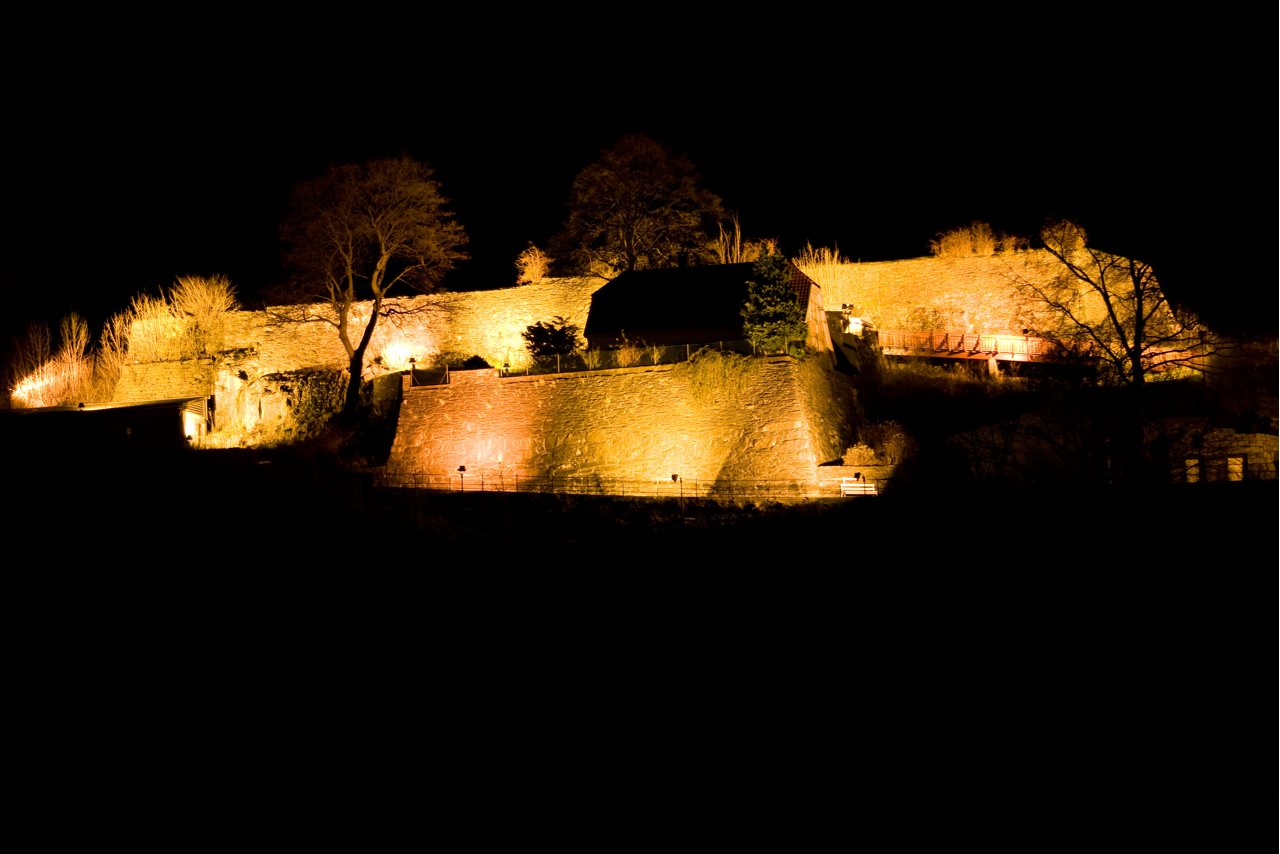
Bergenhus Fortress stands as one of the oldest and best-preserved castles in Norway, located at the strategic entrance to Bergen harbour. Its origins trace back to the early 12th century when the site, known as Holmen, served as the royal residence and political center of Bergen, which was then the capital of Norway. The fortress complex includes buildings dating from the 1240s, alongside later additions from various periods, including World War II. This rich layering of history makes Bergenhus a remarkable example of medieval and post-medieval fortification architecture.
The medieval origins and royal significance
Originally, the area known as Holmen housed the royal estate established by King Øystein Magnusson in the early 1100s. Bergen served as Norway's capital until 1299, making Holmen the main seat of Norwegian rulers during the High Middle Ages. Excavations have revealed foundations of buildings potentially dating before 1100, possibly linked to King Olav Kyrre, indicating the site's long-standing importance.
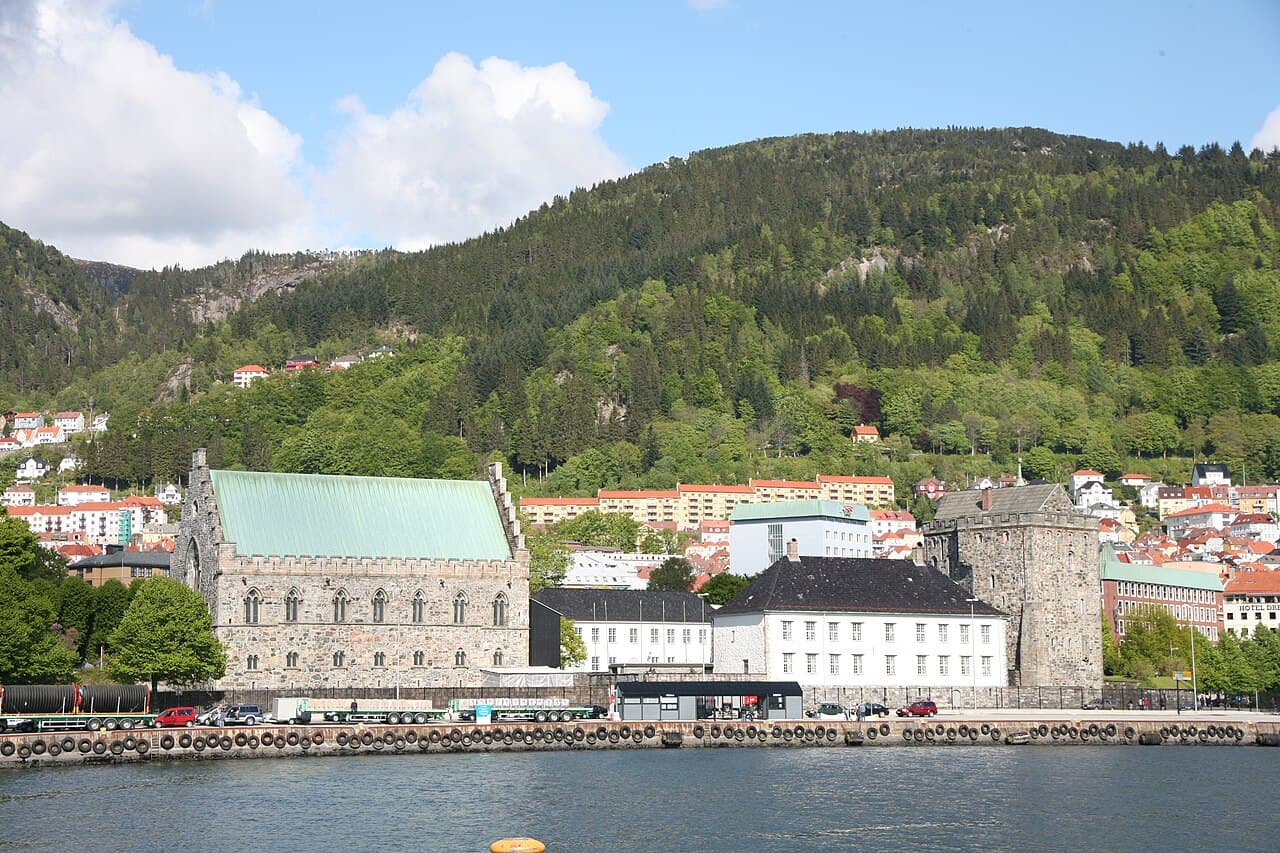
In the 13th century, King Håkon IV commissioned the construction of Haakon's Hall around 1260, which remains the largest medieval secular building in Norway. This grand hall was used for royal banquets, coronations, and significant state events. Shortly after, around 1270, King Magnus VI Lagabøte built a defensive tower by the sea, later known as the Rosenkrantz Tower, which included a royal apartment on its upper floor. These structures symbolized the fortress's dual role as a royal residence and a defensive stronghold.
Holmen also contained several medieval churches, including the prominent Christ Church, which was the site of Norway's first royal coronation in 1163 and housed the shrine of Saint Sunniva, the patron saint of Bergen and western Norway. The church was a burial site for at least six Norwegian kings and members of the royal family, underscoring the site's religious and political significance. The church was dismantled in the early 16th century as the fortress transitioned to a purely military function.
Transformation into a military fortress
Following Bergen's loss of status as the capital to Oslo in 1299, Bergenhus shifted from a royal residence to a military and administrative fortress. In the early 16th century, under Danish rule, the religious buildings were removed to strengthen the site's defensive capabilities. The name Bergenhus came into use around this period.
Significant fortification enhancements occurred during the governorship of Erik Rosenkrantz in the 1560s. He expanded the Rosenkrantz Tower with the help of Scottish masons, adding dungeons, governor's apartments, and artillery placements, transforming it into a multi-functional defensive structure. By the 17th century, the fortress was linked to nearby Sverresborg Fortress through bastions, creating a more comprehensive defensive network.
Bergenhus played a role in the Battle of Vågen in 1665, a naval engagement during the Second Anglo-Dutch War, highlighting its ongoing military importance.
Architectural features and surviving structures
The fortress complex today includes several well-preserved medieval and post-medieval buildings. Haakon's Hall is a three-story stone structure with a cellar and a large ceremonial hall. Its original timber roof was destroyed in the 1944 explosion during World War II but was meticulously reconstructed during post-war restorations. The hall serves today as a venue for official banquets and cultural events.
The Rosenkrantz Tower originated in the 13th century and was extensively modified in the 1560s. It features multiple floors including dungeons, residential apartments, and artillery platforms. Its robust stone masonry and strategic location by the sea made it a formidable defensive structure. From the 18th century until the early 20th century, it was used as a gunpowder magazine and has been accessible to the public since 1966.
Other historic buildings within the fortress include the Kommandantboligen and Stallbygningen, dating from the early 18th century, originally serving as the commandant's residence and stables. The Portkastellet, built during King Håkon Håkonsson's reign, and the Kapteinvaktmesterboligen from 1714, further illustrate the fortress's continuous use and adaptation over centuries. The 19th-century Hovedvakten and the Artilleribygningen, used as a gunpowder laboratory, add to the site's layered architectural narrative.
The fortress was originally enclosed by stone walls from the 1240s, with bastions and moats added over time. A drawbridge constructed around 1520 controlled access across the moat. The parade ground within the fortress has historically been used for military drills and today hosts public events and concerts, particularly in the adjacent Koengen area.
Damage, restoration, and modern use
During World War II, the fortress was used as a German naval headquarters. On 20 April 1944, a devastating explosion occurred when a Dutch ship loaded with about 120 tons of dynamite detonated in Bergen harbour just outside the fortress walls. This blast caused severe damage to several buildings, including Haakon's Hall and the Rosenkrantz Tower. Post-war restoration efforts, led by architect Gerhard Fischer, carefully rebuilt the damaged structures, restoring their historical appearance by the 1950s and continuing through the 1970s.
Today, Bergenhus Fortress is under the command of the Royal Norwegian Navy, with about 150 military personnel stationed there. While it no longer functions as an active defensive fortification, it remains a military administrative base and a cultural venue. Haakon's Hall and Rosenkrantz Tower are open to the public, attracting visitors interested in Norway's medieval history and military heritage.
The fortress grounds also host concerts and public events, with the Koengen area serving as a popular open-air concert venue. The site includes a museum that showcases exhibitions on local resistance during World War II, wartime censorship, and Norway's military history, managed by Forsvarsbygg.
Historical and cultural significance
Bergenhus Fortress is a symbol of Norway's medieval royal power and military resilience. Its well-preserved medieval structures, particularly Haakon's Hall and the Rosenkrantz Tower, offer unique insights into Norwegian architecture and history from the High Middle Ages through the Renaissance and into modern times. The fortress's continuous adaptation—from royal residence to military stronghold to cultural landmark—reflects the evolving political and social landscape of Norway.
The site’s connection to significant historical events, royal ceremonies, and military conflicts enhances its importance as a heritage site. The legal protection granted in 2006 ensures its preservation for future generations. Bergenhus remains a vibrant cultural hub in Bergen, blending historical grandeur with contemporary public life.
Frequently asked questions (FAQ)
- What is the best time to visit Bergenhus Fortress?
- The best time to visit Bergenhus Fortress is during the warmer months from late spring to early autumn when the weather is pleasant and outdoor events are frequent. Summer months also offer longer daylight hours for exploring the site.
- Can I visit Haakon's Hall and Rosenkrantz Tower?
- Yes, both Haakon's Hall and Rosenkrantz Tower are open to the public. Visitors can explore these medieval buildings to learn about their history and architectural significance.
- Is Bergenhus Fortress accessible for people with mobility issues?
- Bergenhus Fortress has some accessibility limitations due to its medieval structures and uneven terrain. However, efforts have been made to improve access in certain areas. It is recommended to check with the visitor center for specific accessibility information.
- How do I get to Bergenhus Fortress?
- Bergenhus Fortress is located in the center of Bergen, Norway, near the harbor. It is easily accessible by foot from the city center, public transport, or taxi.
- Are there guided tours available at Bergenhus Fortress?
- Guided tours are often available, especially during the tourist season. These tours provide in-depth historical and architectural insights into the fortress and its buildings.
- What events take place at Bergenhus Fortress?
- Bergenhus Fortress hosts cultural events, concerts, and official banquets, particularly in Haakon's Hall and the Koengen area, which is a popular open-air concert venue.

Information
Sources & official resources
Verify the information above using these authoritative references.
Loading map...
Visitor reviews
No reviews yet. Been here? Write the first review and help other travelers!
Write the first reviewVisited this castle? Share your experience
Your review helps other travelers and adds first-hand knowledge to our encyclopedia.