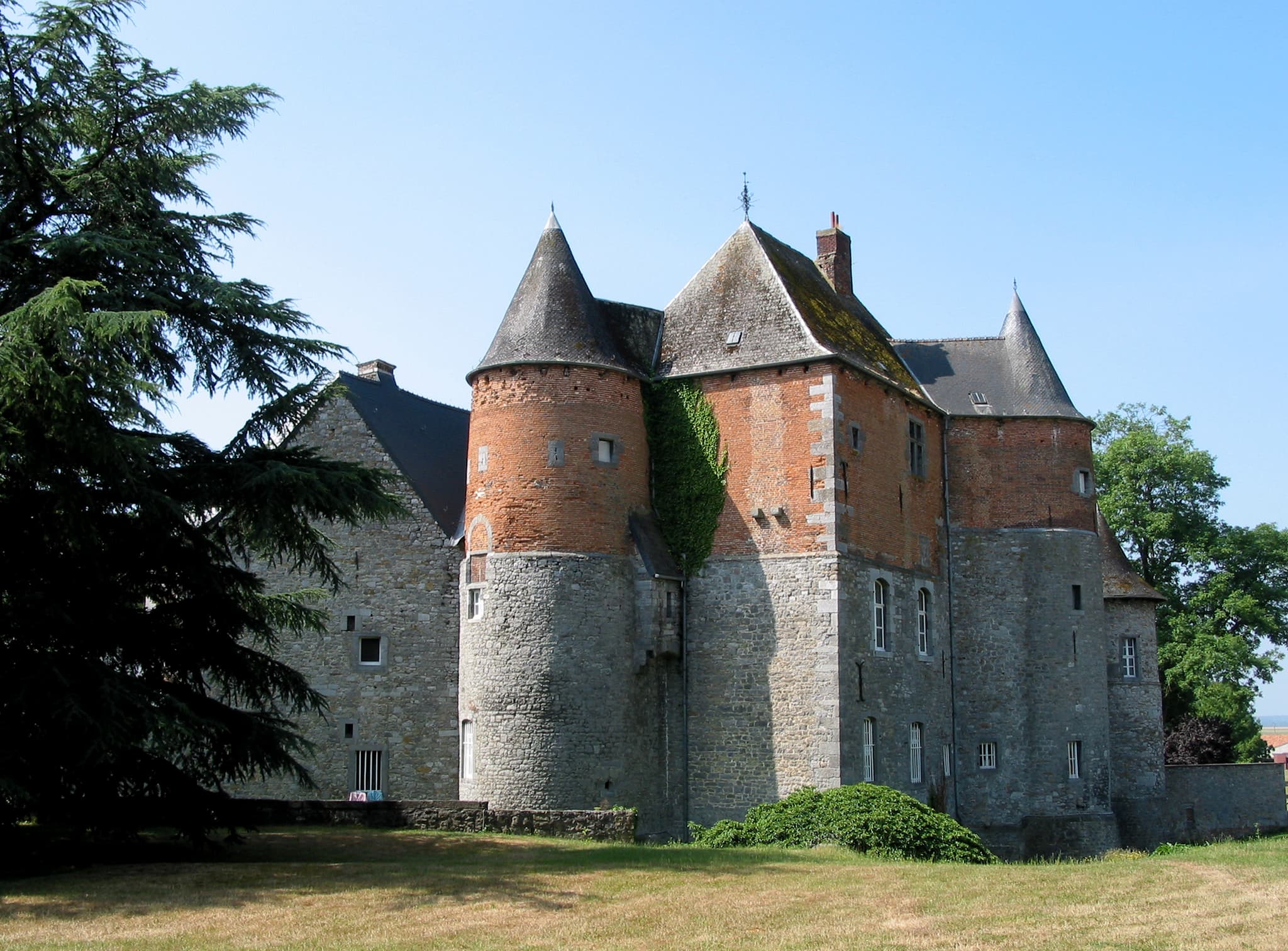
Fosteau Castle
Fosteau Castle, locally known as Château du Fosteau, is a remarkable example of a late medieval fortified residence situated in the town of Leers-et-Fosteau, within the province of Hainaut in Belgium's Wallonia region. The castle's origins date back to the early 13th century, with the earliest known structure being a donjon—a fortified tower typical of medieval defensive architecture. This donjon formed the core of the castle and was first mentioned in 1235 in the cartulary of the Abbey of Lobbes.
By the late 14th century, around 1380, significant developments transformed the site under the ownership of Jean Clutinc, also known as Wauthier de Semousies. Granted the property by Duchess Joan of Brabant, he expanded the donjon into a fortified residence with a rectangular, moated design. This expansion marked the transition of the castle from a purely military stronghold to a noble residence, adapting to the changing needs of defense and habitation during the medieval period.
Architectural features and medieval origins
The castle's most notable medieval architectural element is the Gothic Knights' Hall (Salle des Chevaliers), constructed in the late 14th century. This hall is celebrated as one of Belgium's finest examples of Gothic architecture, distinguished by its vaulted stone ceilings, pointed arches, and intricate masonry work. It served as a ceremonial and social gathering space for the castle's noble inhabitants and visiting dignitaries.
The original rectangular layout of the castle was surrounded by a moat, enhancing its defensive capabilities. The use of local stone and traditional masonry techniques reflects typical medieval construction methods aimed at fortification and durability. Over the centuries, the castle's fabric was augmented with additional buildings and wings, creating a complex that blends medieval fortification with residential comfort.
Historical lineage and ownership
Throughout its history, Fosteau Castle passed through the hands of several noble families, each leaving their mark on the estate. The de Semousies family, beginning with Wauthier, held the castle in the late 14th century. The property then passed to the Sars family through marriage, with four generations of Knights of Sars residing at the castle. In the mid-16th century, it passed by marriage to Louis de Zwenne.
Financial difficulties forced Pierre de Zwenne to sell the castle in 1599. Nicolas de Marotte acquired the property and undertook significant restoration and enlargement, including the addition of an extra brick floor atop the original mansion. The Marotte family also introduced a formal French garden on the western side of the estate, reflecting contemporary landscaping trends and a shift toward aesthetic refinement.
Subsequent ownership included the Jamblines family in the 17th century and later the d'Aoust family in the 18th century. The latter added a new wing, giving the castle a distinctive U-shaped ground plan. In the 19th century, the Barbantane family inherited the castle and made further modifications, including the creation of a second farmyard, enhancing the estate's agricultural and residential functions.

Photo by Jean-Pol GRANDMONT (CC BY 3.0)
Photo by Jean-Pol GRANDMONT • CC BY 3.0
Role in historical events
Fosteau Castle played a brief but notable role during the Napoleonic Wars. In 1815, General Honoré Charles Reille, Count of the Empire, lodged at the castle with his 25,000 troops of the 2nd corps as they advanced toward the Battle of Waterloo. The room where he stayed has been preserved, offering a tangible link to this pivotal moment in European history.
Preservation and modern use
Recognized for its historical and architectural significance, Fosteau Castle was declared a protected monument in 1979. Since 1980, it has housed exhibitions of antique furniture and a pharmacy museum, allowing visitors to experience the castle's rich heritage and interior decor. The castle remains private property under the ownership of the Van Hoonacker family, who have continued restoration efforts to maintain its condition.
Though primarily a private residence, the castle is occasionally open to the public for tours at a small fee, providing a unique opportunity to explore its medieval architecture, historic interiors, and beautifully landscaped grounds. The preservation of the Gothic Knights' Hall, the medieval donjon, and the French formal garden exemplify the castle's layered history and architectural evolution.
Architectural evolution and landscaping
The castle's architectural style is predominantly Gothic, especially evident in the Knights' Hall and the medieval core. Later additions from the 16th to 19th centuries introduced elements reflecting Renaissance and post-medieval residential styles, including brick construction and expanded wings. The U-shaped layout achieved in the 18th century allowed for a more comfortable and representational noble residence.
The formal French garden established by the Marotte family demonstrates the influence of French landscaping principles, emphasizing symmetry, order, and aesthetic harmony. This garden remains an integral part of the estate's charm and historical character.
Visiting information and cultural significance
Visitors to Fosteau Castle can appreciate the blend of medieval fortification and later residential elegance. The castle's exhibitions of antique furniture and the preserved Napoleonic-era bedroom provide insights into the daily lives and historical events associated with the site. The castle's status as a protected monument ensures ongoing preservation and recognition of its cultural importance within Belgium.
Its location on a gentle hill in the Hainaut region offers picturesque views of the surrounding countryside, enhancing the visitor experience. The castle's architectural and historical layers make it a valuable destination for those interested in medieval history, Gothic architecture, and European noble estates.
Frequently asked questions (FAQ)
- How do I get to Fosteau Castle?
- Fosteau Castle is located in Leers-et-Fosteau, Belgium, easily accessible by car or public transport. If you're driving, you can use GPS coordinates or follow local signage from nearby towns. For public transport, check local bus schedules that connect to Leers-et-Fosteau.
- What is the historical significance of Fosteau Castle?
- Fosteau Castle dates back to the 15th century and is a remarkable example of medieval architecture in Belgium. It has served various purposes throughout its history, including as a residence and a fortification. Its preservation makes it an important site for understanding regional history.
- When was Fosteau Castle built?
- Construction of Fosteau Castle began in the late 1400s, with significant renovations occurring over the centuries. The castle reflects various architectural styles due to these modifications. Today, it stands as a testament to the historical evolution of castle design in the region.
- Can I take photographs inside Fosteau Castle?
- Yes, visitors are welcome to take photographs inside Fosteau Castle, but please be respectful of any areas where photography might be restricted. Always check for signage or ask staff if unsure. Capturing the stunning architecture and beautiful grounds makes for great memories!
- Why is Fosteau Castle a popular tourist destination?
- Fosteau Castle attracts visitors due to its rich history, stunning architecture, and picturesque setting. It offers a glimpse into medieval life and is surrounded by beautiful gardens and landscapes. The castle also hosts various cultural events and exhibitions, enhancing its appeal.
- Is it possible to visit Fosteau Castle year-round?
- Yes, Fosteau Castle is open to visitors throughout the year, although hours may vary by season. It's advisable to check the official website or contact the visitor center for the latest information on opening hours. Visiting during the warmer months enhances the experience due to the lovely outdoor surroundings.
- What are the ticket prices for visiting Fosteau Castle?
- Ticket prices for Fosteau Castle are quite reasonable, with discounts available for children, seniors, and groups. Check the castle's official website for the most up-to-date pricing and any special promotions. Purchasing tickets online in advance can also save time during your visit.
- What are the opening hours of Fosteau Castle?
- Fosteau Castle typically opens from 10 AM to 6 PM, with extended hours during peak tourist seasons. It is closed on certain public holidays, so be sure to check the calendar before planning your visit. Early arrival is recommended to fully enjoy the site and avoid crowds.
- What nearby attractions can I visit after Fosteau Castle?
- After exploring Fosteau Castle, consider visiting nearby attractions such as the charming village of Leers, local parks, and other historical sites in the region. The area is rich in cultural heritage, making it perfect for a day trip. Enjoy dining options in the vicinity to complete your experience!
Photo gallery


Information
Sources & official resources
Verify the information above using these authoritative references.
Loading map...
Visitor reviews
No reviews yet. Been here? Write the first review and help other travelers!
Write the first reviewVisited this castle? Share your experience
Your review helps other travelers and adds first-hand knowledge to our encyclopedia.

