Fortress of São Miguel
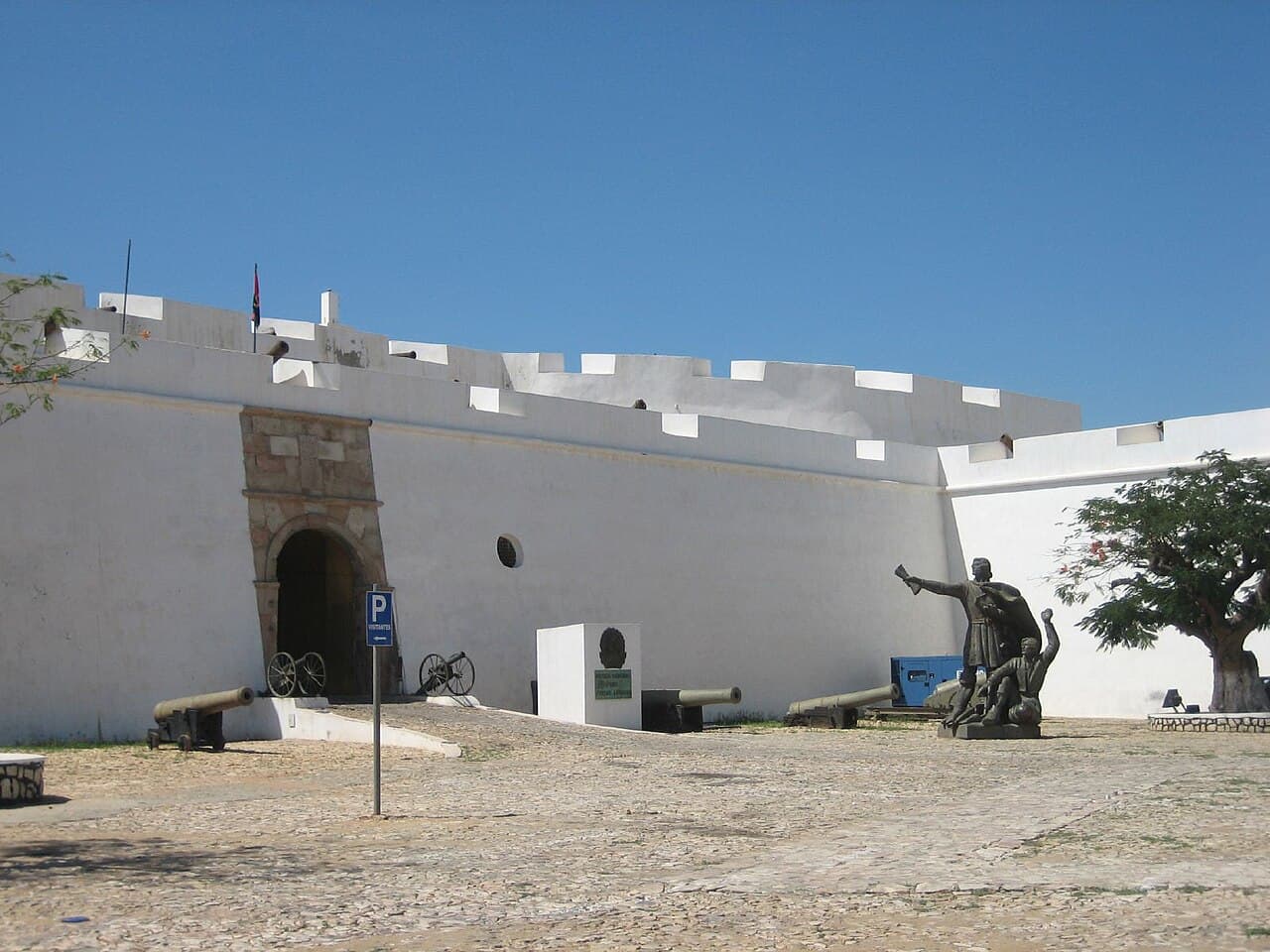
Fortress of São Miguel, also known as Fortaleza de São Miguel, is a significant Portuguese bastioned fortress constructed in 1576 in the Ingombota District of Luanda, Angola. This fortress stands as one of the earliest examples of European military architecture on the west coast of Africa, reflecting the strategic importance of Luanda as a colonial port and military stronghold during the Renaissance period.
Historical background and strategic importance
The fortress was built by the Portuguese to secure their colonial interests and protect Luanda from rival European powers and local resistance. Its construction in the 16th century marked a critical phase in the establishment of Portuguese control over Angola, which was a vital hub for the Atlantic slave trade and regional commerce. The fortress's position in the Ingombota District allowed it to oversee the harbor and defend the city against naval attacks.
During the period of Dutch occupation of Angola from 1641 to 1648, the fortress was renamed Fort Aardenburgh. The Dutch made use of the existing fortifications to maintain control over Luanda, which was a key prize due to its economic and military significance. After the Portuguese recaptured Luanda, the fortress resumed its original name and continued to serve as a military bastion.
Architectural features and design
The Fortress of São Miguel exemplifies the bastioned fortress style, which was prevalent in Renaissance military architecture. This style was characterized by angled bastions designed to provide overlapping fields of fire, eliminating blind spots and enhancing defensive capabilities against artillery and infantry assaults.
The fortress features robust stone walls with thick ramparts and bastions projecting at the corners, allowing defenders to cover the approaches with cannon and musket fire. The design incorporates a moat and a series of defensive structures including curtain walls, gates, and watchtowers. The layout reflects the influence of Italian military engineers who popularized the bastion system across European colonies during the Renaissance.
Inside the fortress, there were barracks, ammunition magazines, and command quarters. The fortress also had facilities to accommodate the garrison and store supplies necessary for prolonged defense during sieges.
Cultural and historical significance
The fortress is a symbol of Portuguese colonial power in Angola and played a pivotal role in the region's history. It was central to the defense of Luanda against indigenous uprisings and European rivals. The site also stands as a testament to the complex history of the Atlantic slave trade, as Luanda was a major port for the exportation of enslaved Africans.
Today, the Fortress of São Miguel is one of the most important historical landmarks in Luanda. It houses the National Museum of Slavery, which educates visitors about the history of slavery in Angola and the broader Atlantic world. The museum preserves artifacts, documents, and exhibits that provide insight into the lives of enslaved people and the impact of colonialism.
Preservation and current condition
The fortress remains well preserved and retains much of its original Renaissance bastioned design. Restoration efforts have been undertaken to maintain the structural integrity of the walls and bastions. Its location in the urban center of Luanda makes it accessible to visitors and scholars interested in military architecture and African colonial history.
As a cultural heritage site, the fortress is protected and managed by the Angolan government. It is open to the public, offering guided tours that explain its architectural features, historical context, and the significance of its role in Angola's colonial past.
Visiting the fortress
Visitors to the Fortress of São Miguel can explore the extensive fortifications and the museum housed within its walls. The site provides panoramic views of Luanda's harbor and cityscape. Educational programs and exhibitions are available to enhance understanding of the fortress's military and cultural importance.
The fortress is typically open during regular museum hours, and admission fees may apply. It is recommended to check current opening times and ticket information before visiting.
Frequently asked questions (FAQ)
- How do I get to the Fortress of São Miguel?
- The Fortress of São Miguel is located in Luanda, Angola, and can be easily reached by car or public transport. Local taxis and ride-sharing services are also available for convenient access to the site.
- What is the historical significance of the Fortress of São Miguel?
- The Fortress of São Miguel, built in the late 16th century, played a crucial role in the defense of Luanda against invasions. It served as a military stronghold and has significant historical value due to its role in Angola's colonial history.
- When was the Fortress of São Miguel constructed?
- The construction of the Fortress of São Miguel began in 1576 and was completed in 1634. It was built by the Portuguese as a means to protect their interests in the region during the colonial period.
- Can I take guided tours of the Fortress of São Miguel?
- Yes, guided tours are available at the Fortress of São Miguel, allowing visitors to explore its rich history and architecture. Tour guides provide insightful information about the fortress and its historical context, enhancing the visitor experience.
- Why is the architecture of the Fortress of São Miguel notable?
- The architecture of the Fortress of São Miguel is notable for its blend of military functionality and Renaissance style, showcasing the engineering techniques of the time. Its thick walls and strategic layout reflect its purpose as a defensive structure against invaders.
- Is it possible to visit the Fortress of São Miguel year-round?
- Yes, the Fortress of São Miguel is open for visitors year-round, although it's advisable to check for any specific closure dates or maintenance schedules. Visiting during the dry season, from May to October, may provide a more pleasant experience.
- What are the opening hours of the Fortress of São Miguel?
- The Fortress of São Miguel typically opens to the public from 9 AM to 5 PM daily. However, it is recommended to verify the hours ahead of your visit, as they may vary during holidays or special events.
- What are the ticket prices for visiting the Fortress of São Miguel?
- Ticket prices for the Fortress of São Miguel are generally affordable, with discounts available for students and seniors. For the most accurate pricing information, it’s best to check the official website or inquire at the entrance.
- Are there nearby attractions to visit after the Fortress of São Miguel?
- Yes, after visiting the Fortress of São Miguel, you can explore several nearby attractions, such as the National Museum of Slavery and the beautiful waterfront of Luanda. These sites provide additional insights into the history and culture of Angola.
Photo gallery

Information
Current owner
Angolan government
Loading map...
Visitor reviews
No reviews yet. Been here? Write the first review and help other travelers!
Write the first reviewVisited this castle? Share your experience
Your review helps other travelers and adds first-hand knowledge to our encyclopedia.