Fortress of Santo Amaro da Barra Grande
Constructed during the colonial era, likely in the 17th or 18th century, the fortress was built to secure the surrounding area from naval and land-based threats. Its robust walls and bastions were designed to withstand cannon fire, a hallmark of post-medieval military architecture. The fortress's location in Brazil was strategically chosen to control important waterways and protect settlements from incursions.
Architectural features and layout
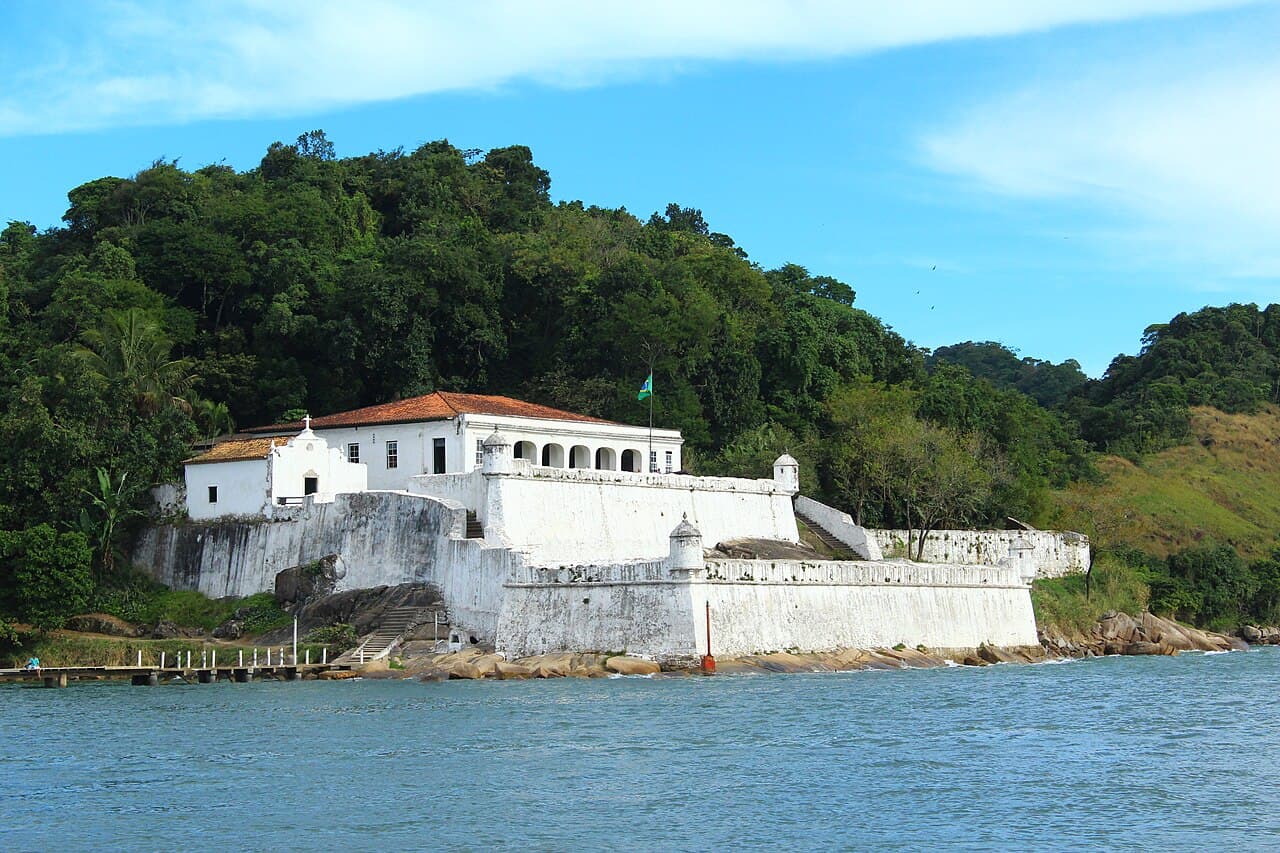
The fortress is distinguished by its angular bastions projecting from the main curtain walls, a key feature of bastioned fortresses. These bastions provided defenders with superior vantage points and allowed crossfire coverage, eliminating blind spots. The walls are constructed of stone and mortar, thick enough to absorb artillery impacts.
Within the fortress, there would have been casemates or vaulted chambers for housing troops and storing ammunition. The design likely included a central courtyard, surrounded by barracks, powder magazines, and command buildings. The entrance would have been heavily fortified with a gatehouse and possibly a drawbridge or moat for added defense.
Defensive innovations
The bastioned design was a response to the evolution of gunpowder artillery, making traditional high walls vulnerable. By lowering the walls and adding bastions, the fortress could better deflect and absorb cannonballs. The angled bastions also allowed defenders to fire upon attackers attempting to scale the walls or breach the gates.
Historical significance and context
During the colonial period, Brazil was a contested territory among European powers, primarily Portugal and Spain. Fortresses like Santo Amaro da Barra Grande played a crucial role in securing Portuguese colonial interests. They served not only as military strongholds but also as administrative centers and symbols of authority in the region.
The fortress's presence helped to deter pirate raids and hostile incursions, contributing to the stability and security of nearby settlements. Its strategic position likely allowed control over maritime traffic and the protection of valuable resources.
Current status and preservation
Today, the fortress of Santo Amaro da Barra Grande remains a notable historical monument. While specific details about its current condition are limited, bastioned fortresses in Brazil often face challenges from natural erosion and urban development. Preservation efforts focus on maintaining the structural integrity of the walls and bastions, as well as promoting the site for cultural tourism and education.
Visitors to the site can appreciate the fortress's military architecture and gain insight into the colonial history of Brazil. Interpretive signage and guided tours may be available to explain the fortress's role and construction.
Visiting information and accessibility
As a heritage site, the fortress may be accessible to the public, though opening hours and visitor facilities can vary. It is advisable to check with local tourism authorities for the most current information on access, guided tours, and any visitor restrictions.
The fortress's location in Brazil offers an opportunity to explore the broader historical and cultural landscape, including other colonial-era sites and natural attractions.
Frequently asked questions (FAQ)
- What is the fortress of Santo Amaro da Barra Grande?
- The fortress of Santo Amaro da Barra Grande is a bastioned fortress in Brazil, built during the colonial period to defend strategic coastal areas.
- When was the fortress of Santo Amaro da Barra Grande built?
- The fortress was likely constructed in the 17th or 18th century during the post-medieval colonial era.
- What architectural style characterizes the fortress?
- It features bastioned fortress design typical of post-medieval military architecture, with angular bastions for defense against artillery.
- Can visitors tour the fortress today?
- The fortress may be open to the public, but visiting hours and facilities vary; checking with local tourism offices is recommended.
- Why were bastioned fortresses important in colonial Brazil?
- Bastioned fortresses provided enhanced defense against naval attacks and piracy, securing colonial territories and trade routes.
Photo gallery

Information
Loading map...
Visitor reviews
No reviews yet. Been here? Write the first review and help other travelers!
Write the first reviewVisited this castle? Share your experience
Your review helps other travelers and adds first-hand knowledge to our encyclopedia.