Fortress of Mainz
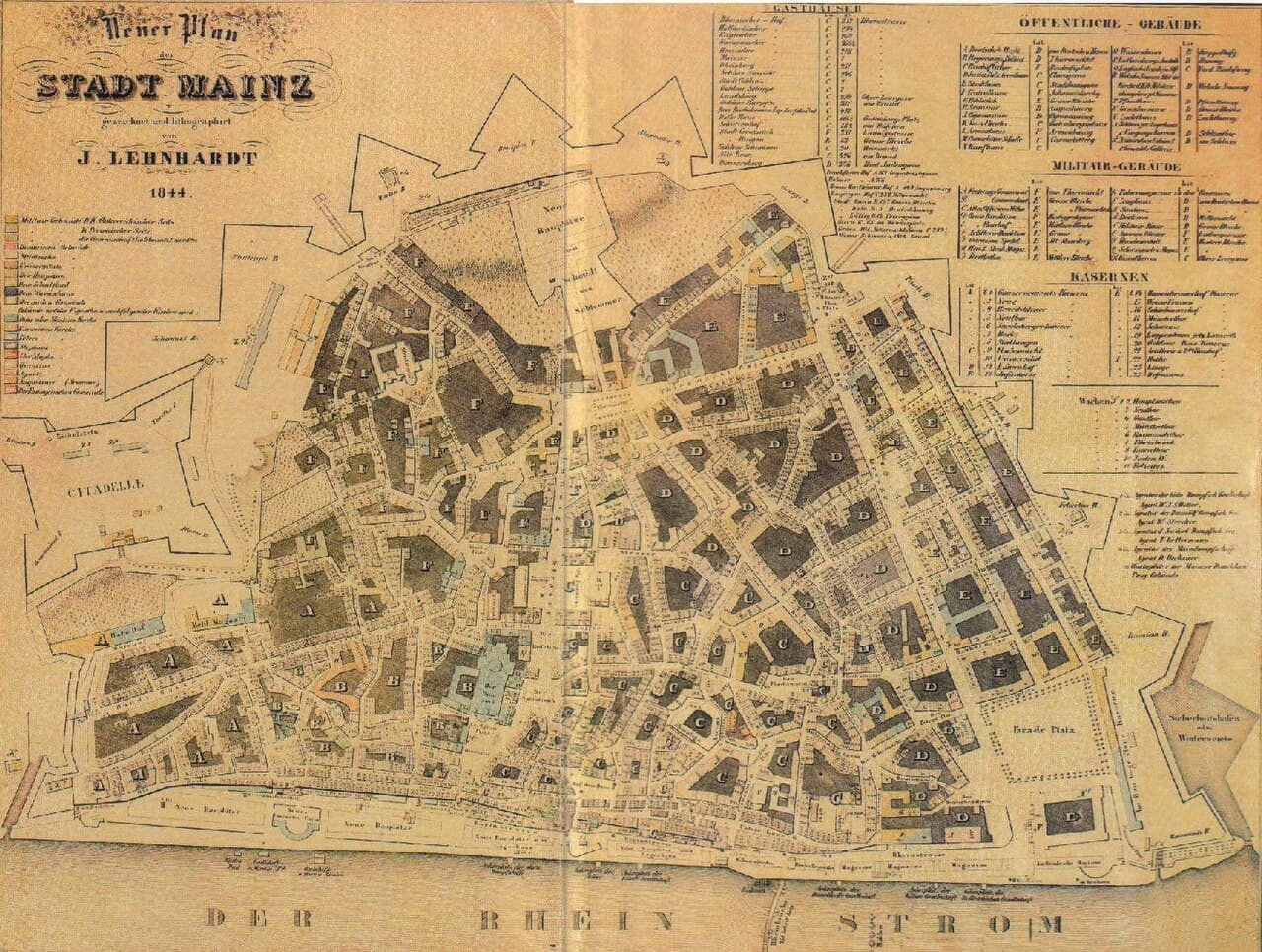
The Fortress of Mainz stands as a significant example of a bastioned fortress constructed during the 17th century in Germany. It functioned as a fortified garrison town from 1620 until 1918, playing a pivotal role in the military and political landscape of central Europe. The fortress was strategically important due to its location on the Rhine River, serving as a key defensive stronghold in various conflicts, including the Napoleonic Wars and the shifting power dynamics of 19th-century Germany.
Historical background and strategic importance
Following the Napoleonic Wars, the 1815 Peace of Paris placed Mainz under the control of the German Confederation. It became part of a network of fortresses designed to protect the Confederation's borders and maintain regional security. This chain of fortifications was essential in guarding against external threats and internal unrest during a period of considerable political upheaval.
With the dissolution of the German Confederation and the outbreak of the Austro-Prussian War in 1866, control of the fortress shifted to the Kingdom of Prussia. Subsequently, after the 1871 Unification of Germany, Mainz and its fortress were incorporated into the military infrastructure of the newly formed German Empire. Throughout these transitions, the fortress retained its military significance, adapting to evolving warfare technology and strategic doctrines.
Architectural features and construction
The fortress complex includes the Mainzer Zitadelle (Citadel of Mainz), located at the edge of the Old Town of Mainz, near the Mainz Römisches Theater station. Constructed starting in 1660, the citadel is a classic example of bastioned fortress design, characterized by angular bastions that allowed defenders to cover all approaches with overlapping fields of fire. This design was a response to the development of artillery and siege tactics during the Renaissance period.
The fortress walls are thick and robust, built to withstand cannon fire, and include multiple layers of defensive works such as moats, ravelins, and glacis. The layout reflects the principles of military engineering pioneered by figures such as Sébastien Le Prestre de Vauban, although the Mainz fortress predates some of Vauban's most famous works. The citadel itself served as the command center and last line of defense within the larger fortress complex.
Defensive structures and military utility
The bastions are connected by curtain walls that form a polygonal shape optimized for defense. These walls were equipped with artillery positions and firing slits for musketeers. The fortress also contained barracks, armories, and storage facilities, supporting a substantial garrison capable of withstanding prolonged sieges.
Throughout its operational period, the fortress was modernized to meet advances in military technology, including the introduction of rifled artillery in the 19th century. However, by the early 20th century, the fortress's military role diminished as warfare evolved beyond static fortifications.
The fortress in the context of Mainz and its surroundings
Situated near the Rhine River, the fortress played a crucial role in controlling river traffic and protecting the city of Mainz. Its location at the fringe of the Old Town allowed it to serve both as a defensive bulwark and a symbol of military power. The fortress influenced the urban development of Mainz, with the city expanding around its imposing walls.
Today, the Mainzer Zitadelle remains a prominent historical landmark. While parts of the fortress are preserved and accessible, other sections have been integrated into the modern urban fabric of Mainz. The site offers visitors insights into the military architecture of the Renaissance and the strategic importance of Mainz in European history.
Legacy and cultural significance
The Fortress of Mainz exemplifies the evolution of military fortifications from medieval castles to modern bastioned fortresses. Its history reflects the broader political and military changes in Germany from the early modern period through the 19th century. The fortress is a testament to the engineering ingenuity of its era and remains a subject of study for historians and architects interested in fortification design.
Preservation efforts have focused on maintaining the structural integrity of the citadel and educating the public about its historical role. The fortress is also a venue for cultural events and historical reenactments, connecting contemporary audiences with the region's rich military heritage.
Frequently asked questions (FAQ)
- How do I get to the Fortress of Mainz?
- The Fortress of Mainz is easily accessible by public transportation, including trams and buses that connect to the Mainz central station. Visitors can also reach the fortress by walking from the city center, which is approximately a 15-minute stroll. For those driving, there are parking facilities available nearby.
- What is the historical significance of the Fortress of Mainz?
- The Fortress of Mainz has a rich history dating back to the Roman Empire, serving as a strategic military stronghold. It played a crucial role in the defense of the Rhine River and was expanded significantly during the 19th century. Today, it stands as a testament to the military architecture of its time and the historical events that shaped the region.
- When was the Fortress of Mainz built?
- Construction of the Fortress of Mainz began in the early 19th century, specifically in 1817, under the direction of the Prussian military. The fortress was completed in 1850 and served various military purposes before being preserved as a historical site. Its architecture reflects the styles and military needs of that era.
- Can I take guided tours of the Fortress of Mainz?
- Yes, guided tours of the Fortress of Mainz are available and highly recommended for those interested in learning about its rich history and architecture. These tours are typically offered in multiple languages and provide insights into the fortress's strategic importance. Be sure to check the schedule for tour times during your visit.
- Why is the Fortress of Mainz a popular tourist attraction?
- The Fortress of Mainz attracts visitors due to its impressive architecture, historical significance, and stunning views of the Rhine River. It offers a unique glimpse into the military history of Germany, along with beautiful walking paths and areas for exploration. Additionally, the fortress hosts various events and exhibitions throughout the year, enhancing its appeal.
- Is it possible to visit the Fortress of Mainz year-round?
- Yes, the Fortress of Mainz is open to visitors year-round, although opening hours may vary by season. It’s advisable to check the official website for the most current hours and any seasonal events that may be taking place. This allows visitors to plan their trips effectively and make the most of their visit.
- What are the ticket prices for the Fortress of Mainz?
- Ticket prices for the Fortress of Mainz are generally affordable, with discounts available for students and seniors. Prices may vary for special events or guided tours, so it's best to check the official website for the latest information on ticket options. Children under a certain age may enter for free, making it a great family outing.
- What is the best time to visit the Fortress of Mainz?
- The best time to visit the Fortress of Mainz is during the spring and early autumn months when the weather is mild and conducive for outdoor exploration. Additionally, visiting during weekdays can help avoid large crowds, allowing for a more enjoyable experience. Special events are often held during the summer, which can also enhance your visit.
- Are there nearby attractions to visit along with the Fortress of Mainz?
- Yes, the Fortress of Mainz is located near several other attractions, including the Mainz Cathedral and the Gutenberg Museum, which are both within walking distance. The Rhine River promenade offers scenic views and lovely walking paths, perfect for a leisurely stroll. Exploring the charming old town of Mainz can also add to your visit.
Photo gallery

Photo by User Moguntiner on de.wikipedia•Public domain
Information
Loading map...
Visitor reviews
No reviews yet. Been here? Write the first review and help other travelers!
Write the first reviewVisited this castle? Share your experience
Your review helps other travelers and adds first-hand knowledge to our encyclopedia.