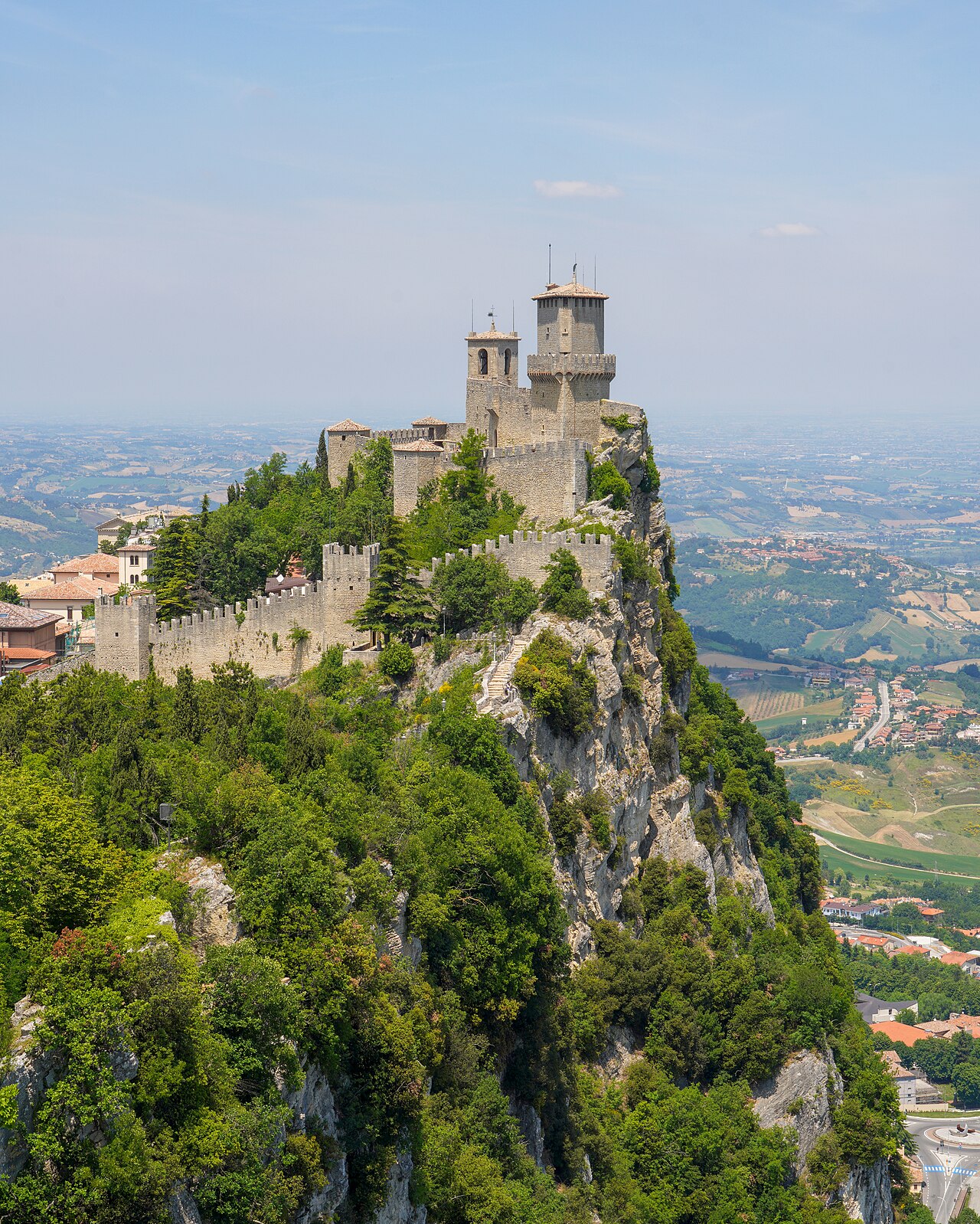
Fortress of Guaita
The Fortress of Guaita, also known as Rocca Guaita, is a prominent medieval stronghold located in the city of San Marino, the capital of the Republic of San Marino. This fortress is one of the three iconic peaks that dominate the skyline of the tiny republic, which is entirely surrounded by Italy. The castle's strategic position atop Monte Titano has made it a vital defensive structure throughout its history, serving as a refuge during sieges and a symbol of San Marino's resilience and independence.
Historical background and construction
Constructed originally in the 10th century, the Fortress of Guaita was built directly on the natural stone of the mountain without any artificial foundation, a testament to the builders' skill and the fortress's integration with its rugged environment. Its pentagonal base design is distinctive, providing robust defense capabilities. Over the centuries, the fortress underwent several reinforcements and modifications, particularly in the 15th and 16th centuries, reflecting the evolving military architecture and the needs of its defenders.
The fortress was rebuilt in the second half of the 15th century, and in the 16th century, it was enhanced with a sloping roof to improve protection against the elements. The structure is encircled by a double round wall, with the outer wall featuring battlements and towers with truncated corners, which added an extra layer of defense. These walls were designed to shelter the local population during times of siege, highlighting the fortress's role not only as a military installation but also as a communal refuge.
Architectural features and fortifications
The fortress's defensive system includes a gatehouse built in 1481, which guards the upper entrance accessible by a ladder. This gatehouse played a critical role in controlling access and defending against attackers. The inner courtyard contains several pieces of artillery from the early 20th century, including two mortars gifted by King Vittorio Emanuele II and two 75 mm guns donated by King Vittorio Emanuele III. These weapons were historically used by the Guardia di Rocca during official festivities, underscoring the fortress's continued military significance into modern times.
The fortress also features a Baroque stone crest above the main door, dating from around 1600, which originally belonged to the old Public Palace. This decorative element symbolizes the Republic and its enduring sovereignty. Within the fortress, the Belltower and the Pen Tower were constructed in later centuries, adding to the complex's layered architectural history.
Use as a prison and cultural significance
Some rooms within the Fortress of Guaita served as a prison until October 1970. This prison is notable for its walls covered in 19th-century prisoner graffiti, recently uncovered after being hidden beneath layers of whitewash for over two centuries. The graffiti includes a variety of images, from simple scribbles and geometric patterns to detailed depictions of soldiers, fair maidens, and other expressive and sometimes bizarre figures. These artworks provide a unique glimpse into the lives and emotions of prisoners during that era, making the fortress an important cultural and historical site.
Role in San Marino's defense and heritage
Throughout its history, the Fortress of Guaita has been a critical element of San Marino's defense system. The tiny republic, surrounded by larger powers, relied heavily on such fortifications to maintain its independence and protect its citizens. The fortress, along with the other two peaks, formed a formidable defensive network that successfully deterred invasions and sieges.
Today, the fortress is a well-preserved monument and a major tourist attraction, offering visitors the chance to explore its ancient walls, towers, and prison cells. The site provides panoramic views of the surrounding landscape and a tangible connection to San Marino's medieval past. Its combination of military architecture, historical artifacts, and cultural significance makes it a must-visit destination for those interested in castle architecture and European history.
Visiting the fortress of guaita
The Fortress of Guaita is open to visitors who can explore the towers, battlements, and prison cells. The site often features exhibitions and displays related to its history and the broader heritage of San Marino. Visitors can appreciate the fortress's architectural evolution, from its early medieval origins to its later modifications, and observe the preserved artillery pieces and the Baroque crest that adorns the entrance.
Its location atop Monte Titano offers spectacular views, making the visit both an educational and scenic experience. The fortress's accessibility and well-maintained condition allow for a comprehensive exploration of one of San Marino's most significant historical landmarks.
Frequently asked questions (FAQ)
- How do I get to the Fortress of Guaita?
- The Fortress of Guaita is located in San Marino and can be reached by foot from the city center. There are well-marked paths leading up to the fortress, making it accessible for visitors of all ages. Alternatively, you can take a taxi to the base of the fortress if you prefer not to walk.
- What is the historical significance of the Fortress of Guaita?
- The Fortress of Guaita, built in the 11th century, is one of the three towers that symbolize the Republic of San Marino. It has served various purposes throughout its history, including as a military defense and a prison. Today, it stands as a testament to the rich history and independence of San Marino.
- When was the Fortress of Guaita constructed?
- Construction of the Fortress of Guaita began in the 11th century, making it one of the oldest fortifications in San Marino. It was strategically built to defend against invasions and has been preserved over the centuries. The architecture reflects the medieval military styles of the time.
- Can I enter the Fortress of Guaita?
- Yes, visitors can enter the Fortress of Guaita to explore its towers and enjoy panoramic views of the surrounding region. Inside, you will find exhibits that detail the fortress's history and significance. Make sure to wear comfortable shoes, as there are stairs and uneven surfaces.
- Why is the Fortress of Guaita a popular tourist attraction?
- The Fortress of Guaita is popular due to its stunning views, historical importance, and unique architecture. Visitors are drawn to its picturesque setting and the opportunity to learn about San Marino's heritage. Additionally, the fortress offers great photo opportunities, making it a favorite among tourists.
- Is it possible to visit the Fortress of Guaita during the winter months?
- Yes, the Fortress of Guaita is open year-round, although opening hours may vary in the winter months. It is advisable to check the official website for current hours and any seasonal events. Visiting in winter can provide a unique experience with fewer crowds and beautiful scenery.
- What are the ticket prices for entering the Fortress of Guaita?
- The ticket prices for the Fortress of Guaita are generally affordable, with discounts available for students and seniors. Children under a certain age may enter for free, making it a great family-friendly attraction. You can purchase tickets on-site or through the official website.
- What are the opening hours for the Fortress of Guaita?
- The Fortress of Guaita typically opens at 9:00 AM and closes at different times depending on the season, usually around 5:00 PM to 7:00 PM. It's important to check the official website for the most accurate and up-to-date information regarding opening hours. Planning your visit accordingly ensures you have enough time to explore.
- What nearby attractions should I visit while at the Fortress of Guaita?
- While visiting the Fortress of Guaita, consider exploring the other two towers of San Marino, Montale and Cesta, which offer further insights into the region's history. Additionally, the nearby Guaita Museum and the Basilica di San Marino are worth a visit. The charming streets of San Marino also feature shops and restaurants for a complete experience.
Information
Loading map...
Visitor reviews
No reviews yet. Been here? Write the first review and help other travelers!
Write the first reviewVisited this castle? Share your experience
Your review helps other travelers and adds first-hand knowledge to our encyclopedia.