Fortress of Bagrati
Fortress of Bagrati, also known as Bagrat's Castle (Georgian: ბაგრატის ციხე, romanized: bagrat'is tsikhe), is a notable medieval fortress ruin located near Sokhumi in the breakaway republic of Abkhazia, Georgia. Positioned close to the Black Sea coast, this castle occupies a strategic hill overlooking the left bank of the Basla (Besleti) river. Though its exact construction date remains debated, it is traditionally linked to the reign of Georgian kings Bagrat III or Bagrat IV and is primarily dated to the 12th century, placing it within the high medieval period.
Historical background and significance
The fortress derives its name from King Bagrat, a prominent figure in Georgian history, though local legends recorded in the 19th century suggest an earlier origin in the late 10th or 11th century. However, architectural and archaeological evidence points to a construction period centered around the 12th century, with continued use into the 14th century. The castle served as a fortified seat for the eristavi (duke) of Tskhumi, the medieval name for the area now known as Sokhumi.
During its active years, the fortress played a critical role in regional defense and governance. It is believed to have hosted Queen Tamar of Georgia during her visits to Abkhazia in the early 13th century, underscoring its importance as a royal stronghold. The castle also functioned as a refuge for the local aristocracy, including the influential Shervashidze family, in times of conflict or threat.
Architectural features and layout
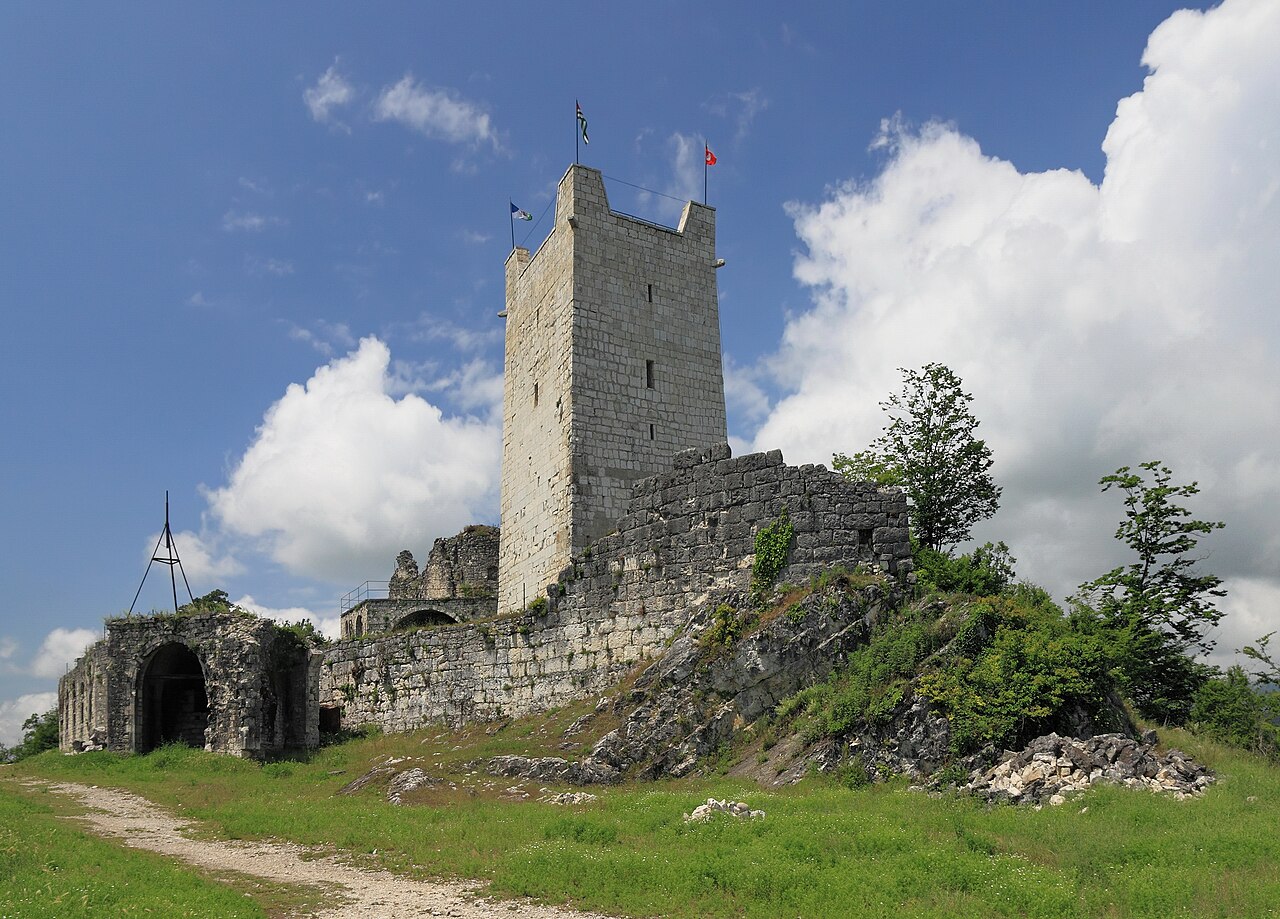
The fortress covers an area measuring approximately 55 by 27 meters, with its remains standing prominently on a hill. The surviving structures include thick defensive walls rising between 10 and 12 meters high, forming an oval-shaped enclosure. A key architectural element is the rectangular tower that guards the entrance gateway, which shows evidence of tunnels or hidden passages, a common medieval defensive feature designed to protect against sieges.
Excavations led by archaeologist Mikhail Trapsh in the 1950s uncovered remnants of fortified buildings within the castle grounds, alongside everyday artifacts such as wine jars, jugs, and glazed pottery. These findings date from the 12th to the 14th centuries, providing valuable insights into the castle's period of occupation and the lifestyle of its inhabitants.
Defensive structures and strategic location
The castle’s placement on a hill overlooking the Basla river provided a natural defensive advantage, enabling control over the surrounding territory and access routes to the Black Sea coast. The oval-shaped curtain walls and the entrance tower were designed to maximize defense capabilities against invaders. The presence of tunnels beneath the gateway suggests sophisticated defensive planning, allowing defenders to launch counterattacks or escape if necessary.
Decline and current status
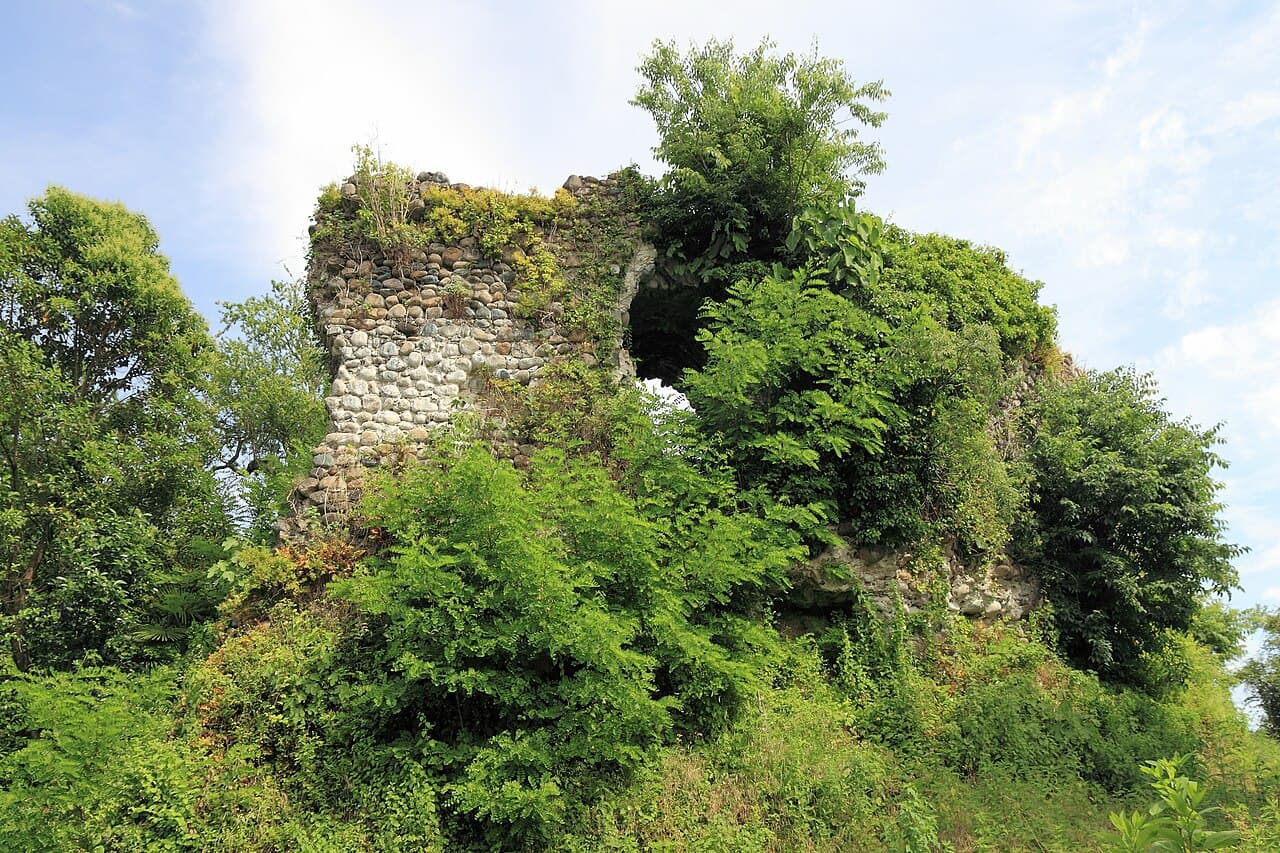
By the 16th century, the main settlement of Sokhumi shifted westward to the right bank of the Basla river, leading to the gradual abandonment of the fortress. Over time, the structure fell into ruin, with only partial walls and the tower remaining visible today. Despite its dilapidated state, the fortress remains a significant cultural monument, reflecting the medieval history and architectural heritage of Georgia.
The Georgian government has recognized the fortress as a Cultural Monument of National Significance. However, as of 2015, the site was reported to be in urgent need of conservation efforts to prevent further deterioration. The ruins stand as an archaeological site offering insights into medieval Georgian fortification techniques and regional history.
Archaeological research and cultural heritage
Archaeological investigations at the fortress have been crucial in piecing together the story of medieval Abkhazia and Georgia’s broader historical landscape. The discoveries of domestic artifacts alongside fortifications illustrate the castle’s dual role as a military stronghold and a noble residence. These excavations have helped clarify the timeline of the castle’s use and its architectural evolution over several centuries.
The fortress’s connection to prominent historical figures and families, including King Bagrat and the Shervashidze lineage, enhances its cultural importance. It serves as a tangible link to Georgia’s medieval past and the complex history of Abkhazia, a region marked by diverse influences and political changes.
Visitor information and accessibility
Today, the fortress remains accessible as an archaeological ruin. While there are no extensive visitor facilities on site, the castle’s location near Sokhumi makes it a point of interest for those exploring Georgian medieval history and architecture. Preservation efforts are necessary to maintain the site’s structural integrity and to support its role as a cultural and historical landmark.
Photo gallery

Information
Loading map...
Visitor reviews
No reviews yet. Been here? Write the first review and help other travelers!
Write the first reviewVisited this castle? Share your experience
Your review helps other travelers and adds first-hand knowledge to our encyclopedia.