Anacopia Castle
Anacopia Castle stands as a significant early medieval bastioned fortress located in New Athos, within the disputed territory of Abkhazia, Georgia. This ancient citadel occupies a strategic position atop the Iverian Mountain, overlooking the Black Sea coast and serving historically as the fortified heart of Anacopia, the former capital of the Kingdom of Abkhazia. The castle's origins trace back to military constructions from the 2nd to 4th centuries AD, with major fortifications erected in the 7th century during a period of Byzantine influence and regional conflict.
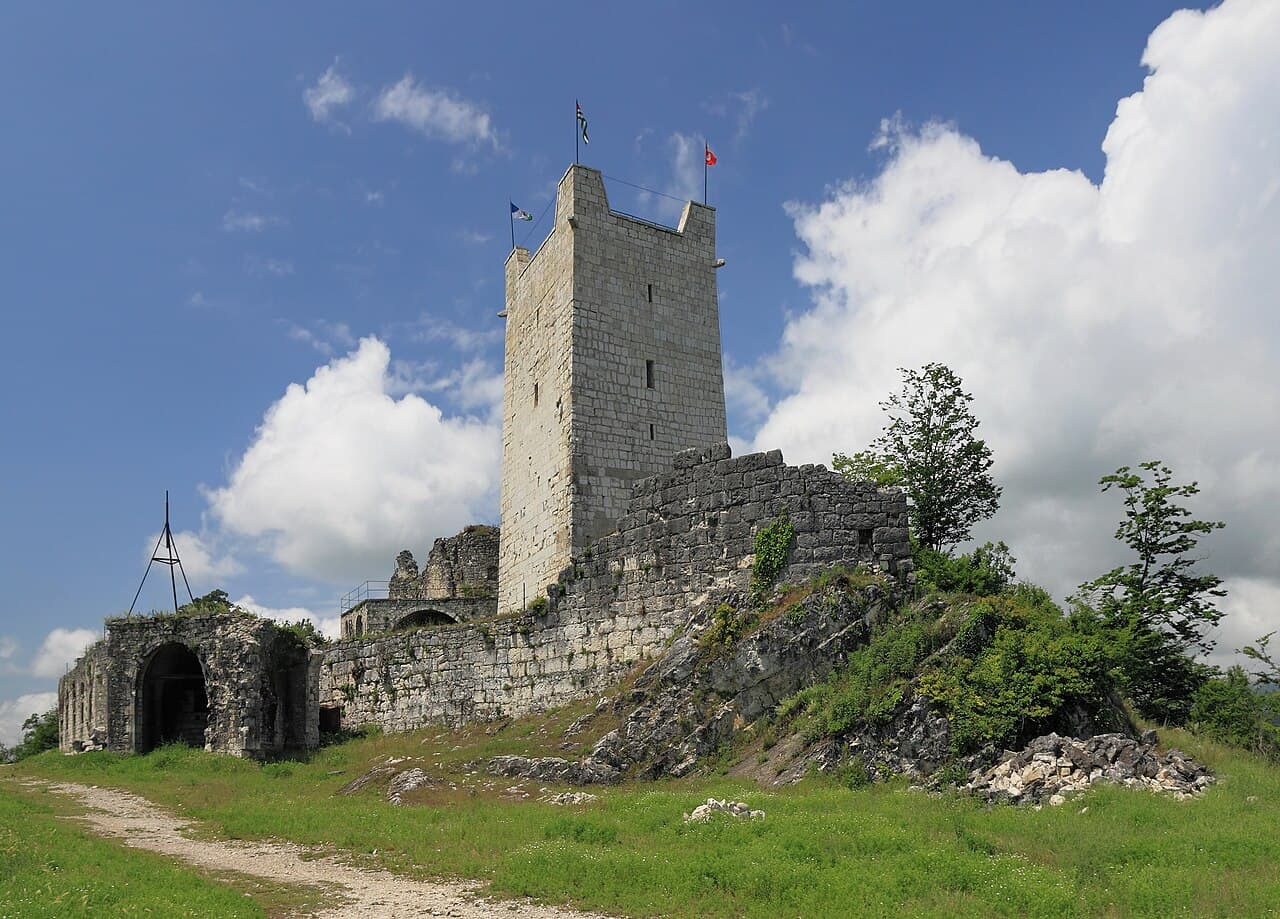
The fortress is a prime example of early medieval military architecture in the Caucasus, featuring robust limestone walls carefully hewn and tightly assembled to create a formidable defensive enclosure. The walls, built with Byzantine support as a bulwark against expanding Islamic forces, encompass an area approximately 450 by 150 meters. The fortification includes a single, narrow southern gate designed to control access and enhance defense.
Architectural features and layout
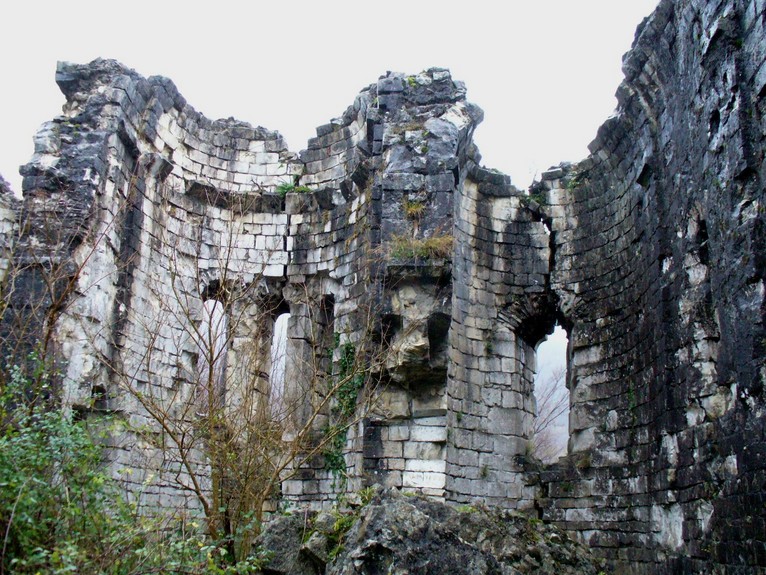
The interior of Anacopia Castle is dominated by a Roman-style tower rising four stories high, which served both as a lookout and a last refuge during sieges. This tower offers commanding views of the surrounding landscape and the nearby Black Sea, emphasizing the strategic importance of the site. Adjacent to the tower lies a small Christian basilica dating from the 7th or 8th century, indicative of the fortress's religious as well as military significance. The basilica's stone altar remains intact, alongside remnants of frescoes depicting Christian symbols such as the cross and fish motifs, emblematic of early Eastern Roman Christian art.
Water supply was secured through a cistern fed by a natural spring via a deep well approximately 25 meters in depth, ensuring the fortress could withstand prolonged sieges. The combination of military and religious structures within the walls reflects the dual role of Anacopia as both a defensive stronghold and a center of Christian culture.
Historical context and significance
During the 8th century, Anacopia found itself on the volatile frontier between Byzantine Christendom and the Umayyad Caliphate. This borderland position made it a focal point of military and political conflict. In 736 or 737 AD, the fortress was famously besieged by an Umayyad army led by Abū ʿAbd Al-Malik Marwān ibn Muḥammad, later known as Marwan II, commanding a force of some 60,000 men.
The defenders, consisting of approximately 1,000 Georgian and 2,000 Abkhazian warriors under the leadership of Leon I of Abkhazia, successfully resisted the siege. According to Georgian chronicles, the invading forces were devastated by an epidemic that killed around 35,000 soldiers, while another 3,000 fell in combat. This victory was a pivotal moment in the region's history, halting Umayyad expansion into the Caucasus and securing the independence of the Kingdom of Abkhazia.
Restoration and current status
In the early 21st century, specifically in 2008, restoration efforts were undertaken to stabilize the structure and improve visitor safety. These works included the rehabilitation of the central tower, reinstating it as a functional lookout point and enhancing the site's appeal for tourism and cultural heritage preservation. Today, Anacopia Castle remains one of the most complete and well-preserved examples of early medieval fortress architecture in the Caucasus region.
Location and access
Situated about 22 kilometers from Sukhumi along the Black Sea coast, the castle is accessible by road and lies approximately one mile inland from the shoreline. Its elevated position on the Iverian Mountain provides panoramic views and underscores its historical military importance.
Architectural style and military design
The fortress exemplifies the bastioned fortress type, characterized by thick defensive walls and a compact layout optimized for defense. The use of limestone masonry and the inclusion of a single controlled entrance demonstrate advanced military engineering for its time. The Roman-style tower reflects architectural influences from the Eastern Roman Empire, blending local and Byzantine design elements.
Frequently asked questions (FAQ)
- How do I visit Anacopia Castle?
- Anacopia Castle is located near New Athos, Abkhazia, and can be reached by road from Sukhumi. Visitors should check local access conditions due to the region's disputed status and verify opening hours with the managing authority, typically a state museum.
- What is the historical significance of Anacopia Castle?
- Anacopia Castle was a key defensive fortress for the Kingdom of Abkhazia and played a crucial role in repelling the Umayyad siege in 736/737 AD, marking a turning point in regional history.
- When was Anacopia Castle built?
- The military site dates back to between the 2nd and 4th centuries, with the main fortifications constructed in the 7th century AD during Byzantine-supported expansions.
- Can I see the Christian basilica inside the fortress?
- Yes, visitors can view the remains of the small Christian basilica inside the castle, including the stone altar and some fresco fragments depicting early Christian symbols.
- Is the castle accessible for people with limited mobility?
- Due to its mountainous location and historic structure, accessibility may be limited for visitors with mobility challenges. It is advisable to inquire in advance about available accommodations.
Photo gallery

Information
Current owner
State museum
Loading map...
Visitor reviews
No reviews yet. Been here? Write the first review and help other travelers!
Write the first reviewVisited this castle? Share your experience
Your review helps other travelers and adds first-hand knowledge to our encyclopedia.