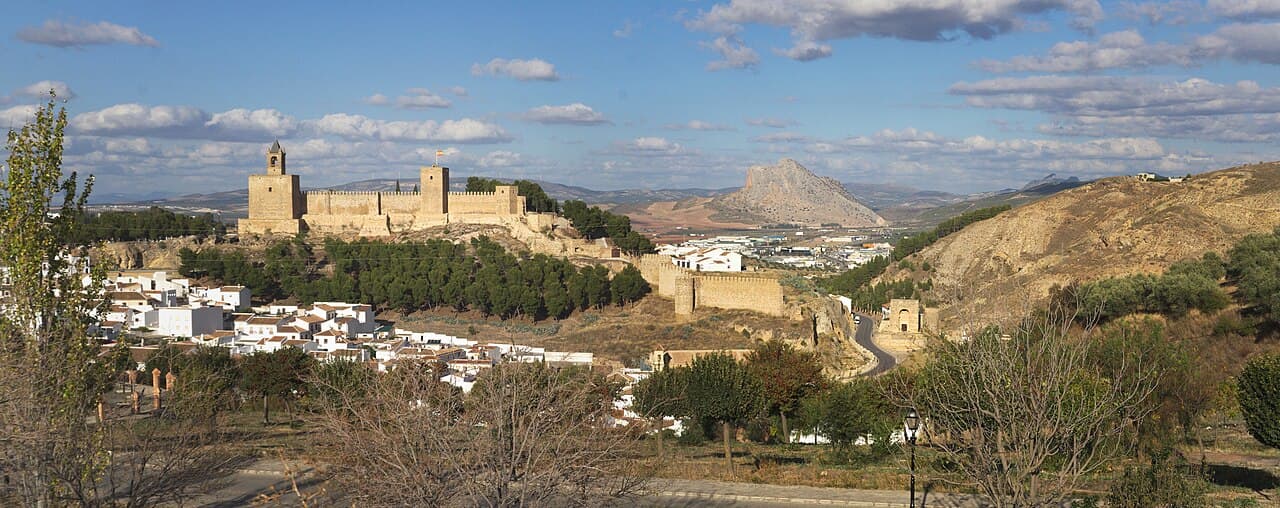
Fortress of Antequera
The Fortress of Antequera, also known as the Alcazaba of Antequera, is a prominent medieval fortress located in Andalucia, Spain. Its origins date back to the eleventh century, marking it as a significant example of early Islamic military architecture on the Iberian Peninsula. The fortress was initially constructed during the period of Muslim rule in the region, serving as a strategic defensive stronghold. While the earliest construction began in the 11th century, the majority of the surviving walls and towers visible today were built or extensively rebuilt in the fourteenth century, reflecting the evolving military needs and architectural styles of the time.
Architectural features and layout
The fortress is characterized by its imposing fortification walls and several notable towers that dominate its silhouette. The most significant of these is the El Homenaje tower, or the main keep, which served as the central stronghold within the fortress. This tower is architecturally distinguished by its interior spaces covered with oblique domes, a feature typical of Moorish design, except for one chamber that uniquely retains a wooden roof. The presence of these domes not only provided structural strength but also demonstrated the skilled craftsmanship of the builders.
Another important tower is the Torre de Papabellotas, which was constructed on top of the El Homenaje tower in the sixteenth century. This addition reflects the continued use and adaptation of the fortress well into the post-Reconquista period. The Torre de Papabellotas is historically significant for housing a bell that regulated the irrigation schedules of the surrounding agricultural lands, indicating the fortress's role beyond mere military defense to include local civil administration and resource management.
The Torre Blanca, or White Tower, is another key structure within the fortress complex. It features chambers spread over two stories and is connected to El Homenaje by a fortified wall walk along the top of the defensive walls. This connectivity allowed defenders to move swiftly between towers while maintaining protection from attack.
Defensive structures and gates
The fortress's defensive system includes a second line of walls extending southward from the Torre Blanca. Along this wall stands the Puerta de Málaga (Málaga Gate), a graceful tower featuring a distinctive horseshoe arch that exemplifies Islamic architectural influence. This gate served as a critical access point and was strategically important for controlling movement into the fortress.
Following the Christian conquest of Antequera in the 15th century, the Puerta de Málaga was repurposed as a hermitage named Virgen de la Espera. This transformation highlights the cultural and religious shifts that occurred in the region after the Reconquista, as Islamic military structures were adapted for Christian uses.
Historical context and significance
The Fortress of Antequera stands as a testament to the region's complex history of conquest, cultural exchange, and architectural evolution. Originally built by the Moors during the Al-Andalus period, it played a crucial role in the defense of the city and surrounding lands. The fortress's walls and towers were designed to withstand sieges and attacks, reflecting the turbulent nature of medieval Iberian politics.
After the Christian Reconquista in the 15th century, the fortress continued to be used and modified, illustrating the layered history of the site. Its adaptation for religious purposes, such as the conversion of the Málaga Gate into a hermitage, demonstrates the integration of new cultural identities while preserving the fortress's architectural heritage.
Preservation and current condition
Today, the Fortress of Antequera is well preserved and remains a prominent historical monument within Andalucia. The surviving walls, towers, and gates offer valuable insight into medieval military architecture and the region's history. Visitors can explore the fortress's pathways along the battlements, gaining panoramic views of Antequera and the surrounding landscape.
The fortress is managed as a cultural heritage site, with efforts to maintain its structural integrity and promote its historical significance. It serves as an educational resource and tourist attraction, drawing those interested in medieval history, Islamic architecture, and Spanish heritage.
Architectural influences and style
The fortress exemplifies Islamic military architecture from the Al-Andalus period, with characteristic features such as horseshoe arches, , and domed ceilings. The later additions, including the Torre de Papabellotas, reflect Renaissance influences and the practical adaptations made during the Christian period. This blend of styles highlights the fortress's long history of occupation and modification.
Visitor information and cultural importance
As a cultural landmark, the Fortress of Antequera offers visitors a chance to experience a significant piece of Andalucian and Spanish history. Its strategic location and commanding views make it a popular destination for tourists and historians alike. The site often hosts guided tours and educational programs that delve into its architectural and historical context.
Visitors are encouraged to explore the various towers and walls, noting the architectural details such as the oblique domes and the horseshoe arches. The fortress's role in regulating agricultural irrigation through the bell in the Torre de Papabellotas adds a unique aspect to its historical narrative.
Frequently asked questions (FAQ)
- When was the fortress of Antequera originally constructed?
- Construction of the fortress began in the eleventh century during the period of Muslim rule in Andalucia.
- What are the main architectural features of the fortress?
- Key features include the El Homenaje tower with oblique domes, the Torre de Papabellotas added in the sixteenth century, and the horseshoe-arched Puerta de Málaga.
- Can visitors access the towers and walls of the fortress?
- Yes, visitors can explore the fortress's towers and walk along the battlements, enjoying panoramic views of Antequera and the surrounding area.
- What was the function of the bell in the Torre de Papabellotas?
- The bell regulated the irrigation schedules of the surrounding farmlands, demonstrating the fortress's role in local agricultural management.
- How did the fortress change after the Christian conquest?
- After the Christian conquest, parts of the fortress, such as the Puerta de Málaga, were repurposed for religious uses, including conversion into the hermitage Virgen de la Espera.
Photo gallery

Information
Loading map...
Visitor reviews
No reviews yet. Been here? Write the first review and help other travelers!
Write the first reviewVisited this castle? Share your experience
Your review helps other travelers and adds first-hand knowledge to our encyclopedia.



