Archidona Castle

Archidona castle: history and architecture of a medieval fortress in spain
Archidona, Spain
Early Medieval (5th–10th c.)
Partially Preserved

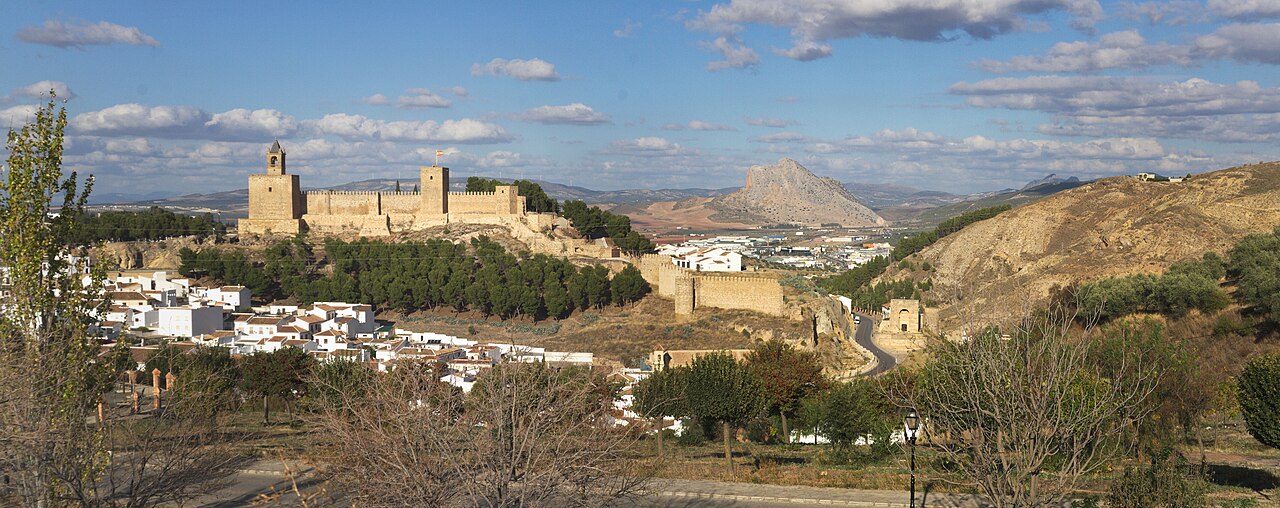
Archidona Castle stands as a significant historical fortress located in Archidona, Spain. Originally constructed in the 9th century AD by the Arabs, this castle represents the strategic military architecture of the early medieval period in the Iberian Peninsula. The castle was later rebuilt and expanded in the 13th century under the direction of Alhamar, the first ruler of the Nasrid dynasty, who played a crucial role in the fortress's development during the High Medieval period. This reconstruction reinforced Archidona Castle's position as a formidable defensive stronghold during the era of Muslim rule in southern Spain.

Early medieval origins and arabic construction

The initial construction of the castle by the Arabs in the 9th century was part of a broader network of fortifications established to secure the region against Christian reconquest efforts. The castle's location atop a hill provided commanding views of the surrounding landscape, allowing for early warning of approaching forces. Typical of early medieval military architecture, the original structure likely included robust stone walls, defensive battlements, and a central keep or donjon serving as the last refuge during sieges.

Nasrid dynasty reconstruction and expansion

During the 13th century, the castle underwent significant rebuilding and expansion under Alhamar, founder of the Nasrid kingdom of Granada. This period saw the incorporation of Islamic architectural elements and advanced fortification techniques. The Nasrid enhancements likely included the strengthening of curtain walls, the addition of towers for improved defense, and the refinement of living quarters within the castle complex. This reconstruction helped maintain Archidona's strategic importance amid the ongoing conflicts of the Reconquista.

Christian conquest and urban development

In 1462, the castle and the town of Archidona were conquered by the Conde de Osuna, marking a shift in control to Christian hands. Following the conquest, the settlement expanded beyond the original castle walls, reflecting a transition from purely military use to a more urbanized community. This expansion included the development of the town's most notable urban feature, the Plaza Ochavada, an octagonal square constructed in the 18th century. The plaza is distinguished by its unique geometric shape and the use of contrasting red brick and white lime in its buildings, illustrating the architectural tastes of the period.

Architectural features and preservation status

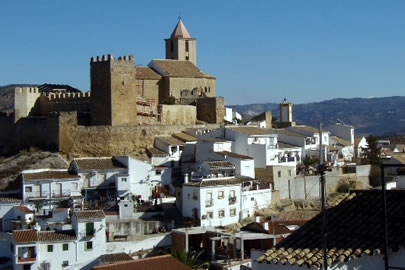
Today, Archidona Castle remains a prominent historical landmark, though much of its original medieval structure has been altered or integrated into later constructions. The castle's hilltop position continues to offer panoramic views of the surrounding Andalusian landscape. Visitors can observe remnants of the fortified walls and towers that once formed the defensive perimeter. The castle's evolution from an early medieval arab fortress to a nasrid stronghold and finally to a symbol of Christian urban expansion reflects the complex history of southern Spain.

Cultural significance and tourism

Archidona Castle is an important cultural site that attracts visitors interested in medieval military architecture and Andalusian history. The castle and the adjacent town showcase a blend of Islamic and Christian influences, visible in the architectural styles and urban layout. The Plaza Ochavada remains a focal point for cultural events and local gatherings, enhancing the castle's role in the community. Preservation efforts aim to maintain the castle's structural integrity and promote its historical value as part of Spain's rich heritage.

Visiting archidona castle

Visitors to Archidona Castle can explore the castle grounds and enjoy views of the town and surrounding countryside. The site offers insight into the region's layered history and the architectural transitions from the early medieval period through the nasrid era to the post-medieval urban expansion. While the castle is partially preserved, it provides a tangible connection to the past and a unique experience for those interested in Spain's medieval fortifications.

Frequently asked questions (FAQ)

What is the historical significance of Archidona Castle?
Archidona Castle is a remarkable example of Moorish architecture, reflecting the region's rich cultural heritage. It was originally built during the 9th century and has served various roles throughout history, including as a defensive fortress. The castle's strategic location offers stunning views of the surrounding landscape, making it an important historical landmark in Spain.
When was Archidona Castle built?
The construction of Archidona Castle began in the 9th century during the Muslim rule of Andalusia. It underwent several modifications and expansions over the centuries, particularly during the Christian reconquest in the 15th century. The castle's architecture showcases a blend of Islamic and Christian influences, highlighting its historical evolution.
Can I visit Archidona Castle?
Yes, Archidona Castle is open to visitors year-round. While exploring the castle, guests can enjoy its impressive walls, towers, and panoramic views of the town and surrounding countryside. It is recommended to check local guidelines for any specific visiting hours or restrictions before planning your trip.
What are the opening hours for Archidona Castle?
Archidona Castle typically opens daily from 9 AM to 7 PM, but hours may vary depending on the season. It is advisable to confirm the current opening times on the official website or local tourism board before your visit. Guided tours may also be available during specific times.
Is it possible to access Archidona Castle by public transport?
Yes, Archidona Castle is accessible by public transport, with regular bus services connecting it to nearby cities. Once you arrive in Archidona, it is a short walk to the castle, which is located near the town center. Consider planning your trip in advance to ensure a smooth journey.
What is the best time to visit Archidona Castle?
The best time to visit Archidona Castle is during the spring or fall when the weather is mild and pleasant for outdoor exploration. Summer can be quite hot, while winter may bring cooler temperatures, so plan accordingly. Additionally, visiting during local festivals can enhance your experience with cultural events.
Are there any nearby attractions to explore after visiting Archidona Castle?
Yes, there are several nearby attractions to enjoy after visiting Archidona Castle. The town is home to beautiful churches, such as the Church of Santa Ana, and picturesque plazas that are perfect for leisurely strolls. You can also explore the natural beauty of the surrounding countryside and nearby historical sites.
What are the ticket prices for Archidona Castle?
Entry to Archidona Castle is generally affordable, with ticket prices typically ranging from €2 to €5. Discounts may be available for students, seniors, and children, so it's worth checking for any special offers. Guided tours may have separate pricing, providing additional insights into the castle's history.

Information

Hill Castle

Loading map...

Visitor reviews

No reviews yet. Been here? Write the first review and help other travelers!

Write the first review

Visited this castle? Share your experience

Your review helps other travelers and adds first-hand knowledge to our encyclopedia.

Write a review

(5/5)

0/2000 characters

Your review will be visible after admin approval

Nearby castles

17.9 km

Alcazaba of Antequera

Antequera, Spain

The Alcazaba of Antequera stands as a remarkable example of 14th-century Muslim military architecture in southern Spain. Erected on Cerro del Castillo, a strategic hill overlooking the city of Antequera in the province of Málaga, this fortress was built to defend the frontier between the Nasrid Kingdom of Granada and the expanding Christian kingdoms to the north. Its origins lie on a site with a deep historical legacy, built over Roman ruins and earlier Iberian settlements, reflecting centuries of cultural and military significance. The fortress is rectangular in plan, featuring three defensive lines that include massive walls, towers, and gates. Among its most notable architectural features is the Torre del Homenaje, or Keep, one of the largest and tallest Moorish towers in al-Andalus, second only to the tower of La Calahorra in Gibraltar. This pentagonal tower rises over 17 meters high and is surmounted by a Catholic bell tower and chapel added in 1582, symbolizing the fortress's transformation after the Christian conquest. Historical background and strategic importance Early settlement and Roman influence The site of the Alcazaba has been inhabited since the 7th millennium BCE, with archaeological evidence of early Iberian peoples. During the late 1st millennium BCE, the Romans established the city of Anticaria, developing it as a key center for olive oil production. The city's strategic location on a hill provided natural defense advantages and control over important trade routes linking Granada and Seville. Medieval Muslim rule and fortress construction Following the Berber conquest in 711 CE, the city was renamed Medina Antaquira and became an important military outpost. Initial defensive walls were constructed during the Caliphate of Córdoba (912–1016). Successive Muslim dynasties, including the Hammudids, Almoravids, and Almohads, reinforced the city's defenses with two rings of walls enclosing a large area. The current fortress, the Alcazaba, was built in the 14th century during the Nasrid period to strengthen the frontier against Christian advances. Sieges and Christian conquest The fortress played a critical role during the turbulent period of the Reconquista. In 1361, it successfully withstood a siege by King Pedro I of Castile, demonstrating its formidable defenses. However, in 1410, after a prolonged five-month siege, the fortress fell to forces led by Fernando I of Aragon, who earned the nickname "Fernando de Antequera" for this victory. The subsequent Christian conquest led to the expulsion of the Muslim population and the fortress's conversion into a Catholic stronghold. Architectural features and layout Fortress plan and defensive structures The Alcazaba occupies a rectangular layout on the hilltop, incorporating three concentric defensive walls. The innermost line encloses the central citadel, where the keep and key military buildings are located. Surrounding this are barracks and other facilities for the garrison, while the outer walls protect the old city below. The walls are constructed with ashlar masonry, combining finely cut stone blocks and brick vaults, showcasing the skilled craftsmanship of Nasrid builders. Notable towers Torre del Homenaje (Keep): This pentagonal tower measures approximately 17 by 17 meters and rises over 17 meters high. It contains three rooms arranged around a central hall and originally had a flat roof accessed by stairs. The 1582 addition of a bell tower with a pitched roof, known locally as "Papabellotas," houses the city's main bell and later a clock. This addition was financed by selling a cork oak forest, illustrating the community's investment in the fortress. Torre Blanca: Built during the Nasrid era, this rectangular tower measures about 9.7 by 9 meters and stands 19.25 meters tall. It has two floors; the ground floor served military purposes, while the upper floor contained five small rooms, including one with a balcony likely reserved for honored guests or residents. Its entrance is located in the western wall of the fortress. Torre del Quiebro: An outer tower adjacent to Torre Blanca, destroyed in 1510 during post-conquest conflicts. Archaeological excavations have reconstructed this tower based on surviving remains. Torre Albarrana de la Estrella: A detached albarrana tower connected to the fortress walls, reinforcing the defensive perimeter. Additional defensive elements The fortress includes several small gates such as the postigo and the Puerta del Agua, both near albarrana towers. These gates and towers are reinforced with buttresses and connected by curtain walls featuring horseshoe-shaped arches and loopholes for archers. The presence of these architectural elements reflects the Islamic military design principles prominent in al-Andalus. Functional spaces within the fortress Inside the fortress, there is a rectangular cistern measuring 6.20 by 4.10 meters, essential for water storage during sieges. An underground prison approximately 6 by 3 meters in size also exists, highlighting the fortress's role in controlling and detaining prisoners. Barracks and administrative buildings supported the garrison and the fortress's role as a military and political center. Transformation after the Christian conquest Following the capture of Antequera in 1410, the fortress was adapted to serve the needs of the new Christian rulers. The addition of the bell tower and chapel in 1582 atop the keep symbolizes this transformation from a Muslim military bastion to a Catholic administrative and religious site. The fortress also hosted the Cortes of Aragon in 1429 under Alfonso V, underscoring its continued strategic and political importance. Some parts of the fortress suffered damage over the centuries, including the destruction of the Torre del Quiebro in 1510. Archaeological efforts have since reconstructed damaged sections, preserving the fortress for future generations. Today, the Alcazaba stands as a well-preserved monument reflecting the complex history of medieval Spain. Preservation and visitor experience The Alcazaba of Antequera is currently well preserved thanks to careful restoration efforts that maintain its key architectural features and reconstruct damaged parts. Visitors can explore the layered defenses, towers, and internal spaces, gaining insight into the fortress's military, administrative, and cultural roles throughout history. The fortress's location on Cerro del Castillo offers panoramic views of Antequera and the surrounding Andalusian landscape, making it a popular destination for history enthusiasts and tourists alike. Interpretive signage and guided tours provide detailed information about the site's Nasrid origins, Christian modifications, and archaeological significance. Overall, the Alcazaba of Antequera is a testament to the military ingenuity and cultural fusion that characterize medieval Spain, embodying centuries of history within its formidable walls.

Late Medieval (14th–15th c.)
Details
18 km
Fortress of Antequera — Spain castle

Fortress of Antequera

, Spain

The Fortress of Antequera, also known as the Alcazaba of Antequera, is a prominent medieval fortress located in Andalucia, Spain. Its origins date back to the eleventh century, marking it as a significant example of early Islamic military architecture on the Iberian Peninsula. The fortress was initially constructed during the period of Muslim rule in the region, serving as a strategic defensive stronghold. While the earliest construction began in the 11th century, the majority of the surviving walls and towers visible today were built or extensively rebuilt in the fourteenth century, reflecting the evolving military needs and architectural styles of the time. Architectural features and layout The fortress is characterized by its imposing fortification walls and several notable towers that dominate its silhouette. The most significant of these is the El Homenaje tower, or the main keep, which served as the central stronghold within the fortress. This tower is architecturally distinguished by its interior spaces covered with oblique domes, a feature typical of Moorish design, except for one chamber that uniquely retains a wooden roof. The presence of these domes not only provided structural strength but also demonstrated the skilled craftsmanship of the builders. Another important tower is the Torre de Papabellotas, which was constructed on top of the El Homenaje tower in the sixteenth century. This addition reflects the continued use and adaptation of the fortress well into the post-Reconquista period. The Torre de Papabellotas is historically significant for housing a bell that regulated the irrigation schedules of the surrounding agricultural lands, indicating the fortress's role beyond mere military defense to include local civil administration and resource management. The Torre Blanca, or White Tower, is another key structure within the fortress complex. It features chambers spread over two stories and is connected to El Homenaje by a fortified wall walk along the top of the defensive walls. This connectivity allowed defenders to move swiftly between towers while maintaining protection from attack. Defensive structures and gates The fortress's defensive system includes a second line of walls extending southward from the Torre Blanca. Along this wall stands the Puerta de Málaga (Málaga Gate), a graceful tower featuring a distinctive horseshoe arch that exemplifies Islamic architectural influence. This gate served as a critical access point and was strategically important for controlling movement into the fortress. Following the Christian conquest of Antequera in the 15th century, the Puerta de Málaga was repurposed as a hermitage named Virgen de la Espera. This transformation highlights the cultural and religious shifts that occurred in the region after the Reconquista, as Islamic military structures were adapted for Christian uses. Historical context and significance The Fortress of Antequera stands as a testament to the region's complex history of conquest, cultural exchange, and architectural evolution. Originally built by the Moors during the Al-Andalus period, it played a crucial role in the defense of the city and surrounding lands. The fortress's walls and towers were designed to withstand sieges and attacks, reflecting the turbulent nature of medieval Iberian politics. After the Christian Reconquista in the 15th century, the fortress continued to be used and modified, illustrating the layered history of the site. Its adaptation for religious purposes, such as the conversion of the Málaga Gate into a hermitage, demonstrates the integration of new cultural identities while preserving the fortress's architectural heritage. Preservation and current condition Today, the Fortress of Antequera is well preserved and remains a prominent historical monument within Andalucia. The surviving walls, towers, and gates offer valuable insight into medieval military architecture and the region's history. Visitors can explore the fortress's pathways along the battlements, gaining panoramic views of Antequera and the surrounding landscape. The fortress is managed as a cultural heritage site, with efforts to maintain its structural integrity and promote its historical significance. It serves as an educational resource and tourist attraction, drawing those interested in medieval history, Islamic architecture, and Spanish heritage. Architectural influences and style The fortress exemplifies Islamic military architecture from the Al-Andalus period, with characteristic features such as horseshoe arches, , and domed ceilings. The later additions, including the Torre de Papabellotas, reflect Renaissance influences and the practical adaptations made during the Christian period. This blend of styles highlights the fortress's long history of occupation and modification. Visitor information and cultural importance As a cultural landmark, the Fortress of Antequera offers visitors a chance to experience a significant piece of Andalucian and Spanish history. Its strategic location and commanding views make it a popular destination for tourists and historians alike. The site often hosts guided tours and educational programs that delve into its architectural and historical context. Visitors are encouraged to explore the various towers and walls, noting the architectural details such as the oblique domes and the horseshoe arches. The fortress's role in regulating agricultural irrigation through the bell in the Torre de Papabellotas adds a unique aspect to its historical narrative.

High Medieval (11th–13th c.)
Details
18.8 km
Iznájar Castle — Spain castle

Iznájar Castle

Calle Villa, Spain

Iznájar Castle, locally known as Castillo de Iznájar, is a striking example of a hill castle perched on a prominent rocky ridge in the town of Iznájar, within the province of Córdoba, Spain. Its commanding position overlooking the surrounding landscape and the nearby Iznájar reservoir underscores its historic strategic importance. This fortress is a significant monument reflecting the complex medieval history of southern Spain, particularly during the period of Muslim rule known as Al-Andalus. The castle's origins trace back to the 8th century, constructed by the Umayyads during the early decades of the Emirate of Córdoba. It is believed to have been built on the ruins of an earlier fortification, possibly dating from the Visigothic or even Roman era, indicating the site's long-standing military and administrative significance. Its Arabic name, derived from "hisn al-ashar", meaning "joyful castle," reflects its role as a frontier fortress and local stronghold. Architectural design and fortifications The castle features a distinctive triangular layout, truncated on the northeast side, with the longest side facing south. This design encloses a large central courtyard, a typical feature of medieval fortresses that provided space for military and administrative activities. The fortress is surrounded by a robust curtain wall, reinforced by flanking towers at the southeast and southwest corners, which served as key defensive positions. On the northeast side, the enclosure is closed by a rectangular building connected to a pentagonal tower on the west and another tower on the east. This arrangement provided layered defense and control over access points. The original entrance is believed to have been through a bent passageway on the east side, within a tower attached to the rectangular building, a common defensive feature designed to slow attackers. The walls are constructed of small, regularly cut ashlar blocks bonded with lime mortar, measuring approximately 1.80 meters thick. The masonry technique includes two faces of carefully worked stones arranged in a herringbone pattern with a rubble-filled core, demonstrating advanced medieval construction methods typical of the region. The castle is encircled by a barbican and a moat, enhancing its defensive capabilities. The presence of the alcazaba or citadel at the highest part of the site housed important buildings such as a mosque, baths, and residences for the ruling elite, though these structures no longer survive intact. Historical significance and timeline Early medieval period and umayyad construction Constructed in the early 8th century, Iznájar Castle was part of the Umayyad efforts to consolidate control over the Iberian Peninsula. The fortress played a pivotal role during the turbulent years of the 9th and 10th centuries, especially during the revolts led by Omar ibn Hafsún, a prominent Mozarabic rebel who challenged Umayyad authority. In 886 AD, the castle sided with the rebels and was subsequently besieged and captured by the Emir of Córdoba's forces. Following continued unrest, including the murder of the local governor in 912 AD, the castle was rebuilt in the 10th century under the reign of Abd al-Rahman III, who reinforced its defenses, reaffirming its strategic importance within the Emirate of Córdoba. Taifa period and nasrid kingdom In 1010, Iznájar became the capital of a small taifa, or independent Muslim principality, reflecting the fragmentation of Al-Andalus during this period. Later, in 1080, the castle was further strengthened by ′Abd Allah, Emir of the Taifa of Granada, amid threats from the Almoravids and Christian kingdoms. By the 12th century, the castle was recognized by the Muslim traveler Al Idrisi as a well-fortified stronghold. The Nasrid Kingdom of Granada incorporated Iznájar Castle following the 1246 Pact of Jaén, making it a frontier fortress on the border with Christian territories. The castle's defenses were expanded with the addition of a second enclosure during this time. In 1362, the castle was captured by King Pedro I of Castile with the aid of the deposed Nasrid Sultan Muhammad V, but it was retaken by Muhammad V in 1366 after regaining power. The castle was rebuilt and reinforced following these conflicts, highlighting its ongoing military significance. Christian conquest and later history The final Christian conquest of Iznájar Castle occurred in 1434, when forces led by Pedro Fernández de Córdoba captured the fortress after a fierce battle. Following this, the castle was rebuilt and entrusted to the governor of the nearby municipality of Cabra, marking the transition from Muslim to Christian control. Throughout the 18th century, the castle underwent adaptations to serve the administrative needs of the Duke of Sessa's estate. Parts of the western wing were converted into stables, while the eastern sections preserved remnants of the original walls and floors. Ownership remained private until 1991, when the local municipality acquired the castle. It was declared a protected monument of cultural importance in 1993, ensuring its preservation and public access. Architectural features and notable elements The castle's defensive system includes several distinct towers: the original tower connected to the northeast core, a pentagonal prow tower on the northwest side, the central keep (torre del homenaje), and a tower at the southeast corner. These towers provided overlapping fields of fire and strongpoints for the castle's defenders. One of the castle's highlights is its accessible cistern, a vital feature for water storage during sieges, which remains well-preserved and accessible to visitors. The vaulted chambers and semicircular arches with stone voussoirs demonstrate the architectural sophistication of the period. The castle's interior enclosure measures approximately 98 meters in perimeter, with walls originally built with two faces of small square stones arranged in a herringbone pattern. The core filled with rubble gave the walls great solidity, a common technique in medieval fortifications. Visitor information and current status Today, Iznájar Castle is well preserved and open to the public for a small fee. Visitors gain admittance through the local Tourist Information Office. While some restoration efforts involved the use of concrete, a common but controversial practice in Spanish castle restorations, the overall integrity of the castle remains intact, allowing visitors to appreciate its historical and architectural significance. The castle's location offers spectacular views of the surrounding landscape and the Iznájar reservoir, enhancing the visitor experience. Its blend of early medieval Muslim architecture and later Christian modifications tells a rich story of cultural and political change in Andalusia. The castle is owned by the local community, reflecting its importance as a cultural heritage site and symbol of regional identity. It stands as a testament to the layered history of southern Spain, from Roman and Visigothic times through the Islamic period and the Christian Reconquista.

Early Medieval (5th–10th c.)
Details