Fortezza del Tocco
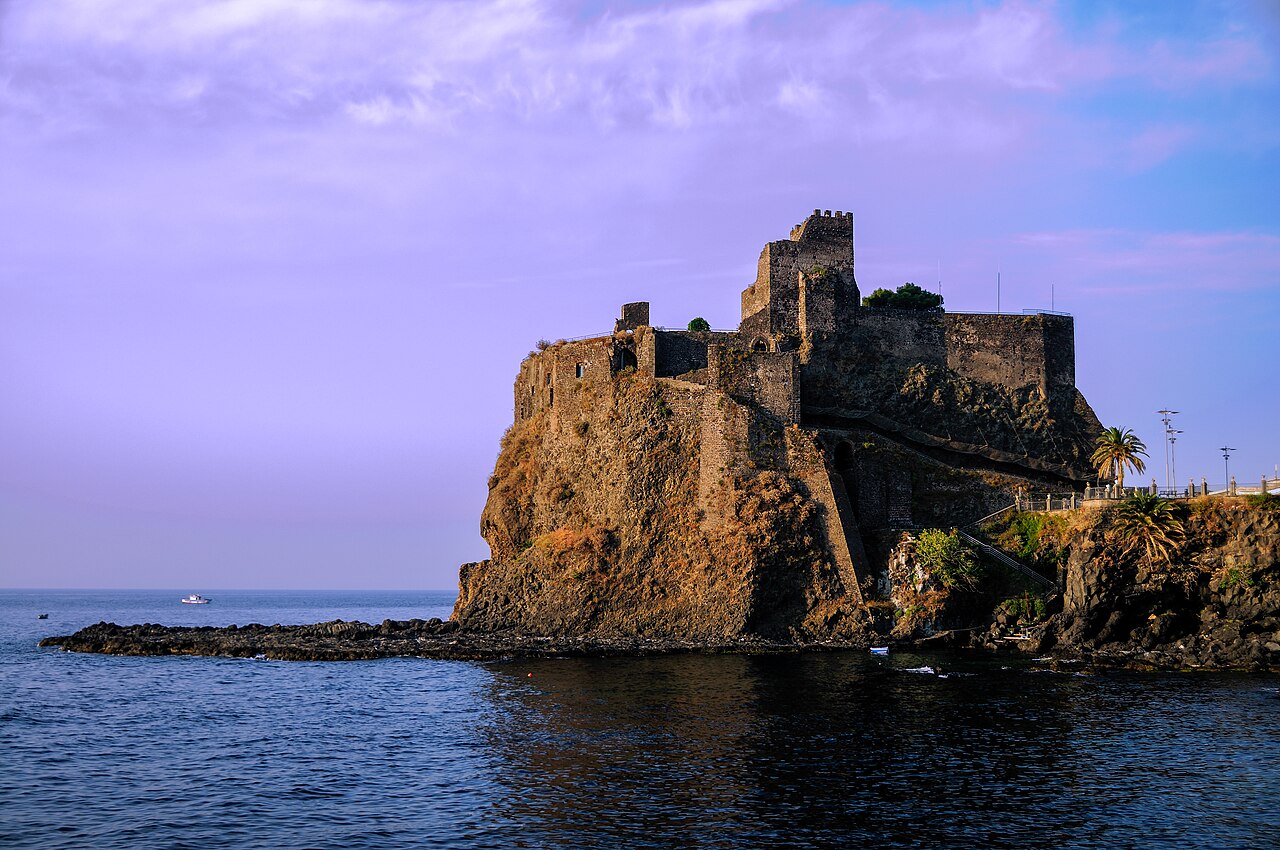
The Fortezza del Tocco is a prominent Renaissance bastioned fortress located in Acireale, on the eastern coast of Sicily, Italy. Constructed between 1592 and 1616, the fort was a strategic military installation designed to protect the city and its coastline from persistent pirate attacks, particularly from the Barbary corsairs who plagued the Mediterranean during this period.
The fort's origins are closely tied to the turbulent maritime history of the late 16th century. Despite the decisive Battle of Lepanto in 1571, which curtailed Ottoman naval dominance, piracy along the Sicilian coast remained a significant threat. In 1582, the notorious Ottoman admiral Uluç Ali attempted a raid on Acireale, which was ultimately repelled. However, this event heightened local fears and prompted the Spanish rulers of the Kingdom of Sicily to invest in robust coastal defenses.
Historical context and construction
The Fortezza del Tocco was commissioned by the Spanish authorities as part of a broader defensive network along Sicily's eastern shoreline. The fort was designed by the notable military architects Camillo Camilliani and Vincenzo Geremia, who specialized in fortifications adapted to the evolving artillery technology of the Renaissance.
Its construction spanned over two decades, reflecting the complexity and scale of the project. The fortress was strategically situated to oversee and control the coastline and the approaches to Acireale, enabling early warning and effective defense against seaborne threats.
Architectural features and design
The fortress exemplifies the bastioned fortress typology, characteristic of Renaissance military architecture. This design incorporates angular bastions projecting outward from the curtain walls, allowing defenders to cover adjacent walls with overlapping fields of fire, thus eliminating blind spots vulnerable to attackers.
The Fortezza del Tocco features robust stone walls, thick enough to withstand cannon fire, and includes several bastions arranged to maximize defensive coverage. The layout reflects the influence of the Italian school of fortification, which emphasized geometric precision and the integration of artillery platforms.
Additional defensive elements include a moat and a fortified gatehouse controlling access to the interior courtyard. The internal space was organized to accommodate garrison quarters, ammunition storage, and command facilities, ensuring the fort could sustain prolonged defense.
Military engagements and modifications
Throughout its operational history, the Fortezza del Tocco played a crucial role in defending Acireale. Notably, in 1675, the fortress successfully repelled a French naval attack, demonstrating its strategic value and the effectiveness of its design.
In the early 17th century, the fort underwent modifications to adapt to advancements in military technology and changing tactical requirements. These included enhancements to the bastions and artillery placements, ensuring the fortress remained a formidable defensive structure.
Decline and preservation
By the 19th century, the military importance of the Fortezza del Tocco diminished due to shifts in warfare and political changes. The fort was decommissioned, and its artillery was removed in 1834. These guns were preserved and are now displayed in the Pinacoteca Zelantea in Acireale, providing a tangible link to the region's martial past.
Since 1999, the fortress and its surrounding area have been designated as a nature reserve, highlighting the site's environmental as well as historical significance. The fort is open to the public, offering visitors insight into Renaissance military architecture and the coastal defense history of Sicily.
Nearby fortifications and regional defense network
The Fortezza del Tocco was part of a comprehensive system of coastal defenses constructed by the Spanish in Sicily during the late 16th and early 17th centuries. Other contemporary fortifications include the Torre Alessandrano, Torre di Sant'Anna, and the Garitta di S. Tecla. These towers and forts formed an interconnected network that allowed for communication and coordinated defense against pirate incursions.
This network reflects the strategic importance of Sicily as a crossroads in the Mediterranean and the ongoing challenges posed by piracy and foreign naval powers during the Renaissance.
Frequently asked questions (FAQ)
- When was the Fortezza del Tocco built?
- The Fortezza del Tocco was constructed between 1592 and 1616 during the Renaissance period to defend Acireale from pirate attacks.
- What architectural style characterizes the Fortezza del Tocco?
- The fortress is designed in the Renaissance bastioned style, featuring angular bastions and thick stone walls adapted for artillery defense.
- Can visitors explore the Fortezza del Tocco today?
- Yes, the fort and its surrounding nature reserve have been open to the public since 1999, offering access to its historical and architectural features.
- What was the fort's role in military history?
- The Fortezza del Tocco defended Acireale from pirate raids and repelled a French attack in 1675, highlighting its strategic importance.
- Are there other nearby historical fortifications?
- Yes, nearby defenses include the Torre Alessandrano, Torre di Sant'Anna, and Garitta di S. Tecla, which formed a coastal defense network.
Photo gallery

Information
Opening hours
Open to the public
Ticket prices
Free
Current owner
Municipality
Loading map...
Visitor reviews
No reviews yet. Been here? Write the first review and help other travelers!
Write the first reviewVisited this castle? Share your experience
Your review helps other travelers and adds first-hand knowledge to our encyclopedia.