Castello Normanno
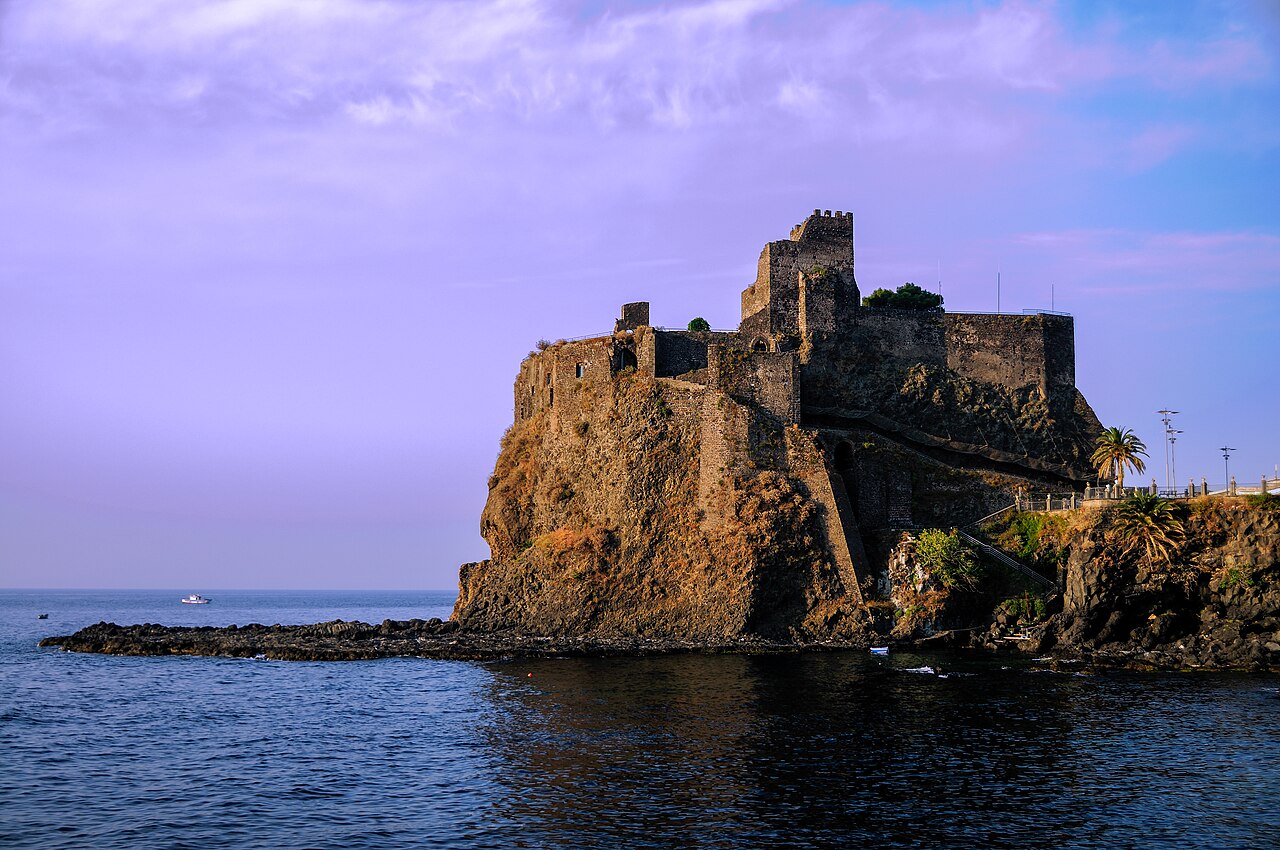
Castello Normanno, also known as the Castello di Paternò, is a remarkable Norman fortress perched on a hilltop in the town of Paternò, Sicily. Constructed in 1072 by Count Roger I of Sicily, it was strategically positioned to dominate the Simeto valley and protect the region from Islamic raids during the Norman conquest of Sicily. This hill castle embodies significant High Medieval military architecture and reflects the complex history of Norman and Swabian rule on the island.
The castle's foundation marked a pivotal moment in Sicilian history, as it was built shortly after Roger I’s successful siege of Catania in 1071. The fortress served both as a military stronghold and an administrative center, facilitating Norman control and encouraging settlement by Northern Italian mercenaries and farmers. Over the centuries, the castle evolved from a defensive bastion to a royal residence and later a prison, before undergoing restoration in the 19th century to preserve its historical and architectural significance.
Historical context and strategic importance
The Castello Normanno was established during a turbulent period marked by the Norman expansion into Sicily, which was then contested by Muslim forces. Its location on a rocky outcrop approximately 300 meters above the surrounding landscape allowed it to oversee the Simeto valley and serve as a formidable barrier against incursions. The castle was integral to Roger I’s campaign to secure the region, particularly in his efforts to capture the nearby town of Centuripe.
After its construction, the castle was granted to Roger’s daughter, Flandrina, and her husband Henry of Lombardy, fostering the growth of a Norman-aligned community supported by privileges that attracted settlers. This contributed to the development of Paternò as a regional center. In 1195, control passed to Bartolomeo de Luci, a noble connected to the Swabian Emperor Henry VI, reflecting the castle's continued political relevance.
Throughout the 13th and 14th centuries, the castle hosted important figures including Emperor Frederick II and members of the Sicilian royal family. It became part of the Camera Reginale, a royal endowment for the queen consort, housing queens such as Eleonora of Anjou and Blanca of Navarre. Ownership later transferred to noble families like the Speciale and Moncada, who maintained the castle until the decline of feudalism in Sicily.
Architectural features and layout
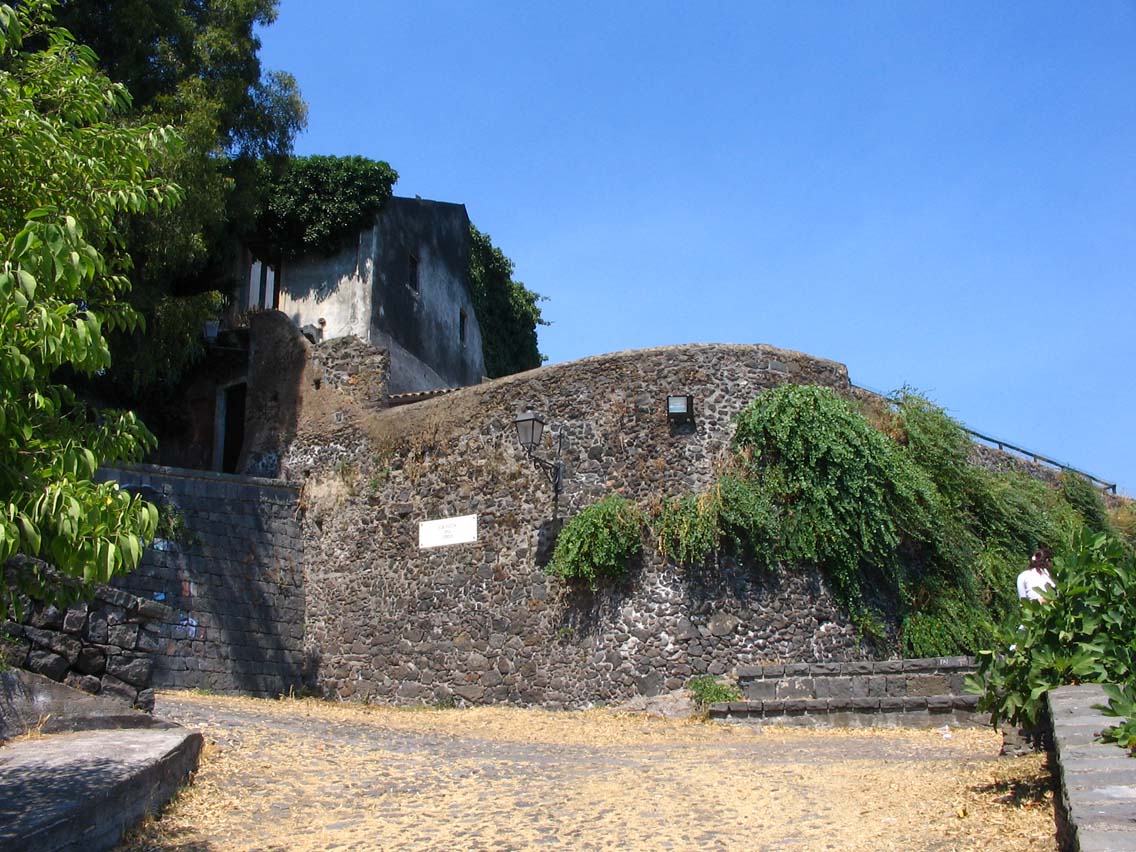
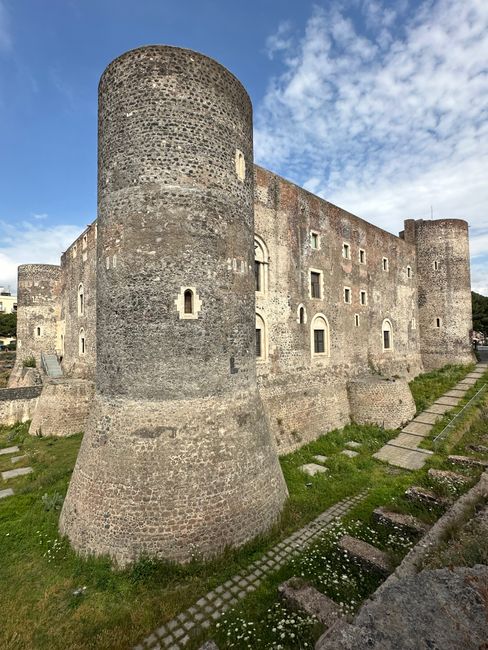
The castle is characterized by a rectangular plan measuring approximately 24.3 by 18 meters, rising to a height of about 34 meters. It is constructed primarily of dark lava stone, contrasted strikingly by white limestone used for window frames and cornerstones. This color contrast highlights the castle’s Norman and Swabian architectural heritage.
The structure comprises three to four floors, with internal staircases ingeniously built within the thick walls, a feature typical of Anglo-Norman military architecture. The ground floor is divided into four rooms by intersecting walls, including a small chapel dedicated to Saint John adorned with 13th-century frescoes, a guardroom, and prison cells, emphasizing the castle’s defensive and administrative roles.
The first floor contains the armory hall, illuminated by four bifora windows—twin-arched openings characteristic of medieval design—and three adjacent chambers. The second floor features a large hall for official functions, with two large bifora windows offering panoramic views of Mount Etna and the Simeto valley. Surrounding this hall are four rooms believed to have served as royal living quarters.
Access to the terrace is via a staircase from the second floor. The terrace was originally enclosed by Ghibelline-style battlements with distinctive swallowtail merlons, of which only remnants remain today. Historical illustrations from the 17th century depict the castle’s crenellated rooftop, reflecting its medieval defensive design.
Decorative and structural elements
The castle's exterior presents an irregular parallelepiped shape, enhanced by the interplay of rough volcanic stone and smooth limestone detailing. The Gothic-style mullioned windows with white limestone frames add an elegant contrast to the fortress’s robust appearance. Inside, some upper-floor chambers feature early 14th-century frescoes, likely decorating the quarters used by royal guests.
Later history and restoration
By the 18th century, the castle’s military significance waned, and it was repurposed as a prison, a role that contributed to its gradual decline and neglect. The centuries that followed saw the fortress fall into disrepair until restoration efforts began in the 19th century, spearheaded by historians and architects dedicated to preserving Sicily’s Norman heritage.
These restorations revived the castle’s architectural prominence and allowed it to be opened as a museum, showcasing its rich history and medieval architecture to visitors. Today, Castello Normanno stands as a testament to the Norman conquest of Sicily and the island’s layered history, attracting scholars and tourists alike.
Cultural significance and visitor experience
As a well-preserved example of Norman military architecture, the Castello Normanno offers insight into medieval fortification techniques and the political dynamics of Sicily during the High Middle Ages. Its strategic location provides stunning views of the surrounding landscape, including the imposing silhouette of Mount Etna.
Visitors can explore the castle’s multiple floors, including the chapel with its rare frescoes, the armory hall, and the royal chambers. The blend of military functionality and residential comfort illustrates the castle’s dual role as a fortress and noble residence. The site also hosts cultural events and exhibitions that highlight its historical importance and ongoing legacy.
Accessibility and tourism
The castle is accessible to the public as a museum, offering guided tours that explain its architectural features and historical context. Its location in Paternò makes it a convenient destination for those interested in Sicilian history and medieval architecture. The castle’s preservation efforts ensure that it remains a valuable cultural landmark for future generations.
Frequently asked questions (FAQ)
- How do I get to Castello Normanno?
- Castello Normanno is located in Paternò, Italy, and is easily accessible by car or public transportation. If you’re coming from Catania, you can take a train or bus that will take you directly to the town. Once in Paternò, the castle is a short walk from the town center.
- What is the historical significance of Castello Normanno?
- Castello Normanno, also known as the Norman Castle, dates back to the 11th century and is a symbol of the Norman conquest of Sicily. It served as a royal residence and military stronghold, showcasing the power and influence of the Normans in the region. The castle's architecture reflects the blend of Norman, Arabic, and Byzantine styles.
- When was Castello Normanno built?
- Construction of Castello Normanno began in the 11th century, shortly after the Normans arrived in Sicily. It was completed in stages, with significant modifications made over the centuries, especially during the medieval period. The castle has stood the test of time and remains a prominent historical site in Paternò.
- Can I take guided tours of Castello Normanno?
- Yes, guided tours of Castello Normanno are available and are highly recommended for a deeper understanding of its history and architecture. Tours typically include access to various parts of the castle, including its towers and battlements. It’s best to check the castle’s official website for schedule and availability.
- Why is Castello Normanno a popular tourist attraction?
- Castello Normanno attracts visitors due to its rich history, stunning architecture, and panoramic views of the surrounding area. The castle offers a glimpse into Sicily's past and showcases the cultural influences that shaped the island. Its well-preserved structures and historical significance make it a must-visit for history enthusiasts.
- Is it possible to visit Castello Normanno year-round?
- Yes, Castello Normanno is open to visitors throughout the year, although hours may vary seasonally. It’s advisable to check the official website for the exact opening hours before planning your visit. The castle offers a unique experience in each season, with beautiful views and less crowded times to explore.
- What are the ticket prices for Castello Normanno?
- Ticket prices for Castello Normanno are generally affordable, making it accessible for all visitors. Discounts may be available for students, seniors, and groups. It's best to confirm the current prices on their official website or at the entrance before your visit.
- What is the best time to visit Castello Normanno?
- The best time to visit Castello Normanno is during the spring and fall months when the weather is mild and pleasant. These seasons also tend to have fewer tourists, allowing for a more enjoyable experience. Summer can be quite hot, while winter may bring some rain, so plan accordingly.
- Are there any nearby attractions to Castello Normanno?
- Yes, there are several attractions close to Castello Normanno, including the picturesque town of Paternò itself and its charming streets. Visitors can also explore nearby historical sites such as the Monastery of San Benedetto and the Church of Santa Maria dell'Elemosina. These sites complement the visit to the castle and enhance the cultural experience in the area.
Information
Website
Visit websiteSources & official resources
Verify the information above using these authoritative references.
Loading map...
Visitor reviews
No reviews yet. Been here? Write the first review and help other travelers!
Write the first reviewVisited this castle? Share your experience
Your review helps other travelers and adds first-hand knowledge to our encyclopedia.