Forte dos Reis Magos
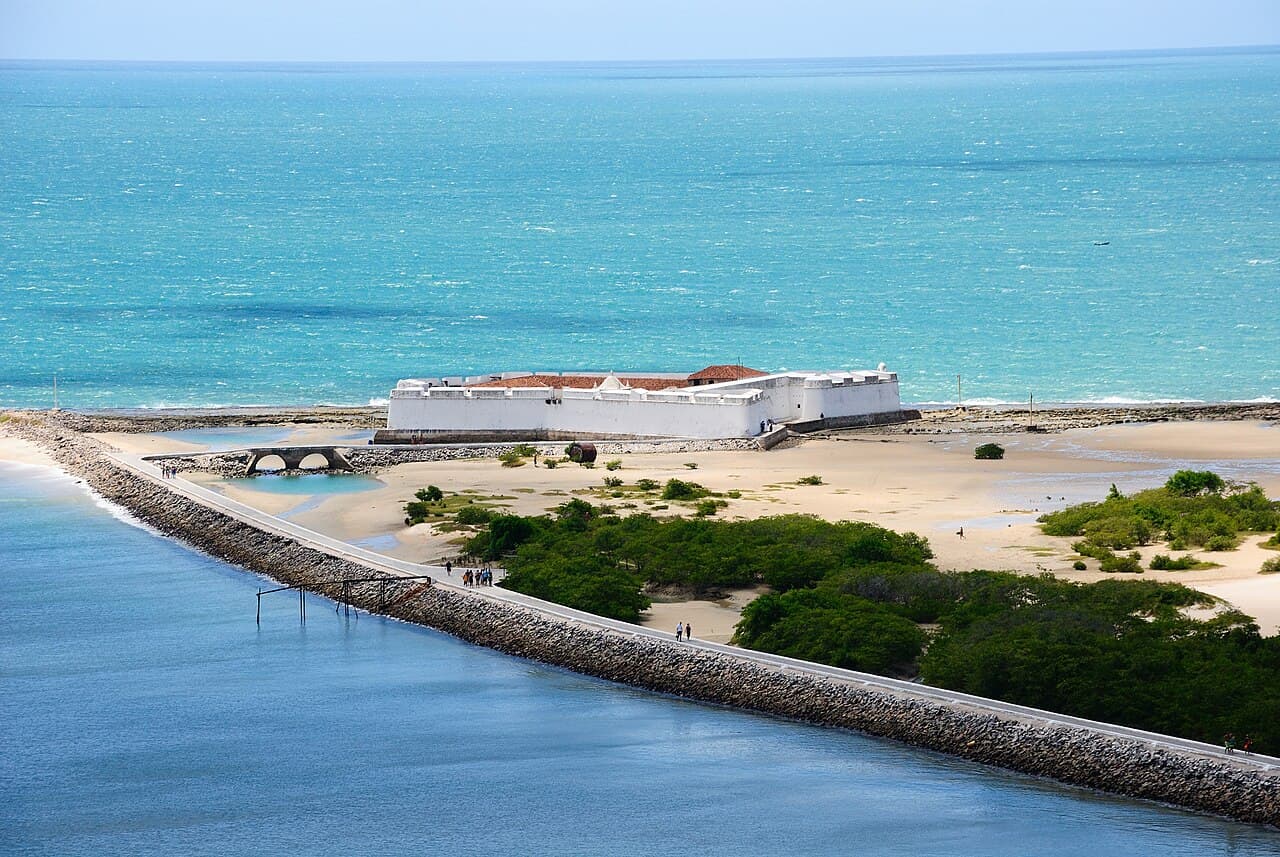
The Forte dos Reis Magos, also known as Fortaleza dos Reis Magos or the Fortress of the Three Wise Men, is a significant 16th-century bastioned fortress located in the city of Natal, in the Brazilian state of Rio Grande do Norte. It stands as a prominent historical landmark and was the foundational structure around which the city of Natal developed.
Construction of the fortress began on 6 January 1598, coinciding with the Epiphany in the Catholic calendar, which inspired its name referencing the biblical Three Wise Men. The fortress was strategically positioned on the right bank of the Potenji River mouth, near what is now the Newton Navarro Bridge. This location was chosen to defend the coastline and the river entrance against foreign invaders and pirates during the colonial period.
Early construction and architectural design
The original structure was designed by Father Gaspar Samperes and initially constructed using earthworks, a common practice for fortifications in the late 16th century due to the speed and relative ease of building. However, by 1608, the earthen fortifications had deteriorated and required significant repair.
Subsequently, the fortress was rebuilt using stone, a more durable material that enhanced its defensive capabilities. The reconstruction was completed in 1614 under the supervision of the Portuguese engineer Francisco Frias de Mesquita. The stone fortification featured a bastioned design, characteristic of Renaissance military architecture, which emphasized angular bastions to eliminate blind spots and enable crossfire coverage around the walls.
Architectural features and style
The fortress's layout is a star-shaped bastioned fortress with five points, a typical design of the Renaissance period influenced by the principles of military engineering developed to withstand artillery attacks. This style was widely adopted in European colonial fortifications to improve defensive strength.
Its design shares similarities with the Forte Jesus de Mombaça in East Africa, which is noted for its adherence to the Vitruvian ideals of proportion and symmetry inspired by classical Roman architecture. However, the Forte dos Reis Magos is simpler in appearance and scale, reflecting local adaptations and resource availability.
The fortress includes thick stone walls, bastions for cannon placements, and a moat on the landward side. Inside, it features barracks, ammunition storage rooms, and command quarters. The fortress's entrance is fortified with a gatehouse designed to control access and provide additional defense.
Historical significance and role in brazilian colonial defense
The Forte dos Reis Magos was the first permanent military installation in the region and served as the nucleus for the establishment of Natal, founded officially on 25 December 1599. Its presence was crucial in securing Portuguese claims against French and Dutch incursions along the northeastern Brazilian coast.
Throughout its history, the fortress played a defensive role during various conflicts, including attacks by Dutch forces in the 17th century. Its strategic position allowed control over the maritime approaches to the Potenji River and protection of the early colonial settlement.
Preservation and current status
Today, the Forte dos Reis Magos is a well-preserved historic monument and an important cultural heritage site in Brazil. It has undergone several restoration efforts to maintain its structure and to provide visitors with insights into colonial military architecture.
The fortress is open to the public and serves as a museum, offering exhibitions on the history of the fort, the city of Natal, and the broader context of Portuguese colonization in Brazil. Its location near the coast provides scenic views and makes it a popular tourist attraction.
Visitor information
Visitors can explore the fortress's bastions, walls, and interior chambers, gaining a comprehensive understanding of its defensive features and historical context. Educational programs and guided tours are often available to enhance the visitor experience.
Architectural legacy and influence
The design of the Forte dos Reis Magos reflects the adaptation of European Renaissance military architectural principles to the Brazilian colonial environment. Its bastioned star shape influenced subsequent fortifications in the region and stands as an example of early colonial military engineering in the Americas.
Its comparison to African fortresses like Forte Jesus de Mombaça highlights the global exchange of military architectural knowledge within the Portuguese Empire, adapting to different geographic and strategic contexts.
Frequently asked questions (FAQ)
- How do I get to Forte dos Reis Magos?
- Forte dos Reis Magos is located in Natal, Brazil, and can be easily accessed by car or public transportation. If you're staying in the city, local bus services and taxis are available to take you directly to the fortress. Parking is also available nearby for those driving.
- What is the historical significance of Forte dos Reis Magos?
- Forte dos Reis Magos was built in the 16th century to protect the Portuguese colony from invasions. It played a crucial role in the defense of the region during colonial conflicts and has been a key historical site reflecting Brazil's military past. Today, it stands as a symbol of Natal's heritage and attracts many history enthusiasts.
- When was Forte dos Reis Magos constructed?
- Construction of Forte dos Reis Magos began in 1598 and was completed in 1607. The fort was strategically built at the confluence of the Potengi River and the Atlantic Ocean, making it an important military installation during its time. Its architecture reflects the military design principles of the period.
- Can I visit Forte dos Reis Magos on a guided tour?
- Yes, guided tours are available for visitors to explore Forte dos Reis Magos. These tours provide insightful information about the fort's history, architecture, and significance. It's recommended to check the schedule and book in advance, especially during peak tourist seasons.
- Why is the architecture of Forte dos Reis Magos unique?
- The architecture of Forte dos Reis Magos is unique due to its star-shaped layout, which was designed to withstand artillery attacks. Its thick walls and strategic location showcase the military engineering techniques of the 16th century. The fort's construction materials and design also reflect the influence of Portuguese colonial architecture.
- Is it possible to access the fort with a wheelchair?
- While efforts have been made to make Forte dos Reis Magos accessible, some areas may present challenges for wheelchair users due to uneven terrain and steps. It is advisable to contact the site in advance to inquire about accessibility options and any accommodations that may be available.
- What are the opening hours for Forte dos Reis Magos?
- Forte dos Reis Magos is generally open to the public from Tuesday to Sunday, from 9 AM to 5 PM. However, hours may vary on holidays, so it's best to check the official website or contact them for the most current information before your visit.
- What are the ticket prices for visiting Forte dos Reis Magos?
- Ticket prices for Forte dos Reis Magos are typically very affordable, with discounts available for students and seniors. Children under a certain age may enter for free. It's a good idea to check the official site for the latest pricing details before your visit.
- When is the best time to visit Forte dos Reis Magos?
- The best time to visit Forte dos Reis Magos is during the dry season, which runs from June to December. This period offers pleasant weather and clearer skies, making it ideal for exploring the fort and enjoying the surrounding scenery. Visiting during the weekdays can also help you avoid larger crowds.
- What nearby attractions can I explore after visiting Forte dos Reis Magos?
- After visiting Forte dos Reis Magos, you can explore nearby attractions such as the beautiful Ponta Negra Beach and the vibrant Morro do Careca dune. Additionally, the Natal Aquarium and the historic city center are just a short drive away, offering more opportunities to experience the region's culture and natural beauty.
Photo gallery

Information
Loading map...
Visitor reviews
No reviews yet. Been here? Write the first review and help other travelers!
Write the first reviewVisited this castle? Share your experience
Your review helps other travelers and adds first-hand knowledge to our encyclopedia.