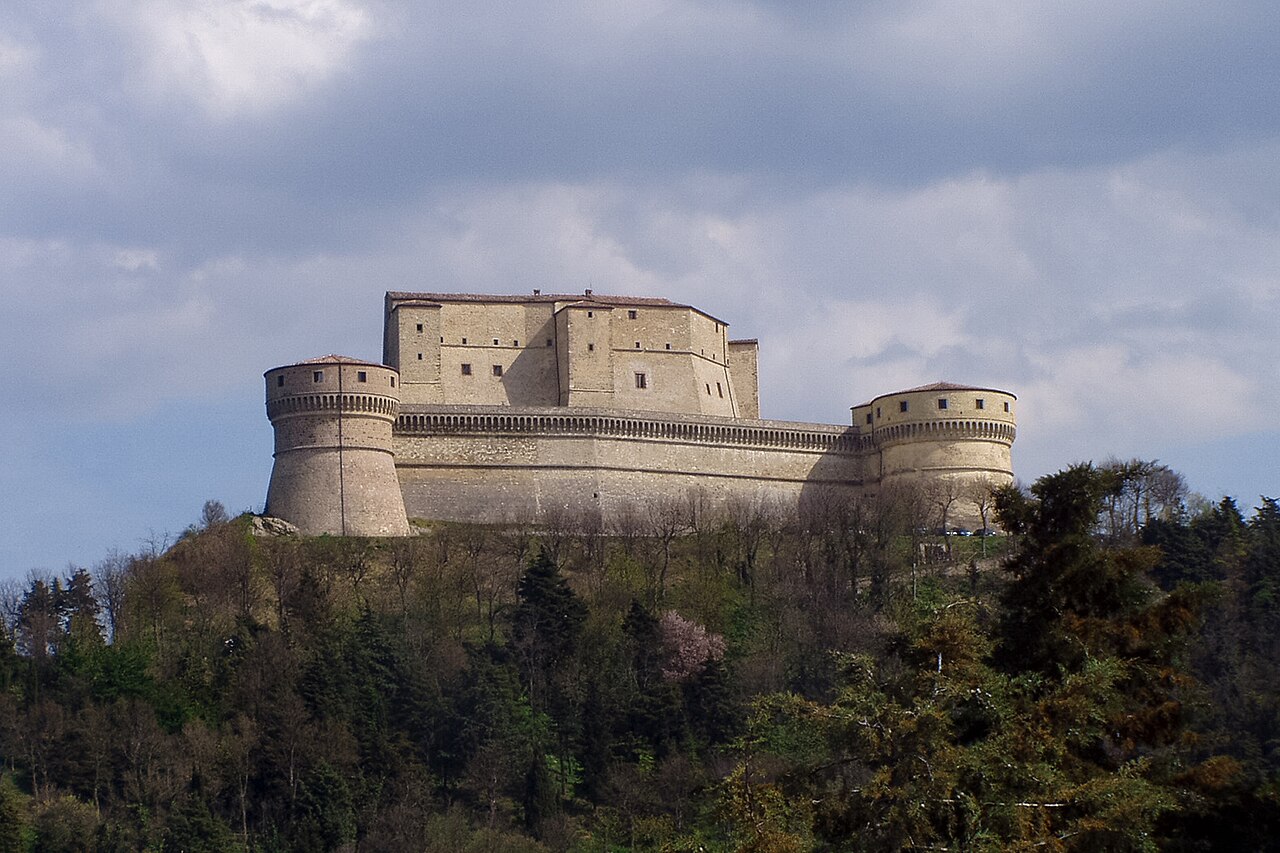
Forte di San Leo
Forte di San Leo stands as a commanding example of a hill castle perched atop the rocky outcrop of the town of San Leo in the region of Emilia-Romagna, Italy. This fortress is renowned for its strategic location and rich history dating back to the High Medieval period, with its initial construction in the 13th century. It has witnessed centuries of military and political significance, evolving architecturally to meet the needs of its occupants and the challenges of warfare.
The fortress is famously associated with Count Alessandro di Cagliostro, a controversial figure who died within its walls while imprisoned. Additionally, it was once part of the holdings of the illustrious Federico da Montefeltro, Duke of Urbino, and his wife Battista Sforza. Their ownership marked the fortress not only as a military stronghold but also as a palatial retreat, blending defensive architecture with residential grandeur.
Historical context and significance
The origins of Forte di San Leo trace back to the early medieval era, but the most significant phase of construction and fortification occurred in the 13th century, aligning with the High Medieval period of castle building in Italy. Its position atop a steep rocky hill made it a formidable defensive site, controlling the surrounding valleys and trade routes. Over time, the fortress was expanded and reinforced to serve as a military bastion and a symbol of regional power.
Throughout its history, the fortress changed hands among various noble families and rulers, reflecting the turbulent political landscape of medieval and Renaissance Italy. The Montefeltro family, particularly Federico da Montefeltro, was instrumental in enhancing the fortress's fortifications and residential quarters, transforming it into a dual-purpose site for defense and noble residence.
Architectural features and layout
Forte di San Leo exemplifies the characteristics of a hill castle with its integration into the natural rocky terrain. The fortress features massive stone walls and robust bastions designed to withstand sieges and artillery attacks. The defensive layout includes thick curtain walls, a deep moat carved into the rock, and strategically placed towers that provide panoramic views of the surrounding landscape.
The entrance to the fortress is guarded by a formidable gatehouse with multiple defensive mechanisms such as portcullises and murder holes. Inside, the complex contains several courtyards, living quarters, and a chapel, reflecting its role as both a military installation and a noble residence. The fortress's design balances functionality with the aesthetic sensibilities of Renaissance architecture introduced during the Montefeltro period.
The palatial retreat of federico da montefeltro
Under the stewardship of Federico da Montefeltro and his wife Battista Sforza, the fortress was enhanced to serve not only as a military stronghold but also as a luxurious residence. They commissioned renovations that included refined living spaces, decorative elements, and improved comfort, embodying the Renaissance ideals of harmony and beauty within a fortified setting.
The prison and the legacy of count cagliostro
The fortress's historical narrative is also marked by its use as a prison. The most notable prisoner was Count Alessandro di Cagliostro, an enigmatic occultist and alchemist who was incarcerated and died there in 1795. His imprisonment adds a layer of intrigue and mystique to the fortress's history, attracting visitors interested in the darker chapters of its past.
Modern status and visitor experience
Today, Forte di San Leo is a well-preserved monument open to the public as a museum. Visitors can explore the extensive fortifications, including the walls, bastions, and towers, as well as the residential quarters and prison cells. The site offers panoramic views of the surrounding Emilia-Romagna countryside, providing both historical insight and natural beauty.
The museum hosts exhibitions and events that highlight the fortress's architectural evolution, historical significance, and cultural heritage. Its preservation allows for an immersive experience into medieval and Renaissance military architecture and noble life.
Access and amenities
The fortress is accessible via a steep climb or shuttle service from the town of San Leo. Facilities include guided tours, informational panels, and a gift shop. The site is a popular destination for history enthusiasts, architecture aficionados, and tourists seeking to explore Italy's rich medieval heritage.
Frequently asked questions (FAQ)
- How do I get to Forte di San Leo?
- Forte di San Leo is located in the picturesque town of San Leo in Italy. You can reach it by car or public transport from nearby cities such as Rimini and San Marino, with parking available near the entrance. The castle is situated on a hill, offering stunning views of the surrounding landscape.
- What is the historical significance of Forte di San Leo?
- Forte di San Leo has a rich history dating back to the 10th century and played a crucial role in the defense of the region. It was a strategic fortress for various rulers, including the Malatesta family and later the Papal States. Additionally, it is famous for being the prison of the notorious Italian alchemist Cagliostro in the late 18th century.
- When was Forte di San Leo built?
- Construction of Forte di San Leo began in the early 10th century, with significant enhancements made during the 15th and 16th centuries. The fortress has undergone various modifications over the centuries to adapt to the advancements in military architecture. It stands today as a testament to medieval engineering and design.
- Can I visit Forte di San Leo all year round?
- Yes, Forte di San Leo is open to visitors throughout the year, although opening hours may vary by season. It is advisable to check the official website for the latest information on visiting hours and any special events. This allows guests to enjoy the castle's historical and architectural marvels regardless of the time of year.
- Why is Forte di San Leo a popular tourist attraction?
- Forte di San Leo is popular for its stunning architecture, rich history, and breathtaking views of the surrounding countryside. Visitors are captivated by its well-preserved structures and the intriguing stories associated with its past. Additionally, the castle's strategic location and dramatic setting make it a must-see for anyone traveling in the Emilia-Romagna region.
- Is it possible to take guided tours of Forte di San Leo?
- Yes, guided tours are available at Forte di San Leo, providing visitors with an in-depth understanding of the castle's history and architecture. These tours are led by knowledgeable guides who share fascinating anecdotes and insights about the fortress. It's recommended to book in advance, especially during peak tourist seasons.
- What are the ticket prices for visiting Forte di San Leo?
- Ticket prices for Forte di San Leo are generally affordable, with discounts available for students and seniors. Children under a certain age may enter for free or at a reduced rate. It’s best to check the official website for the most current pricing and any special offers or family packages.
- What are the opening hours for Forte di San Leo?
- Forte di San Leo typically opens from 9:00 AM to 7:00 PM during the peak tourist season, with shorter hours in the off-season. It is important to verify the specific opening hours on the castle's official website prior to your visit, as they may change due to special events or maintenance. Planning your visit accordingly can enhance your experience.
- Are there any nearby attractions to visit along with Forte di San Leo?
- Yes, nearby attractions include the charming town of San Leo itself, known for its picturesque streets and historical sites. Additionally, the stunning landscapes of the Montefeltro region offer opportunities for hiking and exploring nature. Other nearby attractions include the Sanctuary of San Leo and the beautiful city of Urbino, a UNESCO World Heritage Site.
Information
Website
Visit websiteSources & official resources
Verify the information above using these authoritative references.
Loading map...
Visitor reviews
No reviews yet. Been here? Write the first review and help other travelers!
Write the first reviewVisited this castle? Share your experience
Your review helps other travelers and adds first-hand knowledge to our encyclopedia.