Fortaleza de Sarria
The Fortaleza de Sarria stands as a prominent medieval fortress located on the highest hill of the town of Sarria in the Galicia region of Spain. This hill castle was constructed by the Galician nobility during the Middle Ages atop the site of a former fortified settlement, known locally as a castro. Its strategic position overlooking the town and the vital Camino Francés pilgrimage route to Santiago de Compostela underscores its historical military and administrative importance.
The origins of the fortress likely trace back to the 12th or 13th century, with strong associations to the influential lords of Lemos and Sarria, notably Gutierre Ruiz de Castro and Elvira Osorio. The fortress’s placement was carefully chosen to command views over the surrounding landscape and to control access along the pilgrimage route, which was a major artery for religious and commercial traffic during the medieval period.
Historical context and noble lineage
During the 14th and 15th centuries, the Fortaleza de Sarria became closely linked to the titles of Count of Trastámara, Lemos, and Sarria. These titles were held by prominent figures such as Álvar Núñez de Osorio and Infante Don Enrique de Trastámara, who used the fortress as a center for military control and governance. The castle served as a symbol of noble authority, overseeing the surrounding territories and administering justice.
The latter half of the 15th century was marked by turbulence for the fortress. It suffered near destruction during the Irmandiña Revolt (1467–1469), a significant popular uprising against the Galician nobility. Following this conflict, the castle was rebuilt under the direction of local vassals loyal to Pedro Álvarez Osorio, the first Count of Lemos. This reconstruction was supported by contributions from five neighboring towns collectively known as the “Pobras”, which later unified to form the Marquisate of Sarria.
Sieges and royal protection
Subsequent years saw the fortress endure several sieges amid disputes involving regional counts and military leaders, including Marshal Álvaro González de Ribadeneira. Recognizing its strategic and symbolic significance, the Catholic Monarchs placed the fortress under royal protection to prevent its destruction, further emphasizing its importance along the pilgrimage route.
In 1543, Emperor Charles V granted Fernando Ruiz de Castro y Portugal the marquisate of Sarria and the majorat of the town, consolidating noble titles and estates linked to the fortress. The fortress also hosted notable royal visitors such as Queen Isabel and King Fernando, Emperor Charles I, and King Philip II, reflecting its continued prominence into the early modern period.
Administrative role and decline
Up until the early 18th century, the fortress remained an active administrative center, housing officials like the Corregidor and Justicia Mayor, who governed the five “Pobras” and the Marquisate. Ownership transitioned from the House of Castro to the House of Berwick after the death of Joaquín López de Zúñiga Sotomayor y Castro, the last Count of Lemos from his line. Although the Marquis retained territorial control and judicial privileges until the early 19th century, these were eventually abolished amid political reforms in Spain.
By the late 18th century, the fortress had fallen into disuse and was largely abandoned. The property remained intact until 1860 when it was sold by the Duke of Alba. The land was divided, with half acquired by Manuel Pérez-Batallón and the other half by the town council. Stones from the fortress were repurposed by local families for building materials, and parts of the site were adapted for public use. The Pérez-Batallón family retained ownership of the remaining tower and grounds until 2024, when it was sold to a local businessman. The town council has since sought to acquire the tower for heritage preservation efforts.
Architectural features and surviving remains
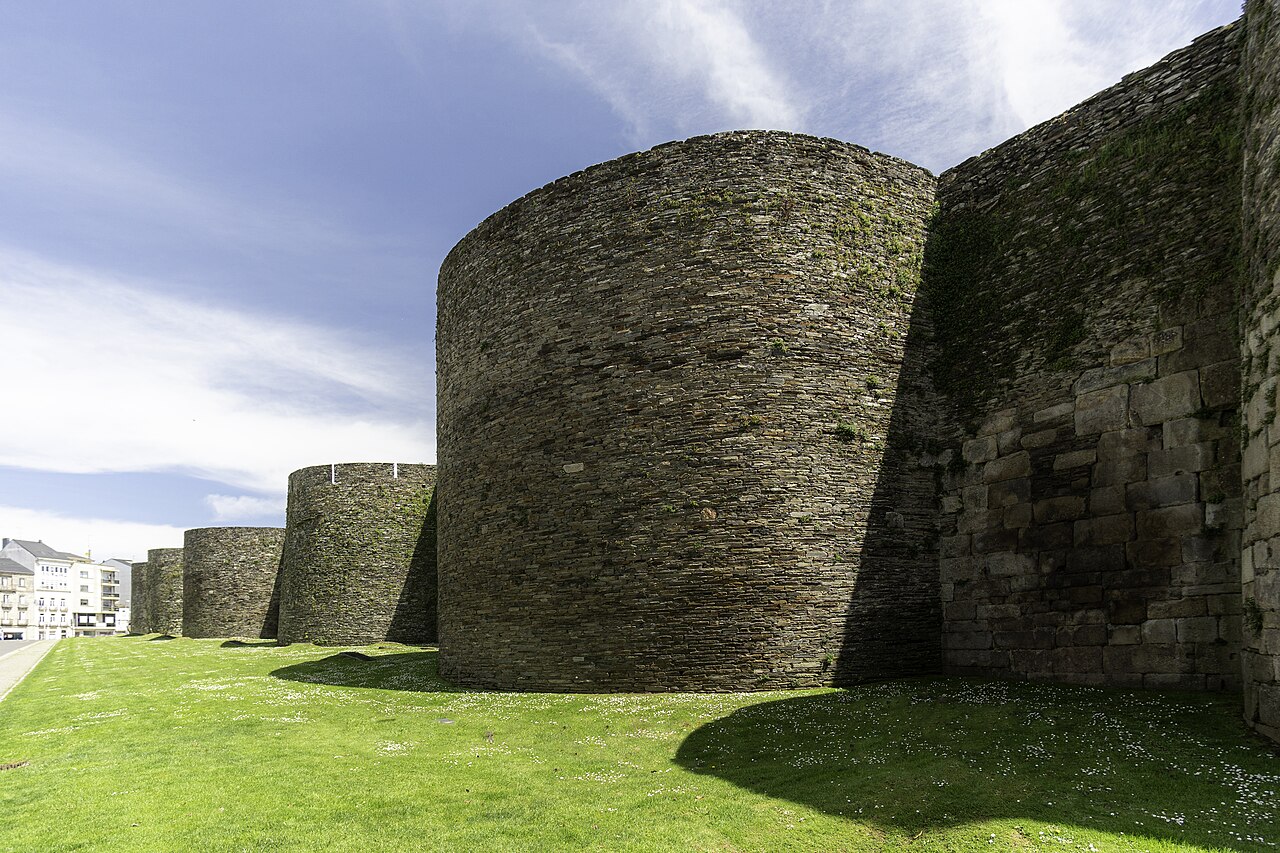
The original Fortaleza de Sarria enclosed a large polygonal area surrounded by a thick defensive wall made primarily of granite and slate. The fortress included four towers: two main keeps, one known as the Market Tower, and two flank towers positioned to defend the perimeter. These structures were built using traditional medieval masonry techniques, featuring battlements, a drawbridge, and deep moats and counter-moats for defense.
Within the walls, several houses accommodated officials such as the merino (local magistrate), jail officers, armed guards, and a chamber reserved for the count’s use. This arrangement underscores the fortress’s dual role as both a military stronghold and an administrative center.
The surviving tower
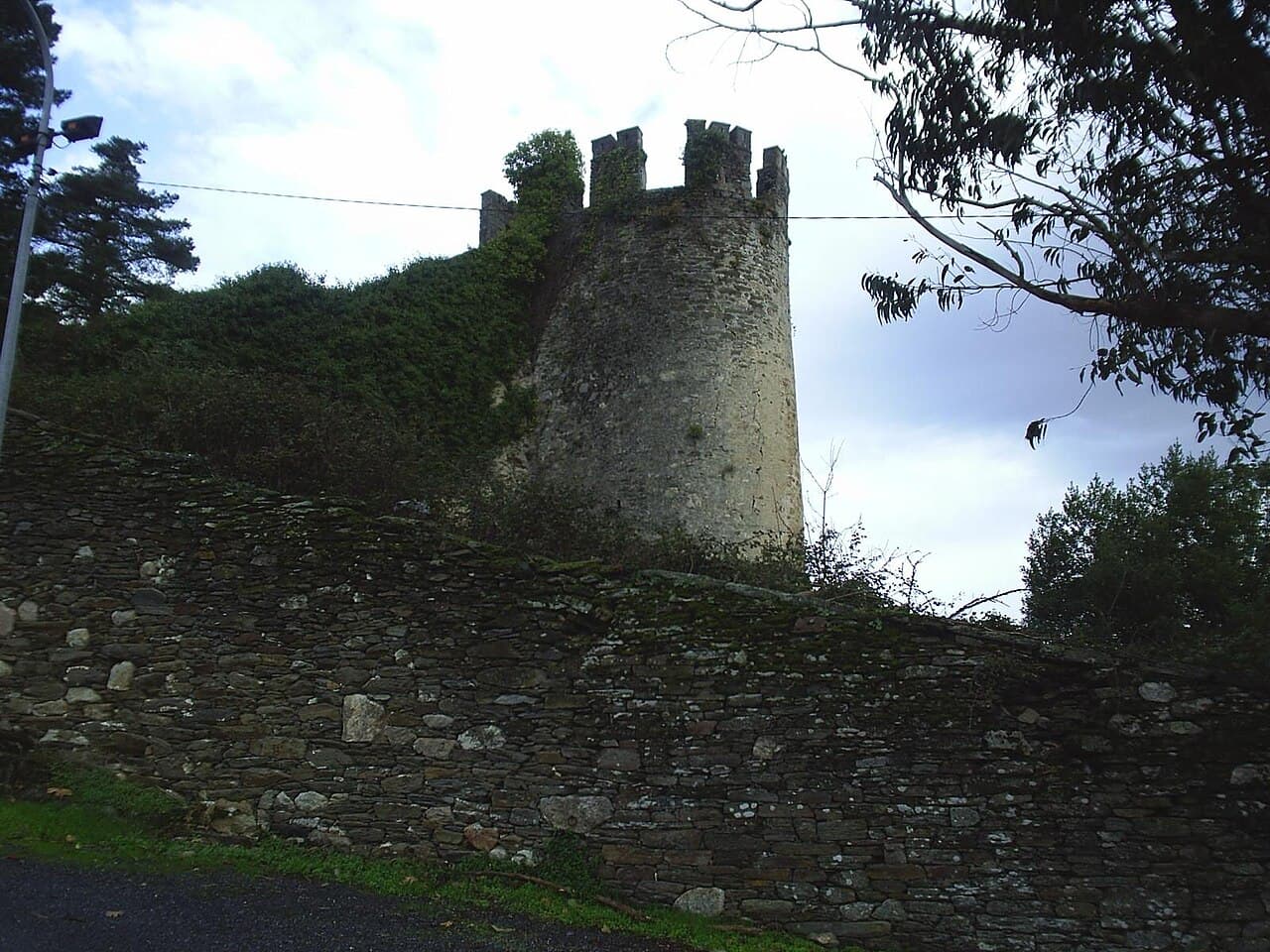
Today, only one of the original flank towers remains standing. This tower rises approximately 14 to 15 meters high and has an irregular footprint with a semicircular front facing outward. Constructed from granite and slate, it was originally coated with mortar. The upper edge retains battlements or crenellations, which provided defensive positions during armed conflicts.
Access to the tower is now possible via a modern staircase added in the 19th century during repairs by Manuel Pérez-Batallón. The main entrance is reached by a partially open staircase cut into the thickness of the original wall, highlighting the complexity of the tower’s medieval construction.
Inside, the tower is vaulted at about seven meters high, featuring a slightly pointed arch typical of medieval architecture. From the upper levels, visitors can enjoy wide views of the surrounding Veiga de Sarria valley and notable natural landmarks such as Monte Santa Cristiña, Cha de Santa Marta, Serra Illoá, Monte Meda, and Serra Oribio.
The tower’s exterior walls display several heraldic shields bearing the coats of arms of the Castro, Enríquez, and Osorio families, directly linking the structure to its historical owners and emphasizing its noble heritage.
Remaining walls and religious features
Encircling the surviving tower, sections of the original enclosing wall still stand. These walls bear several 18th-century crosses that formed part of a “viacrucis” or Way of the Cross, reflecting religious practices near the fortress in later centuries. The defensive moats and other below-ground fortification features were removed during the 19th century as the land was repurposed for agriculture and communal uses.
The overall layout and surviving structures preserve clear evidence of the fortress’s medieval military design and its sustained significance throughout centuries of regional history, making the Fortaleza de Sarria a valuable cultural and architectural landmark in Galicia.
Frequently asked questions (FAQ)
- How do I get to Fortaleza de Sarria?
- Fortaleza de Sarria is easily accessible by car and public transport. If traveling by train, the nearest station is Sarria, which is well-connected to major cities in Spain. Local taxis and buses can also take you directly to the castle.
- What is the historical significance of Fortaleza de Sarria?
- Fortaleza de Sarria dates back to the medieval period and was originally built for defense purposes. It played a crucial role during various conflicts in the region, serving as a stronghold for local nobles. Today, it stands as a testament to the rich history and architectural heritage of Sarria.
- When was Fortaleza de Sarria constructed?
- The fortress was constructed in the late 14th century, with significant renovations and expansions occurring over the following centuries. Its strategic location made it a key site during the medieval era, influencing the development of Sarria and its surroundings.
- Can I visit Fortaleza de Sarria year-round?
- Yes, Fortaleza de Sarria is open to visitors throughout the year. However, it is advisable to check specific opening hours and any seasonal closures before planning your visit. Guided tours are often available, enhancing your experience of the castle's history.
- Why is the architecture of Fortaleza de Sarria unique?
- The architecture of Fortaleza de Sarria showcases a blend of medieval military design and local building techniques, featuring thick stone walls and impressive towers. Its layout reflects the defensive needs of its time while also incorporating elements of residence for noble families. This combination makes it an interesting study in historical architecture.
- Is it possible to take guided tours of Fortaleza de Sarria?
- Yes, guided tours are available at Fortaleza de Sarria, providing visitors with in-depth knowledge about its history and architecture. These tours often include access to areas of the castle that are not open to the general public. Booking in advance is recommended, especially during peak tourist seasons.
- What are the ticket prices for visiting Fortaleza de Sarria?
- Ticket prices for Fortaleza de Sarria are generally affordable, with discounts available for students and seniors. Children under a certain age may enter for free. Be sure to check the official website for the most current pricing and any special promotions.
- What is the best time to visit Fortaleza de Sarria?
- The best time to visit Fortaleza de Sarria is during the spring and fall when the weather is mild and pleasant for exploring. Summer can be quite hot, while winter may bring colder temperatures. Visiting during off-peak times also allows for a more peaceful experience.
- Are there any nearby attractions to see after visiting Fortaleza de Sarria?
- Yes, there are several nearby attractions worth exploring, including the beautiful landscapes of the surrounding Galician countryside and the historic town of Sarria itself. Additionally, the Camino de Santiago pilgrimage route passes through Sarria, making it a popular stop for travelers. Enjoying local cuisine in nearby restaurants is also highly recommended.
Photo gallery

Information
Loading map...
Visitor reviews
No reviews yet. Been here? Write the first review and help other travelers!
Write the first reviewVisited this castle? Share your experience
Your review helps other travelers and adds first-hand knowledge to our encyclopedia.