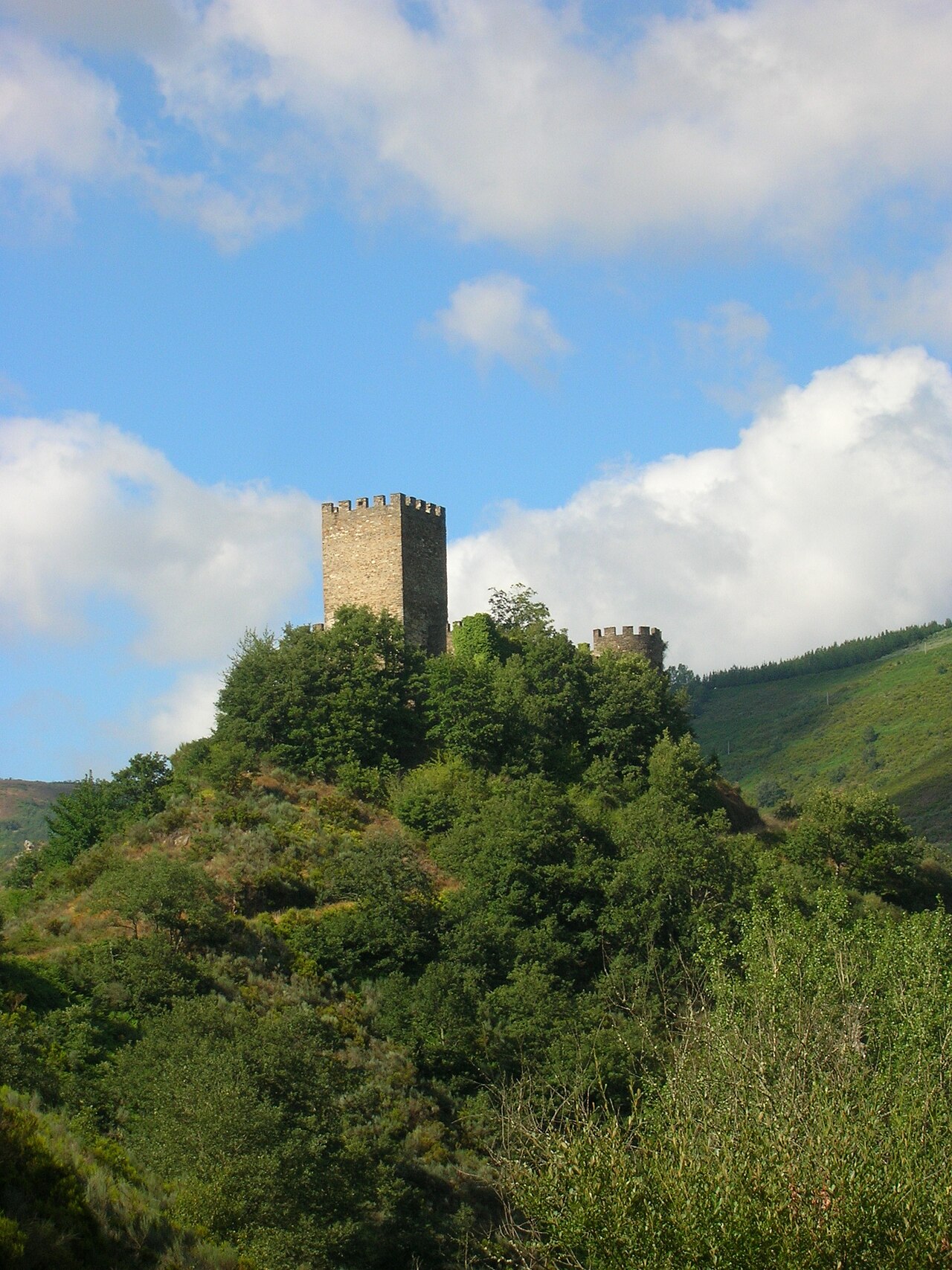
Carbedo Castle

Carbedo Castle in Folgoso de Caurel, Spain
Folgoso de Caurel, Galicia, Spain
High Medieval (11th–13th c.)
Ruins

Carbedo Castle is a historic fortress located in Folgoso de Caurel, in the region of Galicia, Spain. Its origins trace back to the high medieval period, with the first documented mention occurring in 1181. Although the exact date of its initial construction remains uncertain, architectural and historical evidence place its foundation firmly in the 12th century.

Historical significance and early mentions

The castle was strategically positioned to oversee and control the surrounding territory in the mountainous area of the Caurel region. Its location provided a defensive advantage, typical of hill castles built during the high medieval era to secure important routes and local domains.

Carbedo Castle's first known documentation in 1181 places it within the context of the feudal conflicts and territorial disputes common in medieval Spain. It likely served as a stronghold for local lords who managed the land and exercised military and administrative control.

Architectural features and construction

The castle's structure reflects typical high medieval military architecture. It was constructed primarily of stone, designed to withstand sieges and attacks. The remains indicate a fortress with thick defensive walls and a compact layout adapted to the rocky terrain.

Though detailed architectural plans are scarce, the castle likely featured a keep or donjon as its central fortified tower, surrounded by curtain walls and possibly a moat or natural defensive barriers. The fortress's design emphasized functionality and defense over residential comfort.

Restorations and decline

Significant restoration work was undertaken in 1558, during the post-medieval period, which suggests the castle retained some strategic or symbolic importance into the Renaissance era. These restorations may have included reinforcement of walls and repairs to deteriorating structures.

Despite these efforts, Carbedo Castle was soon abandoned after the mid-16th century. The decline likely resulted from changes in military technology, such as the advent of gunpowder artillery, which rendered many medieval fortresses obsolete, as well as shifts in political and social structures.

Current condition and heritage

Today, Carbedo Castle stands as ruins, with only partial remnants of its original walls and towers visible. The site offers valuable insights into medieval fortification techniques and regional history.

Its location within the natural landscape of Folgoso de Caurel makes it a point of interest for visitors and historians alike, providing a tangible link to the area's medieval past.

Visiting Carbedo Castle

Access to the castle ruins requires some hiking due to its hilltop position. Visitors should prepare for uneven terrain and bring appropriate footwear. The site is open year-round, though there are no formal visitor facilities.

Exploring Carbedo Castle offers a chance to appreciate the rugged medieval architecture and the strategic importance of such fortresses in the history of Galicia.

Information

Hill Castle

Loading map...

Visitor reviews

No reviews yet. Been here? Write the first review and help other travelers!

Write the first review

Visited this castle? Share your experience

Your review helps other travelers and adds first-hand knowledge to our encyclopedia.

Write a review

(5/5)

0/2000 characters

Your review will be visible after admin approval

Nearby castles

14.3 km

Sarracín Castle

Vega de Valcarce, Spain

Sarracín Castle is a historically significant hill castle located near the village of Vega de Valcarce in Spain. Positioned strategically on the slope of Monte de la Vilela, it overlooks one of the most ancient and revered pilgrimage routes in Europe, the Way of Saint James (El Camino de Santiago). Built around the 9th century AD, the castle served as a military fortress and refuge for pilgrims traveling this sacred path. It was notably used by the Knights Templar to protect the route, underscoring its importance in medieval religious and military history. The castle remained in use until the 16th century before being abandoned, leaving behind evocative ruins that continue to capture the imagination of visitors and historians alike. Historical background and strategic importance The origins of Sarracín Castle trace back to the turbulent period of the early medieval era, reflecting the shifting power dynamics between Muslim and Christian forces on the Iberian Peninsula. The earliest recorded history of the site dates to the early 8th century when an original fortification was reportedly destroyed in 714 AD by Muza, the governor of the Umayyad Caliphate. This destruction marked a significant moment in the region's history during the Muslim expansion into Christian territories. Following the Christian reconquest, reconstruction efforts likely began in the late 9th century. One credible hypothesis suggests that the castle was built between 852 and 885 AD under the orders of Count Gatón, son of King Ordoño I. Count Gatón is believed to have named the fortress after his son, Sarracino Gatónez, who held the titles of Lord of Sarracín and Count of Bierzo and Astorga. This lineage firmly ties the castle to the early Leonese nobility and highlights its role in consolidating Christian control in the region. Before the medieval fortress was established, the hill itself may have hosted an Iron Age settlement, as suggested by archaeological finds such as a socketed axe discovered nearby. This indicates the site's long-standing strategic and perhaps symbolic significance. The castle's location on Monte de la Vilela is also referenced in the Codex Calixtinus, a 12th-century guidebook associated with the Camino de Santiago, further cementing its connection to the pilgrimage tradition. Architectural features and defensive design Sarracín Castle occupies a commanding rocky promontory that provides extensive views of the surrounding landscape, crucial for early warning and defense. Its layout is an irregular rectangular plan, divided into multiple compartments that likely served distinct military and residential functions within the fortress. The castle's robust stone walls were constructed to withstand sieges and attacks, a testament to the martial needs of the period. Among the most notable surviving features are two towers, one of which contains a rare example of a splayed arrow slit (saetera abocinada). This architectural element widens on the interior side, allowing defenders to shoot arrows with a broad range of angles while remaining protected from incoming projectiles. In total, twelve such arrow slits have been identified throughout the castle walls, emphasizing the importance of archery in its defensive strategy. The main entrance is characterized by a semicircular arch doorway, typical of early medieval construction, providing both structural strength and controlled access. The castle's defensive architecture reflects the military technologies and design principles of the early medieval period, adapted to the rugged terrain of the region. Cultural significance and legends Throughout its history, Sarracín Castle played a vital role in local defense and the protection of pilgrims journeying along the Camino de Santiago. It withstood multiple sieges, demonstrating its strategic resilience. The castle is also embedded in local folklore, including the intriguing "legend of the five stakes", a tale that has been passed down through generations and reflects the fortress's enduring presence in the cultural memory of the area. Its inclusion in the extended Camino de Santiago World Heritage area highlights the castle's dual importance as both a military site and a cultural landmark integral to one of Europe's most famous pilgrimage routes. Archaeological discoveries and restoration efforts In the 20th century, Sarracín Castle was officially recognized for its cultural and historical value when it was declared a Bien de Interés Cultural in 1949. This designation helped protect the site and raise awareness of its significance. More recently, in 2014 and 2015, urgent restoration work was undertaken to stabilize the crumbling walls and prevent further collapse. These efforts also involved archaeological excavations that uncovered important features such as arrow slits and military equipment. Artifacts recovered include ceramic fragments, metal buckles, arrowheads, and a possible blade fragment, providing tangible evidence of the castle's military occupation and everyday life within its walls. Restoration work focused on clearing debris to reveal original floor levels and structural elements, offering valuable insights into the castle's construction techniques and defensive layout. These efforts have helped preserve the ruins and enhance understanding of the site's historical context. The castle today and visitor experience Today, Sarracín Castle stands as evocative ruins that reflect centuries of history on the slopes of Monte de la Vilela. The surviving walls, towers, and arrow slits provide a glimpse into the fortress's past military importance and its role in safeguarding one of Europe's most significant pilgrimage routes. Visitors to the site can appreciate the castle's strategic location and its integration into the natural landscape, which was crucial for its defensive function. The castle's connection to the Knights Templar and its place in regional legends add layers of intrigue for history enthusiasts and pilgrims alike. As part of the broader Camino de Santiago heritage, the castle enriches the cultural tapestry of northern Spain, inviting exploration and reflection on the medieval interplay of faith, warfare, and nobility.

Early Medieval (5th–10th c.)
Details
18.3 km

Castle of Balboa

Balboa, Spain

The Castle of Balboa stands as a remarkable example of a 13th-century hill castle located near the town of Balboa in the autonomous community of Castile and León, Spain. This fortress was originally constructed by medieval builders during a period when the establishment of territorial control by noble families was crucial to regional governance. Positioned strategically on a prominent hilltop, the castle's location provided commanding views over the surrounding landscape, a critical defensive advantage in the turbulent medieval era. Historical significance and ownership The earliest documented reference to the Castle of Balboa dates back to 1260, when it was recognized as a center of power for the influential Valcarce-Balboa family. This family played a vital role in the administration and defense of their lands, using the castle as a stronghold to exert authority throughout the region. The castle's strategic importance continued through the centuries, witnessing significant historical events that shaped the local and broader Spanish medieval landscape. One of the most turbulent episodes in the castle's history occurred during the 15th century amid the Irmandiña Revolt, a widespread uprising involving peasants and nobles challenging feudal power structures. The castle, along with other fortresses such as those in Sarracín and Corullón, suffered considerable damage during this conflict. The revolt led to the partial destruction of the fortress, reflecting the widespread social upheaval of the period. After the revolt, the castle was restored under the direction of Pedro Álvarez Osorio, the Count of Lemos. His reconstruction efforts likely incorporated elements of the original medieval structure, blending preservation with necessary repairs to maintain the castle's defensive capabilities. Ownership later transferred to the Marquesado de Villafranca, who retained control until the 19th century. The abolition of feudal rights by the Cortes of Cádiz in the 19th century marked a significant turning point, resulting in the castle passing into private hands and reflecting the broader decline of feudalism in Spain. In the 21st century, the castle became property of the Balboa Town Council in 2006. This transfer initiated a new phase focused on the preservation and protection of the site. Starting in 2021, restoration work has concentrated on stabilizing the remaining structures, particularly the keep tower, to prevent further decay and preserve this important medieval monument for future generations. Architectural features and remains Perched on its commanding hilltop, the Castle of Balboa is primarily known today for the remains of its keep tower, or Torre del Homenaje. This tower served as the fortress's last line of defense and is a quintessential feature of medieval military architecture. Constructed using locally sourced stone, the tower's thick walls were designed to withstand sieges and attacks, reflecting the practical defensive needs of the time. The surviving ruins reveal multiple phases of construction and repair, with visible layers indicating the castle's evolution over centuries. The most significant alterations correspond to the 15th-century rebuilding by the Count of Lemos following the damage sustained during the Irmandiña Revolt. Although detailed records of the castle's original layout and decorative elements are scarce, the structural remains provide valuable insights into medieval fortification techniques. The castle's ruins, while fragmentary, maintain a well-defined silhouette against the skyline. The recent restoration and stabilization efforts have been crucial in securing the integrity of the keep tower, preventing collapse, and enabling visitors to appreciate the site's historical and architectural significance. The weathered stonework and elevated position continue to convey the fortress's former military importance and its role in the region's medieval heritage. Cultural and heritage importance The Castle of Balboa is not only a symbol of medieval military architecture but also an emblem of the region's feudal history and social transformations. Its endurance through centuries of conflict and change illustrates the dynamic history of northern Spain during the Middle Ages. The castle's association with prominent noble families such as the Valcarce-Balboa lineage and the Counts of Lemos highlights its role as a focal point of power and governance. Today, the castle is an important cultural landmark within the municipality of Balboa. Efforts to preserve and restore the site reflect a broader commitment to safeguarding Spain's medieval architectural heritage. The castle attracts historians, architects, and visitors interested in exploring the tangible remains of feudal Spain and understanding the complexities of medieval fortification design. Visiting the castle of balboa Visitors to the Castle of Balboa can explore the ruins, including the stabilized keep tower, which offers a glimpse into medieval defensive architecture. The castle's hilltop location provides panoramic views of the surrounding countryside, enhancing the visitor experience with scenic vistas alongside historical exploration. While the castle is in ruins, ongoing preservation efforts have made it accessible and safe for visitors interested in Spain's medieval past. The site is managed by the Balboa Town Council, which oversees maintenance and facilitates educational initiatives to promote awareness of the castle's historical importance. Architectural details of the keep tower The keep tower stands as the most prominent feature of the castle ruins. Its robust construction features thick stone walls, narrow window slits for archers, and a rectangular plan typical of medieval keeps designed for both defense and habitation. The tower's height and strategic positioning allowed defenders to monitor approaching threats and coordinate the castle's defense effectively. The tower's interior, though now largely exposed, would have contained multiple floors connected by wooden staircases or ladders. These floors likely housed living quarters, storage rooms, and defensive positions, illustrating the multifunctional nature of the keep within the castle complex. The castle's role in regional defense During its active use, the Castle of Balboa formed part of a network of fortifications that secured the region against external threats and internal conflicts. Its elevated position and strong defensive features made it a key asset in controlling movement through the valley and protecting the interests of its noble owners. The castle's history of destruction and rebuilding reflects the contested nature of power in medieval Spain, where fortresses frequently changed hands and were focal points in regional disputes. The Irmandiña Revolt is a prime example of such conflicts, demonstrating the castle's central role in the social and military struggles of its time. Landscape and surroundings The castle's hilltop setting not only provided defense but also symbolized authority over the surrounding lands. From its vantage point, the castle overlooks the town of Balboa and the surrounding natural landscape, including valleys and forested areas. This commanding view reinforced the castle's function as a seat of power and a deterrent against potential aggressors. The surrounding landscape remains largely rural, preserving the historical context in which the castle operated. This setting offers visitors a sense of the medieval environment and the strategic considerations that influenced the castle's placement and design.

High Medieval (11th–13th c.)
Details
20 km
Doiras Castle — Spain castle

Doiras Castle

Cervantes, Spain

Doiras Castle stands as one of the most significant and well-preserved late medieval fortresses in the region of Galicia, Spain. This 15th-century hill castle was strategically constructed to control a vital passage along the historic Camino de Santiago pilgrimage route, following the ancient Roman road XIX that linked Astorga and Lugo. Its commanding position atop a high promontory overlooking the confluence of the Doiras and Cervantes rivers provided both defensive strength and surveillance over the surrounding territory. Historical significance and origins The castle’s origins trace back to the late 15th century, when it was built by the noble Osorio family, originally from the Kingdom of León. The founder, Diego Pérez Osorio y Guzmán, the first lord of Cervantes and Villacid, established the fortress as a key defensive stronghold to protect the region and secure control over the important route into Galicia. The castle’s role extended beyond military defense; it also symbolized the Osorio family’s rising influence and territorial authority during this period. Through the centuries, the castle changed hands, passing in the 17th century to the Grajal de Campos family. This family later gained noble titles such as the Marquises of Alcañices in the 18th century and the Dukes of Sesto in the 19th century, reflecting their growing prominence. The last lord of the castle was José Osorio Silva, who died in 1909. By the early 20th century, the castle had fallen into a state of ruin. Architectural features and layout Doiras Castle is constructed primarily from slate masonry, skillfully adapted to the uneven terrain of its hilltop location. The fortress is organized around a roughly rectangular courtyard measuring approximately 25 by 21 meters. Its curtain walls are robust, with thicknesses ranging from one to one and a half meters, and heights averaging around eight meters, though the elevation varies due to the sloping ground. The centerpiece of the castle is its imposing keep, or tower of homage, a rectangular structure measuring about 10 by 8 meters with walls two meters thick. Rising to nearly 14 meters, the keep features interior chambers that were once decorated with frescoes, though these have significantly deteriorated over time. The keep’s entrance is accessed via a raised walkway leading to a door situated approximately four meters above ground level, a defensive design intended to hinder attackers. The castle’s main entrance is marked by a wooden gate standing about four meters tall, set beneath a semicircular arch opening into the central courtyard. The fortress overlooks the historic Ferrería de Fonquente, a traditional ironworking site, and forms a complex with a nearby church, which served as a private chapel for the castle’s owners, along with adjacent residential buildings that supported the castle community. Restoration and preservation efforts By the 20th century, Doiras Castle had suffered considerable neglect, with the interior accumulating debris and showing structural damage such as wall cracks caused by insufficient maintenance. In the 1940s, the castle was acquired by Emilio Martínez Baladrón, who initiated substantial restoration work that preserved much of the castle’s structural integrity and restored key elements of its appearance. Recognition of the castle’s cultural and historical importance culminated in its designation as a Bien de Interés Cultural (a protected heritage site) in 1994. Ownership later transferred to the Fundación Xosé Soto de Fión in 2000, and in 2024, stewardship passed to the Cervantes town council with support from the provincial government of Lugo, ensuring continued preservation and public access. Archaeological context and recent discoveries Interest in the castle and its surrounding landscape was renewed in 2016 with the discovery of archaeological remains at O Teso do Castelo, located nearby. The finding of a 17th-century coin at this site suggests that Doiras Castle was part of a broader network of defensive and administrative control in the region during the early modern period. This discovery has expanded understanding of the castle’s ongoing strategic role beyond the medieval era. Cultural and heritage significance Doiras Castle remains a prominent symbol of Galicia’s medieval heritage and its historical role in regional defense and governance. Its well-preserved hill castle architecture, including the towering keep, thick curtain walls, and strategic location, offers valuable insights into late medieval military construction and noble residence design. The castle’s connection to important noble families and its proximity to historic pilgrimage routes further enhance its cultural significance. Today, the castle and its associated structures, including the chapel and residential buildings, form a complex that attracts historians, archaeologists, and visitors interested in medieval fortifications and Galician history. Ongoing conservation efforts aim to maintain the site’s structural stability and promote its historical legacy for future generations.

Late Medieval (14th–15th c.)
Details