Fort Zachary Taylor Historic State Park — United States of America castle

Fort Zachary Taylor Historic State Park

Fort Zachary Taylor Historic State Park, Key West
Key West, Florida, United States of America
Modern (19th–20th c.)
Well Preserved

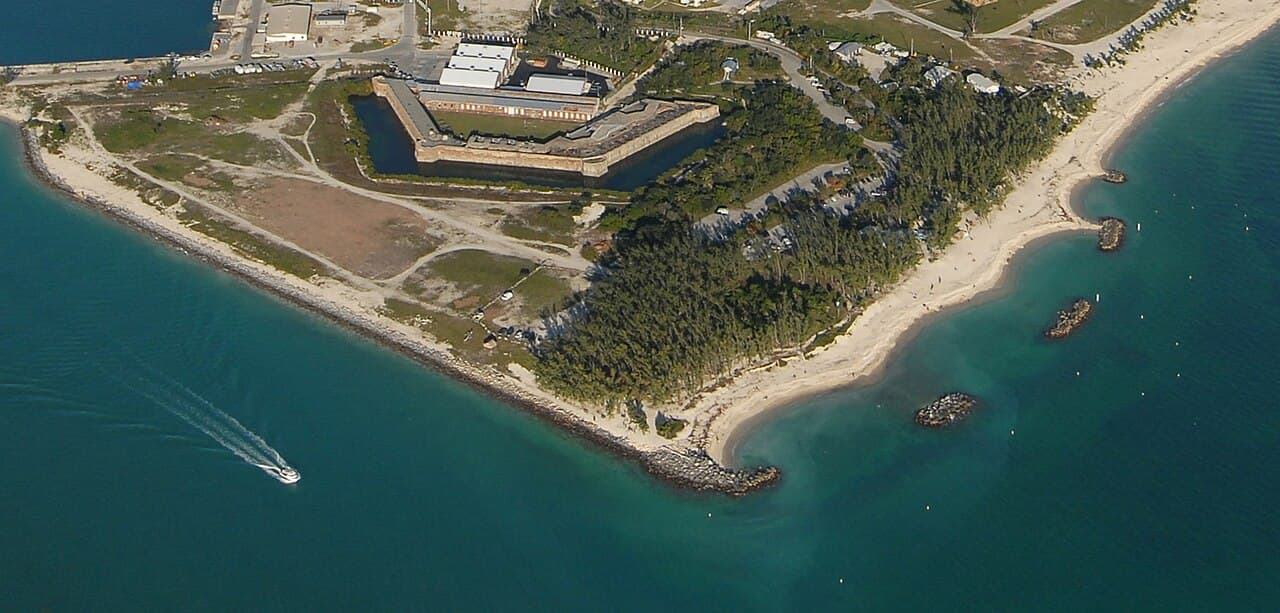
Fort Zachary Taylor Historic State Park, commonly known as Fort Taylor, is a prominent bastioned fortress located near the southern tip of Key West, Florida. This historic site serves both as a state park and a National Historic Landmark, preserving a significant piece of American coastal defense history from the 19th century. The fort was constructed as part of the United States' efforts to strengthen its coastal defenses during a period of increasing international tension and internal conflict.

Historical context and construction

The construction of Fort Zachary Taylor began in the early 1840s under the Third System of U.S. coastal fortifications, a nationwide program initiated to protect strategic ports and harbors. The fort was named after President Zachary Taylor, a military leader and the 12th president of the United States. Its primary purpose was to guard the Key West harbor and the Straits of Florida, a vital maritime passage connecting the Gulf of Mexico and the Atlantic Ocean.

The fort's design reflects the bastioned fortress style, characterized by angled bastions projecting from the main walls, which allowed defenders to cover all approaches with overlapping fields of fire. This design was typical of mid-19th-century coastal fortifications and was intended to withstand bombardment from naval artillery.

Architectural features and layout

Fort Taylor is constructed primarily of coral rock and brick, materials locally sourced and suitable for withstanding the harsh coastal environment. The fortress features thick, sloped walls designed to absorb and deflect artillery fire. Its bastions are equipped with gun emplacements that once housed a variety of smoothbore and rifled cannons, including large-caliber Rodman guns and Columbiads.

The fort's layout is roughly pentagonal, with bastions at each corner providing comprehensive defensive coverage. Inside, the fort contains casemates—vaulted chambers used for ammunition storage and troop quarters. The design also includes a dry moat surrounding the walls, enhancing its defensive capabilities.

Role during the Civil War and later military significance

During the American Civil War, Fort Zachary Taylor played a crucial role as a Union stronghold in the South. Key West remained under Union control throughout the war, and the fort served as a base for blockading Confederate shipping and protecting Union naval operations in the Gulf of Mexico and Caribbean Sea.

After the Civil War, the fort continued to be maintained and upgraded as part of the Endicott Program in the late 19th century, which modernized coastal defenses with new artillery and fortifications. However, advances in military technology eventually rendered traditional masonry forts like Fort Taylor obsolete.

Preservation and public access

Today, Fort Zachary Taylor Historic State Park is managed by the Florida Department of Environmental Protection. The fort is well preserved and open to the public, offering visitors a chance to explore its historic walls, gun batteries, and casemates. The park also features a beach, picnic areas, and nature trails, making it a popular destination for both history enthusiasts and outdoor recreation.

The site includes a museum with exhibits detailing the fort's history, military artifacts, and the broader context of coastal defense in the United States. Educational programs and guided tours are available to deepen visitors' understanding of the fort's significance.

Natural and cultural significance

Located in the ecologically rich Florida Keys, the park combines historical preservation with environmental conservation. The surrounding waters are known for excellent snorkeling and diving opportunities, with coral reefs and diverse marine life accessible nearby. This blend of cultural heritage and natural beauty enhances the park's appeal to a wide range of visitors.

Frequently asked questions (FAQ)

How do I get to Fort Zachary Taylor Historic State Park?
Fort Zachary Taylor Historic State Park is located near the southern tip of Key West, Florida. It is accessible by car via US Highway 1, and there is ample parking available on site.
What are the opening hours of Fort Zachary Taylor?
The park is generally open daily from 8:00 AM to sunset. It is advisable to check the official website for any seasonal changes or special closures.
Is there an admission fee to visit the fort?
Yes, there is a small entrance fee for visitors, which helps support the maintenance and preservation of the park. Fees are typically around $6 per vehicle.
Can I explore the interior of the fort?
Visitors can explore the accessible areas of the fort, including the gun batteries, casemates, and museum exhibits. Some areas may be restricted for safety reasons.
What is the historical significance of Fort Zachary Taylor during the Civil War?
Fort Zachary Taylor served as a key Union stronghold in the South during the Civil War. It was instrumental in blockading Confederate shipping and protecting Union naval operations in the Gulf of Mexico and Caribbean Sea.
Are there guided tours available at the park?
Yes, guided tours are offered periodically, providing detailed historical information about the fort's construction, military use, and preservation efforts.
Is the park family-friendly and suitable for children?
The park is family-friendly, offering educational programs, picnic areas, and a beach. It provides a safe and engaging environment for visitors of all ages.

Photo gallery

Fort Zachary Taylor Historic State Park
Click to view

Photo by U.S. Department of Transportation•Public domain

1 photo • Click any image to view in full screen

Information

Bastioned Fortress

Current owner

Florida Department of Environmental Protection

Loading map...

Visitor reviews

No reviews yet. Been here? Write the first review and help other travelers!

Write the first review

Visited this castle? Share your experience

Your review helps other travelers and adds first-hand knowledge to our encyclopedia.
Write a review

(5/5)

0/2000 characters

Your review will be visible after admin approval

Nearby castles

107.9 km
Fort Jefferson — United States of America castle

Fort Jefferson

, United States of America

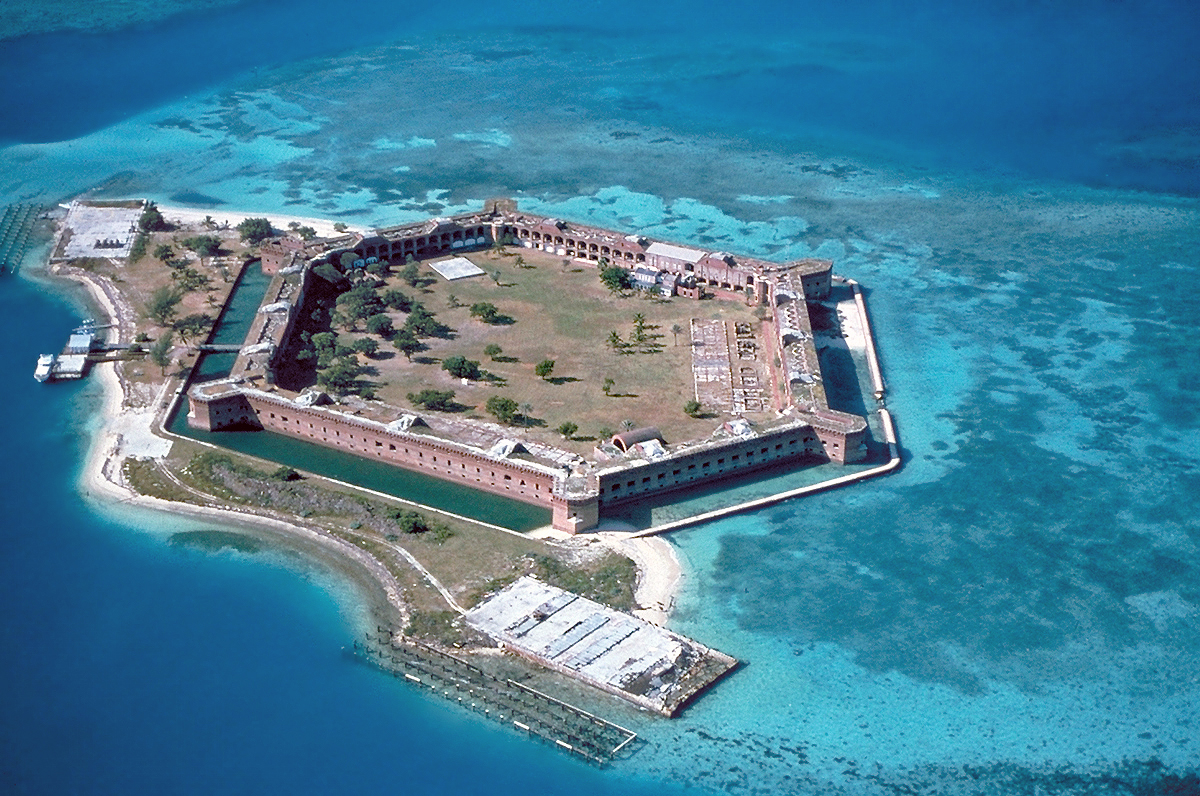
Fort Jefferson stands as a monumental example of 19th-century coastal military architecture in the United States. Located on Garden Key within the Dry Tortugas National Park in Florida, this bastioned fortress is renowned for being the largest brick masonry structure in the Americas. Spanning approximately 16 acres (6.5 hectares), it was constructed using over 16 million bricks, a testament to the ambitious engineering and military planning of its era. The fort is situated about 68 miles (109 kilometers) west of Key West in the lower Florida Keys, part of Monroe County. Its strategic location was chosen to protect the vital shipping lanes and the Gulf of Mexico from naval threats during a period of expanding American maritime interests. The fort was named in honor of Thomas Jefferson, the third President of the United States and a Founding Father, reflecting the patriotic significance attributed to such military installations. Architectural design and construction Fort Jefferson exemplifies the bastioned fortress style, characterized by angular bastions projecting outward from the main walls, designed to provide overlapping fields of fire and eliminate blind spots. This design was a common feature of coastal defenses in the 19th century, aimed at countering the threat posed by enemy ships. The fort's construction began in the early 19th century, with work continuing over several decades. Its massive walls were built using bricks manufactured on-site, highlighting the logistical efforts involved in establishing such a remote fortification. The fort’s walls rise to about 30 feet (9 meters) in height and are approximately 8 feet (2.4 meters) thick, providing formidable protection against artillery bombardment. The layout includes a dry moat surrounding the fort, multiple casemates for artillery placements, and extensive barracks to house soldiers. The interior courtyard was designed to accommodate the daily activities of the garrison, including storage, workshops, and defensive operations. Historical significance and military use Originally intended to defend the Gulf Coast and the shipping routes against foreign naval powers, Fort Jefferson played a strategic role during the American Civil War. Although it never saw direct combat, the fort served as a key Union military outpost and a prison for Confederate prisoners of war. Its remote location made it an ideal site for detaining high-profile prisoners. Throughout its operational history, the fort was never fully completed due to the immense scale and the logistical challenges posed by its isolated location. Despite this, it remained an active military installation well into the late 19th and early 20th centuries, adapting to changing military technologies and strategic priorities. Preservation and current status Today, Fort Jefferson is part of the Dry Tortugas National Park, managed by the National Park Service. It is well preserved and accessible to visitors, who can explore its extensive brickwork, bastions, and historical structures. The fort is a popular destination for history enthusiasts, snorkelers, and tourists interested in the natural beauty and cultural heritage of the Florida Keys. Visitors can reach the fort by boat or seaplane from Key West, with guided tours available that highlight its architectural features and historical context. The fort’s preservation efforts focus on maintaining its structural integrity while providing educational opportunities about its military and cultural importance. Architectural features and unique characteristics The fort’s design incorporates casemated gun rooms arranged in tiers, allowing for a dense concentration of artillery. Its star-shaped layout with multiple bastions reflects principles of Vauban-style fortifications, adapted for coastal defense. The extensive use of brick masonry is notable for its durability and scale, making Fort Jefferson an engineering marvel of its time. Additional features include the dry moat encircling the fort, which enhances its defensive capabilities by preventing direct assaults on the walls. The fort’s interior spaces were designed for both military functionality and the accommodation of a sizable garrison, including barracks, magazines for ammunition storage, and officers’ quarters.

Modern (19th–20th c.)
Details
161.2 km
Cojímar Tower — Cuba castle

Cojímar Tower

Cojímar, Cuba

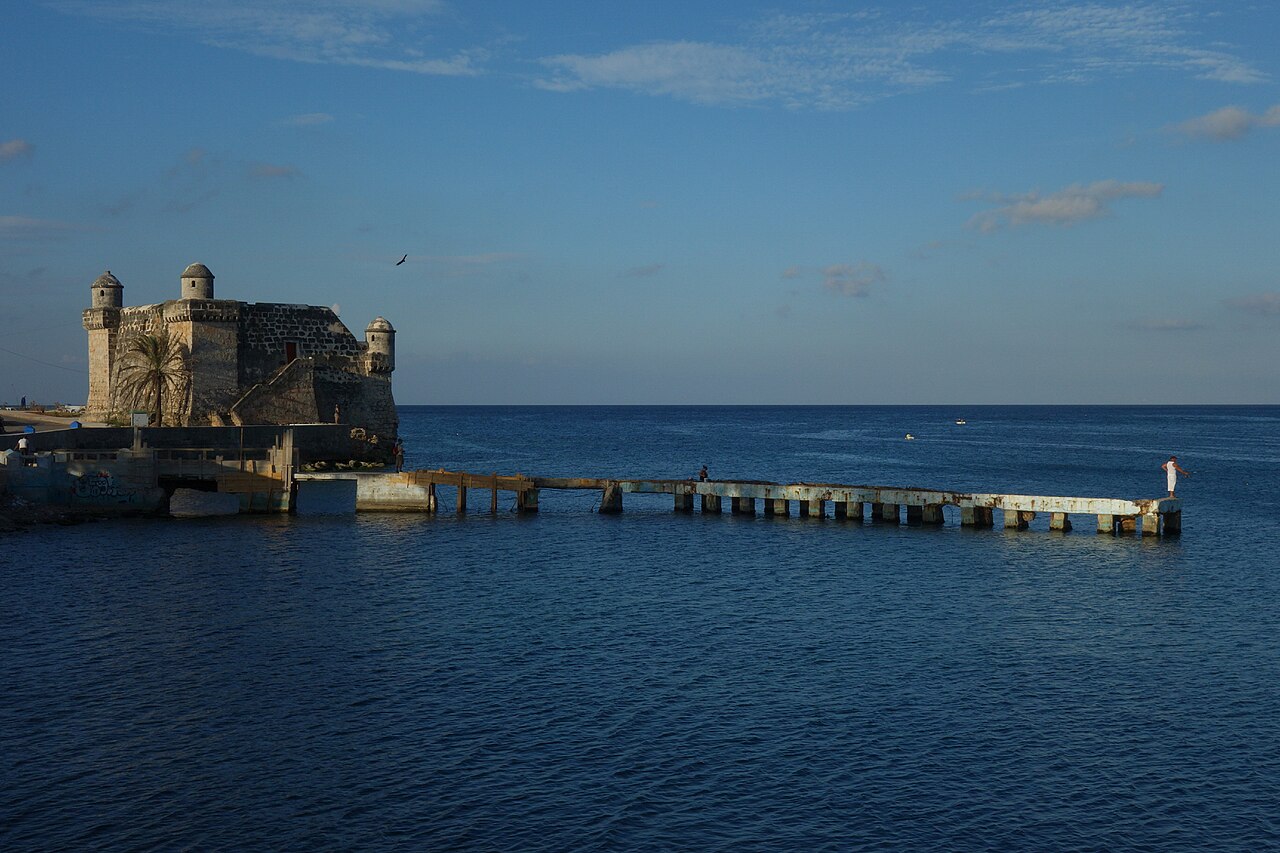
Cojímar Tower, locally known as Torreón de Cojímar, stands as a significant 17th-century coastal fortress located at the seafront of the village of Cojímar in Cuba. It is strategically positioned east of the old town of Havana, guarding the mouth of the Cojímar river. This tower played a vital role in the defensive network protecting Havana from maritime attacks during the Renaissance period. Historical context and strategic importance The origins of Cojímar Tower are closely tied to the evolving military needs of Havana in the early 17th century. The idea to fortify the mouths of the Cojímar and La Chorrera rivers, located east and west of Havana respectively, was first proposed by Governor Don Pedro Valdés. This initiative aimed to safeguard Havana from potential English naval incursions during a period of intense colonial rivalry in the Caribbean. Although the initial project was halted following the end of hostilities with England, renewed concerns about threats from the Dutch navy prompted further action. In 1633, Captain-General Marquess de Cadereyta and Admiral Carlos de Ibarra inspected Havana's existing fortifications, including La Fuerza, La Punta, and El Morro. They identified vulnerabilities along the eastern and western river mouths where enemy landings could bypass the main fortresses. Following their recommendations, Governor Francisco Riaño Gamboa received a royal decree in 1635 mandating the construction of Cojímar and Chorrera Towers. However, actual construction was delayed until 1646, when fears of Dutch naval aggression intensified under Governor Don Álvaro de Luna y Sarmiento. The towers were intended to prevent enemy forces from landing troops who could launch surprise attacks on Havana's defenses. Architectural features and design Cojímar Tower exemplifies typical coastal fortress architecture of the Renaissance era in the Caribbean. It was designed to serve as a watchtower and artillery platform, commanding clear views over the sea approaches and the river mouth. Its robust masonry walls were built to withstand cannon fire and to provide a defensible position for a small garrison. The tower's compact, circular or polygonal structure allowed for 360-degree surveillance and firing range. It likely featured battlements and embrasures for cannons and muskets. Its location on the seafront enabled it to coordinate with other fortifications in Havana's defensive system, creating overlapping fields of fire to deter enemy ships. While specific architectural details are limited due to restricted access, the tower's enduring presence reflects the strategic military engineering principles of the period, emphasizing functionality and resilience against naval threats. Military role and historical significance Throughout its history, Cojímar Tower functioned as a critical sentinel point guarding Havana's eastern maritime approaches. Its primary role was to detect and repel enemy landings by English, Dutch, or other hostile forces seeking to exploit less defended coastal areas. The tower's construction was part of a broader Spanish colonial strategy to fortify Havana, a key port and naval base in the Caribbean. By securing the river mouths, the Spanish aimed to prevent surprise attacks that could circumvent the main fortresses and threaten the city. Although there are no records of significant battles involving Cojímar Tower, its presence contributed to the deterrence of enemy incursions and the overall security of Havana during a volatile period of colonial competition. Current status and cultural relevance Today, Cojímar Tower remains a prominent historical landmark, though it is not generally accessible to the public as it is reportedly still used by military or police forces. Its preservation status is generally considered well preserved, maintaining its structural integrity despite centuries of exposure to the maritime environment. The tower also holds cultural significance as part of the village of Cojímar, a location famously associated with the American writer Ernest Hemingway. Hemingway often launched his fishing expeditions from Cojímar, adding a layer of literary heritage to the site. Visitors to the area can appreciate the tower's commanding position overlooking the sea and the village's picturesque coastal charm, linking Cuba's colonial past with its vibrant cultural present. Relationship with Chorrera Tower and Havana's fortifications Cojímar Tower is closely linked historically and functionally with Chorrera Tower, located at the mouth of the La Chorrera river west of Havana. Together, these towers formed a defensive pair guarding strategic river entrances that were vulnerable to enemy landings. This defensive strategy complemented the more massive fortresses of La Fuerza, La Punta, and El Morro, which protected Havana's harbor and city center. The smaller towers like Cojímar and Chorrera filled critical gaps in the defensive perimeter, enhancing the overall security network. The coordinated defense system reflects the Spanish Crown's comprehensive approach to colonial military architecture in the Caribbean during the Renaissance and early colonial periods.

Renaissance (15th–17th c.)
Details
165 km
Morro Castle — Cuba castle

Morro Castle

, Cuba

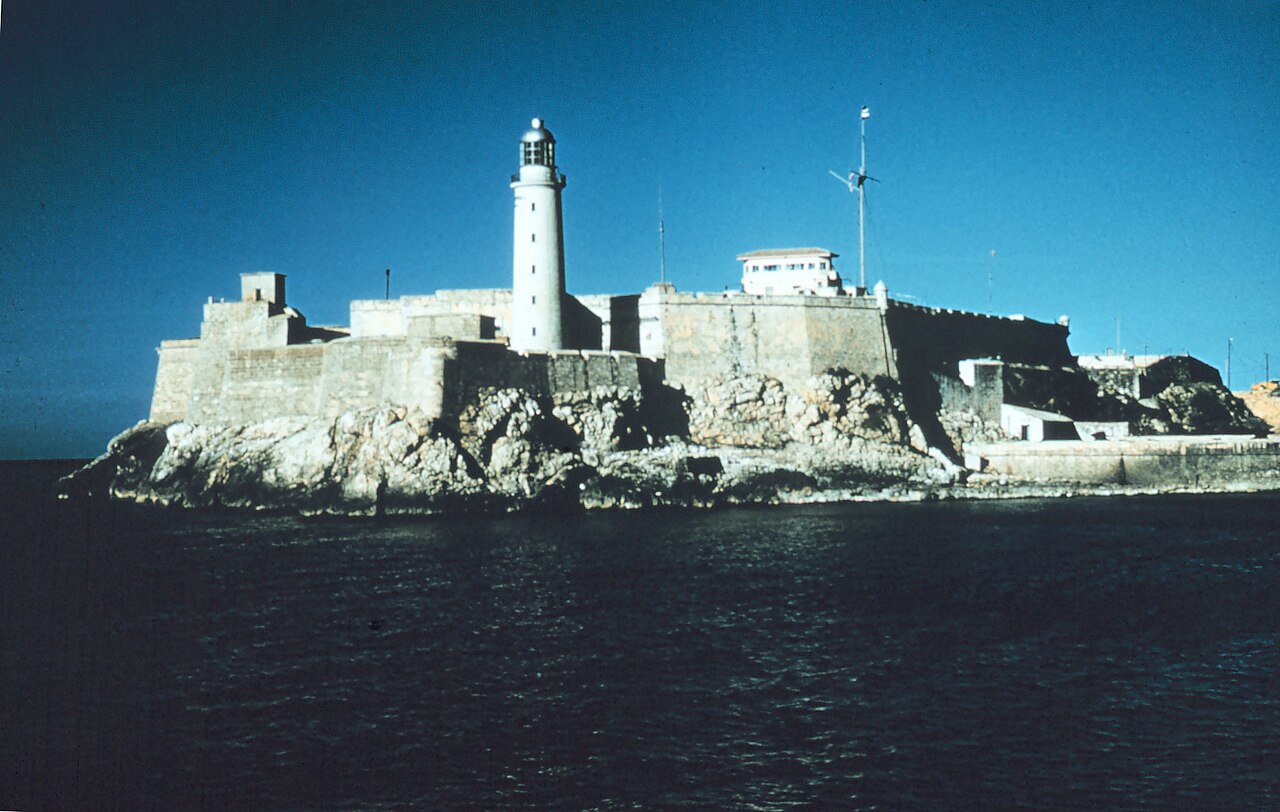
The Castillo de los Tres Reyes del Morro, commonly known as Morro Castle, is a prominent fortress located at the entrance of Havana harbor in Cuba. This imposing structure was strategically built to guard the harbor and protect the city from naval attacks and pirate incursions. Its commanding position on a rocky promontory allows it to oversee and control access to one of the most important ports in the Caribbean. The fortress was designed by the renowned Italian military engineer Battista Antonelli (1547–1616), whose expertise in fortification architecture was sought by the Spanish Crown during the late 16th century. Although construction began in the late 16th century, the fortress underwent various phases of building and reinforcement over the centuries, with significant works continuing into the 18th century. This timeline reflects its evolution in response to advances in military technology and changing strategic needs. Architectural design and features Morro Castle exemplifies the post-medieval bastion fort style, characteristic of the period following the Renaissance, when artillery warfare demanded new defensive designs. The fortress is constructed primarily of robust stone masonry, featuring thick walls angled to deflect cannon fire. Its layout includes a series of bastions and curtain walls that form a star-shaped defensive perimeter, typical of trace italienne fortifications. The main entrance is accessed via a drawbridge over a moat, leading to a fortified gatehouse. Inside, the castle contains gun platforms equipped with cannons that once covered the harbor entrance and adjacent coastline. The fortress also includes magazines for ammunition storage, barracks for troops, and command quarters. Its elevated position provides excellent visibility and overlapping fields of fire. Historical significance and military role Morro Castle was a critical element in the defense of Havana, a key Spanish colonial port and naval base in the Caribbean. The fortress was constructed to deter attacks from European rivals and pirates. In 1762, during the Seven Years' War, the castle was captured by the British in a major siege, marking a significant event in the fortress's history. The British occupation was brief, as the fortress was returned to Spain the following year under the Treaty of Paris (1763). Following this, the Spanish enhanced Havana's defenses by building La Cabaña fortress in 1774, which complemented Morro Castle's role. Despite this, Morro Castle remained a vital defensive structure well into the 19th century, adapting to changing military technologies and threats. Cultural and heritage importance Today, Morro Castle stands as a symbol of Havana's colonial past and its strategic maritime importance. It is part of the Old Havana and its Fortification System, designated as a UNESCO World Heritage Site. The fortress attracts numerous visitors interested in military history, colonial architecture, and Cuban heritage. The site offers panoramic views of the harbor and city skyline, making it a popular destination for tourists and locals alike. Preservation efforts have maintained much of the fortress's original structure, allowing visitors to explore its bastions, dungeons, and ramparts. The castle also hosts cultural events and exhibitions that highlight its historical legacy. Construction history and evolution Construction of Morro Castle began in 1589 under the direction of Battista Antonelli, who was commissioned by the Spanish Crown to fortify Havana against increasing threats. The initial phase focused on establishing the main fortress walls and bastions. Over the next century, the castle was expanded and reinforced to accommodate new artillery and improve defensive capabilities. In the 18th century, particularly after the British siege of 1762, significant repairs and upgrades were made to strengthen the fortress. These included the addition of new gun emplacements and improvements to the living quarters for the garrison. The castle's design reflects the adaptation of Renaissance military engineering principles to the Caribbean environment. Architectural style and influences The design of Morro Castle is influenced by the Renaissance military architectural principles, especially the trace italienne style, which emphasized angular bastions and low, thick walls to withstand cannon fire. This style marked a departure from earlier medieval castles, which were more vertical and less resistant to artillery. Antonelli's work on Morro Castle is part of a broader legacy of Spanish fortifications across the Americas, combining European design with adaptations for local materials and climate. The fortress's stone construction and strategic placement on a promontory demonstrate a careful integration of natural terrain into defensive planning. Visiting morro castle Visitors to Morro Castle can explore its extensive fortifications, including the bastions, ramparts, and the lighthouse that was added in the 19th century. The site includes a museum with exhibits on the fortress's history, military artifacts, and the broader context of Havana's colonial defense system. The castle is accessible to the public year-round, offering guided tours that explain its historical and architectural significance. The panoramic views from the fortress provide excellent opportunities for photography and appreciation of Havana's coastal landscape.

Post-Renaissance (17th–18th c.)
Details