Fort Jefferson
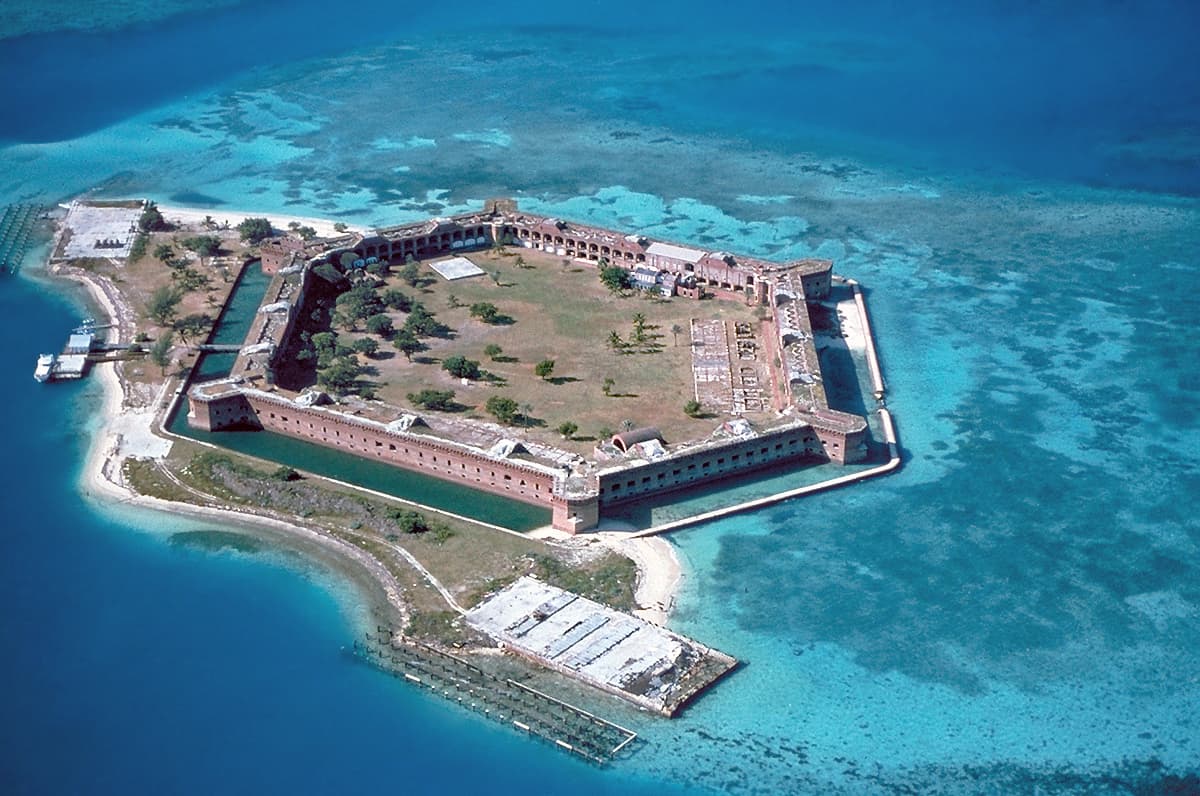
Fort Jefferson stands as a monumental example of 19th-century coastal military architecture in the United States. Located on Garden Key within the Dry Tortugas National Park in Florida, this bastioned fortress is renowned for being the largest brick masonry structure in the Americas. Spanning approximately 16 acres (6.5 hectares), it was constructed using over 16 million bricks, a testament to the ambitious engineering and military planning of its era.
The fort is situated about 68 miles (109 kilometers) west of Key West in the lower Florida Keys, part of Monroe County. Its strategic location was chosen to protect the vital shipping lanes and the Gulf of Mexico from naval threats during a period of expanding American maritime interests. The fort was named in honor of Thomas Jefferson, the third President of the United States and a Founding Father, reflecting the patriotic significance attributed to such military installations.
Architectural design and construction
Fort Jefferson exemplifies the bastioned fortress style, characterized by angular bastions projecting outward from the main walls, designed to provide overlapping fields of fire and eliminate blind spots. This design was a common feature of coastal defenses in the 19th century, aimed at countering the threat posed by enemy ships.
The fort's construction began in the early 19th century, with work continuing over several decades. Its massive walls were built using bricks manufactured on-site, highlighting the logistical efforts involved in establishing such a remote fortification. The fort’s walls rise to about 30 feet (9 meters) in height and are approximately 8 feet (2.4 meters) thick, providing formidable protection against artillery bombardment.
The layout includes a dry moat surrounding the fort, multiple casemates for artillery placements, and extensive barracks to house soldiers. The interior courtyard was designed to accommodate the daily activities of the garrison, including storage, workshops, and defensive operations.
Historical significance and military use
Originally intended to defend the Gulf Coast and the shipping routes against foreign naval powers, Fort Jefferson played a strategic role during the American Civil War. Although it never saw direct combat, the fort served as a key Union military outpost and a prison for Confederate prisoners of war. Its remote location made it an ideal site for detaining high-profile prisoners.
Throughout its operational history, the fort was never fully completed due to the immense scale and the logistical challenges posed by its isolated location. Despite this, it remained an active military installation well into the late 19th and early 20th centuries, adapting to changing military technologies and strategic priorities.
Preservation and current status
Today, Fort Jefferson is part of the Dry Tortugas National Park, managed by the National Park Service. It is well preserved and accessible to visitors, who can explore its extensive brickwork, bastions, and historical structures. The fort is a popular destination for history enthusiasts, snorkelers, and tourists interested in the natural beauty and cultural heritage of the Florida Keys.
Visitors can reach the fort by boat or seaplane from Key West, with guided tours available that highlight its architectural features and historical context. The fort’s preservation efforts focus on maintaining its structural integrity while providing educational opportunities about its military and cultural importance.
Architectural features and unique characteristics
The fort’s design incorporates casemated gun rooms arranged in tiers, allowing for a dense concentration of artillery. Its star-shaped layout with multiple bastions reflects principles of Vauban-style fortifications, adapted for coastal defense. The extensive use of brick masonry is notable for its durability and scale, making Fort Jefferson an engineering marvel of its time.
Additional features include the dry moat encircling the fort, which enhances its defensive capabilities by preventing direct assaults on the walls. The fort’s interior spaces were designed for both military functionality and the accommodation of a sizable garrison, including barracks, magazines for ammunition storage, and officers’ quarters.
Frequently asked questions (FAQ)
- What is Fort Jefferson known for?
- Fort Jefferson is a coastal fortress located in the Dry Tortugas, Florida, known for its unique architecture and historical significance. Constructed in the mid-19th century, it was built to protect the shipping lanes of the Gulf of Mexico and served as a military prison during the Civil War.
- When was Fort Jefferson built?
- Construction of Fort Jefferson began in 1846 and continued for several decades, with the fort being completed in 1876. Despite its impressive size, it was never fully operational as a military fortification and has since become a historical landmark.
- How do I get to Fort Jefferson?
- Fort Jefferson is accessible only by boat or seaplane, as it is located on Dry Tortugas National Park. There are ferry services available from Key West, which typically take about 2.5 hours, offering a scenic journey to this remote destination.
- What are the opening hours of Fort Jefferson?
- Fort Jefferson is open to visitors year-round, with the ferry service operating daily, weather permitting. However, it is advisable to check the schedule in advance, especially during peak tourist seasons.
- Is there an entrance fee for Fort Jefferson?
- Yes, there is an entrance fee required to access Dry Tortugas National Park, which includes Fort Jefferson. The fee helps maintain the park and its facilities, and visitors purchasing ferry tickets will typically have the entrance fee included.
- Can I explore Fort Jefferson on my own?
- Yes, visitors are welcome to explore Fort Jefferson at their own pace. There are self-guided tour materials available, providing historical insights and details about the fort's architecture and significance.
- What is the best time to visit Fort Jefferson?
- The best time to visit Fort Jefferson is during the winter months, from December to April, when temperatures are mild and the weather is generally pleasant. This period also sees fewer rain showers, making it ideal for outdoor activities and exploration.
- Are there any nearby attractions to visit?
- In addition to Fort Jefferson, Dry Tortugas National Park offers excellent opportunities for snorkeling, birdwatching, and camping. Nearby, you can also explore the beautiful blue waters and coral reefs that abound in the area, making it a perfect spot for nature enthusiasts.
- Is Fort Jefferson accessible for visitors with disabilities?
- Fort Jefferson has some accessibility features, but due to its remote location and historic nature, some areas may be challenging for individuals with mobility issues. Visitors with specific accessibility needs are encouraged to contact the ferry service or park staff for detailed information on available accommodations.
Photo gallery

Photo by U.S. National Park Service•Public domain
Information
Loading map...
Visitor reviews
No reviews yet. Been here? Write the first review and help other travelers!
Write the first reviewVisited this castle? Share your experience
Your review helps other travelers and adds first-hand knowledge to our encyclopedia.