Fort William
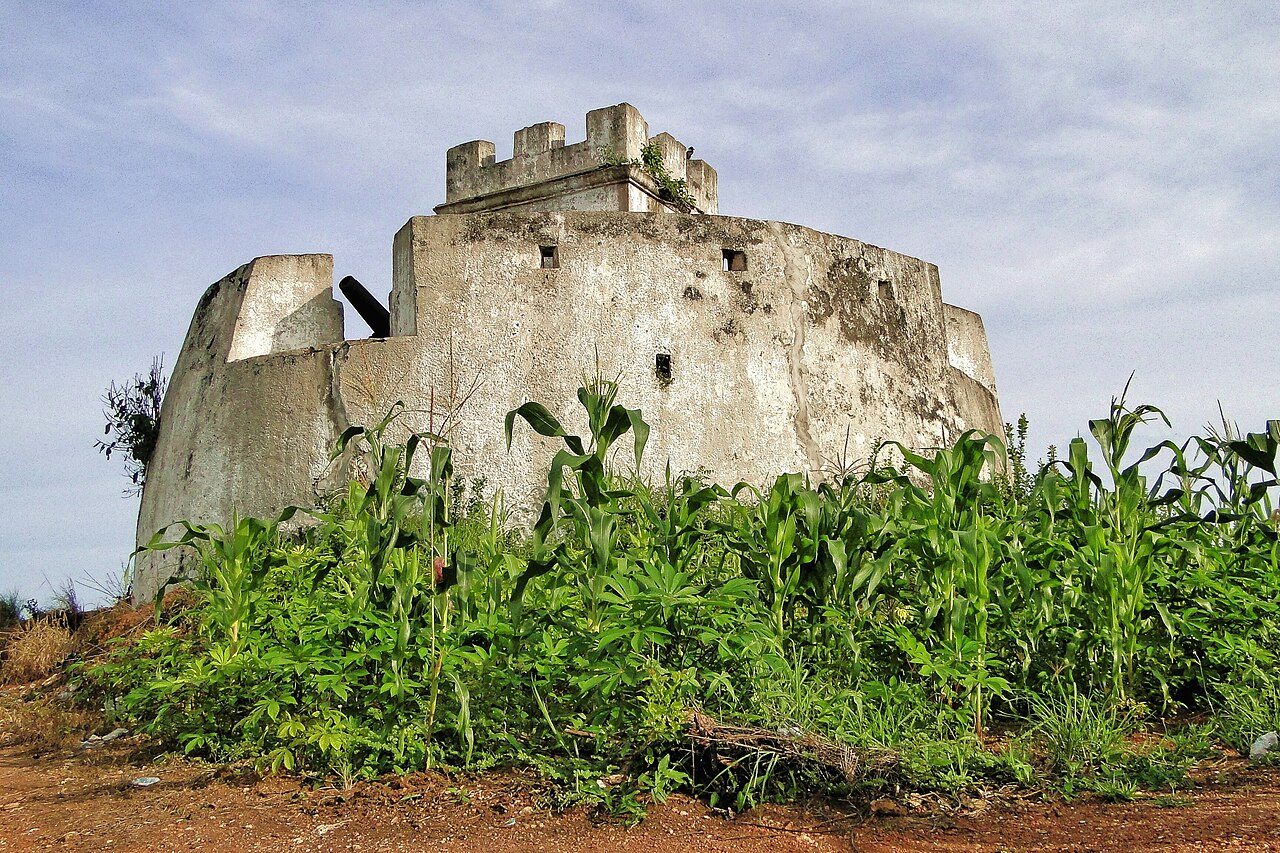
Fort William is a historic fortification located on a prominent hill in the coastal town of Cape Coast, Ghana. This strategic position allowed it to serve as an important lookout post and defensive structure during the colonial era. Originally constructed in the early 19th century, Fort William played a key role in the protection of the nearby Cape Coast Castle against inland threats, particularly from the Ashanti Empire.
Origins and early construction
The site initially hosted a small fortification known as Smith's Tower, built between 1819 and 1820 under the administration of Governor Hope-Smith. This early fort was constructed using mud and stone, materials readily available at the time, and was part of a defensive network of three lookout posts situated on hills around Cape Coast Castle. These posts were designed primarily for early warning and signaling to alert the castle of approaching Ashanti forces or other dangers.
Architectural development and features
In the decades following its initial construction, the original fort was replaced by a larger and more durable structure, now known as Fort William. This reconstruction utilized stronger materials to enhance its defensive capabilities and longevity. The fort's elevated position provided commanding views over the surrounding coastline and town, making it an ideal location for surveillance and defense.
Function as a lighthouse
From the 1830s until the 1970s, Fort William served an additional critical role as a lighthouse. The installation of a lighthouse within the fort's structure helped guide ships safely along the treacherous West African coast, contributing to maritime navigation and trade. This dual military and navigational function highlights the fort's importance in both defense and commerce during the colonial period.
Historical significance and context
Fort William was integral to the colonial defense system protecting Cape Coast Castle, one of the most significant forts involved in the trans-Atlantic slave trade. The fort and its network of lookout posts were essential in monitoring and deterring attacks from the powerful Ashanti Empire, which frequently contested control over the region. Its role in signaling and early warning helped maintain the security of the castle and the surrounding European settlements.
Relation to other forts
Another surviving lookout post, Fort Victoria, is located within sight of Fort William, illustrating the interconnected nature of the defensive system around Cape Coast. These forts collectively formed a strategic network that leveraged the natural topography of the hills to maximize surveillance and communication efficiency.
Current status and visitor information
Today, Fort William remains a well-preserved historic site, although it serves a residential purpose, housing several families who work at Cape Coast Castle. Visitors can explore the fort free of charge, but it is important to respect the fact that it is also a home. Offering a friendly tip is customary and appreciated by the residents.
The fort's accessibility and its proximity to other historic sites make it a valuable destination for those interested in Ghana's colonial history, military architecture, and maritime heritage. Its location on Light House Road in Cape Coast places it within easy reach of tourists visiting the region.
Architectural style and classification
Fort William is classified as a hill castle due to its elevated position on Dawson's Hill. The fort's construction period places it in the post-medieval era, with architectural features reflecting practical military design rather than ornate styles. Its robust stone construction and functional design emphasize defense and visibility rather than aesthetic considerations.
While the fort does not belong to a specific architectural style like Gothic or Renaissance, its form is typical of small coastal military forts built by European colonial powers in West Africa during the 19th century.
Frequently asked questions (FAQ)
- How do I visit Fort William in Cape Coast?
- Fort William is located on Light House Road in Cape Coast and can be visited free of charge. Visitors should be respectful as the fort currently houses families, so offering a friendly tip is appreciated.
- What was the original purpose of Fort William?
- Originally known as Smith's Tower, Fort William was built between 1819 and 1820 as a lookout post to protect Cape Coast Castle from Ashanti attacks and to serve as a signaling station.
- When was Fort William used as a lighthouse?
- Fort William served as a lighthouse from the 1830s until the 1970s, guiding ships safely along the West African coast and aiding maritime navigation.
- Is Fort William related to other forts in Cape Coast?
- Yes, Fort William was part of a network of lookout posts including Fort Victoria, which is still visible nearby. Together, they formed a defensive system around Cape Coast Castle.
- What is the architectural style of Fort William?
- Fort William is a hill castle built in the post-medieval period with a focus on practical military design rather than a specific architectural style.
Information
Ticket prices
Free
Address
Light House Road, Ghana
Loading map...
Visitor reviews
No reviews yet. Been here? Write the first review and help other travelers!
Write the first reviewVisited this castle? Share your experience
Your review helps other travelers and adds first-hand knowledge to our encyclopedia.