Cape Coast Castle
Cape Coast Castle stands as a powerful monument on the coast of Ghana, embodying a complex and somber chapter of world history. Located in the town of Cape Coast, this 17th-century fortification played a pivotal role in the transatlantic slave trade and colonial competition among European powers in West Africa.
The castle's origins date back to 1653 when the Swedish Africa Company, under the leadership of Henrik Krusenstjerna, constructed a wooden fortification named Carolusburg. This initial structure was quickly replaced by a more durable stone fort in 1654, reflecting the strategic importance of the site on the Gulf of Guinea. Over the following decades, control of the fort shifted among several powers, including the Danes, the local Fetu chief, and the Dutch, each vying for dominance in the lucrative trade networks of the region.
In 1665, the fort was seized by the English fleet commanded by Captain Holmes. The English East India Company, later the English Chartered Company of Adventurers, undertook significant expansions and fortifications, renaming the site Cape Coast Castle. The castle was developed to rival the nearby Elmina Castle, built by the Dutch, featuring robust defensive works and extensive facilities to support trade operations.
Architectural development and fortifications
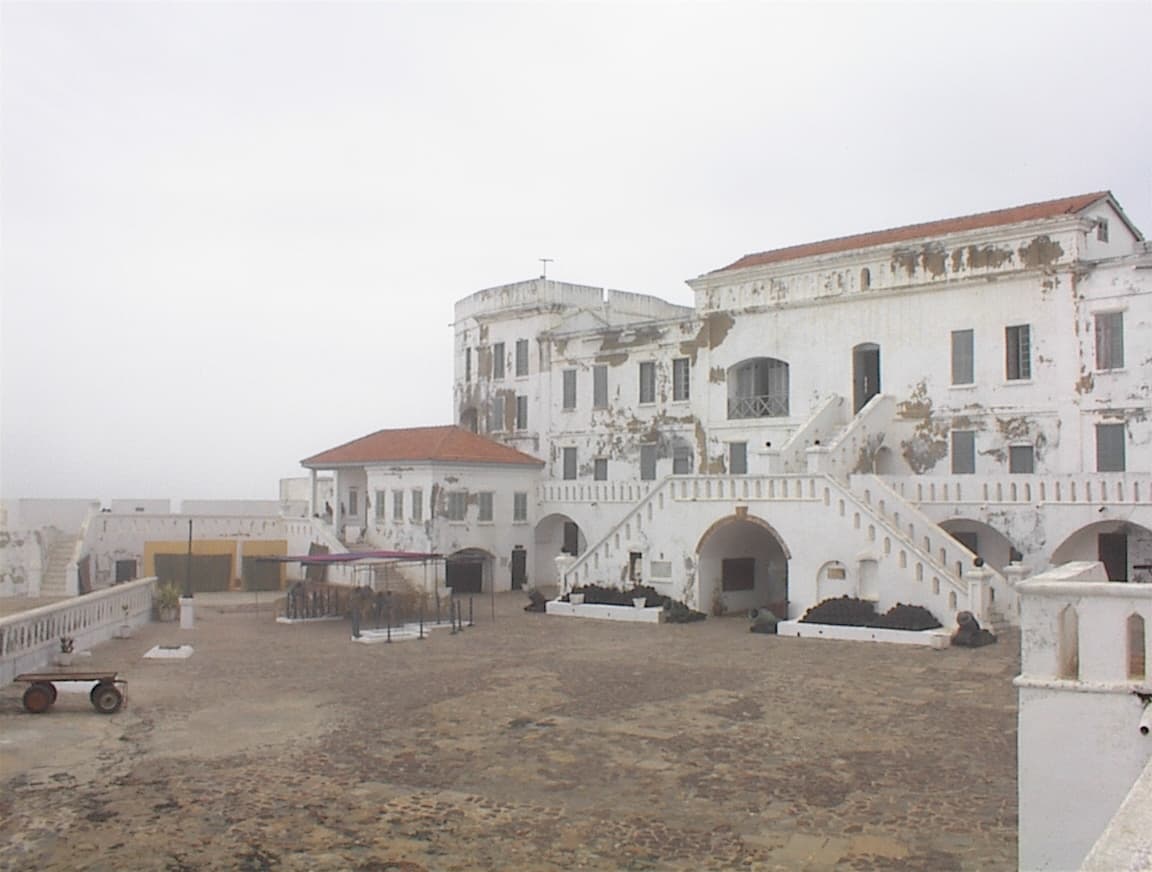
The castle's present form largely results from reconstruction efforts between 1760 and 1790 led by the British Committee of Merchants. Built primarily from locally quarried sandstone, the fort exhibits a loosely pentagonal layout with low curtain walls fortified by several polygonal bastions. Surrounding a central courtyard are three-storey ranges of buildings that housed administrative offices, living quarters, and storage facilities.
One of the most harrowing architectural features of Cape Coast Castle is its system of slave dungeons. These included two dungeons designated for males and one for females, designed to confine enslaved Africans in appalling conditions before their forced embarkation. The castle is historically recognized as one of the largest slave-holding sites on the West African coast, with estimates suggesting that up to 70,000 slaves were held and shipped annually during the peak of the transatlantic slave trade. Many of these individuals were traded by the Ashanti people to British traders in exchange for goods such as alcohol and firearms.
Historical significance and events
In addition to its role in the slave trade, Cape Coast Castle witnessed several significant historical events. In the early 1750s, the castle became a center for education when a primary school was established for local children, reflecting a complex colonial interaction with indigenous communities.
The castle suffered damage during the Seven Years' War when a French naval squadron bombarded it in 1757. Despite this, the British undertook extensive repairs and fortifications in the following decades to maintain its strategic and commercial importance.
In 1803, the castle was the site of a notable siege by local townspeople following a dispute with a British merchant, illustrating tensions between colonial authorities and indigenous populations. Later in the 1870s, Cape Coast Castle served as the headquarters for the West Indian Regiment, a British colonial military unit.
Cultural legacy and modern use
Today, Cape Coast Castle stands as a UNESCO World Heritage Site and a poignant reminder of the atrocities of the transatlantic slave trade. Visitors can explore the castle with guided tours that include the infamous "Door of No Return", through which enslaved Africans were forced onto ships bound for the Americas. This passage symbolizes the beginning of a harrowing journey endured by millions, with an estimated 15 percent perishing during the Middle Passage.
The castle's legacy is deeply intertwined with the history of forced migration and human suffering, making it a significant educational and memorial site. It has also served various roles over time, including functioning as a school, a museum, and the regional headquarters for the Ghana Museums and Monuments Board.
Visitors to Cape Coast Castle are encouraged to also explore nearby smaller forts such as Fort William and Fort Victoria, both within walking distance, which contribute to the rich historical landscape of the region.
Architectural features and layout
The castle's architecture reflects the military engineering principles of the Renaissance period, adapted to the West African coastal environment. Its pentagonal shape with bastions allowed for effective defense against naval and land attacks. The low curtain walls were designed to withstand cannon fire, while the bastions provided vantage points for artillery placement.
The internal three-storey buildings housed various functions, including living quarters for officers, storage for goods, and administrative offices. The design facilitated the operation of the castle as a trading post and military stronghold.
Historical context of the transatlantic slave trade
Cape Coast Castle was a central node in the transatlantic slave trade, which forcibly relocated millions of Africans to the Americas from the 16th to the 19th centuries. The castle's dungeons were notorious for their overcrowded and inhumane conditions, where enslaved people were confined for extended periods before being loaded onto ships.
The castle's role in this trade was facilitated by complex interactions between European traders and African kingdoms, such as the Ashanti, who supplied captives in exchange for European goods. The human cost of this trade was immense, with millions dying during capture, transport, and enslavement.
Visiting cape coast castle today
Today, Cape Coast Castle is open to the public with guided tours available for a modest fee. These tours provide detailed insights into the castle's architecture, history, and its role in the slave trade. The site serves both as a tourist attraction and a solemn memorial.
The castle's location on Victoria Road in the Central Region of Ghana makes it accessible for visitors interested in West African history and colonial heritage. The nearby forts of Fort William and Fort Victoria offer additional perspectives on the region's past.
Frequently asked questions (FAQ)
- What is the historical significance of Cape Coast Castle?
- Cape Coast Castle is one of the largest of the forts built by European traders along the Gold Coast. It played a crucial role in the transatlantic slave trade, serving as a holding place for enslaved Africans before their shipment to the Americas. Today, it stands as a UNESCO World Heritage Site, highlighting the dark history of human trafficking and the resilience of those who endured it.
- When was Cape Coast Castle built?
- Cape Coast Castle was originally built in 1653 by the Swedish Africa Company as a trading post. It was later expanded and fortified by the British in the late 17th century, becoming a significant center for the slave trade. The castle's architecture reflects the colonial style of the period and its importance in Ghana's history.
- Can I visit Cape Coast Castle?
- Yes, Cape Coast Castle is open to visitors who wish to explore its rich history and architecture. Guided tours are available, providing insightful information about the castle's past and its role in the slave trade. It is advisable to book your tickets in advance, especially during peak tourist seasons.
- What are the opening hours of Cape Coast Castle?
- Cape Coast Castle is typically open to visitors from 9:00 AM to 5:00 PM daily. However, it's recommended to check the official website or contact local authorities for any changes in hours, especially during holidays or special events. Guided tours usually start at the top of the hour, so plan your visit accordingly.
- Is it possible to access Cape Coast Castle with mobility challenges?
- Yes, Cape Coast Castle is committed to accommodating visitors with mobility challenges. While some areas may have limited access due to the historic architecture, staff are available to assist and provide alternative viewing options. It is best to contact the castle in advance to ensure a comfortable visit.
- When is the best time to visit Cape Coast Castle?
- The best time to visit Cape Coast Castle is during the dry season, which runs from November to March. This period offers more pleasant weather and is ideal for exploring the castle and its surroundings. Additionally, visiting during weekdays can help you avoid the larger crowds typically seen on weekends.
- What are some nearby attractions to visit after Cape Coast Castle?
- After visiting Cape Coast Castle, consider exploring the nearby Elmina Castle, another significant site related to the slave trade, just a short drive away. You can also visit Kakum National Park for its stunning canopy walk and rich biodiversity. The vibrant local markets in Cape Coast offer a taste of Ghanaian culture and crafts.
- How much does it cost to enter Cape Coast Castle?
- The entrance fee for Cape Coast Castle varies based on nationality, with reduced rates for students and local residents. As of the latest information, tickets for international visitors are typically higher than those for Ghanaian citizens. It is advisable to check the current ticket prices before your visit to ensure you have the correct amount.

Information
Sources & official resources
Verify the information above using these authoritative references.
Loading map...
Visitor reviews
No reviews yet. Been here? Write the first review and help other travelers!
Write the first reviewVisited this castle? Share your experience
Your review helps other travelers and adds first-hand knowledge to our encyclopedia.