Fort Washington
Fort Washington was a strategically significant bastioned fortress located near the northern tip of Manhattan Island, in what is today the Washington Heights neighborhood of New York City. Constructed during the American Revolutionary War, the fort occupied the island's highest elevation, providing commanding views over the Hudson River and surrounding areas. Its position was critical for controlling river access and defending the city against British forces.
Construction and design
The fort was built in 1776 by the Continental Army under the direction of military engineers who adapted European bastion fortification principles to the site's topography. As a bastioned fortress, Fort Washington featured angled earthworks and stone walls designed to provide overlapping fields of fire and resist artillery bombardment. The layout included multiple defensive bastions, ramparts, and a moat to impede enemy advances.
The fort's design reflected the military engineering knowledge of the late 18th century, combining star-shaped bastions with natural terrain advantages. Its elevated position allowed defenders to observe and fire upon approaching British ships and troops, making it a formidable obstacle.
Historical significance
Fort Washington played a pivotal role in the early stages of the American Revolutionary War. It was constructed as part of the defenses to protect New York City, then a vital colonial port and strategic hub. The fort was garrisoned by Continental Army troops who sought to prevent British forces from gaining control of northern Manhattan and the Hudson River corridor.
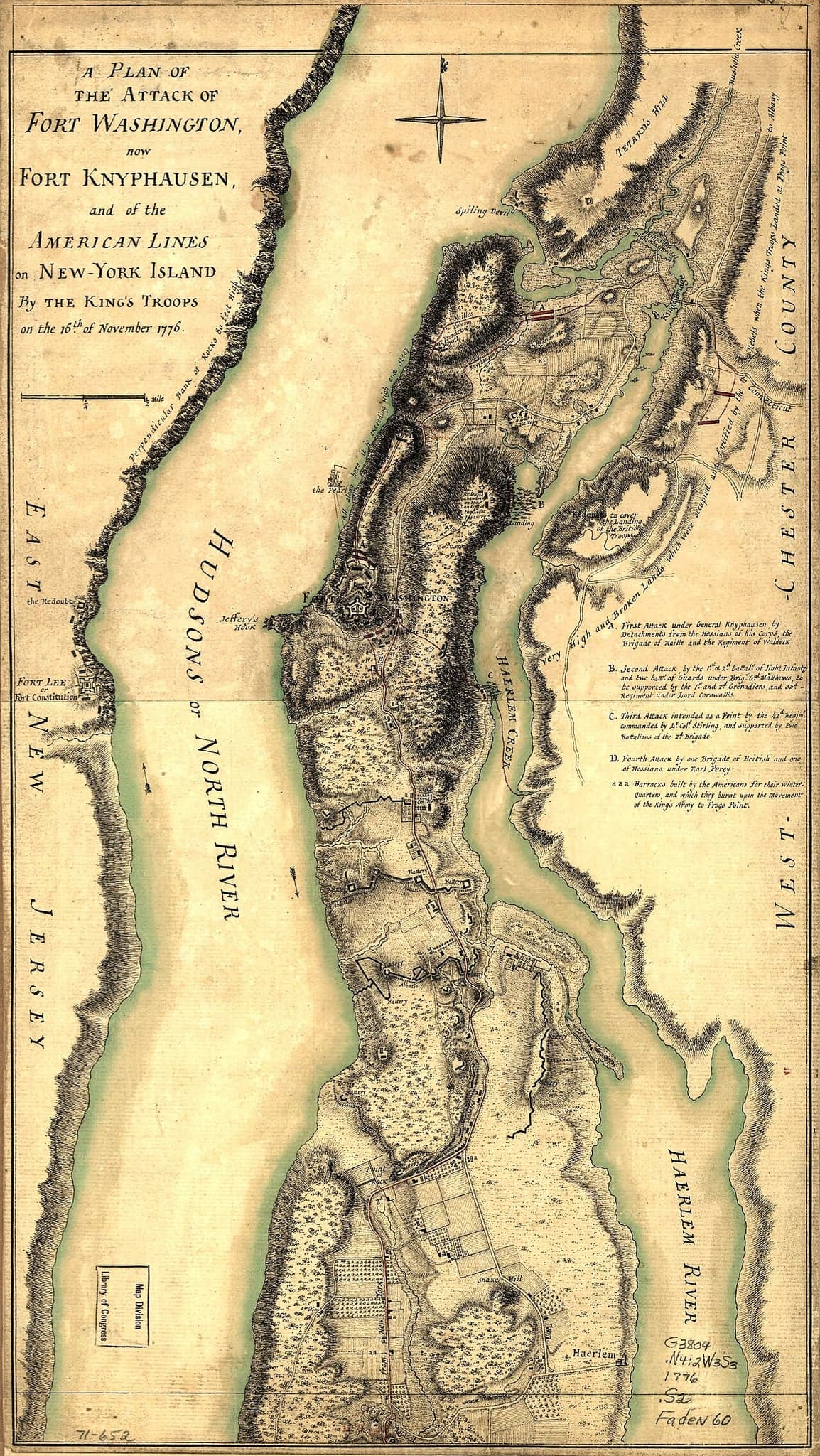
In November 1776, Fort Washington was the site of a major battle when British and Hessian troops launched a coordinated assault to capture the fort. Despite determined resistance, the fort fell after intense fighting, resulting in significant Continental Army casualties and prisoners. This defeat marked a turning point in the defense of New York but underscored the fort's strategic importance.
Architectural features and layout
The fort's bastioned design included several key elements typical of 18th-century military architecture. Its star-shaped bastions allowed defenders to cover all approaches with cannon and musket fire. The earthworks were reinforced with timber and stone to absorb artillery impacts.
Within the fort, there were gun emplacements, magazines for storing ammunition, and soldiers' quarters. The fort also had a network of trenches and ditches surrounding it, enhancing its defensive capabilities. The elevated site provided natural protection and visibility, maximizing the effectiveness of the fortifications.
Legacy and preservation
Today, Fort Washington no longer stands as a complete fortress, but its site is recognized for its historical and cultural significance. It is listed on the National Register of Historic Places, commemorating its role in the Revolutionary War and the defense of New York City.
The location within Washington Heights is marked by historical plaques and interpretive signage to educate visitors about the fort's history. While much of the original structure has been lost to urban development, archaeological efforts have uncovered remnants that provide insights into the fort's construction and military function.
Fort Washington remains an important symbol of American resilience and colonial military engineering, reflecting the challenges faced during the struggle for independence.
Photo gallery

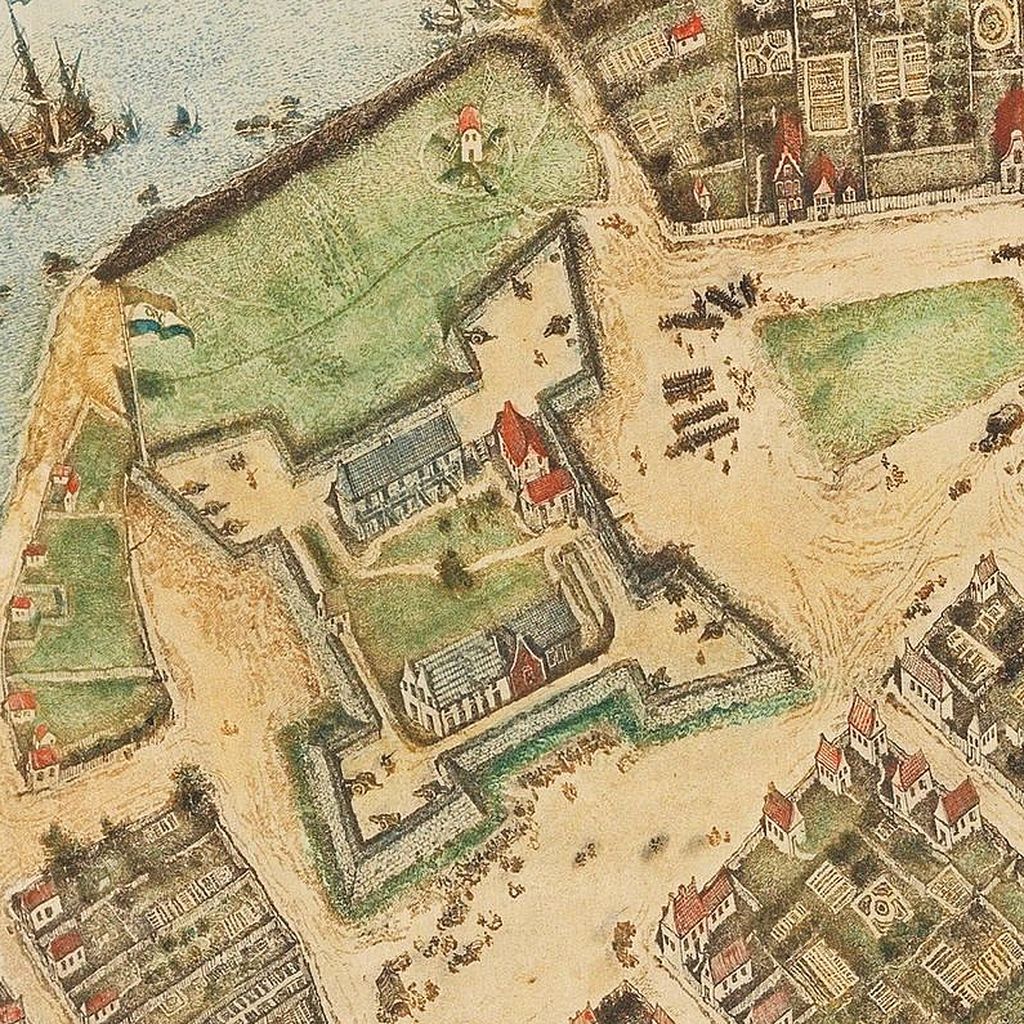
Photo by Claude Joseph Sauthier Manuscript, pen-and-ink and watercolor.•Public domain
Information
Loading map...
Visitor reviews
No reviews yet. Been here? Write the first review and help other travelers!
Write the first reviewVisited this castle? Share your experience
Your review helps other travelers and adds first-hand knowledge to our encyclopedia.