Fort Amsterdam
Fort Amsterdam, originally constructed in the 17th century, was a pivotal bastioned fortress located at the southern tip of Manhattan Island, where the Hudson and East rivers meet in present-day New York City. This fortification served as the administrative and military center for the Dutch colony of New Netherland and later for the British Province of New York. It was the nucleus around which the early settlement of New Amsterdam developed, marking the official founding of what would become one of the world's most important cities.
Early history and construction
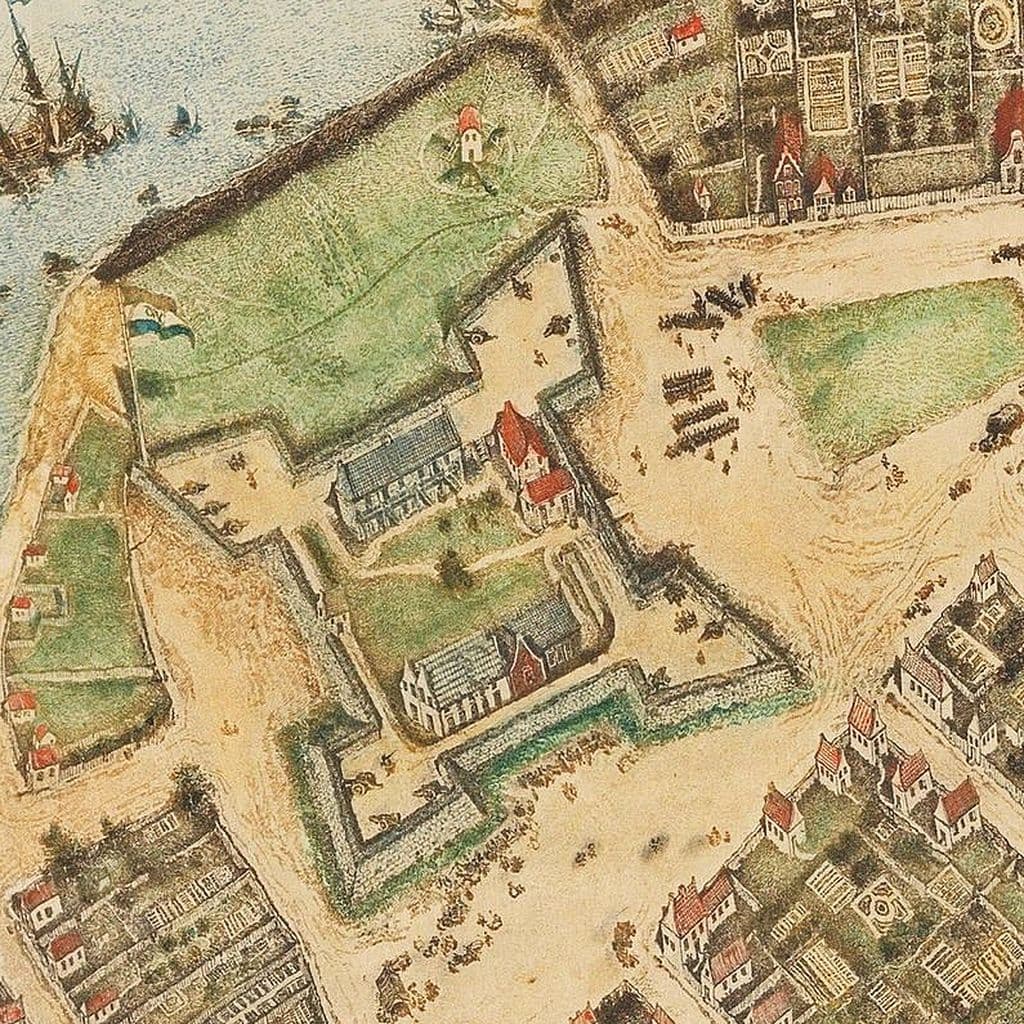
The site of Fort Amsterdam was historically significant even before its construction, as it was the location where the purchase of Manhattan Island from the local Native American tribes took place. The fort itself was built by the Dutch West India Company shortly after their settlement began in 1624 to protect their trading interests and assert control over the strategic harbor. Designed as a star-shaped bastioned fortress, it incorporated angled walls and bastions to provide overlapping fields of fire, a defensive design typical of the renaissance military architecture influenced by the works of Italian engineers.
The fort's layout included a central courtyard surrounded by robust walls, bastions at the corners for artillery placement, and a moat that enhanced its defensive capabilities. Its position allowed control over the harbor entrance, which was crucial for trade and military operations.
Fort amsterdam under dutch and british rule
Originally named Fort Amsterdam, the fortress underwent several name changes reflecting the shifting political powers. Under Dutch control, it was also known as Fort Willem Hendrick and Fort William Henry after the English translation. When the English seized control in 1664, it was renamed Fort James in honor of the Duke of York, who later became King James II of England. Later, it was called Fort Anne and finally Fort George under British rule.
The fort changed hands multiple times during various conflicts, including the Anglo-Dutch wars and the colonial struggles between European powers in North America. The first major change of control occurred when Dutch Governor Peter Stuyvesant surrendered the fort to Richard Nicolls of England in 1664 without significant resistance, marking the beginning of British dominance in the region.
Role in colonial and revolutionary conflicts
Throughout the 18th century, Fort George was a focal point during several key events in colonial American history. It was involved in the Stamp Act riots of 1765, serving as a storage site for the controversial stamped paper imported from England. The fort also provided refuge for British tax collectors who faced hostility from New York's residents opposing the tax.
During the American Revolutionary War, the fort played a strategic role in the Battle of Brooklyn in 1776. Artillery exchanges occurred between the fort and British positions on nearby Governor's Island. The fort's location made it a critical military asset for controlling access to New York Harbor during the conflict.
Demolition and legacy
After serving as a military stronghold for over 165 years, Fort George was demolished in 1790 following the conclusion of the American Revolution. The site was cleared to make way for the Government House, which was intended to serve as a residence for the President of the United States, though it was never used as such.
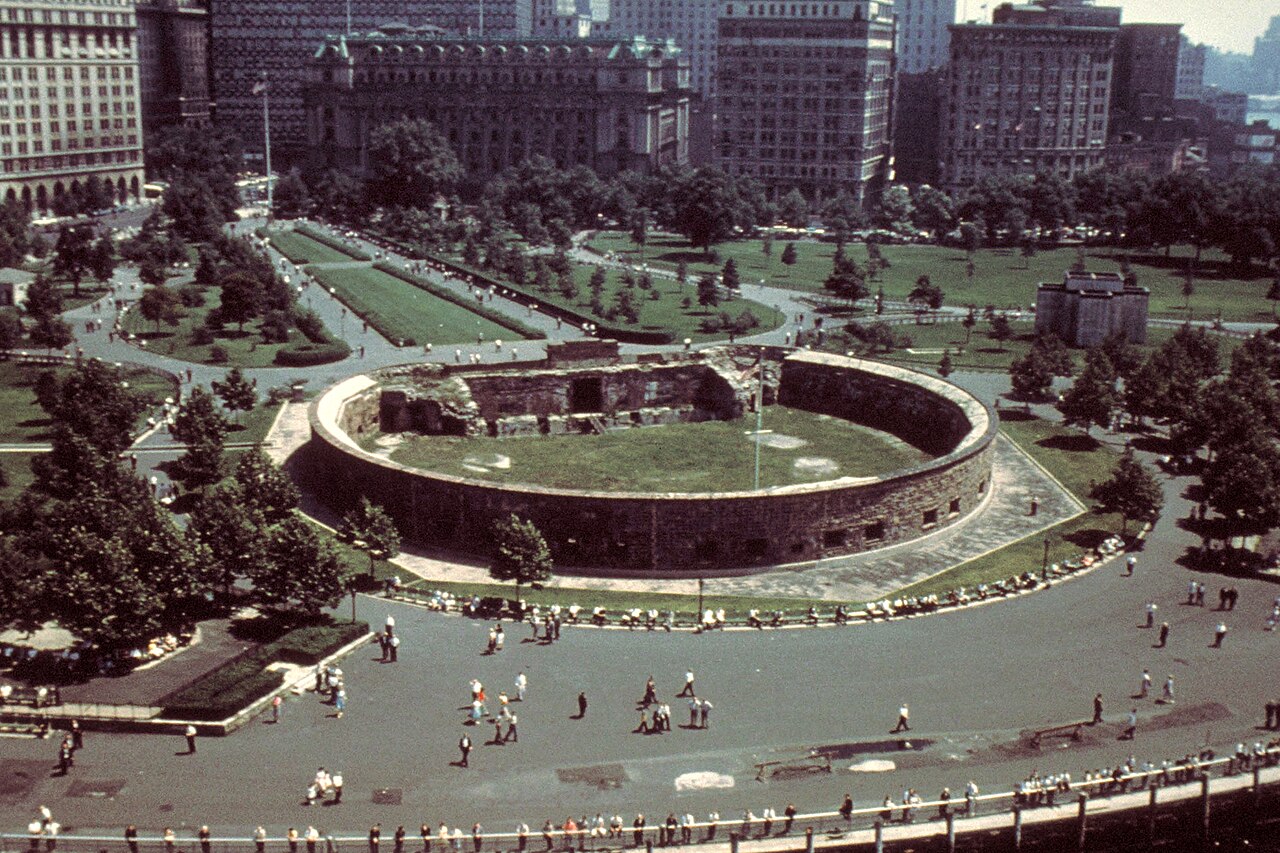
Today, the location where Fort Amsterdam once stood is occupied by the Alexander Hamilton U.S. Custom House, which houses a branch of the National Museum of the American Indian. Nearby is Bowling Green Park, a historic public space that preserves the memory of the fort's presence.
The fort's construction date is commemorated as the founding date of New York City on the city's official seal. Additionally, the artillery batteries once positioned outside the fort inspired the name of Battery Park, a well-known waterfront park that remains a popular attraction.
Architectural significance and design features
Fort Amsterdam exemplifies renaissance bastioned fortress design, characterized by its star-shaped layout that allowed defenders to cover all approaches with cannon fire. The bastions projected outward from the main walls, eliminating blind spots and enabling enfilading fire along the curtain walls. This design reflected contemporary European advances in military architecture aimed at countering the increasing power of artillery.
The fort's walls were constructed using locally available materials, likely including brick and stone, and were thick enough to withstand cannon bombardment. The moat surrounding the fort added an extra layer of defense against infantry assaults.
Inside, the fort contained barracks, storage facilities, and administrative buildings necessary to support the garrison and colonial government. Its strategic position at the harbor entrance underscored its dual role as a military bastion and a symbol of colonial authority.
Frequently asked questions (FAQ)
- What is the historical significance of Fort Amsterdam?
- Fort Amsterdam was built in the 1620s as a strategic military outpost for the Dutch West India Company. It played a crucial role in the early colonial history of New York, serving as the capital of New Amsterdam and later becoming a symbol of the city's rich heritage.
- When was Fort Amsterdam built?
- Fort Amsterdam was constructed in 1625 and completed in 1626. It was established to protect the Dutch settlements and trade routes during a time of growing European competition in the New World.
- Can I visit Fort Amsterdam?
- Yes, Fort Amsterdam is open to visitors, and tours are available to explore its historical grounds. Visitors can learn about its history and significance through informative displays and guided tours.
- What are the opening hours for Fort Amsterdam?
- Fort Amsterdam is typically open to the public from 9 AM to 5 PM daily, but hours may vary during holidays or special events. It is recommended to check the official website for the most current information before planning your visit.
- Is it possible to access Fort Amsterdam with mobility aids?
- Yes, Fort Amsterdam strives to be accessible for all visitors. There are pathways and facilities designed to accommodate wheelchairs and other mobility aids, ensuring everyone can enjoy the historical site.
- What is the best time to visit Fort Amsterdam?
- The best time to visit Fort Amsterdam is during the spring and fall when the weather is mild and the crowds are smaller. These seasons offer a pleasant experience for exploring the grounds and participating in outdoor activities.
- Are there any nearby attractions to visit after Fort Amsterdam?
- Yes, there are several nearby attractions including the Historic Wall Street district, the Battery Park, and the National Museum of the American Indian. These sites complement a visit to Fort Amsterdam and provide further insight into the area's rich history.
- What are the ticket prices for visiting Fort Amsterdam?
- Admission to Fort Amsterdam is generally free, but there may be fees associated with guided tours or special events. It is best to check the official website for detailed pricing and any potential discounts for groups or children.
Photo gallery

Photo by New Amsterdam created by surveyor Jacques Cortelyou in 1660. Images is a detail of File:Castelloplan.jpg, obtained from the New York Historical Society•Public domain
Information
Loading map...
Visitor reviews
No reviews yet. Been here? Write the first review and help other travelers!
Write the first reviewVisited this castle? Share your experience
Your review helps other travelers and adds first-hand knowledge to our encyclopedia.