Belvedere Castle

Belvedere Castle in Central Park, New York City
Late Medieval (14th–15th c.)
Well Preserved

Belvedere Castle stands as a charming and iconic architectural folly nestled in the heart of Central Park, New York City. Completed in 1869, this Gothic Revival structure was designed by Calvert Vaux, one of the co-designers of Central Park, to serve as an elevated observation point. Perched atop Vista Rock, one of the park's highest natural elevations, the castle provides visitors with sweeping panoramic views of the surrounding parklands including the Great Lawn and the Ramble, as well as the city skyline beyond.

Architectural design and style

Belvedere Castle is a fine example of the Gothic Revival style, characterized by its picturesque and romantic aesthetic. The castle's design features turrets, battlements, and arched windows that evoke the medieval castles of Europe, albeit on a smaller, more decorative scale. Originally, the structure was built without doors or windows, emphasizing its function as a viewing pavilion rather than a traditional fortress. The building's stone masonry and intricate detailing contribute to its fairy-tale appearance, making it a beloved landmark within the urban landscape.

Structural features

The castle includes a winding staircase leading visitors up to the highest observation deck located two stories above the base level. This elevated platform offers the most spectacular views of Central Park's natural beauty and the Manhattan skyline. Inside, the castle houses a visitor center and gift shop, enhancing its role as a welcoming destination for tourists and locals alike.

Historical context and significance

Constructed during the late 19th century, Belvedere Castle reflects the era's fascination with romantic medieval architecture and the desire to create picturesque landscapes within urban parks. Its placement on Vista Rock was a deliberate choice to maximize the visual experience for park visitors. Over the years, the castle has served various purposes including a weather station in the 20th century, further embedding it into the functional history of Central Park.

Role in Central Park's development

As part of the original vision by Frederick Law Olmsted and Calvert Vaux, Belvedere Castle contributes to the park's blend of naturalistic scenery and architectural features designed to enhance visitor enjoyment. It exemplifies the 19th-century trend of incorporating ornamental structures within public parks to create focal points and gathering spaces.

Visiting Belvedere Castle today

Today, Belvedere Castle remains a popular tourist attraction and a cherished symbol of Central Park. Visitors can explore the castle grounds, enjoy the spectacular views from the observation decks, and learn about the castle's history through exhibits in the visitor center. Its central location and accessibility make it an ideal spot for sightseeing and photography.

Visitor amenities and accessibility

The castle offers a visitor center and gift shop where guests can find souvenirs and information about Central Park. While the castle's elevated viewing platforms require climbing stairs, the surrounding areas are accessible to all visitors. The site is open seasonally, and visitors are encouraged to check current hours and any special events.

Belvedere Castle's cultural impact

Beyond its architectural charm, Belvedere Castle has become a cultural icon featured in numerous films, television shows, and literature, symbolizing the magic and romance of Central Park. Its name, derived from the Italian term for "beautiful view," aptly captures the essence of this beloved landmark.

Frequently asked questions (FAQ)

How do I get to Belvedere Castle?
Belvedere Castle is located in Central Park, New York City. You can reach it by public transportation via subway or bus, or you can enjoy a scenic walk through Central Park itself, which is a delightful experience.
What is the historical significance of Belvedere Castle?
Built in the 1860s, Belvedere Castle was designed by famed architect Calvert Vaux as a lookout point and a place to showcase the beauty of Central Park. It reflects the Romantic style of architecture and offers a glimpse into the Victorian era of American history.
When was Belvedere Castle constructed?
Belvedere Castle was constructed between 1865 and 1869. It was originally created to provide visitors with panoramic views of the park and the surrounding area.
Can I enter Belvedere Castle?
Yes, visitors can enter Belvedere Castle. There are often educational exhibits inside that highlight the castle's history and the natural landscape of Central Park.
Why is Belvedere Castle a popular tourist attraction?
Belvedere Castle is popular due to its picturesque architecture, stunning views of Central Park, and its rich history. It serves as both a beautiful photo opportunity and a historical landmark in one of the most famous parks in the world.
Is it possible to visit Belvedere Castle year-round?
Yes, Belvedere Castle is open to visitors year-round, although hours may vary seasonally. It’s advisable to check the latest information on opening hours before your visit to ensure you make the most of your experience.
What are the ticket prices for visiting Belvedere Castle?
Admission to Belvedere Castle is free, making it an accessible attraction for everyone. However, certain special events or guided tours may require a fee, so be sure to check ahead.
What is the best time to visit Belvedere Castle?
The best time to visit Belvedere Castle is during the spring and fall when the weather is mild and the surrounding foliage is beautiful. Early mornings or late afternoons are ideal for avoiding crowds and capturing stunning photographs.
Are there any nearby attractions to see after visiting Belvedere Castle?
Yes, after visiting Belvedere Castle, you can explore other nearby attractions in Central Park, such as the Great Lawn, Turtle Pond, and the Alice in Wonderland statue. Additionally, the nearby Metropolitan Museum of Art and the American Museum of Natural History are worth a visit.

Information

Hill Castle

Address

Central Park, New York, NY 10024, United States

Loading map...

Visitor reviews

No reviews yet. Been here? Write the first review and help other travelers!

Write the first review

Visited this castle? Share your experience

Your review helps other travelers and adds first-hand knowledge to our encyclopedia.
Write a review

(5/5)

0/2000 characters

Your review will be visible after admin approval

Nearby castles

8.1 km
Fort Washington — United States of America castle

Fort Washington

New York City, United States of America

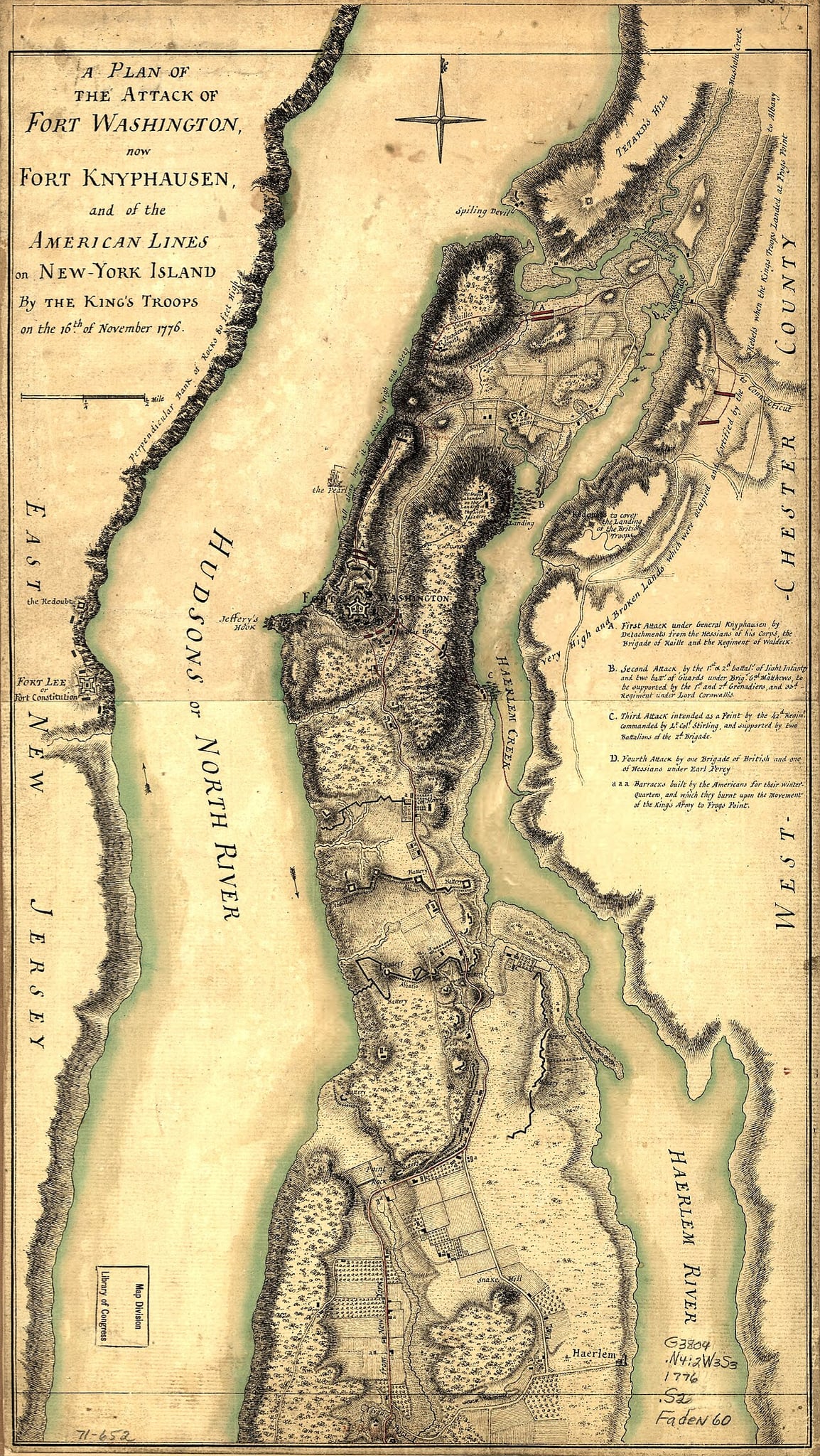
Fort Washington was a strategically significant bastioned fortress located near the northern tip of Manhattan Island, in what is today the Washington Heights neighborhood of New York City. Constructed during the American Revolutionary War, the fort occupied the island's highest elevation, providing commanding views over the Hudson River and surrounding areas. Its position was critical for controlling river access and defending the city against British forces. Construction and design The fort was built in 1776 by the Continental Army under the direction of military engineers who adapted European bastion fortification principles to the site's topography. As a bastioned fortress, Fort Washington featured angled earthworks and stone walls designed to provide overlapping fields of fire and resist artillery bombardment. The layout included multiple defensive bastions, ramparts, and a moat to impede enemy advances. The fort's design reflected the military engineering knowledge of the late 18th century, combining star-shaped bastions with natural terrain advantages. Its elevated position allowed defenders to observe and fire upon approaching British ships and troops, making it a formidable obstacle. Historical significance Fort Washington played a pivotal role in the early stages of the American Revolutionary War. It was constructed as part of the defenses to protect New York City, then a vital colonial port and strategic hub. The fort was garrisoned by Continental Army troops who sought to prevent British forces from gaining control of northern Manhattan and the Hudson River corridor. In November 1776, Fort Washington was the site of a major battle when British and Hessian troops launched a coordinated assault to capture the fort. Despite determined resistance, the fort fell after intense fighting, resulting in significant Continental Army casualties and prisoners. This defeat marked a turning point in the defense of New York but underscored the fort's strategic importance. Architectural features and layout The fort's bastioned design included several key elements typical of 18th-century military architecture. Its star-shaped bastions allowed defenders to cover all approaches with cannon and musket fire. The earthworks were reinforced with timber and stone to absorb artillery impacts. Within the fort, there were gun emplacements, magazines for storing ammunition, and soldiers' quarters. The fort also had a network of trenches and ditches surrounding it, enhancing its defensive capabilities. The elevated site provided natural protection and visibility, maximizing the effectiveness of the fortifications. Legacy and preservation Today, Fort Washington no longer stands as a complete fortress, but its site is recognized for its historical and cultural significance. It is listed on the National Register of Historic Places, commemorating its role in the Revolutionary War and the defense of New York City. The location within Washington Heights is marked by historical plaques and interpretive signage to educate visitors about the fort's history. While much of the original structure has been lost to urban development, archaeological efforts have uncovered remnants that provide insights into the fort's construction and military function. Fort Washington remains an important symbol of American resilience and colonial military engineering, reflecting the challenges faced during the struggle for independence.

Late Medieval (14th–15th c.)
Details
9.7 km
Fort Amsterdam — United States of America castle

Fort Amsterdam

, United States of America

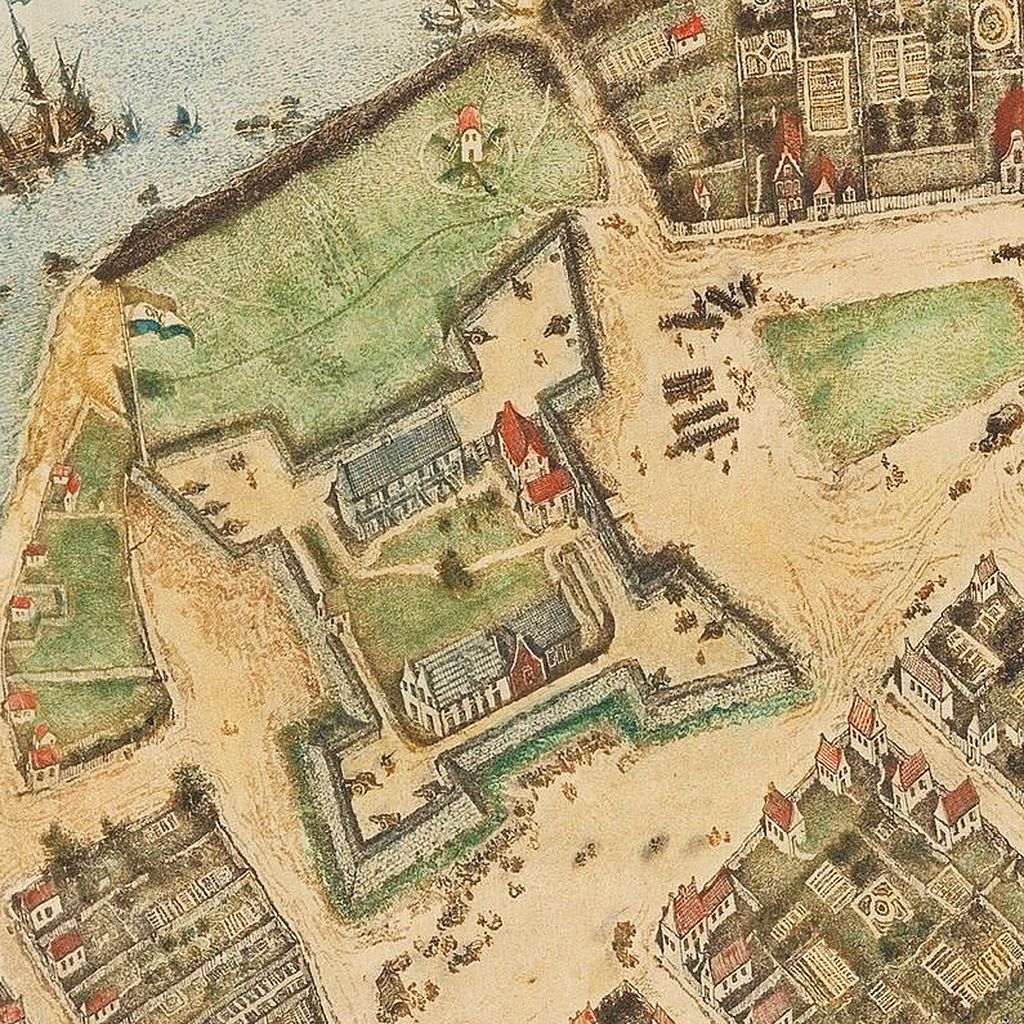
Fort Amsterdam, originally constructed in the 17th century, was a pivotal bastioned fortress located at the southern tip of Manhattan Island, where the Hudson and East rivers meet in present-day New York City. This fortification served as the administrative and military center for the Dutch colony of New Netherland and later for the British Province of New York. It was the nucleus around which the early settlement of New Amsterdam developed, marking the official founding of what would become one of the world's most important cities. Early history and construction The site of Fort Amsterdam was historically significant even before its construction, as it was the location where the purchase of Manhattan Island from the local Native American tribes took place. The fort itself was built by the Dutch West India Company shortly after their settlement began in 1624 to protect their trading interests and assert control over the strategic harbor. Designed as a star-shaped bastioned fortress, it incorporated angled walls and bastions to provide overlapping fields of fire, a defensive design typical of the renaissance military architecture influenced by the works of Italian engineers. The fort's layout included a central courtyard surrounded by robust walls, bastions at the corners for artillery placement, and a moat that enhanced its defensive capabilities. Its position allowed control over the harbor entrance, which was crucial for trade and military operations. Fort amsterdam under dutch and british rule Originally named Fort Amsterdam, the fortress underwent several name changes reflecting the shifting political powers. Under Dutch control, it was also known as Fort Willem Hendrick and Fort William Henry after the English translation. When the English seized control in 1664, it was renamed Fort James in honor of the Duke of York, who later became King James II of England. Later, it was called Fort Anne and finally Fort George under British rule. The fort changed hands multiple times during various conflicts, including the Anglo-Dutch wars and the colonial struggles between European powers in North America. The first major change of control occurred when Dutch Governor Peter Stuyvesant surrendered the fort to Richard Nicolls of England in 1664 without significant resistance, marking the beginning of British dominance in the region. Role in colonial and revolutionary conflicts Throughout the 18th century, Fort George was a focal point during several key events in colonial American history. It was involved in the Stamp Act riots of 1765, serving as a storage site for the controversial stamped paper imported from England. The fort also provided refuge for British tax collectors who faced hostility from New York's residents opposing the tax. During the American Revolutionary War, the fort played a strategic role in the Battle of Brooklyn in 1776. Artillery exchanges occurred between the fort and British positions on nearby Governor's Island. The fort's location made it a critical military asset for controlling access to New York Harbor during the conflict. Demolition and legacy After serving as a military stronghold for over 165 years, Fort George was demolished in 1790 following the conclusion of the American Revolution. The site was cleared to make way for the Government House, which was intended to serve as a residence for the President of the United States, though it was never used as such. Today, the location where Fort Amsterdam once stood is occupied by the Alexander Hamilton U.S. Custom House, which houses a branch of the National Museum of the American Indian. Nearby is Bowling Green Park, a historic public space that preserves the memory of the fort's presence. The fort's construction date is commemorated as the founding date of New York City on the city's official seal. Additionally, the artillery batteries once positioned outside the fort inspired the name of Battery Park, a well-known waterfront park that remains a popular attraction. Architectural significance and design features Fort Amsterdam exemplifies renaissance bastioned fortress design, characterized by its star-shaped layout that allowed defenders to cover all approaches with cannon fire. The bastions projected outward from the main walls, eliminating blind spots and enabling enfilading fire along the curtain walls. This design reflected contemporary European advances in military architecture aimed at countering the increasing power of artillery. The fort's walls were constructed using locally available materials, likely including brick and stone, and were thick enough to withstand cannon bombardment. The moat surrounding the fort added an extra layer of defense against infantry assaults. Inside, the fort contained barracks, storage facilities, and administrative buildings necessary to support the garrison and colonial government. Its strategic position at the harbor entrance underscored its dual role as a military bastion and a symbol of colonial authority.

Renaissance (15th–17th c.)
Details
9.8 km
Castle Clinton — United States of America castle

Castle Clinton

, United States of America

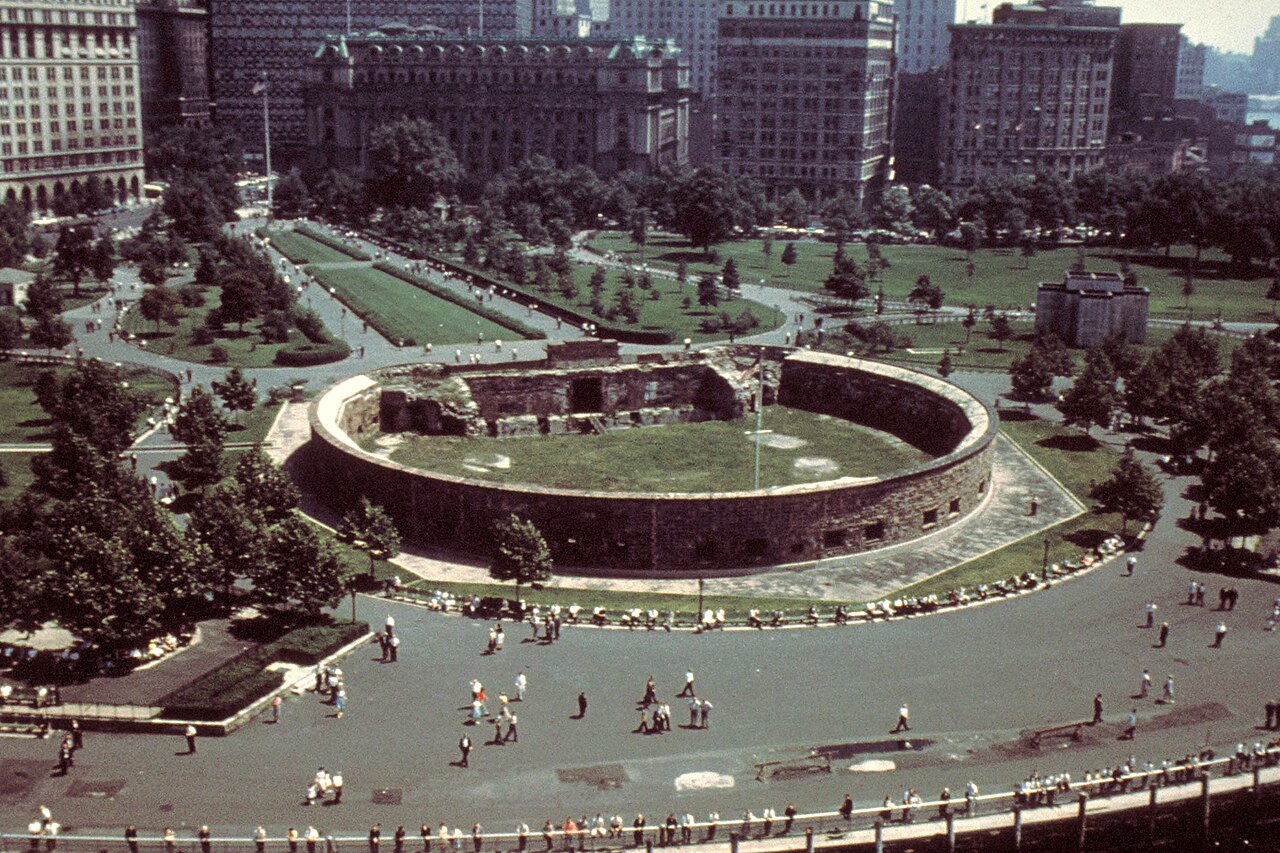
Castle Clinton, originally known as Fort Clinton and Castle Garden, is a restored bastioned sandstone fort located in Battery Park at the southern tip of Manhattan, New York City. Constructed between 1808 and 1811, it represents one of the earliest examples of American coastal fortifications designed to protect the vital harbor of New York. The fort's circular design and bastioned walls reflect early 19th-century military architectural principles aimed at maximizing defensive coverage and resistance to artillery fire. Initially named the West Battery or Southwest Battery, the fort was built on an artificial island off the Manhattan shoreline. It was designed by the prominent architect John McComb Jr. with engineering consultation from Jonathan Williams, who was the first superintendent of the United States Military Academy at West Point. The fort was garrisoned during the War of 1812 but never engaged in battle, serving primarily as a deterrent against British naval forces. Architectural features and military design Castle Clinton is a bastioned fortress characterized by its circular sandstone walls approximately 62 feet in diameter and 20 feet high. The walls are punctuated by casemates—vaulted chambers used for mounting cannons and storing ammunition. The fort's design incorporates earthen embankments behind the stone walls to absorb artillery impacts, a common defensive feature in the period's coastal forts. The fort's bastions project outward to allow defenders to fire along the face of the walls, eliminating blind spots. The original structure included a moat and drawbridge, enhancing its defensive capabilities. Over time, the moat was filled in as the surrounding land was expanded through landfill projects. Evolution of use: from military fort to cultural landmark Early military role and transition Though built for defense, Fort Clinton saw limited military action. After the War of 1812, its strategic importance diminished due to advances in military technology and changing defense priorities. By the 1820s, the fort was repurposed to serve the growing city's recreational needs. Castle garden: an entertainment venue In 1824, the City of New York transformed the fort into Castle Garden, a 6,000-seat theater and beer garden. It became a popular venue for concerts, exhibitions, and public gatherings. The fort's robust stone walls and unique circular shape provided an atmospheric setting for entertainment, making it a cultural hub in the city. The first american immigration station Castle Garden's most historically significant role began in 1855 when it was converted into the first American immigration station, predating the famous Ellis Island facility by several decades. Between 1855 and 1890, more than 7.5 million immigrants passed through its processing halls, marking it as a critical gateway for newcomers to the United States during a period of intense immigration. The immigration station was equipped with offices, dormitories, and medical inspection rooms. Its location at Manhattan's southern tip made it an ideal entry point for ships arriving from Europe. The station operated until 1890, when immigration processing was moved to Ellis Island, reflecting the need for a larger, more modern facility. New york aquarium and later uses Following its immigration role, Castle Clinton was repurposed as the first home of the New York Aquarium in 1896. The aquarium operated there until 1941, featuring marine exhibits and public educational programs. During this period, the fort underwent several expansions and renovations to accommodate its new functions. Preservation efforts and modern significance In the 1940s, the fort faced demolition proposals by New York City parks commissioner Robert Moses to make way for the Brooklyn–Battery Tunnel. This sparked a preservation campaign that led to the establishment of the Castle Clinton National Monument in 1946. The National Park Service assumed control in 1950, safeguarding the structure for future generations. After decades of neglect and several restoration attempts, a comprehensive renovation was completed in 1975, restoring the fort's historic appearance and structural integrity. Since 1986, Castle Clinton has served as a visitor center and the departure point for ferries to the Statue of Liberty National Monument and Ellis Island, continuing its legacy as a gateway to American history. Cultural and historical importance Castle Clinton stands as a rare surviving example of early 19th-century American coastal fortifications and embodies multiple layers of New York City's history—from military defense to entertainment, immigration, and conservation. Its designation as a New York City landmark, a U.S. national monument, and its listing on the National Register of Historic Places reflect its significance as a cultural and architectural treasure. The fort's adaptive reuse over two centuries illustrates the evolving needs of a growing metropolis and the importance of preserving historic sites for public education and heritage tourism. Visitors today can explore the fort's stone walls, casemates, and courtyard, gaining insight into its multifaceted past.

Modern (19th–20th c.)
Details