Dommeldange Castle
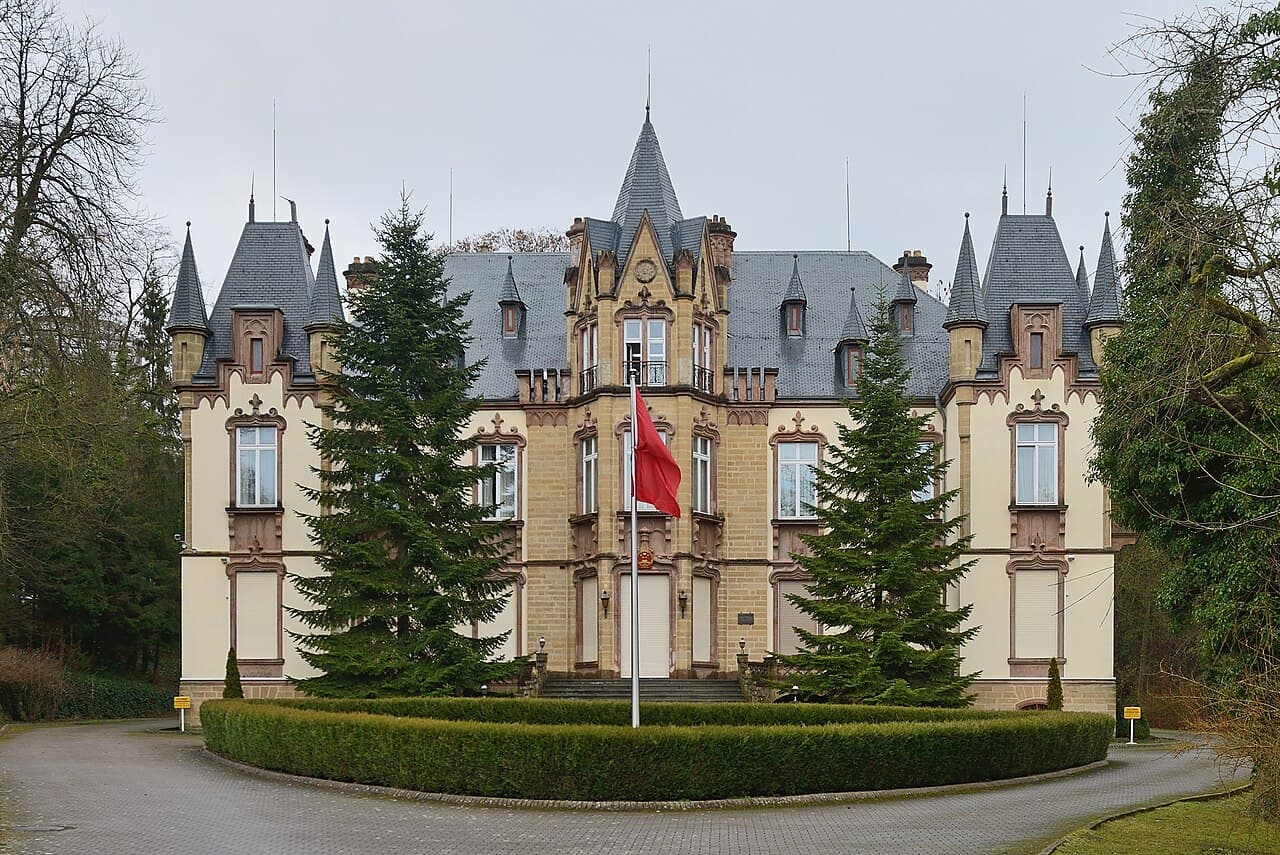
Dommeldange Castle is a distinguished Renaissance-era residence situated in Dommeldange, the northernmost quarter of Luxembourg City in the Grand Duchy of Luxembourg. Constructed in the 17th century, the castle originally served as a private home for prominent figures in the region's iron industry, reflecting the area's historical connection to metallurgy and forge operations. Today, it functions as the official residence and headquarters of the Embassy of the People's Republic of China, blending its rich heritage with contemporary diplomatic use.
Historical background and origins
The origins of Dommeldange Castle can be traced back to the early 1600s when Thomas Marchant, a notable forge operator, commissioned its construction. The castle was intended as a private residence, symbolizing both the wealth and social status associated with the local ironworks industry. This connection to the iron trade is a defining aspect of the castle's history, as Dommeldange was historically a hub for metallurgy and iron production, which played a critical role in Luxembourg's economic development during the Renaissance period.
In the 19th century, the castle remained closely tied to the iron industry. By 1870, it was inhabited by Charles Collart, another influential figure in the forge business. This continuity highlights the castle's longstanding association with industrial leadership in the region.
Architectural features and style
Dommeldange Castle exemplifies Renaissance architecture with its balanced proportions and classical elements. While the castle retains much of its original character, it reflects the modest scale typical of private residences built for industrial entrepreneurs rather than grand aristocratic palaces. The structure likely features symmetrical façades, rectangular windows, and a pitched roof, common in Renaissance residential architecture. Although detailed architectural records are limited, the castle's enduring form and style contribute to its historical charm and cultural significance.
Layout and construction materials
The castle's layout is characteristic of a residential manor of its time, with a central building flanked by ancillary wings or outbuildings that supported domestic and industrial functions. Constructed primarily of local stone and brick, the materials reflect the practical and durable choices typical for the period and region. The use of these materials would have provided both structural stability and a degree of fire resistance, important considerations for a residence connected to ironworking activities.
Transition to state ownership and diplomatic use
In 1973, Dommeldange Castle was acquired by the State of Luxembourg, marking a significant transition from private industrial residence to public and diplomatic function. This acquisition preserved the castle and ensured its maintenance as a heritage site. Subsequently, the castle was designated as the residence and headquarters for the Chinese Embassy in Luxembourg, a role it continues to fulfill today.
This diplomatic use has introduced modern amenities and security measures while respecting the castle's historical fabric. The integration of contemporary functions within a historic setting exemplifies adaptive reuse in heritage conservation, allowing the castle to remain a vibrant part of Luxembourg City's architectural landscape.
Cultural and heritage significance
Dommeldange Castle stands as a testament to Luxembourg's industrial heritage and Renaissance architectural traditions. Its preservation and current use highlight the importance of maintaining historical buildings as active participants in modern civic and international life. The castle's location in Dommeldange, a quarter known for its industrial past, further underscores the intertwined narratives of architecture, industry, and diplomacy in Luxembourg's history.
Public access and visitor information
As the castle currently functions as an embassy, public access is restricted. However, its exterior and surroundings can be appreciated by visitors interested in Luxembourg's architectural heritage and diplomatic quarters. The castle's presence enriches the cultural tapestry of Luxembourg City and offers a glimpse into the region's evolution from industrial hub to international center.
Frequently asked questions (FAQ)
- What is the historical significance of Dommeldange Castle?
- Dommeldange Castle is a significant historical site in Luxembourg City, reflecting the architectural styles and strategic importance of the region during the medieval period. Constructed in the 13th century, it served as a defensive fortress and residence for nobility, showcasing the power dynamics of its time.
- When was Dommeldange Castle built?
- Dommeldange Castle was built in the 13th century, around the year 1250. Its construction marked a period of fortification in Luxembourg as the region sought to protect itself from invasions and maintain control over trade routes.
- Can I visit Dommeldange Castle?
- Yes, visitors can explore Dommeldange Castle, but it's important to check the current visiting hours and any special events. Guided tours are often available, providing insight into the castle's rich history and architecture.
- What are the opening hours for Dommeldange Castle?
- Dommeldange Castle is typically open from Tuesday to Sunday, with specific hours that may vary by season. It is recommended to verify the exact opening times on the official website before planning your visit.
- Is it possible to access Dommeldange Castle by public transport?
- Yes, Dommeldange Castle is accessible via public transport in Luxembourg City. Visitors can take local buses that connect to the area, making it easy to reach the castle without the need for a car.
- What is the best time to visit Dommeldange Castle?
- The best time to visit Dommeldange Castle is during the spring and early autumn months when the weather is pleasant, and the surrounding gardens are in full bloom. Additionally, visiting during weekdays can help avoid larger crowds.
- Are there any nearby attractions to see while visiting Dommeldange Castle?
- While visiting Dommeldange Castle, you can also explore the picturesque surrounding village of Dommeldange and enjoy the natural beauty of the nearby nature parks. Additionally, the city center of Luxembourg City, with its historical sites and vibrant atmosphere, is just a short distance away.
- What are the ticket prices for visiting Dommeldange Castle?
- Ticket prices for visiting Dommeldange Castle vary depending on the type of tour and age of the visitor, with discounts often available for students and seniors. It is advisable to check the official website for the latest pricing information and any special offers.
Photo gallery

Information
Website
Visit websiteSources & official resources
Verify the information above using these authoritative references.
Loading map...
Visitor reviews
No reviews yet. Been here? Write the first review and help other travelers!
Write the first reviewVisited this castle? Share your experience
Your review helps other travelers and adds first-hand knowledge to our encyclopedia.