Fort Sumter
Fort Sumter is a prominent 19th-century bastioned fortress located at the entrance to Charleston Harbor, South Carolina. It was constructed on an artificial island beginning in 1829 as part of a nationwide effort to bolster coastal defenses following vulnerabilities exposed during the War of 1812. Designed to protect the strategic harbor and city of Charleston, Fort Sumter stands as a significant military site in American history.
Construction and design features
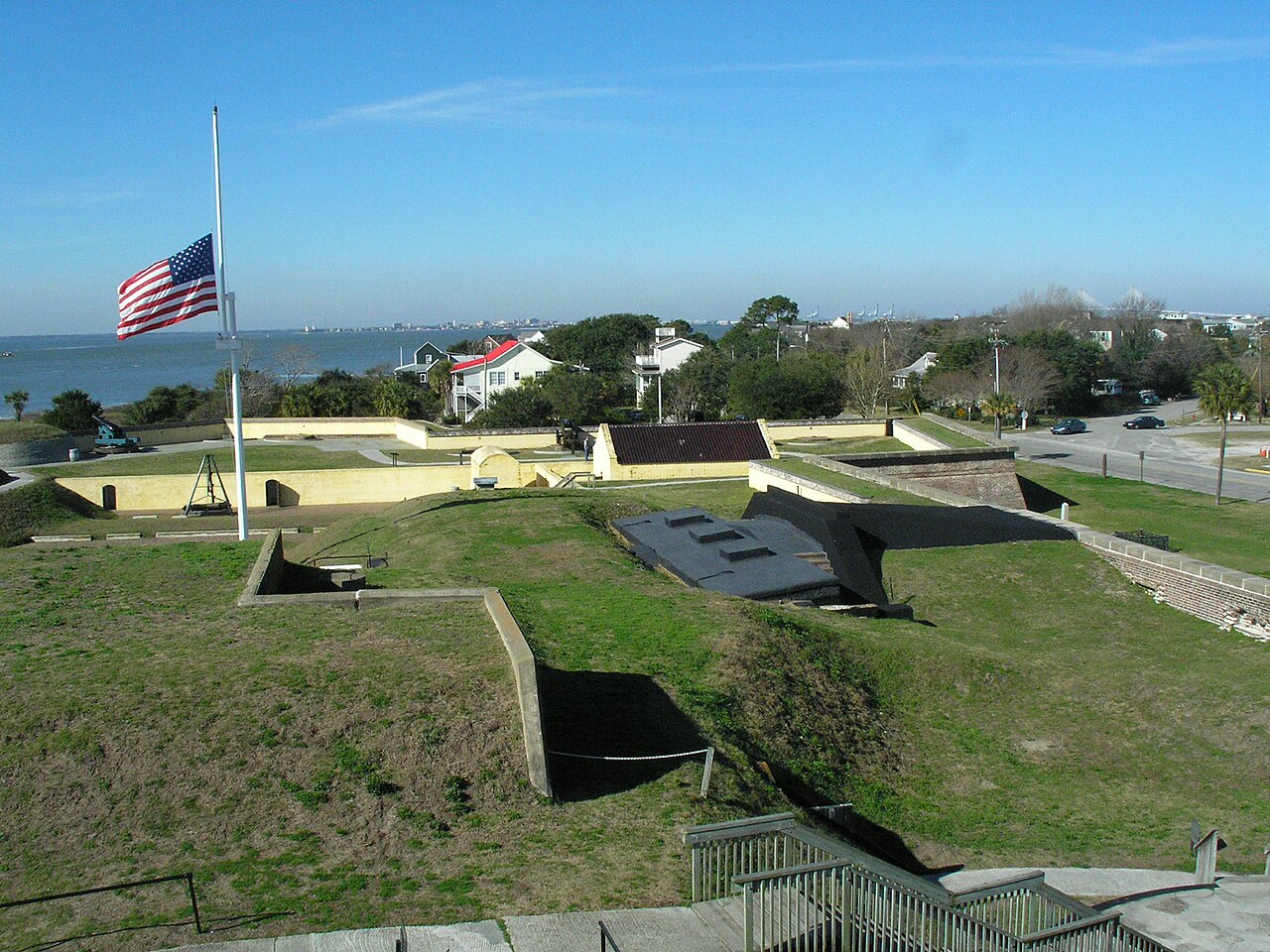
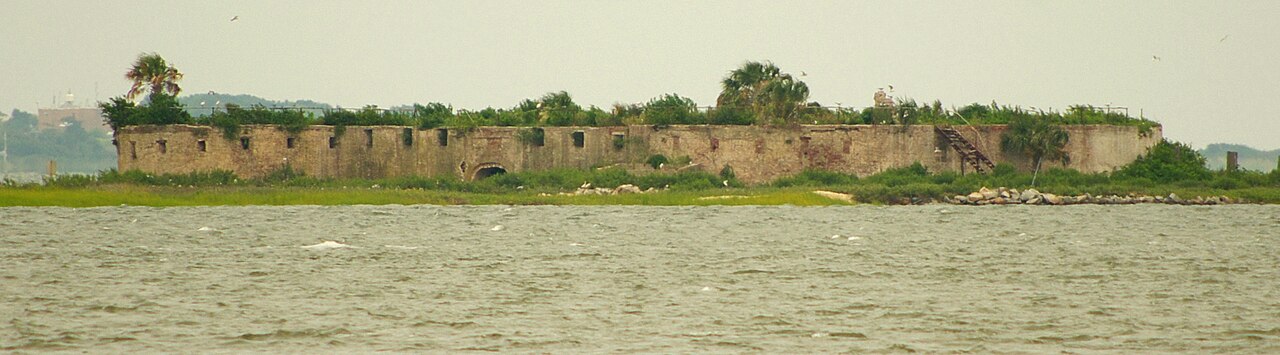
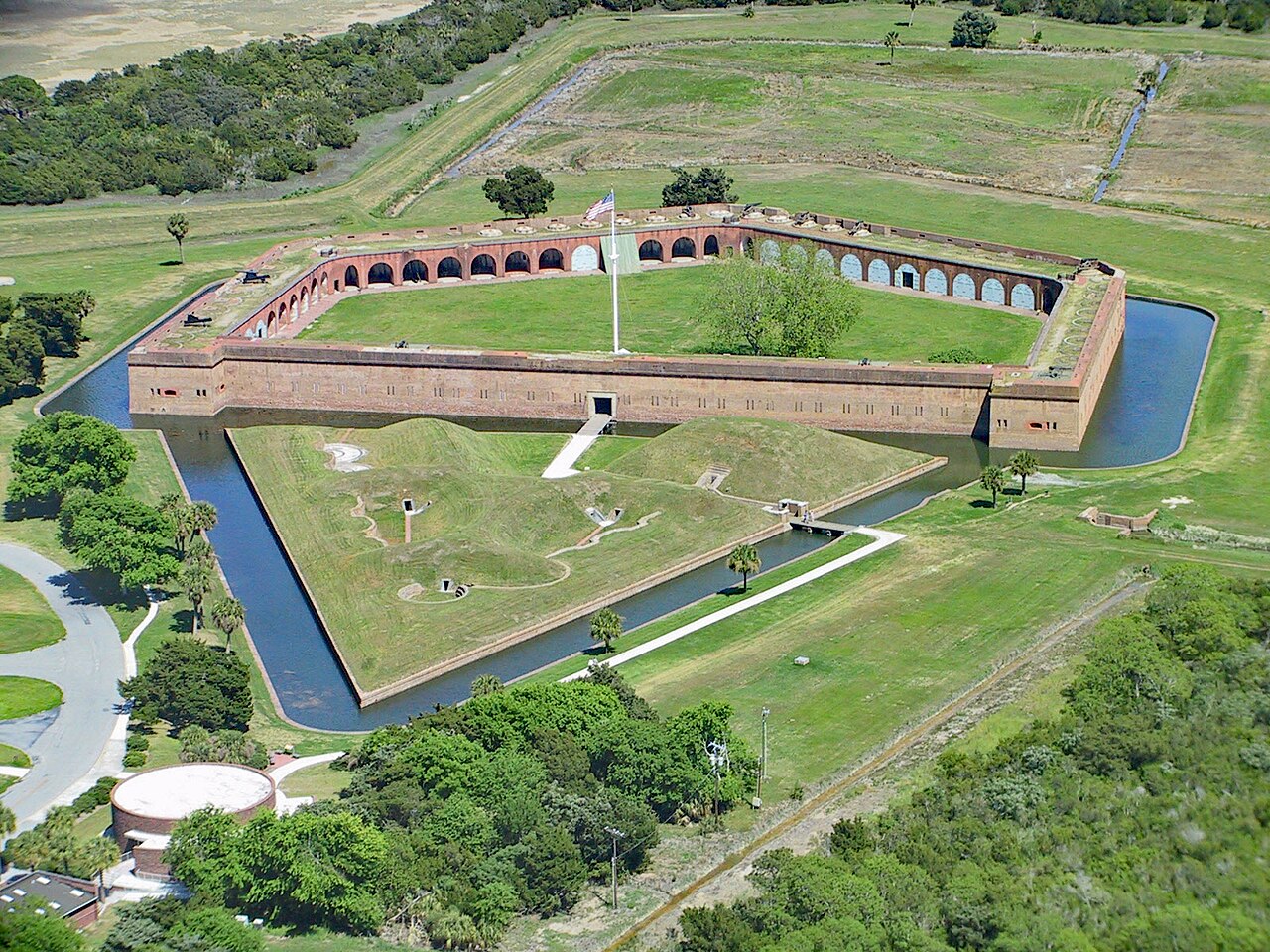
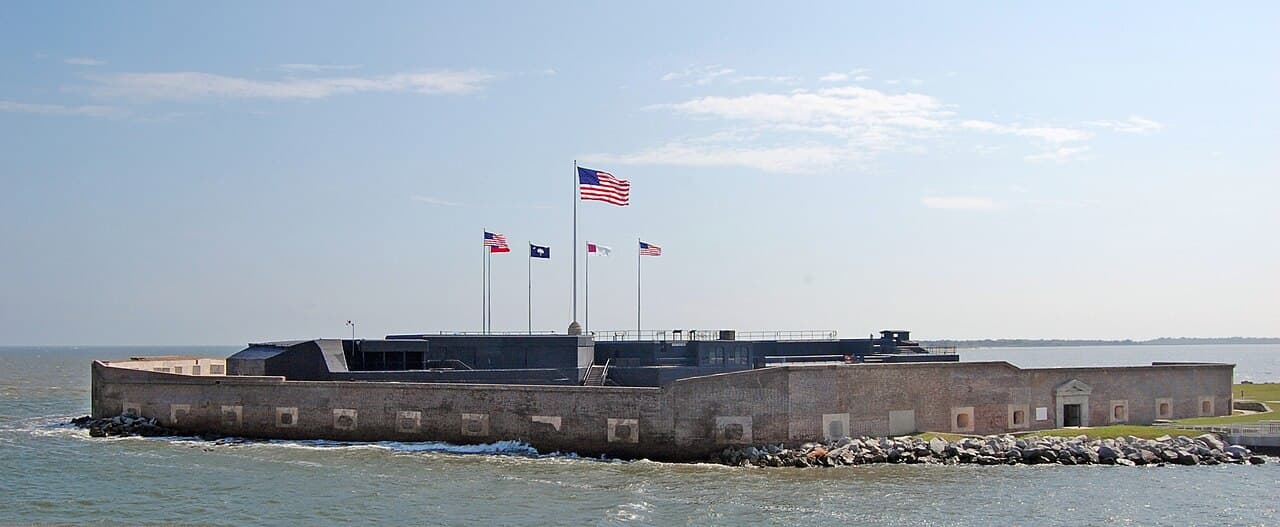
The fort was built using masonry walls arranged in a bastioned layout, typical of coastal fortifications designed to withstand naval bombardment. Its pentagonal shape included angled bastions at each corner, allowing defenders to cover all approaches with cannon fire. The walls were constructed from brick and stone, rising several feet above sea level to provide a commanding position over the harbor entrance.
Fort Sumter's design incorporated multiple tiers for mounting heavy artillery, with casemates and open gun positions. The fort's incomplete status at the outbreak of the American Civil War meant that many of its defensive features were not fully operational, but it still presented a formidable obstacle to any attacking force.
Historical significance and the civil war
Fort Sumter is best known as the site where the first shots of the American Civil War were fired on April 12, 1861. At that time, the fort was still under construction and manned by a small Union garrison. Confederate forces, seeking to take control of the fort and assert sovereignty over South Carolina following its secession, bombarded the fort in a 34-hour engagement. The Union troops eventually surrendered, marking the start of a conflict that would last four years.
The battle caused significant damage to the fort's walls and structures, and it remained under Confederate control for much of the war. The fort's incomplete construction and the intensity of the bombardment left it heavily damaged and unusable as a defensive position by war's end.
Post-war restoration and public access
After the Civil War, efforts were made to repair and complete Fort Sumter, but the original ambitious plans for the fort were never fully realized. The changing nature of military technology and coastal defense strategies rendered the fort obsolete as a frontline defense installation.
In the mid-20th century, Fort Sumter was designated a National Monument and has since been managed by the National Park Service. Today, it is open to the public as a historic site, offering visitors insight into its architectural features, military history, and its pivotal role in American history. The site includes preserved ruins, interpretive exhibits, and guided tours that explain the fort's construction, its role in the Civil War, and its legacy.
Architectural and military importance
Fort Sumter exemplifies the bastioned fortress design adapted for coastal defense in the early 19th century United States. Its construction reflects the period's military engineering principles, emphasizing overlapping fields of fire and protection against naval artillery. Despite its incomplete status during the Civil War, the fort's strategic location and robust design made it a key military objective.
The fort's history also illustrates the evolution of military technology and fortification strategies, as advances in artillery and naval power soon outpaced masonry forts like Fort Sumter. Its preservation allows for study and appreciation of this transitional period in military architecture.
Visiting fort sumter today
Visitors to Fort Sumter can reach the site by ferry from Charleston, which provides scenic views of the harbor and the fort itself. The National Park Service operates guided tours that detail the fort's history, architecture, and the events of the Civil War battle. The site includes a museum with artifacts and exhibits that contextualize the fort's role in American history.
Fort Sumter remains a powerful symbol of the nation's division and the conflict that shaped the United States. Its preserved structures and interpretive resources offer a tangible connection to the past for historians, tourists, and educators alike.
Frequently asked questions (FAQ)
- How do I get to Fort Sumter?
- Fort Sumter is accessible by ferry services that depart from Liberty Square and Patriot's Point in Charleston. It’s advisable to book your tickets in advance, especially during peak tourist seasons, to ensure a spot on the ferry.
- What is the historical significance of Fort Sumter?
- Fort Sumter is famously known as the site where the first shots of the American Civil War were fired in 1861. It played a crucial role in the conflict and is now a symbol of the struggle for Union and freedom.
- When was Fort Sumter built?
- Construction of Fort Sumter began in 1829 and was completed in 1861. The fort was designed to protect Charleston Harbor and is a prime example of coastal fortification architecture from that era.
- Can I visit Fort Sumter year-round?
- Yes, Fort Sumter is open to visitors year-round, but hours may vary seasonally. It is best to check the official website for the most current visiting hours before planning your trip.
- Why is Fort Sumter a popular tourist attraction?
- Fort Sumter attracts visitors due to its rich history and its role in the Civil War. The stunning views of Charleston Harbor and the informative tours provided by park rangers make it an engaging experience for history enthusiasts and casual visitors alike.
- Is it possible to access Fort Sumter with mobility challenges?
- Yes, Fort Sumter is accessible to visitors with mobility challenges. The ferry services offer assistance, and once on the island, there are paths designed to accommodate wheelchairs and other mobility aids.
- What are the ticket prices for visiting Fort Sumter?
- Tickets for the ferry to Fort Sumter typically range from $20 to $30 for adults, with discounts available for children and seniors. Prices may vary based on season and any special events, so it’s best to check ahead for the latest information.
- What is the best time to visit Fort Sumter?
- The best time to visit Fort Sumter is during the spring and fall when the weather is mild and comfortable for outdoor activities. Summer can be quite hot and humid, while winter months are generally cooler but may also attract fewer crowds.
- Are there any nearby attractions to Fort Sumter?
- Yes, there are several nearby attractions including the historic Charleston City Market, the Battery, and the South Carolina Aquarium. Combining a visit to Fort Sumter with these nearby sites can enhance your overall experience of Charleston's rich history and culture.
Photo gallery

Information
Loading map...
Visitor reviews
No reviews yet. Been here? Write the first review and help other travelers!
Write the first reviewVisited this castle? Share your experience
Your review helps other travelers and adds first-hand knowledge to our encyclopedia.