Fort St. Joseph (Ontario)
Fort St. Joseph is a historic British military outpost located on the southernmost point of St. Joseph Island in Ontario, Canada, overlooking Lake Huron. Established in the late 18th century, the fort played a crucial role in British defense and regional control during the early 19th century, particularly in the War of 1812. Its strategic location on the Great Lakes made it a vital point for military operations, trade, and diplomacy with Indigenous peoples.
Historical significance and military role
Constructed primarily in the 1790s, Fort St. Joseph served as the westernmost British outpost in North America during its period of active use. The fort was a key staging ground for British and Indigenous forces during the War of 1812, notably launching the initial attack on the American-held Fort Mackinac in 1812. This successful operation demonstrated the fort's strategic importance in controlling access to the upper Great Lakes region.
Beyond its military function, the fort was a significant hub for trade and diplomacy. It hosted an Indian council house where British officials met with Indigenous leaders to negotiate alliances and manage trade relations. The fort's location along the St. Marys River facilitated commerce and communication between various communities in the region.
Architectural features and layout
Fort St. Joseph was designed as a bastioned fortress, featuring defensive structures typical of late 18th-century military architecture. The fort's perimeter was enclosed by a wooden palisade providing a defensive barrier against potential attackers. Within the walls stood several key buildings including a blockhouse, which served as a fortified barracks and defensive strongpoint, a powder magazine for storing gunpowder safely, and a bakery building essential for provisioning the garrison.
The presence of a storehouse within the fort underscored its role as a supply depot, while the Indian council house highlighted its diplomatic function. The fort's layout was compact but functional, designed to support both military defense and the daily needs of its occupants.
Post-war history and preservation
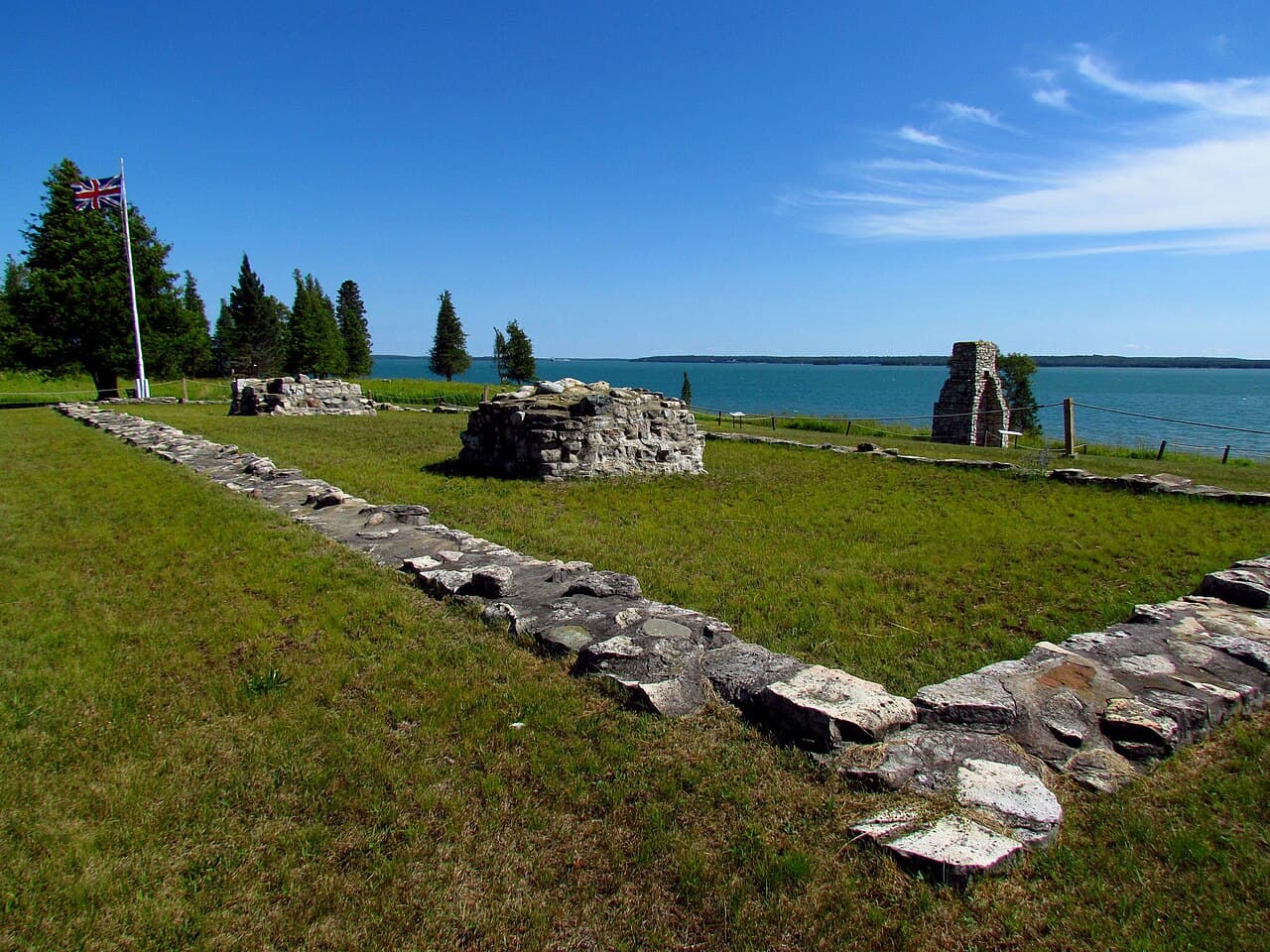
Following the War of 1812, Fort St. Joseph was gradually abandoned as military priorities shifted and the British presence in the region diminished. Over time, the fort fell into ruin, with many original structures deteriorating or disappearing. Despite this, the site retained historical importance due to its role in early Canadian military history and Indigenous relations.
Today, Fort St. Joseph is managed by Parks Canada and designated as a National Historic Site of Canada. The site encompasses approximately 325 hectares along the St. Marys River, preserving archaeological remains and reconstructed elements that provide visitors with insight into its past. Interpretive programs and guided tours help illustrate the fort's significance in the context of the War of 1812 and its broader historical setting.
Visiting fort st. joseph
Visitors to Fort St. Joseph can explore the remains of the fort's defensive structures and buildings, including reconstructed sections that offer a glimpse into 18th and early 19th-century military life. The site features interpretive signage and exhibits detailing the fort's construction, military actions, and interactions with Indigenous peoples.
The surrounding natural environment along the St. Marys River adds to the experience, providing scenic views and opportunities for outdoor activities such as hiking and birdwatching. The site is typically open seasonally, with specific hours and guided tours available through Parks Canada.
Architectural style and construction period
While the fort's primary construction dates to the late 18th century, its architectural style reflects military design principles of the post-medieval period, emphasizing functional defense features such as bastions and palisades rather than ornate stylistic elements. The fort's classification as a bastioned fortress highlights its strategic design to withstand attacks and control key waterways.
Frequently asked questions (FAQ)
- When was Fort St. Joseph built and by whom?
- Fort St. Joseph was constructed in the 1790s by the British as a military outpost to secure their interests in the Great Lakes region.
- What role did Fort St. Joseph play in the War of 1812?
- The fort served as the staging ground for the British-led attack on Fort Mackinac in 1812, marking a key early victory in the War of 1812.
- Can visitors tour Fort St. Joseph today?
- Yes, Fort St. Joseph is open to the public as a National Historic Site managed by Parks Canada, featuring reconstructed buildings and interpretive programs.
- What architectural features are notable at Fort St. Joseph?
- Notable features include the bastioned palisade walls, blockhouse, powder magazine, bakery, and Indian council house, reflecting its military and diplomatic functions.
- Is Fort St. Joseph accessible year-round?
- The site is typically open seasonally, with visiting hours and guided tours available during the warmer months through Parks Canada.
Photo gallery

Information
Loading map...
Visitor reviews
No reviews yet. Been here? Write the first review and help other travelers!
Write the first reviewVisited this castle? Share your experience
Your review helps other travelers and adds first-hand knowledge to our encyclopedia.