Fort Mackinac
Fort Mackinac is a significant historic military site located on Mackinac Island in Michigan, United States. Originally constructed by the British during the American Revolutionary War in the late 18th century, this bastioned fortress was strategically positioned to control the Straits of Mackinac, a crucial waterway connecting Lake Michigan and Lake Huron. The fort's location allowed its occupants to dominate the fur trade routes and maintain military influence over the Great Lakes region.
Construction and british occupation
The British began construction of Fort Mackinac in 1780, recognizing the strategic importance of Mackinac Island in controlling access to the upper Great Lakes. The fort's design incorporated traditional bastioned fortification elements, including angled walls and defensive bastions that provided overlapping fields of fire to repel attackers. The fort was built primarily of wood and earthworks, typical of frontier forts of the period, with later additions of stone and brick for reinforcement.
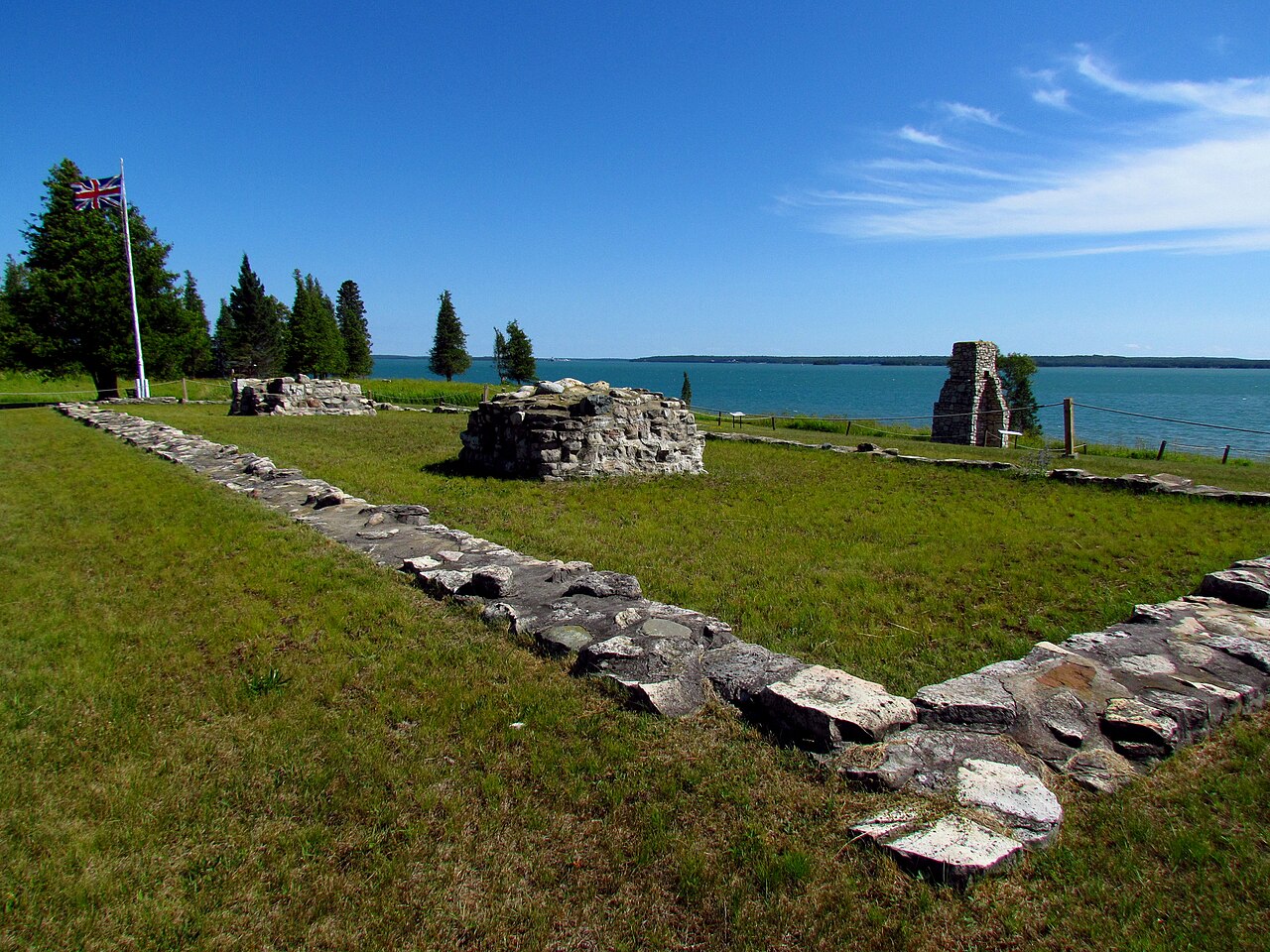
Despite the end of the American Revolutionary War in 1783, the British maintained control of Fort Mackinac until 1796, as stipulated by the Treaty of Paris and subsequent agreements. This delay in transfer of control was due to the fort's strategic value and the slow implementation of treaty terms. During this period, the fort served as a key outpost for British forces and their Native American allies, facilitating trade and military operations in the region.
Role in the war of 1812
Fort Mackinac played a pivotal role during the War of 1812 between the United States and Britain. In July 1812, British forces launched a surprise attack and captured the fort from the Americans without bloodshed, marking one of the first military actions of the war. The fort's capture allowed the British to control the strategic straits and maintain dominance over the upper Great Lakes for much of the conflict.
The fort was the site of two significant battles during the war, including the initial British capture and later American attempts to retake it. Its fortifications and location made it a valuable military asset, and control over Fort Mackinac shifted the balance of power in the Great Lakes theater.
American control and 19th-century use
Following the end of the War of 1812, Fort Mackinac was returned to American control under the Treaty of Ghent in 1815. The United States Army maintained the fort as an active military outpost throughout much of the 19th century. During this time, the fort was expanded and modernized with additional defensive works, barracks, and support buildings to accommodate evolving military needs.
Throughout the 1800s, Fort Mackinac served as a key military installation for the United States, overseeing the Great Lakes region and providing a base for troops involved in regional security and Native American relations. The fort's presence helped secure American interests in the area during a period of westward expansion and increasing settlement.
Architectural features and layout
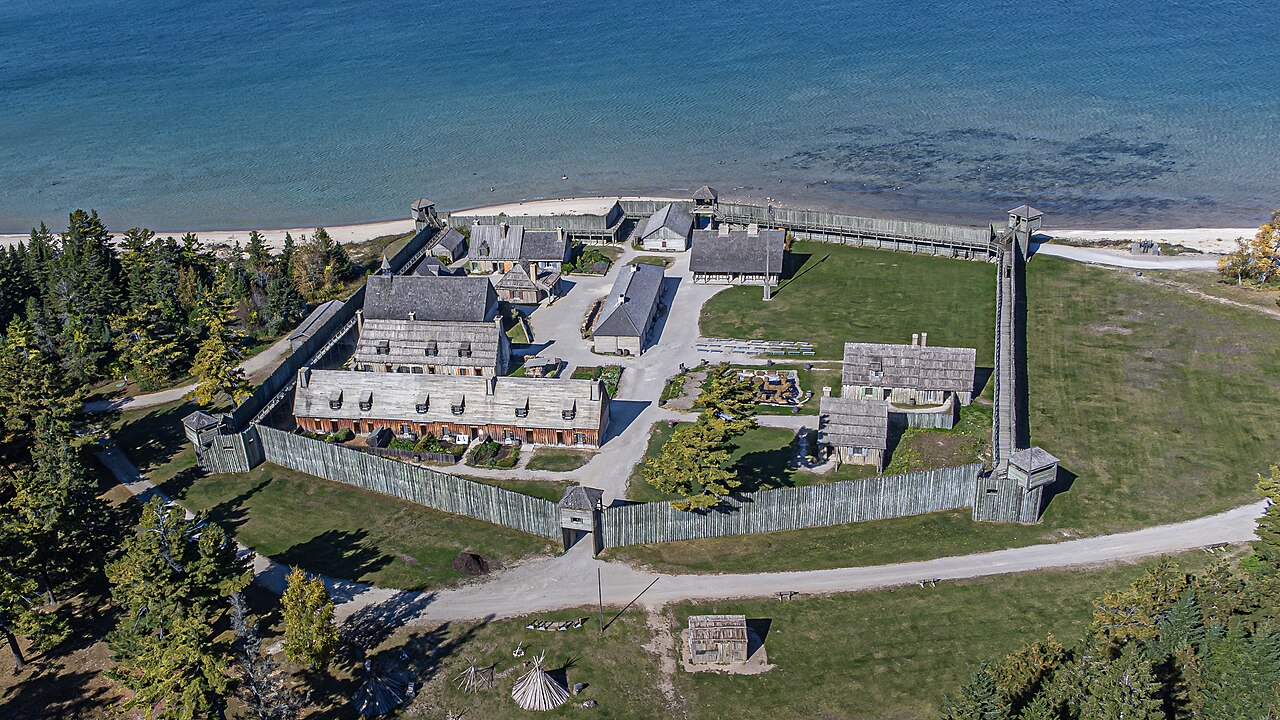
The fort's layout reflects its bastioned fortress design, featuring a roughly rectangular plan with four bastions at the corners. These bastions allowed defenders to cover all approaches with cannon and musket fire. The walls were initially constructed of timber palisades and earthworks, later supplemented with stone and brick structures as resources permitted.
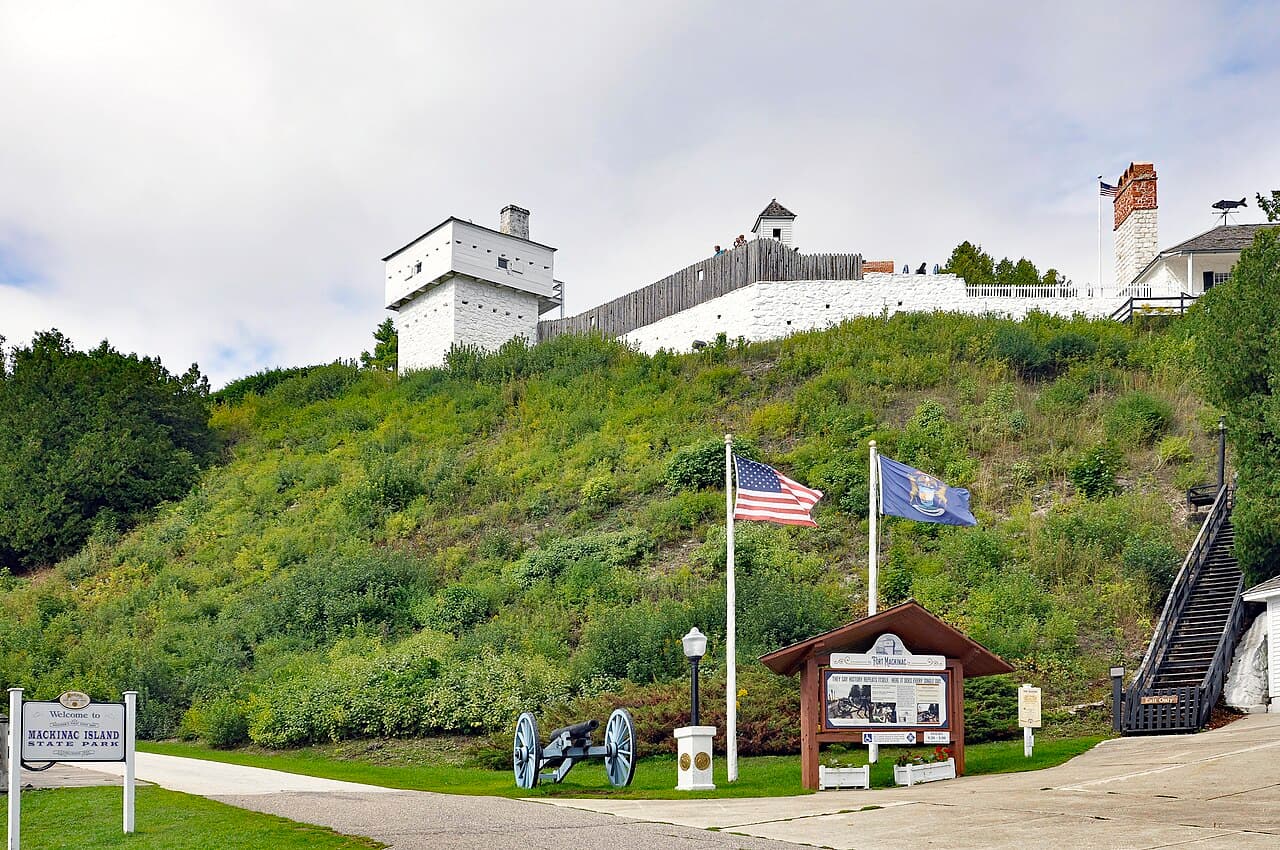
Key structures within Fort Mackinac included the officers' quarters, barracks, magazines for ammunition storage, and artillery batteries. The fort also contained a parade ground and various support buildings necessary for daily military operations. The site’s natural elevation on Mackinac Island provided commanding views of the surrounding waterways, enhancing its defensive capabilities.
Transition to a historic site and museum
Fort Mackinac was officially closed as a military post in 1895. Recognizing its historical and cultural significance, the site was preserved and incorporated into Mackinac Island State Park. The fort has been adapted as a museum that interprets its military history, architecture, and role in regional conflicts.
Today, visitors to Fort Mackinac can explore well-preserved fortifications, historic buildings, and exhibits detailing the fort’s British and American military heritage. The museum offers guided tours, reenactments, and educational programs that highlight the fort’s importance in the history of the Great Lakes and early American frontier defense.
Cultural and heritage significance
Fort Mackinac stands as a prominent symbol of the complex military and cultural history of the Great Lakes region. Its role in the American Revolutionary War and the War of 1812 underscores the strategic importance of the upper Great Lakes in early American and British military strategy. The fort's preservation allows for ongoing study and public education about frontier military architecture and the geopolitical dynamics of the 18th and 19th centuries.
The site also reflects the interactions between European powers and Native American tribes, as control over the fort often influenced alliances and trade in the region. Fort Mackinac remains a major tourist attraction, contributing to the heritage tourism economy of Mackinac Island and Michigan.
Frequently asked questions (FAQ)
- What is the historical significance of Fort Mackinac?
- Fort Mackinac played a crucial role in the War of 1812 and served as a military outpost for over a century. Its strategic location helped control the Great Lakes, and today it stands as a testament to the military history of the United States.
- When was Fort Mackinac built?
- Construction of Fort Mackinac began in 1780, making it one of the oldest military installations in the U.S. The fort was completed in 1781 and has since undergone various renovations and restorations to preserve its historical integrity.
- Is it possible to visit Fort Mackinac year-round?
- Fort Mackinac is primarily open to visitors from mid-May through mid-October, which is the best time to experience its full range of attractions and events. While the grounds may be accessible in winter, many facilities and guided tours are not available during the off-season.
- Can I explore the architecture of Fort Mackinac on my own?
- Yes, visitors can explore the fort's architecture through self-guided tours. The well-preserved buildings and fortifications offer a glimpse into 18th-century military design, and informative signage is available to enhance your experience.
- What are the opening hours for Fort Mackinac?
- During the peak season from mid-May to mid-October, Fort Mackinac typically opens daily from 9:00 AM to 5:00 PM. It’s recommended to check the official website for specific hours during special events or holidays.
- How do I get tickets for Fort Mackinac?
- Tickets for Fort Mackinac can be purchased at the entrance or online through the official website. Admission fees support the preservation of the fort and its historical programs, and discounts may be available for families and groups.
- What is the best time to visit Fort Mackinac?
- The best time to visit Fort Mackinac is during the summer months when the weather is warm and all attractions are fully operational. Special reenactments and events usually take place during this time, providing a lively and engaging experience for visitors.
- Are there any nearby attractions to Fort Mackinac?
- Yes, Fort Mackinac is located near several other attractions on Mackinac Island, including the Mackinac Island State Park and the famous Grand Hotel. Visitors can enjoy a variety of outdoor activities, historical sites, and scenic views in close proximity to the fort.
- Is Fort Mackinac accessible for individuals with disabilities?
- Fort Mackinac strives to be accessible to all visitors, with paths and facilities designed to accommodate individuals with disabilities. However, due to the historic nature of the site, some areas may be challenging to navigate, so it’s advisable to check in advance for specific accessibility options.
Photo gallery

Information
Loading map...
Visitor reviews
No reviews yet. Been here? Write the first review and help other travelers!
Write the first reviewVisited this castle? Share your experience
Your review helps other travelers and adds first-hand knowledge to our encyclopedia.