Fort Michilimackinac
Fort Michilimackinac is a significant 18th-century bastioned fortress originally constructed by the French around 1715 at the strategic Straits of Mackinac, where Lake Huron and Lake Michigan meet in the present-day state of Michigan, United States. This fort played a crucial role in the colonial struggle for control over the Great Lakes region during the post-Renaissance period, serving first as a French military and trading post before being captured and used by the British until its abandonment in 1783.
Historical background and strategic importance
The site of Fort Michilimackinac was chosen for its commanding position at the northern tip of Michigan's lower peninsula, overseeing the vital waterway connecting two of the Great Lakes. This location made it a key point for controlling trade routes and military movements in the region. The fort was initially established by the French as part of their network of fur trading posts and military installations designed to secure their interests in North America against British expansion.
Following the Seven Years' War (also known as the French and Indian War), the British took control of the fort in 1761. Under British rule, Fort Michilimackinac continued to function as a trading post and military garrison, maintaining British influence in the area until the end of the American Revolutionary War.
Architectural features and fortifications
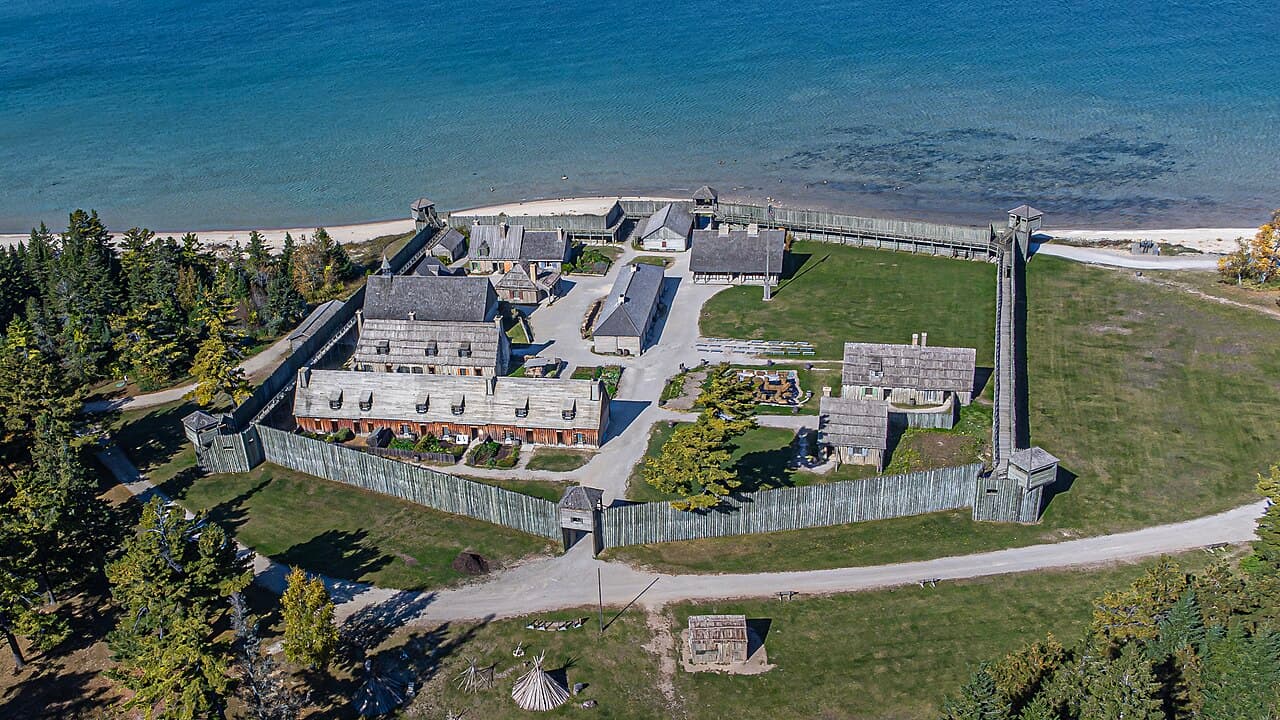
Fort Michilimackinac exemplifies the bastioned fortress style common in the 18th century, characterized by angular bastions projecting from the main walls to provide overlapping fields of fire against attackers. The fort's defenses included a wooden palisade reinforced with earthworks and bastions at key points to maximize protection.
The fort complex originally consisted of several wooden buildings including barracks, officers' quarters, a powder magazine, storehouses, and trading facilities, all enclosed within the defensive walls. The palisades were constructed from timber, a readily available resource in the region, and the design reflected European military engineering adapted to the frontier conditions of North America.
The fort's layout was designed to facilitate both defense and trade, with a central courtyard used for drills and gatherings, surrounded by the various functional buildings. The location also included a dock area along the shoreline to accommodate supply and trade vessels navigating the Great Lakes.
Role in colonial conflicts and Native American relations
Throughout its operational life, Fort Michilimackinac was a focal point in the complex interactions between European powers and Native American tribes. The French and later the British relied heavily on alliances with local indigenous groups to maintain control of the region and to support their fur trading operations.
The fort was involved in several conflicts, including the Siege of Fort Michilimackinac in 1763 during Pontiac's Rebellion, when Native American forces successfully captured the fort from the British through a surprise attack. This event highlighted the fort's strategic vulnerability despite its fortifications and the volatile nature of colonial frontier politics.
Abandonment and preservation as a historic site
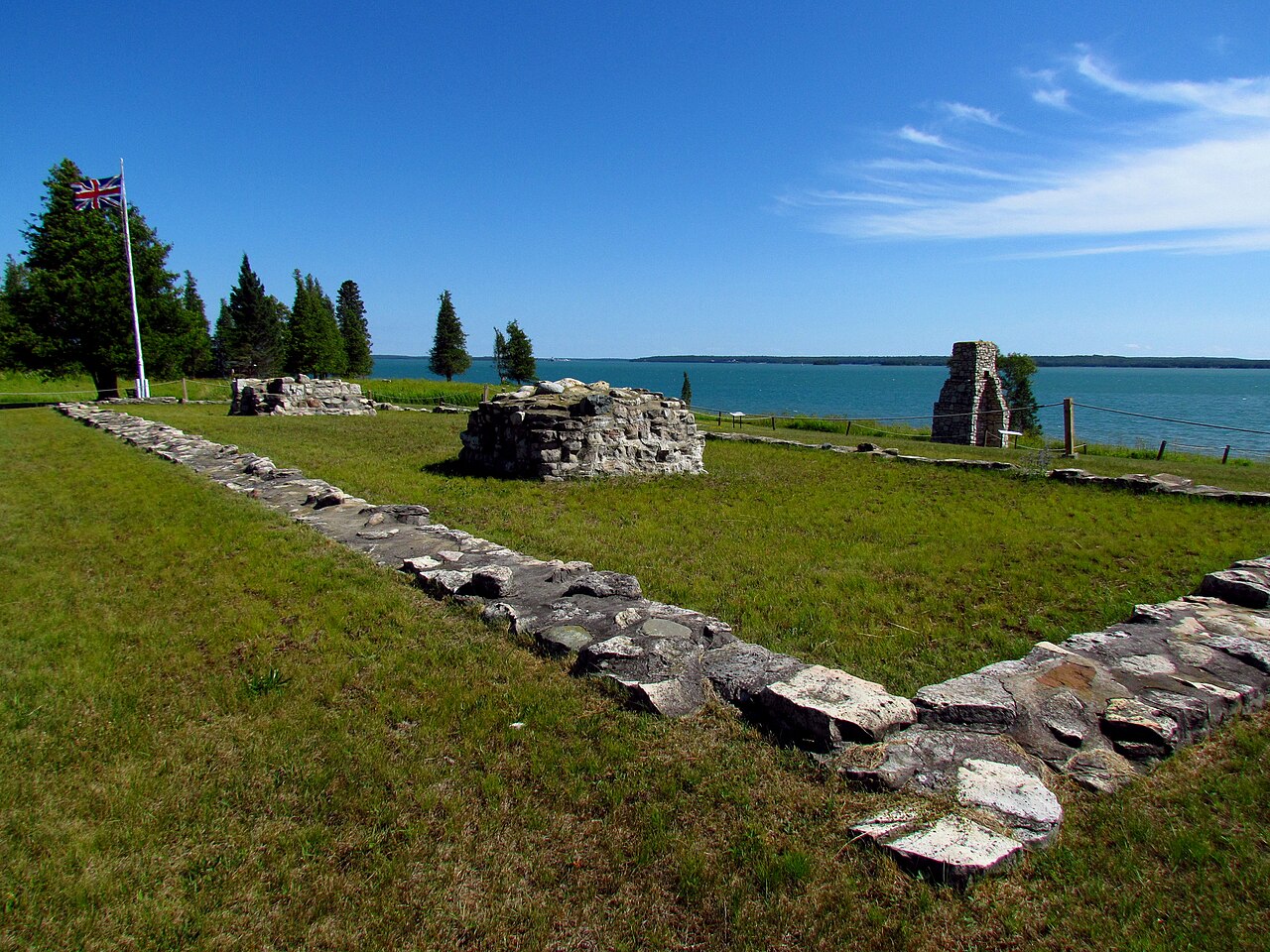
After the American Revolutionary War, the fort was deemed less strategically important and was abandoned in 1783 in favor of Fort Mackinac, located on nearby Mackinac Island, which offered a more defensible position. The original site fell into ruin over time, but its historical significance was recognized in the 20th century.
Today, Fort Michilimackinac is preserved as part of the Colonial Michilimackinac Historic State Park. The site features extensive reconstructions of the original wooden palisades and buildings, allowing visitors to experience an authentic representation of an 18th-century colonial fort. It serves as an open-air museum showcasing the military, trading, and cultural history of the Great Lakes region during the colonial era.
The village of Mackinaw City has grown around the fort's location, and the site is designated as a National Historic Landmark, attracting historians, tourists, and those interested in early American and colonial history.
Visiting Fort Michilimackinac today
Visitors to Fort Michilimackinac can explore the reconstructed fortifications and buildings, watch historical reenactments, and learn about the daily life of soldiers and traders in the 18th century. The site offers educational programs that highlight the interactions between European settlers and Native American tribes, as well as the military history of the region.
The fort's location on the shores of the Straits of Mackinac provides scenic views and a tangible connection to the waterways that shaped its history. The state park surrounding the fort includes trails and interpretive displays that enhance the visitor experience.
Frequently asked questions (FAQ)
- When was Fort Michilimackinac originally built?
- Fort Michilimackinac was originally constructed around 1715 by the French as a military and trading post.
- What architectural style characterizes Fort Michilimackinac?
- The fort features bastioned fortress architecture typical of the 18th century, with wooden palisades and earthworks.
- Can visitors explore the fort today?
- Yes, Fort Michilimackinac is preserved as a historic state park with reconstructed buildings and open-air museum exhibits.
- Why was Fort Michilimackinac abandoned?
- The fort was abandoned in 1783 after the American Revolutionary War in favor of the more defensible Fort Mackinac on Mackinac Island.
- Is Fort Michilimackinac a National Historic Landmark?
- Yes, it is designated as a National Historic Landmark due to its historical and cultural significance in the Great Lakes region.
Photo gallery

Information
Opening hours
9:00-17:00, daily
Ticket prices
Varies seasonally
Current owner
State museum
Loading map...
Visitor reviews
No reviews yet. Been here? Write the first review and help other travelers!
Write the first reviewVisited this castle? Share your experience
Your review helps other travelers and adds first-hand knowledge to our encyclopedia.