Fort St. Jago
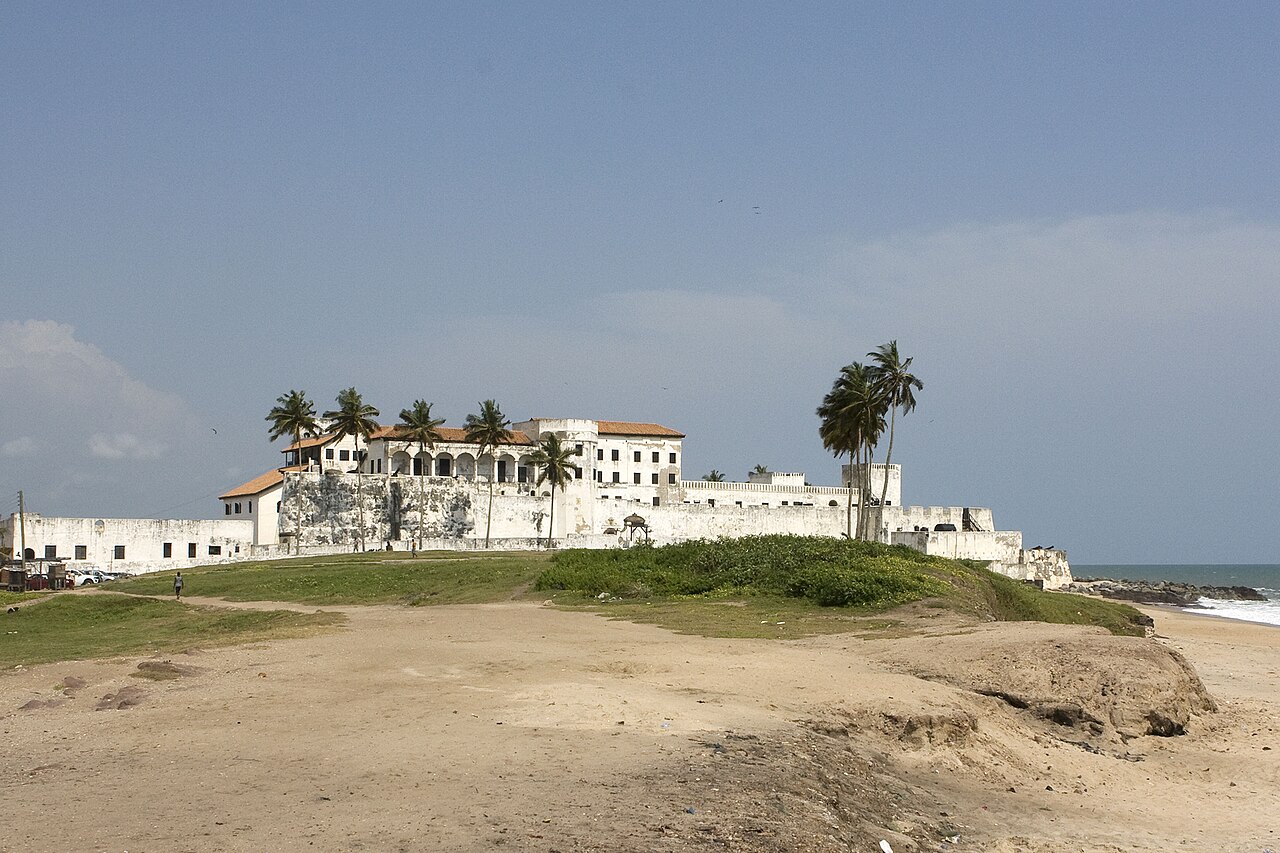
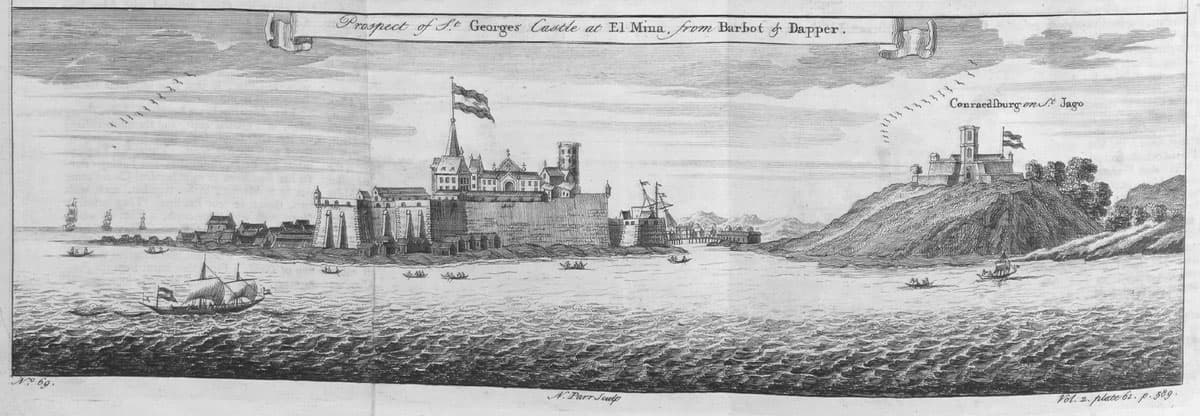
Fort St. Jago, also known as Coenraadsburg or Fort São Tiago da Mina, is a historic bastioned fortress located on a prominent hill directly opposite Elmina Castle in the town of Elmina, within Ghana's Central Region. This fortification played a significant role in the colonial and military history of the region, particularly during the era of European competition for control of the Gold Coast and the transatlantic slave trade.
The origins and early history of Fort St. Jago
The site originally hosted a Portuguese chapel dedicated to Saint Jago (Saint James), constructed during the early period of Portuguese presence on the Gold Coast. This chapel was the first European structure on the hill, signifying the religious and strategic intentions of the Portuguese in the area.
In 1637, the Dutch West India Company launched a military campaign to seize control of Elmina from the Portuguese. Utilizing the hill's elevated position, the Dutch positioned artillery to bombard Elmina Castle, leading to the Portuguese surrender. Recognizing the tactical advantage of the hill, the Dutch constructed a fortified earthwork the following year to prevent future enemies from using the same strategy against them.
Construction of the permanent fort and architectural features
During the 1660s, under the direction of the Elmina Castle's Director General J. Valckenburgh, the Dutch replaced the temporary earthworks with a permanent stone fortification made from local sandstone. This new fort was named Coenraadsburg.
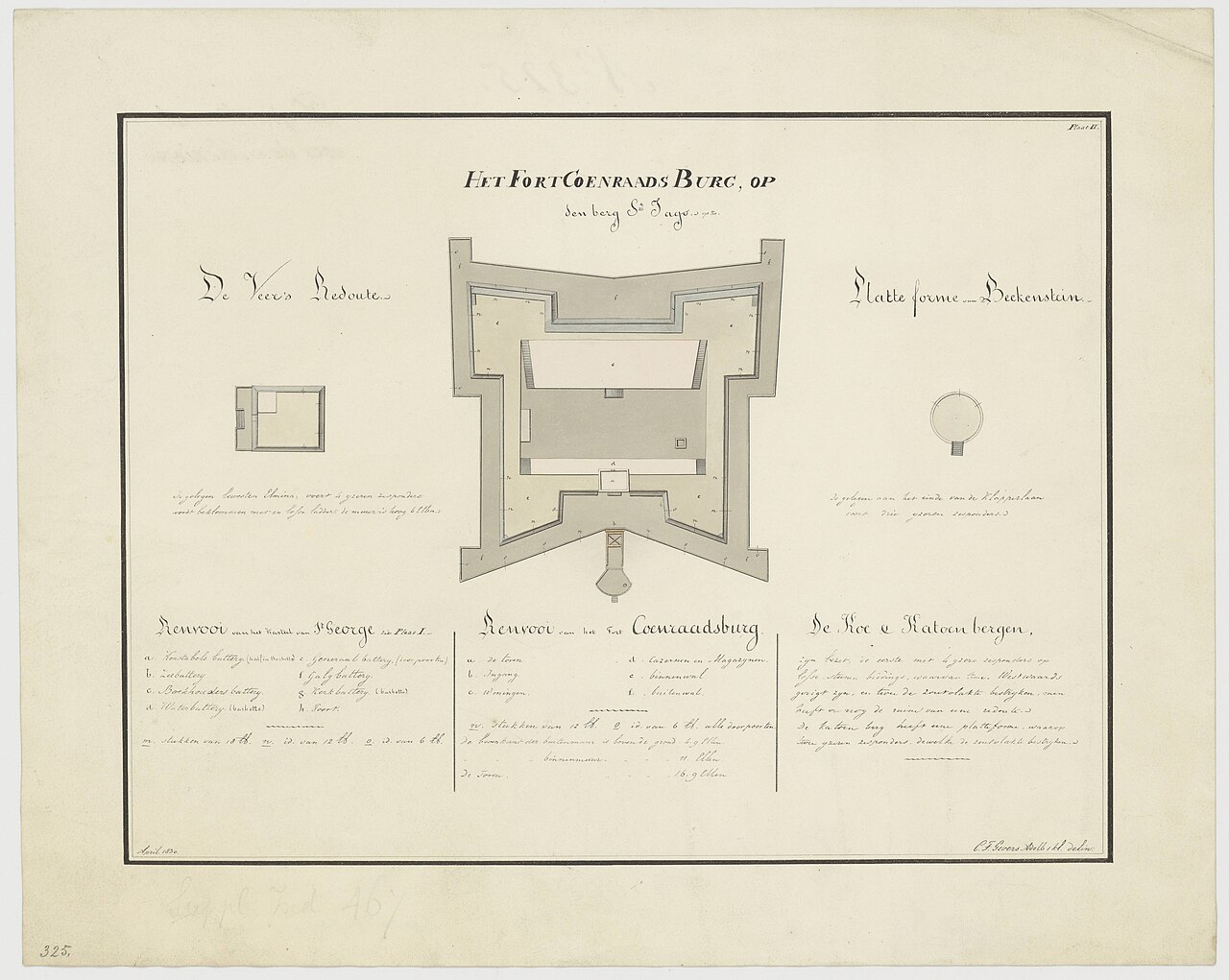
The fort was designed as a bastioned fortress, featuring two strong landward bastions to defend against attacks from the interior and two smaller seaward bastions facing the coast. The bastions were connected by thick curtain walls, creating a defensible perimeter around a central courtyard.
Inside the fort, various buildings surrounded the courtyard, accommodating a garrison of approximately 69 soldiers. These buildings included barracks, storage facilities, and command quarters, all constructed to support the fort's military function.
In 1671, the fortifications were further strengthened with the addition of outer walls, enhancing the defensive capabilities of the fort against both land and sea threats.
British modifications and varied uses in the 19th and 20th centuries
Following the transfer of control from the Dutch to the British in 1872, Fort St. Jago underwent several modifications in 1880 to adapt it for civilian uses. The British altered parts of the structure to accommodate functions beyond military defense.
Throughout the 19th and 20th centuries, the fort served multiple roles including a prison, a hospital, and a rest house. These changes reflect the evolving political and social landscape of the Gold Coast under British colonial administration.
Architectural significance and heritage status
Fort St. Jago is an excellent example of 17th-century bastioned fortress architecture adapted to the West African coastal environment. Its design demonstrates the military engineering principles of the time, particularly the use of bastions to cover all approaches with defensive fire.
The fort's location on a hill provided a strategic vantage point overlooking the coast and the adjacent Elmina Castle, enhancing the overall defensive network of the area.
Due to its historical importance, especially in relation to the Atlantic slave trade and European colonial competition, Fort St. Jago was inscribed on the UNESCO World Heritage List in 1979 along with other castles and forts in Ghana.
Visiting Fort St. Jago today
Visitors to Elmina often view Fort St. Jago from Elmina Castle, as the fort is situated on a steep hill that requires a challenging climb in the region's humid climate. While some tourists may not always ascend the hill, the fort remains an important historical landmark visible from the town and the coast.
The fort is currently well preserved and accessible to visitors interested in the military and colonial history of Ghana. Its proximity to Elmina Castle makes it a key part of the cultural heritage tourism circuit in the Central Region.
Frequently asked questions (FAQ)
- How do I get to Fort St. Jago from Elmina Castle?
- Fort St. Jago is located on a hill opposite Elmina Castle. Visitors can reach it by a steep uphill walk from the town center or from Elmina Castle itself, which takes about 15-20 minutes depending on fitness level.
- What is the historical significance of Fort St. Jago?
- Fort St. Jago played a crucial role in the Dutch capture of Elmina Castle from the Portuguese in 1637 and served as a defensive bastioned fortress protecting the castle from land attacks.
- Can I visit Fort St. Jago year-round?
- Yes, Fort St. Jago is open daily from 9:00 to 17:00. The best time to visit is during the dry season from November to March to avoid the heavy rains and humidity.
- Is Fort St. Jago accessible for people with mobility issues?
- Due to its hilltop location and steep access paths, Fort St. Jago may be challenging for visitors with mobility impairments. Assistance or alternative arrangements should be considered.
- What architectural style is Fort St. Jago built in?
- Fort St. Jago exhibits a mixed architectural style with strong elements of 17th-century bastioned fortress design typical of Dutch colonial military architecture.
Photo gallery

Public domain
Information
Opening hours
9:00-17:00, daily
Ticket prices
GHS 10 adult, GHS 5 child
Current owner
Ghana Museums and Monuments Board
Address
Benya Street, Elmina, Ghana
Loading map...
Visitor reviews
No reviews yet. Been here? Write the first review and help other travelers!
Write the first reviewVisited this castle? Share your experience
Your review helps other travelers and adds first-hand knowledge to our encyclopedia.