Fort Sekondi
Fort Sekondi, also known as Fort George, was a significant English bastioned fortress constructed in 1682 on the Gold Coast, in present-day Ghana. Situated at Sekondi (historically Zakonde or Secondee), it was strategically positioned close to the Dutch Fort Orange, built in 1642. This proximity reflected the intense competition between European powers for control over trade, particularly the lucrative gold and slave trades, in West Africa during the Renaissance period.
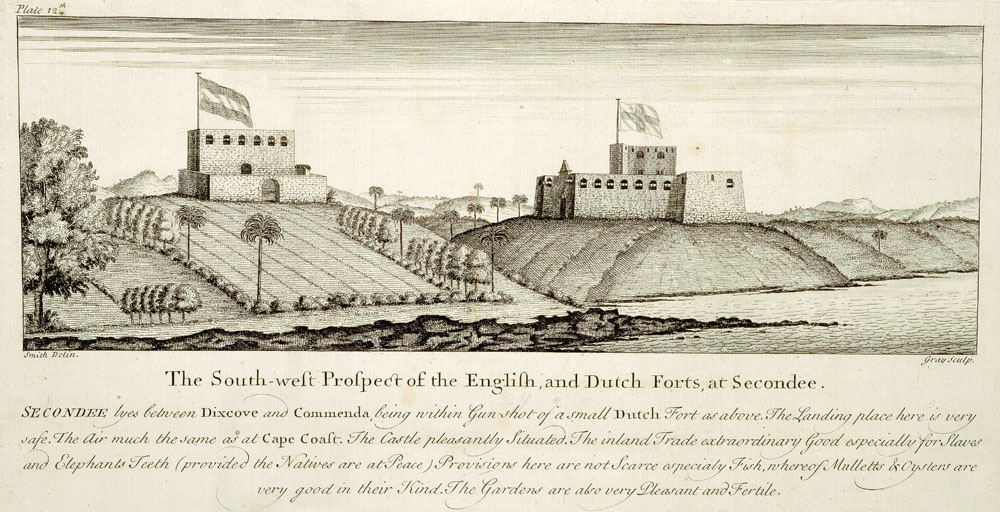
The initial English fort was modest in scale. According to William Claridge, an early chronicler, it was "a very similar building" to the Dutch Fort Orange, which he described as "merely a square white house in a yard, mounting eight or ten guns on a terrace on the roof." Both forts were only a gunshot apart, underscoring the tense military and commercial rivalry in the region. The English fort, like its Dutch neighbor, was designed primarily for defense and to assert control over the surrounding coastal area.
Early construction and architectural features
The original structure of Fort Sekondi was typical of 17th-century bastioned fortresses built by European trading companies along the West African coast. These forts were designed with low, thick stone walls and bastions at the corners to allow defensive cannon fire in multiple directions. The fort's compact design reflected the need for a stronghold that could withstand attacks while serving as a secure trading post.
Despite its small size, the fort was equipped with artillery placements on the roof terrace, which was a common feature in coastal forts to defend against naval and land assaults. The fort's strategic location near the mouth of the Pra River allowed control over maritime traffic and facilitated trade with the interior regions.
Destruction during the Dutch-Komenda war
On 1 June 1698, Fort Sekondi was destroyed amid the Dutch-Komenda war, a conflict involving European powers and local African states vying for dominance in the area. The fort was reduced to blackened outer walls, a testament to the ferocity of the attack. Contemporary reports and correspondence suggest that the Dutch instigated the assault and plundered goods from the English fort, transferring some to their nearby Castle Orange.
The English attempted to rebuild the fort around 1700, but persistent hostility from the indigenous population forced them to abandon these efforts. This period highlights the complex interactions between European colonizers and African communities, where alliances and enmities significantly influenced the fate of colonial establishments.
Reconstruction and later history
Before 1726, a second fort was constructed on the site, as evidenced by a detailed floor plan and a drawing by William Smith, an African Company surveyor. This reconstruction likely incorporated lessons learned from earlier conflicts, possibly including stronger fortifications and improved defensive features.
In 1782, during renewed Anglo-Dutch hostilities, the fort was captured and destroyed by the Dutch. Claridge noted that this was the only significant Dutch success in the war, underscoring the fort's strategic importance. Following this destruction, the fort was not rebuilt, marking the end of its active military role.
Transfer of ownership and legacy
Fort Sekondi changed hands several times as part of broader diplomatic agreements between Britain and the Netherlands. In 1868, it was transferred to the Dutch under the Anglo-Dutch Gold Coast Treaty, which involved a large exchange of forts to consolidate territorial control. Subsequently, on 10 April 1872, the fort was returned to British control as part of the Anglo-Dutch Treaties of 1870–1871.
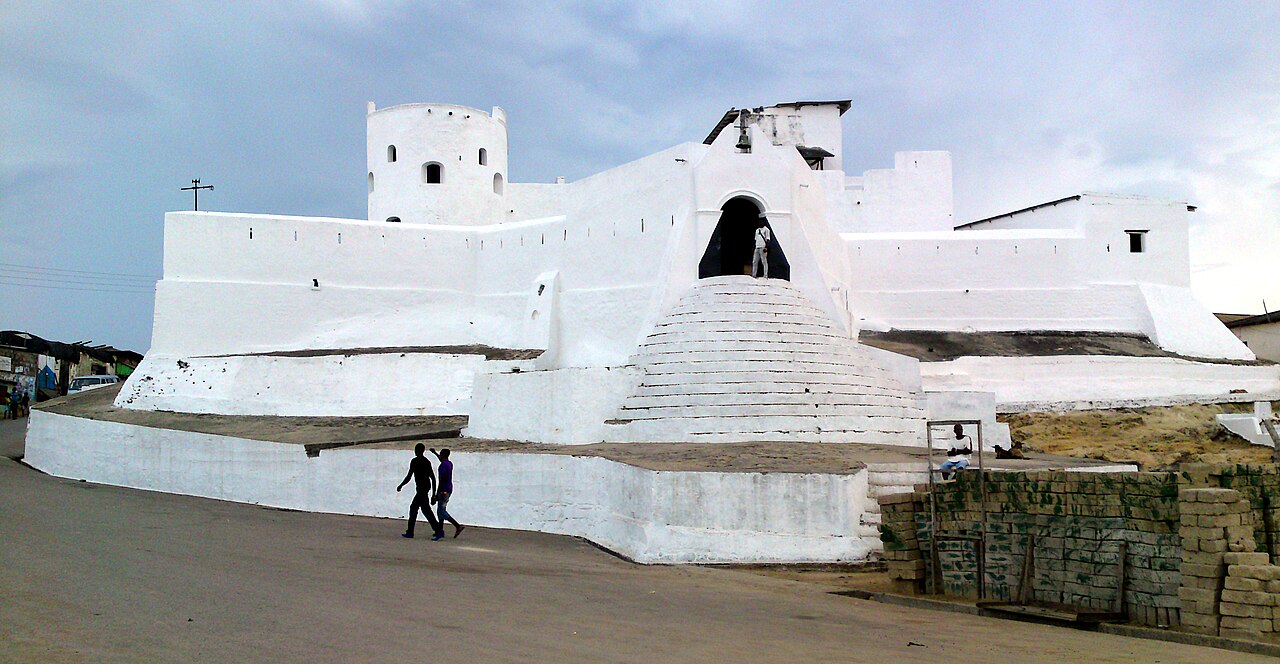
Today, Fort Sekondi stands as a historical site reflecting the intense colonial competition on the Gold Coast. Although in ruins, it offers valuable insights into the military architecture of Renaissance-era bastioned fortresses and the complex history of European-African interactions during the early modern period.
Architectural significance and features
The fort's design exemplifies the bastioned fortress style, characterized by angular bastions projecting from the main walls to provide overlapping fields of fire. This design was a response to the evolving artillery technology of the time, allowing defenders to cover all approaches and minimize blind spots.
Despite its modest size, the fort included essential features such as gun terraces, thick curtain walls, and a . The use of local materials combined with European construction techniques is evident in the fort's remains. These architectural elements were typical of coastal forts built by the English Royal African Company during the late 17th century.
Historical context: European competition on the Gold Coast
The Gold Coast was a focal point of European colonial ambitions due to its rich resources and strategic location. Fort Sekondi was part of a network of forts established by various European powers, including the Portuguese, Dutch, English, and Danes, each vying for control of trade routes and influence over local kingdoms.
The fort's history is intertwined with the broader geopolitical struggles of the period, including the Anglo-Dutch wars and conflicts involving African states such as the Komenda kingdom. These wars often resulted in shifting alliances, sieges, and destruction of forts, reflecting the volatile nature of colonial competition.
Visiting Fort Sekondi today
While Fort Sekondi is largely in ruins, it remains an important cultural and historical landmark in Ghana. Visitors can explore the site to observe the remnants of its bastioned walls and imagine the turbulent history that unfolded there. The fort is a testament to the early colonial military architecture and the complex history of the Gold Coast during the Renaissance and subsequent centuries.
Efforts to preserve and interpret the site contribute to understanding Ghana's colonial past and its role in global trade networks. Fort Sekondi is part of the collective heritage of the region, alongside other forts and castles that illustrate the legacy of European presence in West Africa.
Frequently asked questions (FAQ)
- What is the historical significance of Fort Sekondi?
- Fort Sekondi, built in the late 17th century, served as a military outpost for the Dutch and later the British, playing a crucial role in the trans-Atlantic trade. Its strategic location on the coast allowed it to monitor shipping routes and protect the region from pirates and rival colonial powers. Today, it stands as a monument to Ghana's colonial history and is a popular site for tourists interested in the country's past.
- When was Fort Sekondi built?
- Fort Sekondi was originally constructed in 1698 by the Dutch to serve as a trading post and fortification. Over the years, it underwent various renovations and expansions, particularly under British rule, enhancing its structural integrity and military capabilities. The fort reflects the architectural styles of the period and showcases the colonial influences that shaped Ghana's coastal regions.
- Can I visit Fort Sekondi?
- Yes, Fort Sekondi is open to visitors who wish to explore its historical significance and architectural features. Guided tours are often available, providing insights into the fort's history and its role in Ghana's colonial past. It's advisable to check in advance for any visitor restrictions or special events that may be taking place.
- What are the opening hours for Fort Sekondi?
- Fort Sekondi typically welcomes visitors from 9 AM to 5 PM, but hours may vary on weekends and public holidays. It's recommended to verify the current hours before your visit by checking local resources or contacting the fort's administration. This ensures you have ample time to enjoy the site and its surroundings.
- Is it possible to access Fort Sekondi by public transportation?
- Yes, visitors can access Fort Sekondi via public transportation, with various options available including buses and taxis that operate within the region. Many local taxi drivers are familiar with the fort and can provide a direct route. Additionally, it's advisable to plan your trip ahead of time to ensure a smooth journey.
- When is the best time to visit Fort Sekondi?
- The best time to visit Fort Sekondi is during the dry season, which typically runs from November to March. This period offers pleasant weather conditions ideal for exploring the fort and its surroundings. Additionally, visiting during local festivals may provide an enriching experience as you can enjoy cultural events nearby.
- Are there any nearby attractions to visit along with Fort Sekondi?
- Yes, there are several nearby attractions worth exploring, including the vibrant city of Sekondi-Takoradi and local beaches such as Busua Beach. Visitors can also explore the nearby Fort Metal Cross and the charming markets in the region for an authentic experience of Ghanaian culture. Combining these visits with Fort Sekondi can make for a fulfilling day trip.
- What are the ticket prices for visiting Fort Sekondi?
- Ticket prices for Fort Sekondi are generally affordable, making it accessible for both locals and tourists. Prices may vary depending on whether you opt for a guided tour, so it's best to check the latest information upon arrival. Some discounts may be available for students or groups, so inquire when purchasing your tickets.
Photo gallery

Public domain
Information
Loading map...
Visitor reviews
No reviews yet. Been here? Write the first review and help other travelers!
Write the first reviewVisited this castle? Share your experience
Your review helps other travelers and adds first-hand knowledge to our encyclopedia.