Fort São Sebastião
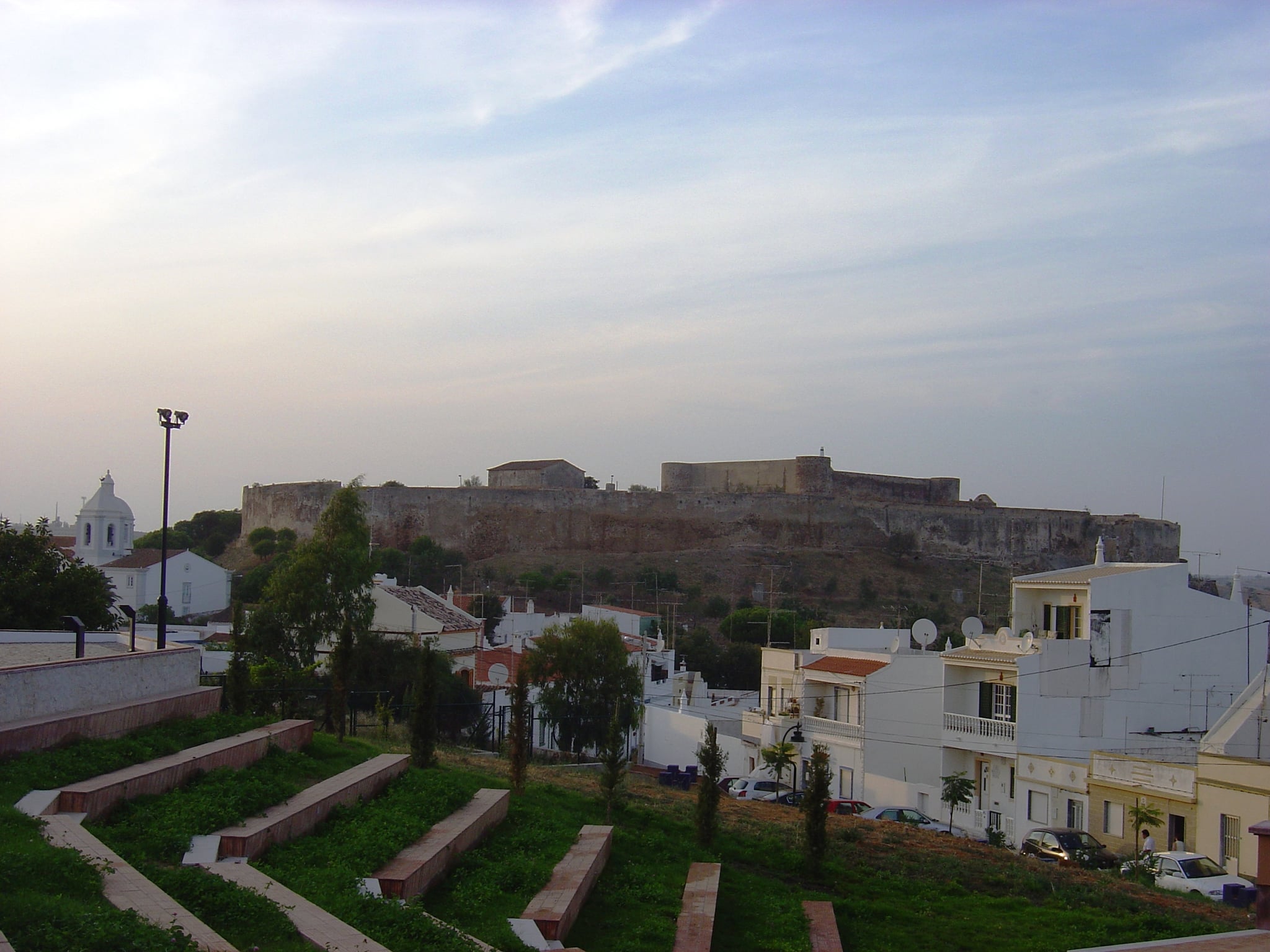
Fort São Sebastião, known locally as Forte de São Sebastião, is a significant 17th-century bastioned fortress located in the village of Castro Marim in the Algarve region of Portugal. This fortification is an outstanding example of Renaissance military architecture and forms part of a unique defensive complex alongside the nearby Castro Marim Castle.
The village of Castro Marim is strategically positioned between two prominent hilltops. On the northern hilltop stands the medieval Castro Marim Castle, which dates back to at least 1242. On the southern hilltop, Fort São Sebastião was constructed in the mid-17th century to enhance the town's defenses. This dual-hilltop fortification system was designed to protect the border region adjacent to the Guadiana River, which lies just about two kilometers to the east and serves as the natural frontier between Portugal and Spain.
Historical context and construction
The impetus for building Fort São Sebastião came during the reign of King John IV of Portugal in 1641, a period marked by the Portuguese Restoration War (1640-1668) against Spanish rule. Recognizing the strategic importance of Castro Marim as a border town, the king ordered the construction of a new fort on the southern hilltop, complementing the existing medieval castle on the northern hill.
The fortification project included connecting the two hilltop defenses with robust walls that enclosed the village between them, creating a fortified urban area. The construction of Fort São Sebastião was completed in 1658, representing a significant upgrade in the town's defensive capabilities. This fortification reflects the evolution of military architecture during the Renaissance, incorporating the bastioned fortress design principles that allowed for improved defense against artillery.
Architectural features and design
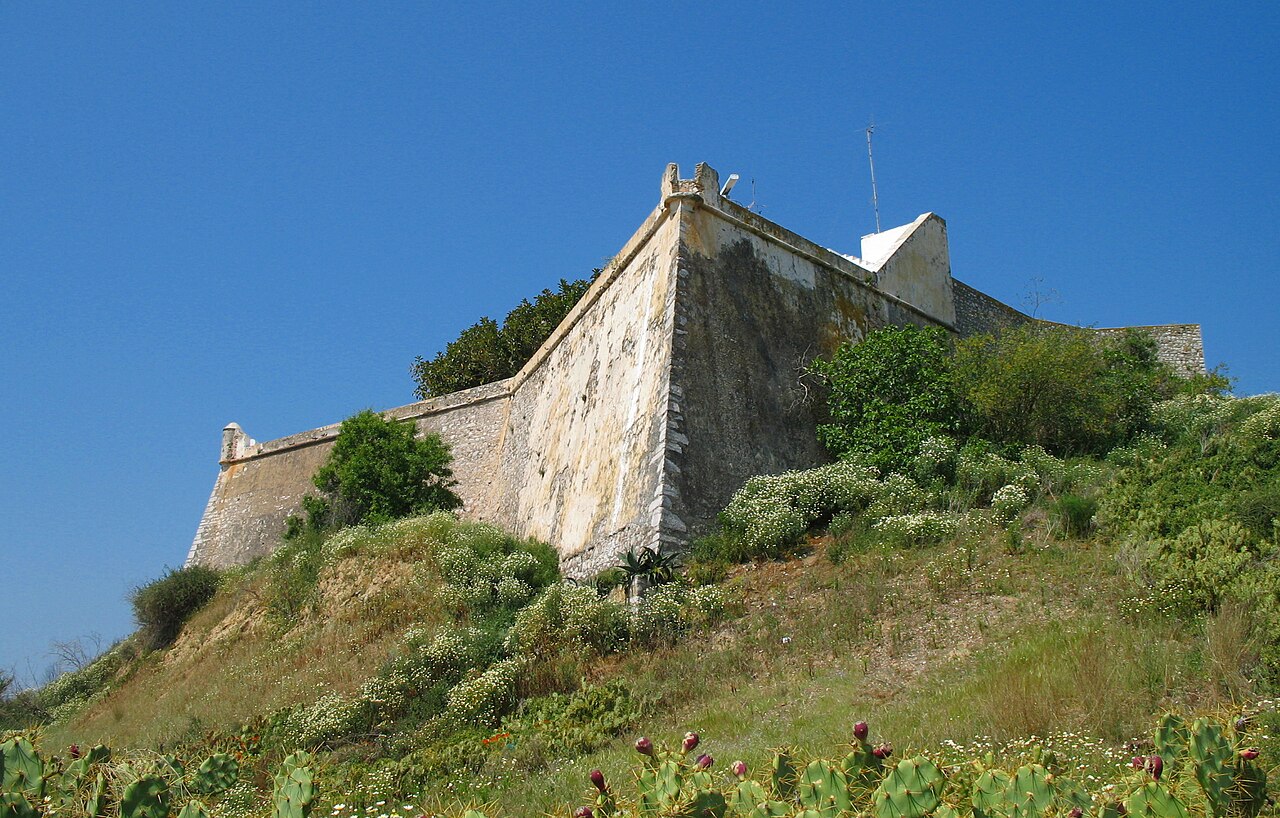
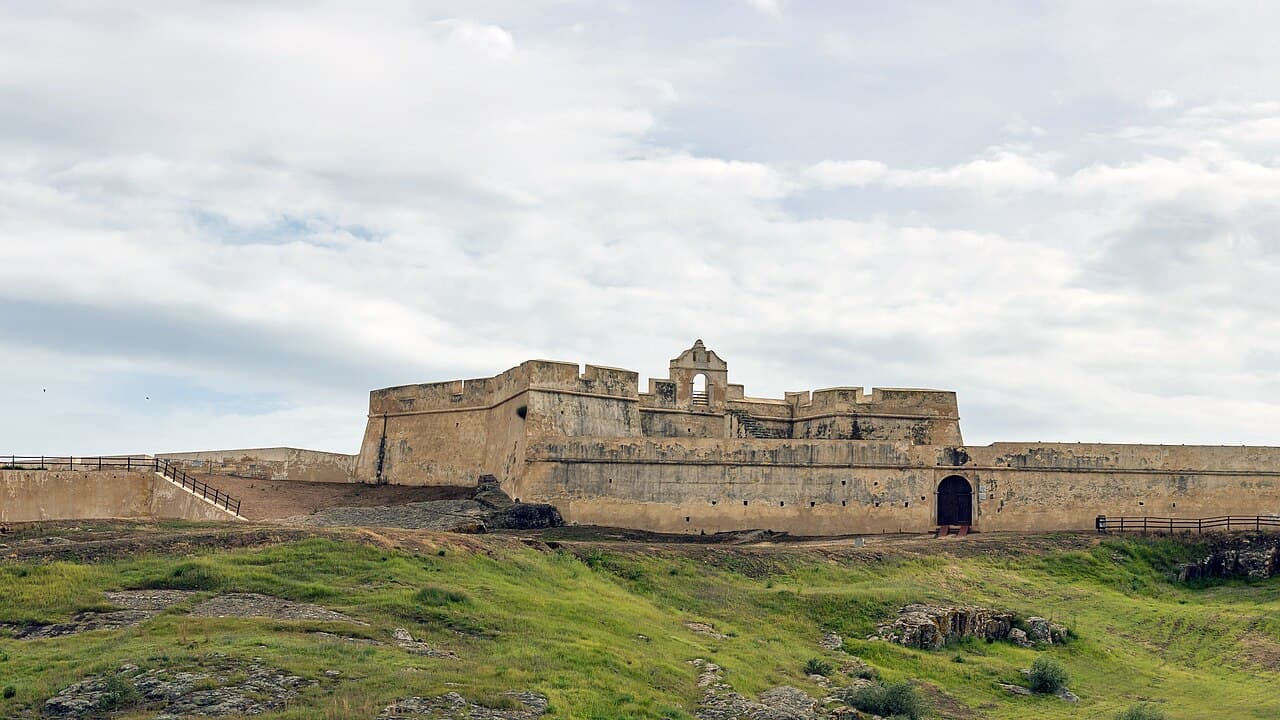
Fort São Sebastião is an exemplary model of a bastioned fortress, a style that emerged in response to the increasing use of gunpowder and cannon in warfare. The fort's layout is characterized by angular bastions that project outward from the main walls, allowing defenders to cover adjacent walls with crossfire and eliminate blind spots.
The fort is situated on the southern hilltop known as Serra do Cabeço, where a hermitage dedicated to Saint Sebastian once stood before being demolished to make way for the fortifications. The fortress features thick stone walls, ramparts, and artillery platforms designed to withstand sieges and bombardments.
The connection walls between Fort São Sebastião and Castro Marim Castle enclose the village, creating a fortified perimeter that protected the inhabitants and controlled access to the town. This integrated defensive system illustrates the military engineering advances of the 17th century and the importance of border security in this region.
Restoration and current status
In recent years, Fort São Sebastião underwent significant restoration efforts to preserve its structure and historical integrity. By the early 2000s, the fort was in a state of disrepair, but restoration work has since stabilized and restored many of its key features.
The fort was officially classified as a National Monument in 2012, recognizing its cultural and historical significance. Today, it is well-preserved and accessible to visitors, although entry is by prior appointment and typically only for groups. Admission is free, making it an attractive destination for those interested in military history and Renaissance fortifications.
Strategic importance and legacy
Fort São Sebastião played a crucial role in the defense of the Portuguese border during a turbulent period of Iberian history. Its construction marked a shift from medieval castle designs to modern bastioned fortresses capable of resisting artillery fire. The fort, together with Castro Marim Castle, exemplifies the adaptation of military architecture to new technologies and geopolitical challenges.
Its location near the Guadiana River border ensured control over a vital frontier, preventing incursions and securing Portuguese sovereignty. The fortress stands today not only as a monument to military engineering but also as a symbol of Portugal's resilience and strategic foresight in the 17th century.
Visitor information
Visitors interested in exploring Fort São Sebastião can arrange group tours by prior appointment. The fort offers a glimpse into the military history of the Algarve and the broader context of Portuguese-Spanish relations. The surrounding landscape, including views of the Guadiana River and the village of Castro Marim, adds to the site's appeal.
The fort's free admission policy encourages educational visits and cultural tourism, contributing to the preservation and appreciation of this important heritage site.
Frequently asked questions (FAQ)
- How do I visit Fort São Sebastião?
- Fort São Sebastião can be visited by prior appointment and typically only in groups. Visitors should contact the local tourist office or management to arrange a guided tour.
- What is the historical significance of Fort São Sebastião?
- The fort was built in the mid-17th century during the Portuguese Restoration War to defend the border with Spain. It is an excellent example of Renaissance bastioned fortress architecture.
- When was Fort São Sebastião constructed?
- Construction began in 1641 under King John IV and was completed in 1658, reflecting the military needs of the period.
- Is there an admission fee to enter Fort São Sebastião?
- Admission to Fort São Sebastião is free, but visits are only allowed by prior arrangement and usually in groups.
- What architectural style characterizes Fort São Sebastião?
- Fort São Sebastião is designed in the Renaissance style, featuring bastioned fortress elements adapted for artillery defense.
- Why was Fort São Sebastião built near Castro Marim Castle?
- The fort was built on the southern hilltop to complement the medieval Castro Marim Castle on the northern hilltop, creating a fortified perimeter to protect the village and border region.
Photo gallery

Information
Current owner
State
Address
Rua de São Sebastião, Portugal
Loading map...
Visitor reviews
No reviews yet. Been here? Write the first review and help other travelers!
Write the first reviewVisited this castle? Share your experience
Your review helps other travelers and adds first-hand knowledge to our encyclopedia.